Free bird quiz
Bird Quiz: Name the Bird from Its Classic Painting
This bird quiz shows you a classic painting by John James Audubon, John Gould, Louis Agassiz Fuertes or another master, and asks which bird it is. Pick one of four names, then see the answer, the painter and one true story about the bird. There are 5 levels, from backyard birds to expert, 10 questions a round, free, with nothing to sign up for.
Updated . 93 classic paintings, 29 trivia questions and a printable quiz.
Play the bird quiz
Backyard birds: 10 paintings. Tap the name you think is right; the answer and the bird’s story open under it.
Question 1 of 10: Which backyard bird is this?
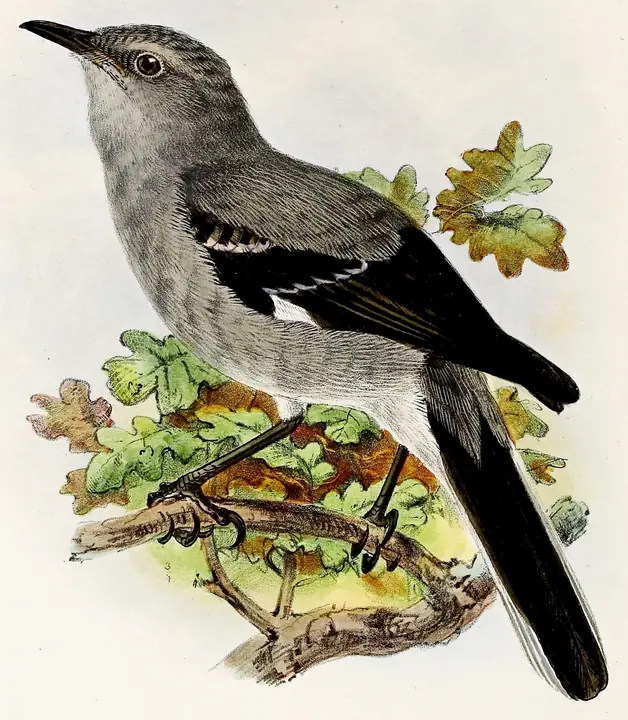
Show the answer
Northern Mockingbird
Painting: John Gerrard Keulemans, Onze Vogels in Huis en Tuin (1869–76)
Mockingbirds remember faces. Nesting mockingbirds on a university campus learned to pick out one person after just two 30-second visits to the nest, a 2009 study in PNAS found. (PNAS, 2009; abstract on Europe PMC)
Northern Mockingbird painting: Audubon's plate and other classic portraits
Question 2 of 10: Which backyard bird is this?
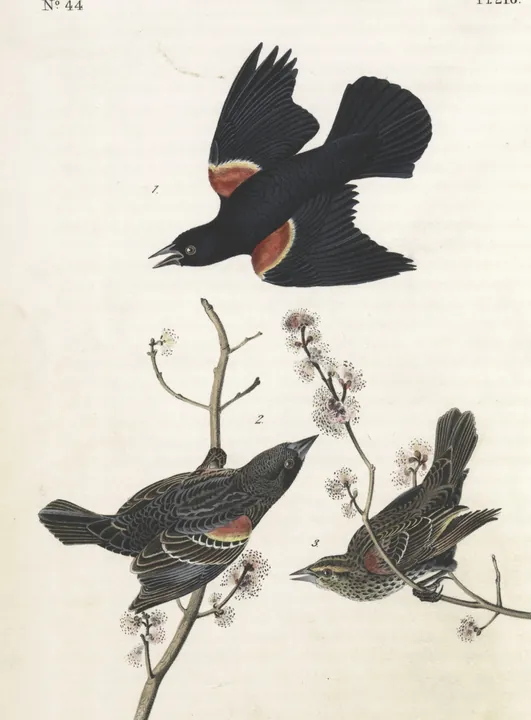
Show the answer
Red-winged Blackbird
Painting: John James Audubon, The Birds of America (1840–44)
Red-winged Blackbirds learn what not to eat by watching. In experiments, birds that saw a companion get sick from a food avoided it without ever tasting it. (Audubon magazine, Jasper Davidoff, 10 Dec 2024)
Red-winged Blackbird painting: Audubon's plate and other classic portraits
Question 3 of 10: Which backyard bird is this?
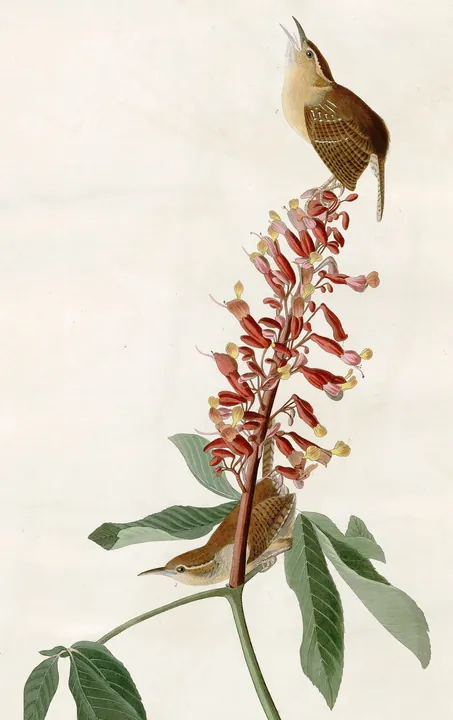
Show the answer
Carolina Wren
Painting: John James Audubon, The Birds of America (1827–38)
Carolina Wrens will nest almost anywhere, The Nature Conservancy says, including mailboxes and shoes left outside the door. (The Nature Conservancy, Cool Green Science, Lauren D. Pharr, 10 Feb 2021)
Carolina Wren painting: Audubon's plate and other classic portraits
Question 4 of 10: Which backyard bird is this?
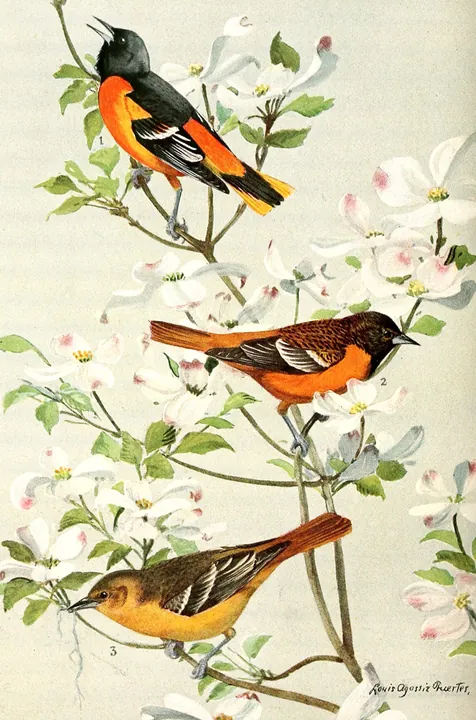
Show the answer
Baltimore Oriole
Painting: Louis Agassiz Fuertes, Bird-Lore (1922)
From 1973 to 1995 the Baltimore Oriole officially didn't exist. Ornithologists had merged it with the western Bullock's Oriole as the “Northern Oriole,” then split the two again 22 years later. (Audubon magazine, 10 Jun 2020)
Baltimore Oriole painting: Audubon's plate and other classic portraits
Question 5 of 10: Which backyard bird is this?
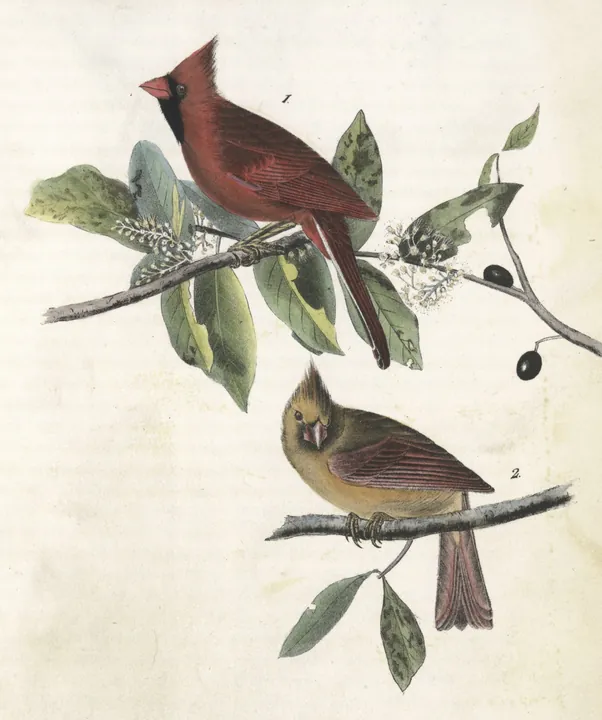
Show the answer
Northern Cardinal
Painting: John James Audubon, The Birds of America (1840–44)
Not every Northern Cardinal is red. A rare genetic mutation turns a few of them yellow, and Audubon magazine puts the odds at about one bird in a million. (Audubon magazine, Kharishar Kahfi, 7 Aug 2023)
Northern Cardinal painting: Audubon's plate and other classic portraits
Question 6 of 10: Which backyard bird is this?
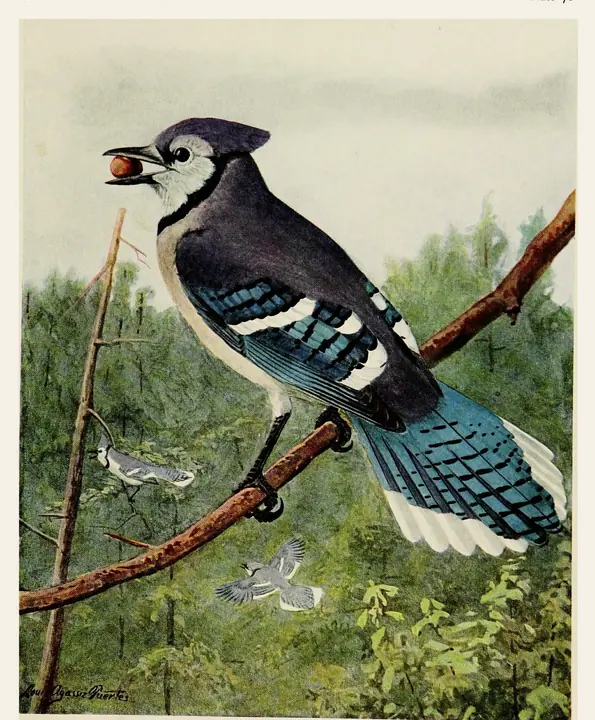
Show the answer
Blue Jay
Painting: Louis Agassiz Fuertes, Elon H. Eaton's Birds of New York (1910–14)
Blue Jays bury acorns for winter but find only about 1 in 4 again, Audubon magazine reports. The rest can sprout, so the jays plant thousands of oak trees a year. (Audubon magazine, Carrie Klein, 17 Mar 2026)
Blue Jay painting: Audubon's plate and other classic portraits
Question 7 of 10: Which backyard bird is this?
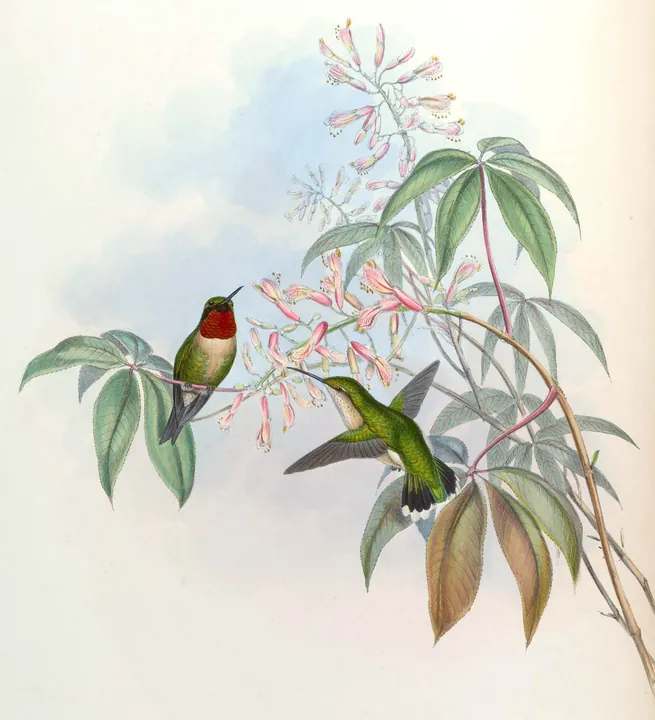
Show the answer
Ruby-throated Hummingbird
Painting: John Gould, A Monograph of the Trochilidae (1849–61)
A Ruby-throated Hummingbird can cross the Gulf of Mexico in one go: about 500 miles in 18 to 20 hours. The National Park Service figures it could beat its wings 3,860,000 times without a break. (National Park Service, Northeast Temperate Network)
Ruby-throated Hummingbird painting: Audubon's plate and other classic portraits
Question 8 of 10: Which backyard bird is this?
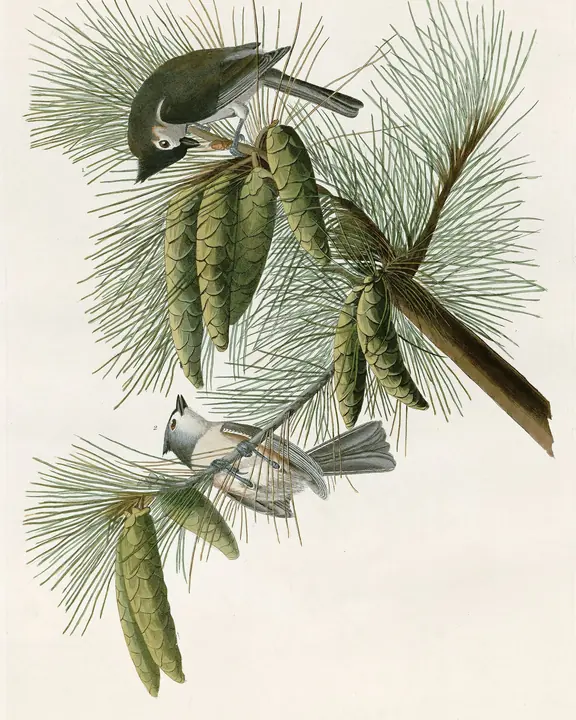
Show the answer
Tufted Titmouse
Painting: John James Audubon, The Birds of America (1827–38)
Titmice pull hair from living animals to line their nests. A University of Illinois study of online videos caught them plucking it from 47 humans, 45 dogs, three cats, three raccoons and a porcupine. (University of Illinois News Bureau, 29 Jul 2021; study in Ecology)
Tufted Titmouse painting: Audubon's plate and other classic portraits
Question 9 of 10: Which backyard bird is this?
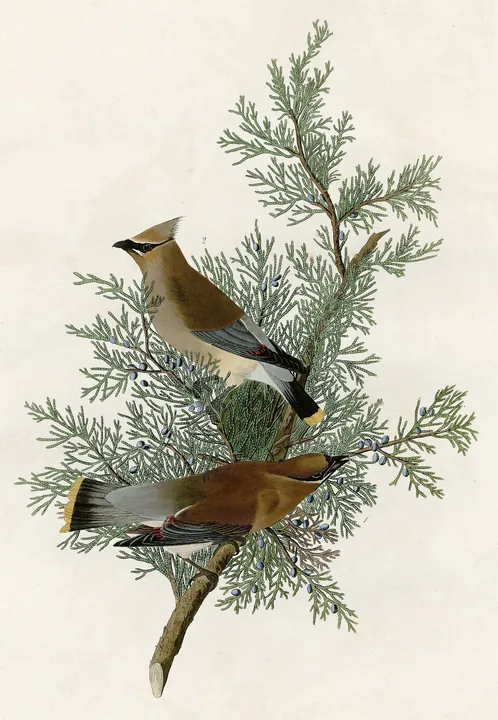
Show the answer
Cedar Waxwing
Painting: John James Audubon, The Birds of America (1827–38)
Cedar Waxwings can get drunk. After about 50 died along a road in Harris County, Texas, federal tests found the holly-family berries they had gorged on were fermenting, at 800 parts per million of alcohol. (Audubon, Alisa Opar, 2 Mar 2011)
Cedar Waxwing painting: Audubon's plate and other classic portraits
Question 10 of 10: Which backyard bird is this?
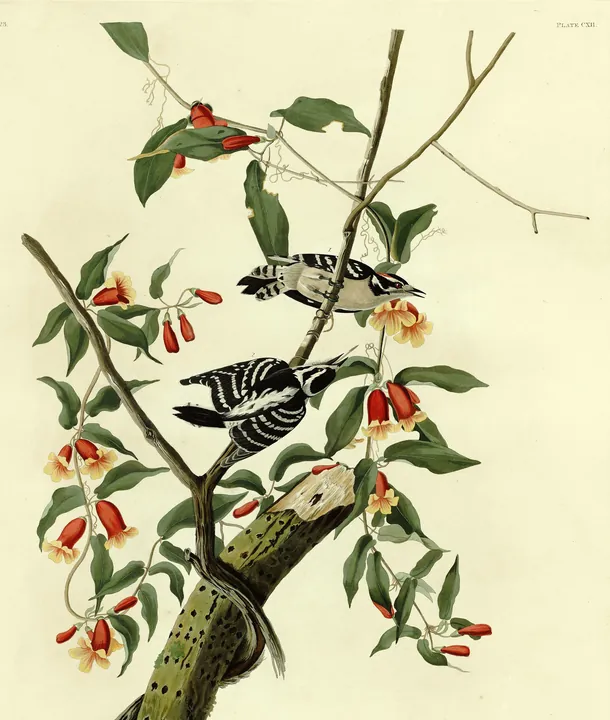
Show the answer
Downy Woodpecker
Painting: John James Audubon, The Birds of America (1827–38)
Downy and Hairy Woodpeckers look almost identical but aren't close relatives. One new theory, reported by Audubon: the small Downy passes for its bigger look-alike to scare off rivals. (Audubon, Nell Durfee, 26 Feb 2018)
Downy Woodpecker painting: Audubon's plate and other classic portraits
Five levels, from backyard birds to expert
Each round draws 10 different birds at random from its level, so no two rounds are quite the same. Every wrong answer is a bird that really looks like the right one, the way a birder would mix them up.
Backyard bird quiz (easy)
Twenty birds most people can see from a kitchen window, from the Northern Cardinal to the Carolina Wren. Start here if you're new to birds, or playing with children or grandchildren. Play the backyard birds level.
The 20 birds in it: American Crow, American Goldfinch, American Robin, Baltimore Oriole, Black-capped Chickadee, Blue Jay, Carolina Wren, Cedar Waxwing, Dark-eyed Junco, Downy Woodpecker, Eastern Bluebird, House Finch, Mourning Dove, Northern Cardinal, Northern Mockingbird, Red-bellied Woodpecker, Red-winged Blackbird, Ruby-throated Hummingbird, Tufted Titmouse, White-breasted Nuthatch.
Duck identification quiz
A duck identification quiz for the season: 20 ducks, geese and swans, each mixed with the look-alikes a hunter or a birder would weigh, from Canvasback and Redhead to the two teal. Play the ducks & waterfowl level.
The 20 birds in it: Blue-winged Teal, Bufflehead, Canada Goose, Canvasback, Common Goldeneye, Common Merganser, Gadwall, Green-winged Teal, Harlequin Duck, Hooded Merganser, Long-tailed Duck, Mallard, Northern Pintail, Northern Shoveler, Redhead, Ring-necked Duck, Ruddy Duck, Snow Goose, Tundra Swan, Wood Duck.
Owl and hawk quiz
Nine owls and eleven hawks, falcons, eagles and kites, painted by Audubon, Gould, Fuertes and their peers. The hard part is telling the Cooper's Hawk from the Sharp-shinned. Play the owls & hawks level.
The 20 birds in it: American Barn Owl, American Kestrel, Bald Eagle, Barred Owl, Burrowing Owl, Cooper's Hawk, Eastern Screech-Owl, Golden Eagle, Great Gray Owl, Great Horned Owl, Long-eared Owl, Northern Harrier, Northern Saw-whet Owl, Osprey, Peregrine Falcon, Red-shouldered Hawk, Red-tailed Hawk, Sharp-shinned Hawk, Snowy Owl, Swallow-tailed Kite.
State bird quiz
Every state bird we have a clear classic painting of; each answer lists every state that chose the bird and links its page. Arizona's Cactus Wren and New Mexico's Greater Roadrunner sit this one out, as our library has only photographs of them. Play the state birds level.
The 24 birds in it: American Goldfinch, American Robin, Baltimore Oriole, Black-capped Chickadee, Brown Pelican, Brown Thrasher, California Gull, California Quail, Carolina Wren, Common Loon, Eastern Bluebird, Hawaiian Goose, Hermit Thrush, Lark Bunting, Mountain Bluebird, Northern Cardinal, Northern Flicker, Northern Mockingbird, Purple Finch, Ring-necked Pheasant, Ruffed Grouse, Scissor-tailed Flycatcher, Western Meadowlark, Willow Ptarmigan.
Expert bird identification quiz
Thrushes, warblers, sparrows and shorebirds that trip up experienced birders, each with the birds it is most often mistaken for. Play the expert level.
The 19 birds in it: American Redstart, American Woodcock, Black-and-white Warbler, Blackburnian Warbler, Bobolink, Brown Creeper, Fox Sparrow, Golden-crowned Kinglet, Greater Yellowlegs, Hermit Thrush, Lincoln's Sparrow, Magnolia Warbler, Ovenbird, Prothonotary Warbler, Purple Finch, Savannah Sparrow, Spotted Sandpiper, Veery, Yellow-rumped Warbler.
How the bird quiz works
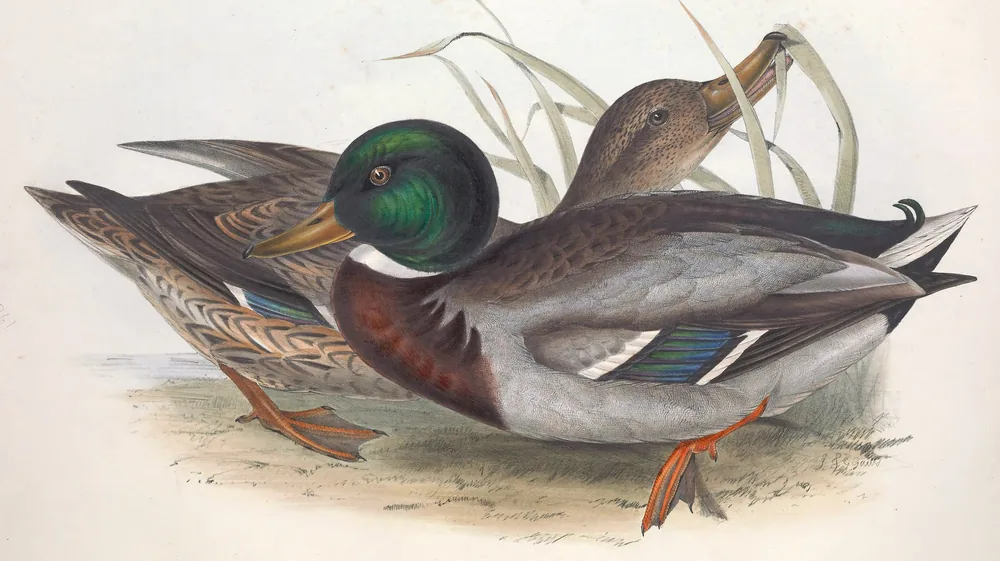
Every question is a classic painting, the same picture our books print beside the bird: a plate by John James Audubon from The Birds of America, a hand-colored lithograph by John and Elizabeth Gould, a Louis Agassiz Fuertes watercolor, or the work of another master of bird painting. Painters drew from the bird in the hand, so the field marks are there, if not always in the pose a photograph would catch.
Pick one of the four names. Right or wrong, the answer opens at once: the bird’s name, who painted it and in which book, one true story about the bird with the source we checked it against, and a link to its own page here when we have one (we have 53 classic bird painting pages and a page for every state bird). After ten questions you get your score and a picture of it to share, with the level and the bird that fooled you.
Everything happens in your browser: no account, no cookies, and your score goes nowhere unless you share it. If JavaScript is off, open “Show the answer” under each painting instead.
Printable bird quiz with answers
The printable bird quiz is two US Letter pages: 12 backyard birds in their classic paintings, each with four names to circle, and an answer key on page two with each painter and one story per bird. It works for a classroom, a seniors’ group, a bird club meeting or a trivia night.
Download the printable bird quiz (PDF)
Free to print and share for school and personal use. Please credit Birdfolio (mybirdfolio.com).
Bird trivia questions and answers
Here are 29 bird trivia questions with answers, 10 easy, 11 medium and 8 hard, each checked against the source linked after it. Read them out at a trivia night or try them on the family; the stories behind the answers are the best part.
What is some interesting trivia about birds?
The best bird trivia crosses into history: Benjamin Franklin called the Bald Eagle “a Bird of bad moral Character” in a 1784 letter, yet a law made the eagle the national bird only in 2024. Records come close behind, like the Bar-tailed Godwit that flew about 8,425 miles nonstop from Alaska to Tasmania in 11 days. All of it is in the questions below.
What are 10 good bird trivia questions?
These ten easy bird trivia questions work for any crowd, children included. The answer follows each question.
In a 1784 letter, which bird did Benjamin Franklin call “a much more respectable Bird” than the Bald Eagle?
Answer: The turkey. He wrote it to his daughter, Sarah Bache, on January 26, 1784, and called the eagle “a Bird of bad moral Character.” It was a private letter, not a proposal to Congress. (Annotation blog, U.S. National Archives)
Which birds are the only ones that can fly backward?
Answer: Hummingbirds. Their wings don't just flap: the motion “involves a lot of wing rotation,” a researcher told National Geographic. (National Geographic)
What is a group of owls called?
Answer: A parliament. Audubon traces the name to C.S. Lewis, who described a meeting of owls in The Chronicles of Narnia. (Audubon)
About how far can an owl turn its head in either direction?
Answer: Up to 270 degrees. Johns Hopkins researchers found the blood vessels under an owl's jaw swell as the head turns, pooling blood so the brain keeps its supply. (Johns Hopkins Medicine, via ScienceDaily)
Which bird, holding an olive branch, is landing on the Moon on the Apollo 11 mission patch?
Answer: The Bald Eagle. The patch shows the eagle touching down on the lunar surface with Earth behind it; the olive branch stands for peace, the Smithsonian's Air and Space Museum says. (Smithsonian National Air and Space Museum)
Baltimore's NFL team is named after a poem by which writer?
Answer: Edgar Allan Poe. In a 1996 Baltimore Sun phone poll, 21,108 of more than 33,000 callers picked Ravens, after Poe's poem “The Raven.” (Maryland Public Television, Knowing Poe: The Poe Library)
Which red songbird is the state bird of seven states?
Answer: The Northern Cardinal. Seven eastern states chose it: Illinois, Indiana, Kentucky, North Carolina, Ohio, Virginia and West Virginia. The Western Meadowlark is next, with six. (Audubon Field Guide)
True or false: an ostrich's eye is bigger than its brain.
Answer: True. An ostrich eye can be about 2 inches (50 mm) across, roughly twice as wide as a human eye, while its brain is no bigger than a walnut, Guinness World Records says. (Guinness World Records)
Which president made Pelican Island, Florida, America's first national wildlife refuge in 1903?
Answer: Theodore Roosevelt. His 1903 executive order set the island aside to protect its nesting birds, making it the nation's first national wildlife refuge, the U.S. Fish and Wildlife Service says. (U.S. Fish & Wildlife Service)
The CIA once built a camera light enough for which bird to carry?
Answer: A pigeon. It didn't work out: the CIA says the birds had trouble flying over the exact places it needed photographed. (CIA Museum artifact page)
Medium bird trivia questions
Which World War I pigeon carried the message that helped save the “Lost Battalion” in 1918?
Answer: Cher Ami. Cher Ami is credited with saving the Lost Battalion in the Argonne Forest in October 1918. France awarded the pigeon the Croix de Guerre, the U.S. Army says. (U.S. Army, CECOM historian, Aug. 27, 2021)
Before 1900, many Americans spent Christmas on a “side hunt.” Which ornithologist proposed counting birds instead?
Answer: Frank M. Chapman. On Christmas Day 1900, Chapman's first Christmas Bird Census drew 27 birders to 25 counts. The Christmas Bird Count still runs every winter. (Audubon)
Which Civil War eagle, named for President Lincoln, went into battle with a Wisconsin company?
Answer: Old Abe. The Bald Eagle went with Company C into nearly 40 battles, BirdNote says (counts vary by source), then retired to the Wisconsin Capitol and appeared at parades and veterans' gatherings. (BirdNote, Feb. 12, 2016)
The Baltimore Oriole's orange and black match the coat of arms of which 17th-century lord?
Answer: Lord Baltimore. That match is the usual explanation for the bird's name, the National Audubon Society says. Baltimore's baseball team later took its name from the bird. (Audubon Field Guide)
The Philadelphia Eagles took their name from a blue eagle, the symbol of which Depression-era program?
Answer: The National Recovery Act. Bert Bell spotted the blue eagle on a placard in a Philadelphia shop window. It stood for the country's resolve to beat the Depression, the Philadelphia Inquirer says. (The Philadelphia Inquirer, Oct. 12, 2019)
A strange seabird event in Capitola, California, helped inspire which Alfred Hitchcock film?
Answer: The Birds (1963). Scientists later suspected domoic acid, a nerve poison made by certain ocean algae, was behind the birds' strange behavior. (Greater Farallones Association)
Why do Snowy Owls keep landing at Boston's Logan Airport?
Answer: It looks like the Arctic tundra. Its 1,800 acres of short-mowed grass look like their Arctic home, says Norman Smith, who has trapped and moved more than 900 owls away from the runways. (NPR via WWNO, Apr. 30, 2025)
Gas companies add a smell like rotting meat to natural gas. Which bird gathers at pipeline leaks?
Answer: The Turkey Vulture. The added chemical, ethyl mercaptan, is a key part of the smell of carrion. A Union Oil employee noticed vultures gathering where gas was leaking, BirdNote tells. (BirdNote, Jan. 30, 2023)
How do vultures cool off on a hot day?
Answer: They poop on their own legs. Birds can't sweat or pant the way we do, so a hot vulture excretes down its legs and lets evaporation cool it, the National Park Service explains. (U.S. National Park Service)
In a 1995 study, pigeons learned to tell apart the paintings of which two artists?
Answer: Monet and Picasso. The pigeons learned to sort color slides of the two painters' works, then sorted paintings they had never seen. Turning a Monet upside down confused them; an upside-down Picasso didn't. (Journal of the Experimental Analysis of Behavior, 1995; abstract on Europe PMC)
How did Audubon fit a life-size American Flamingo onto one page of The Birds of America?
Answer: With its neck bent down. The flamingo is one of the birds that needed a special pose to fit the giant page at life size, the University of Wisconsin–Madison's library explains. (UW-Madison Libraries Special Collections)
Hard bird trivia questions
In what year did a law make the Bald Eagle the official national bird of the United States?
Answer: 2024. It had been on the Great Seal since 1782, but Public Law 118-206, signed December 23, 2024, was the first law to name it the national bird. (govinfo.gov)
In 2022 a Bar-tailed Godwit flew nonstop from Alaska to Tasmania. About how many days did it fly?
Answer: 11 days. It flew about 8,425 miles (13,560 km) across the Pacific without stopping for food or rest, the longest recorded nonstop migration by a bird, Guinness World Records says. (Guinness World Records)
Arctic Terns make the longest migration of any animal. How far can one fly in a year?
Answer: More than 80,000 km (about 50,000 miles). Tracking devices weighing 1.4 grams showed some terns flying more than 80,000 kilometers a year, a 2010 study found. The mile figure is our conversion. (PNAS, 2010; PubMed Central)
Common Swifts stay in the air almost nonstop for about how many months a year?
Answer: About ten months. Data loggers showed swifts spend more than 99 percent of their 10-month non-breeding season flying, a 2016 study found. (Cell Press, via ScienceDaily, Oct. 28, 2016)
Wisdom, a Laysan Albatross first banded in 1956, is the oldest known wild bird. About how old was she in April 2026?
Answer: About 75. The U.S. Fish and Wildlife Service put her at about 75 and estimated that 30 of her chicks have fledged. She nests on Midway Atoll. (US Fish and Wildlife Service, April 20, 2026)
Which bird holds the record for the highest flight, after hitting a jet at 37,000 feet over Ivory Coast in 1973?
Answer: A Rüppell's Vulture. The plane met it at 11,300 meters (37,000 feet) over Abidjan, Guinness World Records says, and the American Museum of Natural History identified the bird from feather remains. (Guinness World Records)
The last Passenger Pigeon died at the Cincinnati Zoo in 1914. Which first lady was she named after?
Answer: Martha Washington. Martha, the last of her species, died on September 1, 1914, at about 29, in the Cincinnati Zoological Garden, the U.S. Fish and Wildlife Service says. (U.S. Fish & Wildlife Service media library)
In 1963, how many Bald Eagle nesting pairs were known in the lower 48 states?
Answer: 417. Protection, the ban on DDT and decades of conservation turned that around: the U.S. Fish and Wildlife Service estimated about 316,700 Bald Eagles in the lower 48 by 2021. (U.S. Fish & Wildlife Service, Mar. 24, 2021)
What is a funny fact about birds?
Vultures cool off on hot days by excreting down their own legs, since birds can’t sweat, the National Park Service explains. Two more that get a laugh: Benjamin Franklin called the Bald Eagle a bird of “bad moral Character,” and the CIA’s pigeon spy cameras failed because the pigeons wouldn’t fly over the right places. All 4 are in the lists above, with their sources.
What are 10 interesting facts about birds?
Ten true stories from the quiz, one bird each:
- American Crow: In 2006 University of Washington researchers trapped seven crows while wearing a scary mask. More than ten years later, over half the crows on campus still raised the alarm at the sight of it. (Audubon magazine, Rachel Fritts, 25 Aug 2021)
- Tufted Titmouse: Titmice pull hair from living animals to line their nests. A University of Illinois study of online videos caught them plucking it from 47 humans, 45 dogs, three cats, three raccoons and a porcupine. (University of Illinois News Bureau, 29 Jul 2021; study in Ecology)
- Burrowing Owl: Burrowing Owls use bait. They collect mammal dung around their burrows to lure dung beetles, a favorite food, a 2004 study in Nature reported: a rare case of a bird using a tool. (Nature, 2004; abstract)
- Mallard: The famous marching ducks of the Peabody Hotel in Memphis began as a 1930s prank: two men back from a hunting trip put their live decoy ducks in the lobby fountain. Live decoys were legal then. (The Peabody Memphis)
- Canada Goose: After US Airways Flight 1549 landed on the Hudson in 2009, scientists tested the feathers of the geese it hit. Chemical clues showed they were migrants from Labrador, not local birds. (Ecological Society of America, 8 June 2009)
- Snowy Owl: Hedwig is a female in the Harry Potter films, but every owl that played her was a male Snowy Owl, with names like Gizmo, Kasper and Oops. (Literary Hub, Jennifer Ackerman, excerpt from What an Owl Knows, Penguin Press)
- Red-tailed Hawk: That fierce “eagle scream” in the movies is often a Red-tailed Hawk. Many films play a red-tail's cry when a Bald Eagle appears on screen. (Audubon magazine, Carlyn Kranking, 3 Dec 2021)
- Hermit Thrush: The Hermit Thrush sings in the same math as human music. A 2014 study found most of its songs favor the simple frequency ratios of the harmonic series, the basis of many musical scales. (Doolittle et al., PNAS, 2014)
- Ruddy Duck: Ruddy Ducks lay huge eggs for their size. A full clutch can weigh more than the hen that laid it, Ducks Unlimited says. (Ducks Unlimited)
- House Finch: In 1940 dealers were selling California House Finches in the East as “Hollywood Finches,” which was illegal. Undercover Audubon investigators helped expose the trade, and about 100,000 finches had been shipped east. (Audubon magazine, Nicholas Lund, 15 Jul 2016)
Birdfolio prints a birder’s life list as a book, each species beside a classic painting like the ones in this quiz. Look inside a Birdfolio.