State birds
What is the New Mexico state bird?
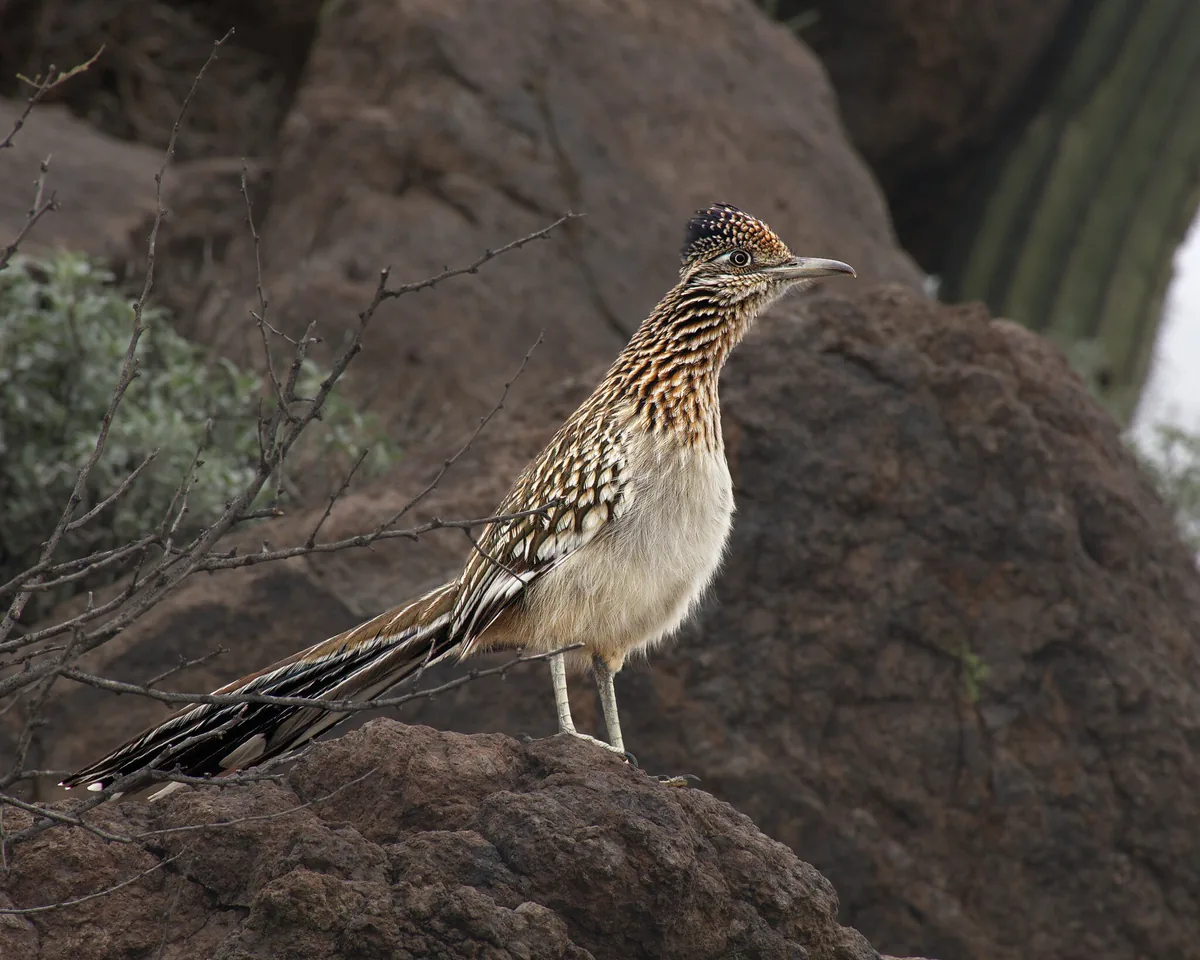
The New Mexico state bird is the Greater Roadrunner. The Legislature adopted it on March 16, 1949, says the Secretary of State, and the law, NMSA 1978 § 12-3-4, still calls it “The chaparral bird, commonly called roadrunner.”
Updated
Why does New Mexico's law call it the chaparral bird?
Because that is one of its old names, and the law kept it. Section 12-3-4 of the New Mexico statutes lists the state's symbols one after another, and line B reads: “The chaparral bird, commonly called roadrunner, is adopted as the official bird of New Mexico” (Laws 2007, House Bill 924).
The Secretary of State gives its other names too: the Greater Roadrunner, Geococcyx californianus, is known as the Chaparral Bird and as el paisano, among others.
The wording in force today comes from a 2007 bill whose purpose was to adopt an official state answer, “Red and green or Christmas,” to the state question, “Red or green.” The section's history begins with a 1927 law, and the Secretary of State dates the yucca, the state flower, to March 14, 1927 (State Flower).
Is the roadrunner a cuckoo?
Yes. The Secretary of State calls the Greater Roadrunner “the larger of two ground cuckoos,” the other being the Lesser Roadrunner of Mexico and Central America.
John Cassin said the same in a book of western birds first copyrighted in 1855. The bird may live on the ground like a grouse or a partridge, he wrote, but “It is a Cuckoo” (Cassin's Illustrations). He headed his account with four English names at once: “The Ground Cuckoo. The Prairie Cock. The Paisano. The corre-camino.”
His account, written for his Plate XXXVI, uses an older scientific name, Geococcyx mexicanus.
Did people really race roadrunners?
They did, Cassin wrote. In Mexico and the nearby United States, “as a matter of amusement,” people tested the bird's speed “by pursuing him on horseback, or by chasing him with dogs,” and it usually ran a longer race than they expected.
He credited it with “both speed and bottom,” an old phrase for speed and staying power.
It can fly, but only weakly, the Secretary of State says, and it hesitates to do so.
Where and when can you see a Greater Roadrunner in New Mexico?
In most of the state, below the high mountains. The Secretary of State says the Greater Roadrunner is “found throughout much of New Mexico, mostly at lower elevations (up to 7,000 feet),” and that it is seen most often running beside roads and trails.
Any month will do: the National Wildlife Federation says greater roadrunners live year-round in Texas, Oklahoma, New Mexico, Arizona, and southern California. For a named place, the U.S. Fish and Wildlife Service has photographed one at Rio Mora National Wildlife Refuge, and the refuge's Friends group shows another beside an irrigation canal at Bosque del Apache National Wildlife Refuge. Watch on the ground, or on low perches such as fences.
It eats what it can catch: snakes, lizards, beetles and small birds, the same page says, and, rarely, cactus fruit. It builds a bulky nest of sticks in low brush, or even in abandoned machinery.
How to recognize a Greater Roadrunner
The National Audubon Society's guide notes that it walks and runs on the ground, flying only when it must, and that it shows a streaky pattern and a long tail with white spots, with a shaggy crest it can raise or lower. Listen, too: the National Wildlife Federation says roadrunners call with a series of coo sounds.
Who is Dusty Roadrunner?
New Mexico's litter mascot. The Secretary of State says Dusty, a roadrunner caricature “complete with a red cap and broom,” was created in 1967 and adopted in 1969 as the official symbol for keeping the state clean.
The same page passes on two old stories about the real bird: that settlers who got lost were told a roadrunner would lead them back to the path, and that Hopi people used the X of its footprint on kachina figures to confuse evil spirits, because the track doesn't show which way the bird went.
Why is there no painting of the roadrunner here?
Because our art library doesn't have a checked one. Audubon never painted the roadrunner: it is on none of the 435 plates of his Birds of America (all of Audubon's plates) and none of the 500 in his octavo edition. Cassin's plate exists, in the book linked above, but it has not been through our art check.
So the page shows a photograph by Norman Kuring, shared under a Creative Commons license that asks for credit; that is why the credit under it names the license.
Does any other state have the roadrunner?
No. New Mexico is the only state with the Greater Roadrunner. Each of its neighbors chose something else: Arizona the Cactus Wren, Colorado the Lark Bunting, Utah the California Gull, Oklahoma the Scissor-tailed Flycatcher and Texas the mockingbird.
Questions about the New Mexico state bird
When did the roadrunner become New Mexico's state bird?
On March 16, 1949, according to the Secretary of State. The law is NMSA 1978 § 12-3-4.
What does New Mexico's law call the state bird?
“The chaparral bird, commonly called roadrunner.” Birders call it the Greater Roadrunner, Geococcyx californianus.
Can a roadrunner fly?
Yes, but only weakly, and it hesitates to, says the New Mexico Secretary of State. It would rather run.
What is New Mexico's state bird and flower?
The roadrunner is the state bird, and the yucca is the state flower, adopted on March 14, 1927, the Secretary of State says.
What is New Mexico's state animal?
The black bear. Section 12-3-4 names “The native New Mexico black bear” as the official animal.
Birdfolio prints a birder’s life list as a book, each species beside a classic painting. Look inside a Birdfolio.