State birds
What is the Nevada state bird?
The Nevada state bird is the Mountain Bluebird. Assembly Bill 198, approved on April 4, 1967, made it “the official state bird of the State of Nevada,” and the same short act turned sagebrush from the state emblem into the state flower. Today the law is Nevada Revised Statutes 235.060.
Updated
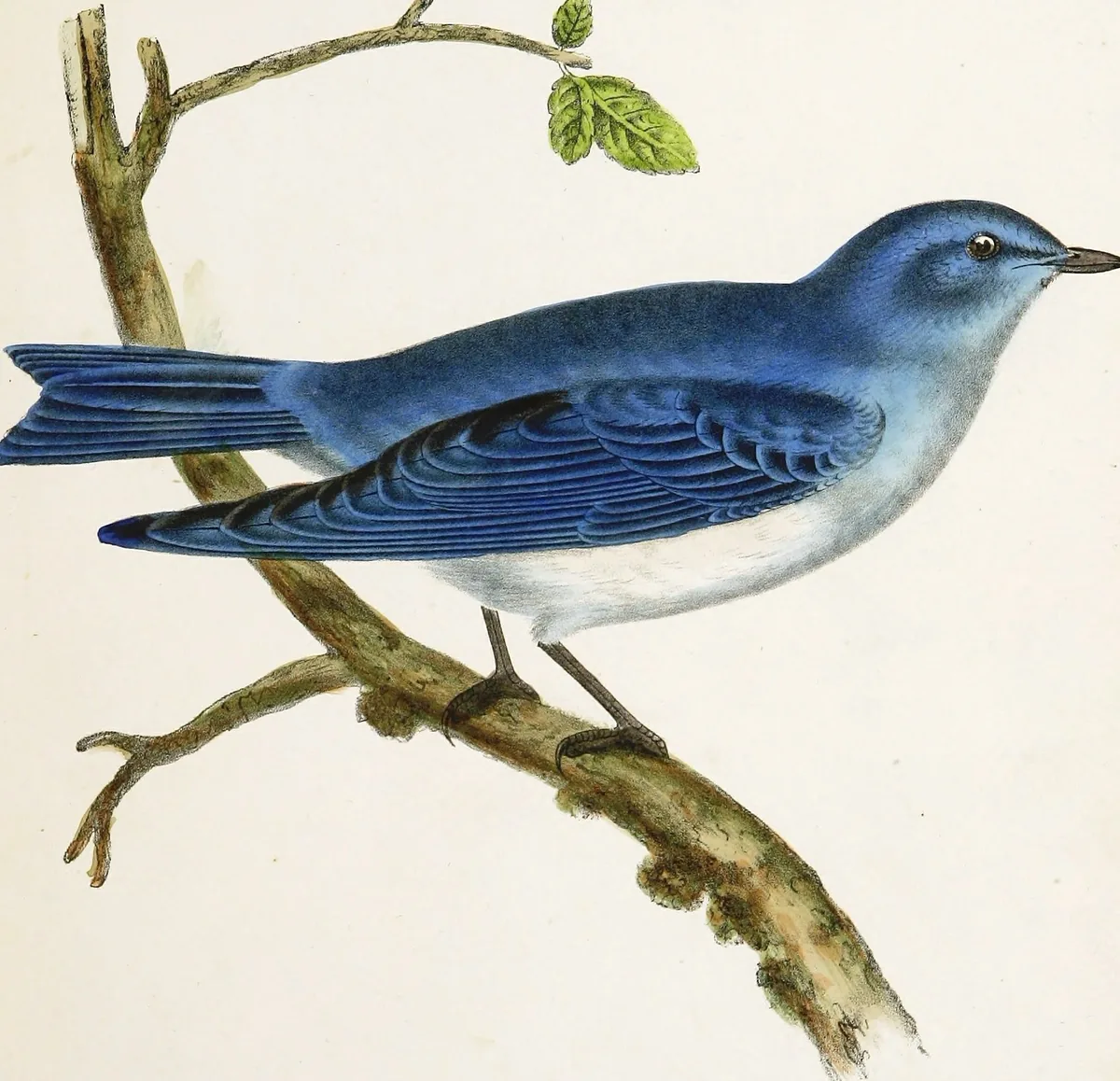
How did the mountain bluebird become Nevada's state bird?
With a short bill in 1967. Assembly Bill 198, which the session laws credit simply to “Mr. Webb,” was an act “relating to state emblems.” It was approved on April 4, 1967, and printed as chapter 235 of that year's statutes (Statutes of Nevada 1967).
Its second section names “the mountain bluebird (Sialia Currucoides)” as “the official state bird of the State of Nevada.” The act took effect “upon passage and approval,” so the state had its bird that same day.
The words are still in force as Nevada Revised Statutes 235.060, with only the capital letters changed: the code now prints “Mountain Bluebird (Sialia currucoides).” The Nevada Assembly's page for schools sums it up in one line: “The mountain bluebird became Nevada’s official state bird in 1967.”
Why did the same bill rename the state flower?
Because sagebrush already had a title, just not that one. Nevada's law had named the shrub in 1959, as the official “state emblem,” and the first section of Assembly Bill 198 struck out the word emblem and wrote in flower. So one act gave Nevada both a state bird and a state flower (the 1967 act).
The code still shows both dates: the flower's section was added in 1959 and amended in 1967, the year of the bluebird.
Nevada kept adding to the same chapter. The desert bighorn sheep became the state animal in 1973, and the vivid dancer damselfly the state insect in 2009. A fourth-grade class from Las Vegas won the contest to name the insect, the Nevada Assembly says, partly because its blue and silver match the state's official colors.
Where and when can you see a Mountain Bluebird in Nevada?
High in the mountains, from spring into fall. The Nevada Department of Wildlife says they are “found throughout the state in mountain meadows,” that they “breed from April to September,” and that they “nest at elevations over 7,000 feet,” usually raising two broods a season.
For one place to start, the National Park Service's bird list for Great Basin National Park marks the Mountain Bluebird common in summer. Scan open meadows and slopes, where a perched or hovering bluebird stands out.
They like room to see. The department says they “prefer open landscapes,” and the National Audubon Society's guide says they nest not only in mountains but in “lowland prairies and sagebrush flats” too, and may use holes in cliffs or dirt banks when tree hollows are scarce.
In winter, the guide adds, they are most common in pinyon-juniper woods, a fitting match for a state whose two official trees include the single-leaf piñon (NRS chapter 235).
How big is a Mountain Bluebird?
Smaller than you might expect. The Oklahoma Department of Wildlife Conservation gives about 6 to 8 inches long, with a wingspan of 11 to 14 inches, and says these birds weigh only about an ounce.
Why do mountain bluebirds hover?
To hunt from the air. Nevada's wildlife department says mountain bluebirds “hover like hawks when searching for flying insects,” and the Audubon guide says this bluebird “hovers more than other bluebirds,” dropping to the ground when it spots its prey.
When nesting is over, they gather. The department says they “travel and live in flocks of 50 individuals,” and the guide describes winter flocks “even by the hundreds.”
The oldest Mountain Bluebird in the federal banding records was a female banded in Alberta, Canada, on June 15, 1997, already past her first year (age codes), and caught and released there on June 6, 2005: at least 9 years old (USGS Bird Banding Laboratory; see the oldest wild birds).
Who painted the bluebird on this page?
No one signed it. The picture is Plate XXXV of the birds in the tenth volume of the Pacific Railroad Reports, the government's surveys for a railroad from the Mississippi River to the Pacific Ocean. Its margins print the survey's name and the plate number, and nothing else (the plate and its text).
The text that goes with it calls the bird Sialia arctica, the “Arctic Bluebird,” an older name for the same species. Nevada's lawmakers used today's name in 1967, and so does the code.
Which other state has the mountain bluebird?
One: Idaho, which chose it in 1931, thirty-six years before Nevada. Nevada's other neighbors went their own way: California chose the California Quail, Oregon the Western Meadowlark, Utah the California Gull and Arizona the Cactus Wren.
Two eastern states picked a cousin, the Eastern Bluebird: New York and Missouri.
Questions about the Nevada state bird
When did the mountain bluebird become Nevada's state bird?
On April 4, 1967, when Assembly Bill 198 was approved. It is now Nevada Revised Statutes 235.060.
Why is the mountain bluebird Nevada's state bird?
The 1967 act doesn't say why. It simply names the mountain bluebird, in the same bill that made sagebrush the state flower.
Is the mountain bluebird the same as the eastern bluebird?
No. They are two different species, and the Eastern Bluebird is the state bird of New York and Missouri.
What is Nevada's state bird and flower?
The Mountain Bluebird is the state bird, and sagebrush is the state flower. Both are in the 1967 act, which renamed sagebrush from state emblem to state flower.
What is Nevada's state animal?
The desert bighorn sheep, added to the state's law in 1973 as Nevada Revised Statutes 235.070.
Birdfolio prints a birder’s life list as a book, each species beside a classic painting. Look inside a Birdfolio.