Reference
How many bird species are in New Mexico?
New Mexico has 559 bird species on its official list (New Mexico Bird Records Committee, March 1, 2026), the 4th highest count of the 49 states with a verified count. Every species on it is backed by a specimen, a photo or a sound recording, and it covers the birds known in New Mexico since 1540.
New Mexico’s state bird is the Greater Roadrunner: our New Mexico state bird page tells how it was chosen.
Updated
What are the most common birds in New Mexico?
In summer, the 25 most common birds in New Mexico are led by the Cassin's Sparrow, at about 76 birds per survey route, then the Cliff Swallow and the Northern Mockingbird, by the USGS Breeding Bird Survey’s counts for 2021–2025. Together these 25 made up 58% of all the birds counted on New Mexico’s 60 survey routes.
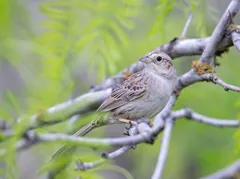
Photo: Karen Szafrajda, CC BY 4.0 1 Cassin's Sparrowabout 76 per routeon 65% of routesfalling since 2015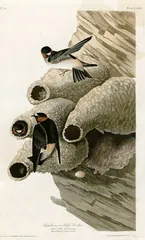
John James Audubon, The Birds of America (1827–38) 2 Cliff Swallowabout 40 per routeon 57% of routesno clear trend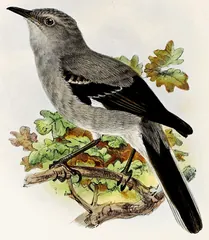
John Gerrard Keulemans, Onze Vogels in Huis en Tuin (1869–76) about 29 per routeon 92% of routesfalling since 2015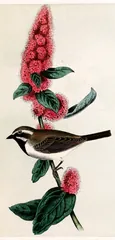
William E. Hitchcock, John Cassin’s Illustrations of the Birds of California, Texas, Oregon, British and Russian America (1853–56) 4 Black-throated Sparrowabout 29 per routeon 57% of routesfalling since 2015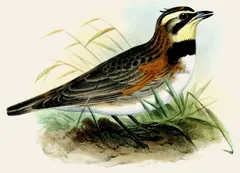
Joseph Wolf, Proceedings of the Zoological Society of London (1855) 5 Horned Larkabout 27 per routeon 77% of routesfalling since 2015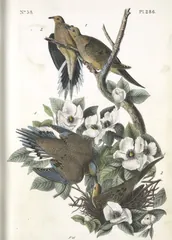
John James Audubon, The Birds of America (1840–44) about 24 per routeon 100% of routesno clear trend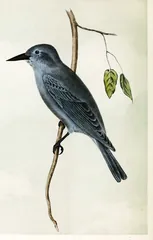
William E. Hitchcock, John Cassin’s Illustrations of the Birds of California, Texas, Oregon, British and Russian America (1853–56) 7 Pinyon Jayabout 22 per routeon 33% of routesno clear trend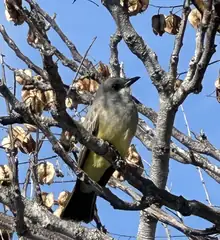
Photo: Irina Mitine, CC BY 4.0 8 Cassin's Kingbirdabout 22 per routeon 75% of routesno clear trend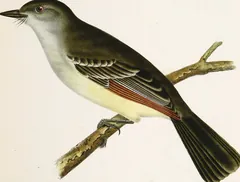
Artist unrecorded, Reports of Explorations and Surveys for a Railroad from the Mississippi River to the Pacific Ocean, vol. 10 (1859) 9 Ash-throated Flycatcherabout 20 per routeon 97% of routesno clear trend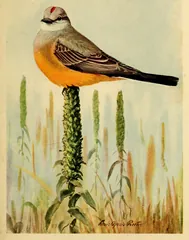
Louis Agassiz Fuertes, Food of Our More Important Flycatchers (1912) 10 Western Kingbirdabout 17 per routeon 82% of routesno clear trend
Show all 25
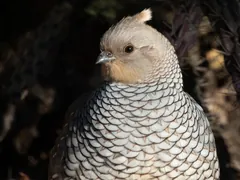
Photo: Rajan Rao, CC BY 4.0 11 Scaled Quailabout 17 per routeon 68% of routesfalling since 2015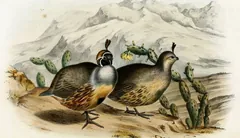
George G. White (on stone by William E. Hitchcock), John Cassin’s Illustrations of the Birds of California, Texas, Oregon, British and Russian America (1853–56) 12 Gambel's Quailabout 16 per routeon 28% of routesfalling since 2015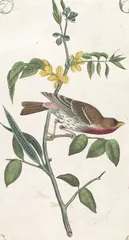
John James Audubon, The Birds of America (1840–44) 13 House Finchabout 15 per routeon 85% of routesno clear trend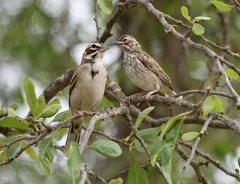
Photo: Cody Stricker, CC BY 4.0 14 Lark Sparrowabout 14 per routeon 80% of routesno clear trend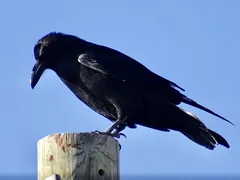
Photo: CK2AZ, CC BY 4.0 15 Chihuahuan Ravenabout 14 per routeon 53% of routesno clear trend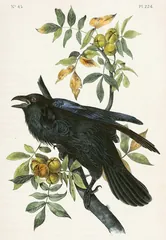
John James Audubon, The Birds of America (1840–44) 16 Common Ravenabout 11 per routeon 92% of routesno clear trend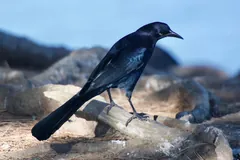
Photo: an iNaturalist contributor, CC0 1.0 17 Great-tailed Grackleabout 8.3 per routeon 37% of routesno clear trend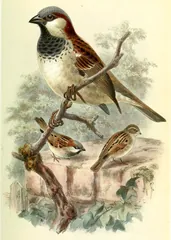
John Gerrard Keulemans, Lord Lilford’s Coloured Figures of the Birds of the British Islands (1885–97) 18 House Sparrowabout 7.2 per routeon 78% of routesno clear trendintroduced species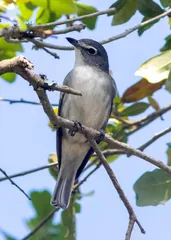
Photo: tcantrell52, CC BY 4.0 19 Plumbeous Vireoabout 7.0 per routeon 35% of routesno clear trend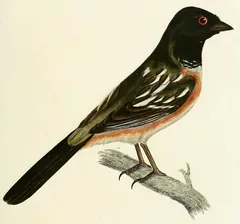
Artist unrecorded, Illustrations of Ornithology (1826) 20 Spotted Towheeabout 6.2 per routeon 53% of routesno clear trend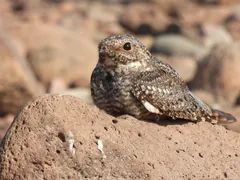
Photo: José Francisco Colorado-Dapa, CC BY 4.0 21 Lesser Nighthawkabout 5.6 per routeon 20% of routesno clear trend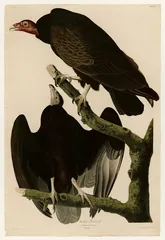
John James Audubon, The Birds of America (1827–38) about 4.5 per routeon 88% of routesno clear trend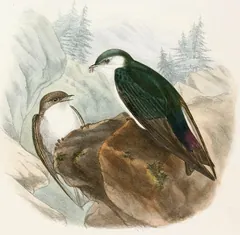
Claude Wilmott Wyatt, Sharpe and Wyatt’s A Monograph of the Hirundinidae (1885–94) 23 Violet-green Swallowabout 4.5 per routeon 35% of routesno clear trend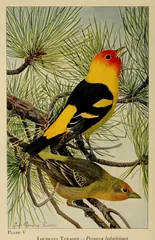
Louis Agassiz Fuertes, Birds of the Rockies (1902) 24 Western Tanagerabout 4.4 per routeon 33% of routesno clear trend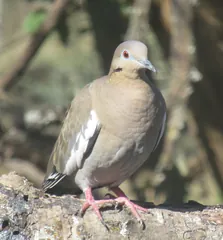
Photo: Linda Jo Conn, CC BY 4.0 25 White-winged Doveabout 4.3 per routeon 48% of routesno clear trend
Away from the survey's roadsides, it depends on where you look. Around homes, the state wildlife agency names Mourning Doves and Black-chinned Hummingbirds among the birds common in backyards. For sheer crowds, the Christmas Bird Count of winter 2014-15 found about 100,000 birds in the Bosque del Apache count circle alone and close to 80,000 around Roswell.
Sources: Calling all birders: Join the 2026 New Mexico Birding Big Year Contest! (New Mexico Department of Game and Fish, December 22, 2025); The 115th Christmas Bird Count: New Mexico (National Audubon Society, October 15, 2015), read October 8, 2026.
If the Cassin's Sparrow, first on this list, or the White-winged Dove, last on it, has you curious about the rest of New Mexico’s 559 species, see our comparison of the best bird books of 2026, from the friendliest for beginners to the newest.
What is the most common bird in New Mexico?
The Cassin's Sparrow leads New Mexico’s summer survey: about 76 a route on average in 2021–2025, ahead of the Cliff Swallow at about 40, seen on 65% of the 60 routes. USGS’s estimate has its New Mexico numbers falling since 2015.
How was this list made?
Each of New Mexico’s 60 routes is a roadside count, 50 stops along about 25 miles, run once a year in early summer by a volunteer. We took USGS’s yearly estimate for each species in New Mexico, the number of birds a typical route records, averaged it over the five latest survey years (there was no survey in 2020) and ranked the birds by it. To keep the list to birds you’re likely to meet across New Mexico, we left out species recorded on fewer than one in five of its routes, and those USGS can only estimate very roughly, which usually means big flocks or colonies on a few routes.
For New Mexico that left out the Sagebrush Sparrow and the Acorn Woodpecker. The survey counts Western and Chihuahuan Meadowlarks together in New Mexico, so neither is listed on its own, though as a group they would rank 3rd, at about 39 a route.
The share of routes is our own count from USGS’s route data for New Mexico, using only counts that met the survey’s standards; “rising” and “falling” are USGS’s trends for the state since 2015, named only where it finds a clear change. Roadside counts on early-summer mornings miss most of New Mexico’s owls and waterbirds, and its winter visitors aren’t here at all.
New Mexico’s counts come from two USGS data releases, the North American Breeding Bird Survey Analysis Results 1966–2025 (Hostetler et al., 2026) and its Dataset 1966–2025 (Ziolkowski et al., 2026), gathered by volunteer observers and free for anyone to use; Birdfolio isn’t connected with the USGS.
How many bird species are in New Mexico?
| Official count | 559 species |
|---|---|
| List’s date | March 1, 2026 |
| Kept by | New Mexico Bird Records Committee (New Mexico Ornithological Society) |
| Introduced species | 5, established in New Mexico |
| No longer found | 3 species |
| Review list | 181 species, March 2026 (our count) |
| Records committee | At work since 1994; seven members |
| Among US states | 4th highest of the 49 states with a verified count |
| Official list | NMOS State Checklist (Checklist of New Mexico Bird Species, 2026 Mar 1) |
What does New Mexico’s count include?
- Only species verified in New Mexico by a specimen, a photo or a sound recording and accepted by the New Mexico Bird Records Committee. A sight record alone doesn't add a species.
- Birds known from 1540 to the present, the period the list calls historical.
- 5 established introduced species: the Ring-necked Pheasant, Rock Pigeon, Eurasian Collared-Dove, European Starling and House Sparrow.
- 3 species no longer found in New Mexico: the Gunnison Sage-Grouse, Sharp-tailed Grouse and Worthen's Sparrow.
- The Mexican Duck as a species of its own, apart from the Mallard. Names follow the American Ornithological Society's 66th supplement (2025).
Why do other sources give a different number?
New Mexico's list grows by a species or two most years, and every edition since 2017 is still online, so older totals turn up:
- 557. The edition of January 1, 2025. The Pacific Golden-Plover and Tufted Flycatcher took it to 559 (our comparison of the two editions). Source: Checklist of New Mexico Bird Species, January 1, 2025 (New Mexico Bird Records Committee).
- 551. The edition of July 2023, one fewer than the year before, because the Pacific-slope and Cordilleran Flycatchers had been merged into one species, the Western Flycatcher (our comparison). Source: Checklist of New Mexico Bird Species, July 20, 2023 (New Mexico Bird Records Committee).
- 433. The confirmed species in the state's 1978 check-list, which also carried 43 unconfirmed ones, for a grand total of 485. Source: Revised Check-list of the Birds of New Mexico, 1978, introduction (New Mexico Ornithological Society Publication No. 6).
New Mexico’s list follows its own committee’s rules, and so does every other state’s: see why the counts differ from state to state.
New Mexico records, from two United States firsts at one refuge to a seabird in a brine pool
- A female Sungrebe spent November 13 to 18, 2008, at Bosque del Apache National Wildlife Refuge in Socorro County. It was a new species and a new bird family for the whole United States. The committee accepted it 6 to 1, the majority noting that Sungrebes are unknown in zoos, private aviaries and the cage-bird trade. Source: Sixth Report of the New Mexico Bird Records Committee (NMOS Bulletin 38:4, 2010), read October 8, 2026.
- The same refuge produced another United States first five years later: a Rufous-necked Wood-Rail, there from July 7 to 18, 2013, the first ever recorded north of Mexico. It is still New Mexico's only one. Source: Seventh Report of the New Mexico Bird Records Committee (Western Birds 54:254-300, 2023), read October 8, 2026.
- On July 12, 2009, a Long-billed Murrelet, a seabird of east Asia, was found dead in a brine pool in the Laguna Grande area east of Loving, Eddy County. DNA tests confirmed what it was, and it is now a study skin at the Museum of Southwestern Biology. Source: Sixth Report of the New Mexico Bird Records Committee (NMOS Bulletin 38:4, 2010), read October 8, 2026.
- New Mexico's first Yellow-footed Gull stayed at Sumner Lake in De Baca County for nearly three months, September 10 to November 21, 2021: the farthest east the species had ever been recorded in the United States. The remains of tropical storm Nora, which had just crossed the desert Southwest, may have helped bring it. Source: Seventh Report of the New Mexico Bird Records Committee (Western Birds 54:254-300, 2023), read October 8, 2026.
- Not every famous bird counts. A Thick-billed Parrot at the Armendaris Ranch near Engle drew hundreds of birders from across North America and beyond between May 7 and June 23, 2003, but the committee turned it down: most likely, it decided, the bird had come through the illegal cage-bird trade. Source: Fifth Report of the New Mexico Bird Records Committee (NMOS Bulletin 35:3, 2007), read October 8, 2026.
Questions people ask about New Mexico’s birds
What is the filthiest bird?
Vultures usually get the title, though no scientist actually ranks birds by dirt. They make their living from dead animals, and the National Park Service notes that their bare heads stay cleaner than feathered ones would and that acids in their gut can dissolve the bacteria behind anthrax, botulism, salmonella and cholera. New Mexico's list has two, the Turkey Vulture and the Black Vulture, the second rare enough here to be on the committee's review list.
Sources: NETN Species Spotlight: Turkey and Black Vultures (National Park Service, last updated August 15, 2021); Checklist of New Mexico Bird Species, March 1, 2026 (New Mexico Bird Records Committee, New Mexico Ornithological Society); Review List, March 2026 (New Mexico Bird Records Committee), read October 8, 2026.
What is the top 1 rarest bird?
For New Mexico, the answer is Worthen's Sparrow: one bird, collected near Silver City in 1884, is the only one ever found in the United States, and the species now survives only in a few small populations in Mexico, as one of North America's most critically endangered birds. Among living birds, the committee's review list of the rarest of the rare holds 181 species (our count).
Sources: History and Status of Worthen's Sparrow in New Mexico, meeting abstract (NMOS Bulletin 41:2, 2013); Seventh Report of the New Mexico Bird Records Committee (Western Birds 54:254-300, 2023); Review List, March 2026 (New Mexico Bird Records Committee), read October 8, 2026.
What big birds are in New Mexico?
Big birds on New Mexico's list include the Sandhill Crane, which stands about 4 feet tall with wings spanning about 6.5 feet, according to the National Park Service, and is often mistaken for a standing person. Tens of thousands of cranes, geese and ducks winter at Bosque del Apache National Wildlife Refuge.
The list also holds the American White Pelican, the Trumpeter and Tundra Swans, the Wood Stork, the Wild Turkey and both the Golden and Bald Eagles. A Common Crane spent the winter of 2014-15 among the Sandhill Cranes around Roswell and Bitter Lake National Wildlife Refuge, the state's first photographed record of the species.
Sources: Sandhill Crane, Yellowstone National Park (National Park Service, last updated April 17, 2025); Bosque del Apache National Wildlife Refuge, About Us (U.S. Fish and Wildlife Service; Internet Archive copy, December 30, 2025); Checklist of New Mexico Bird Species, March 1, 2026 (New Mexico Bird Records Committee, New Mexico Ornithological Society); Seventh Report of the New Mexico Bird Records Committee (Western Birds 54:254-300, 2023), read October 8, 2026.
Which birds live in New Mexico?
Birds of desert, mountains and river valleys. Carlsbad Caverns National Park has recorded 357 species and holds some of the state's best nesting habitat for three birds New Mexico lists as threatened, the Bell's Vireo, Gray Vireo and Varied Bunting. White Sands has more than 220, among them the state bird, the Greater Roadrunner, which lives there all year and runs at about 15 miles an hour.
At Bandelier National Monument, Steller's Jays, Canyon Towhees and Mountain Chickadees stay all year, and Sandhill Cranes pass overhead each spring and fall. On the Rio Grande, Bosque del Apache, a 57,331-acre refuge set up in 1939, is known for the tens of thousands of cranes, geese and ducks that spend the winter there.
Sources: Birds, Carlsbad Caverns National Park (National Park Service, last updated May 6, 2025); Birds, White Sands National Park (National Park Service, last updated September 29, 2025); Birds, Bandelier National Monument (National Park Service, last updated July 22, 2025); Bosque del Apache National Wildlife Refuge, About Us (U.S. Fish and Wildlife Service; Internet Archive copy, December 30, 2025), read October 8, 2026.
How did one sparrow from 1884 become a lost New Mexico bird?
Worthen's Sparrow is known in the United States from a single bird. On June 16, 1884, Charles H. Marsh collected an adult male near Silver City, thinking it was a Field Sparrow, and sent the skin to Charles K. Worthen in Illinois, who passed it to Robert Ridgway at the Smithsonian. Ridgway described it as a new species on August 22, 1884, so the New Mexico bird is the one the whole species was described from.
For a long time it was written off as a stray: the state's 1978 check-list called it probably a straggler from Mexico. Later work in Mexico found the sparrow doesn't migrate, and mid-June, when Marsh collected his bird, is the height of its nesting season. That points to a local New Mexico population that has since died out, which is why the list marks it extirpated, not accidental.
Sources: History and Status of Worthen's Sparrow in New Mexico, meeting abstract (NMOS Bulletin 41:2, 2013); Revised Check-list of the Birds of New Mexico, 1978, cowbirds to the end (New Mexico Ornithological Society Publication No. 6); Checklist of New Mexico Bird Species, March 1, 2026 (New Mexico Bird Records Committee, New Mexico Ornithological Society), read October 8, 2026.
Why did the Aplomado Falcon need a federal rule to return?
Because it had vanished. The falcon disappeared from the United States as DDT came into wide use after World War II, and from 1952 to 2000 no wild pair is known to have nested in New Mexico; one pair nested in Luna County in 2001 and 2002.
In July 2006 the U.S. Fish and Wildlife Service declared all of New Mexico and Arizona an area for a nonessential experimental population, a legal status for reintroduced animals, so that falcons raised in captivity by The Peregrine Fund in Boise, Idaho, could be released in southern New Mexico. The Aplomado Falcon is on the state list today, and still on its review list.
Sources: Establishment of a Nonessential Experimental Population of Northern Aplomado Falcons in New Mexico and Arizona, final rule (Federal Register 71:42298, July 26, 2006); Review List, March 2026 (New Mexico Bird Records Committee), read October 8, 2026.
Where is the official New Mexico bird list, and how often is it updated?
On the New Mexico Ornithological Society's website, nmbirds.org: the Checklist of New Mexico Bird Species, a PDF dated March 1, 2026, with earlier editions back to 2017 still posted. Next to it are the review list of the "rarest of the rare," species reported on average four or fewer times a year over the previous ten years, which need full documentation every time, and a second list of slightly less rare birds, which need only a sketch of the details.
The committee was set up in 1992 and 1993 and began work in 1994: six members serving six-year terms, plus a secretary. A record passes with a 7-0 or 6-1 vote on the first round, except a possible new state bird with one vote against, which goes round again; 2-5 or worse rejects it, and members don't see each other's votes in the first round. From November 2010 to December 2022 it reached final decisions on 1,188 records and accepted 1,051, or 88.5 percent. Its seventh report appeared in Western Birds in 2023.
Sources: Checklist of New Mexico Bird Species, March 1, 2026 (New Mexico Bird Records Committee, New Mexico Ornithological Society); Review List, March 2026 (New Mexico Bird Records Committee); New Mexico Bird Records Committee (New Mexico Ornithological Society); NMBRC: History and Governing Rules (New Mexico Bird Records Committee); Seventh Report of the New Mexico Bird Records Committee (Western Birds 54:254-300, 2023), read October 8, 2026.
How do you count your own New Mexico list?
Your New Mexico list is every species you’ve seen in New Mexico. eBird can filter your life list to New Mexico, and your eBird data download gives the state of every sighting. On paper, count the species you’ve seen in New Mexico; what is a life list? explains how birders keep their lists.
To print your whole list, New Mexico birds and all, see how to print your bird life list, or let Birdfolio make it a hardcover book.
New Mexico’s state bird
New Mexico’s state bird is the Greater Roadrunner, the state bird since 1949. Its story, the state flower and animal, and a free picture card for a report are on our New Mexico state bird page.
Birding festivals in New Mexico
Our birding festivals calendar lists one festival in New Mexico, with dates from its own website:
- Festival of the Cranes (Bosque del Apache), Socorro: December 2–5, 2026
Christmas Bird Count in New Mexico
New Mexico had 40 Christmas Bird Count circles on Audubon’s map last winter, each counted on a single day between December 14 and January 5. Our guide shows where to find New Mexico’s counts and how to join one; it’s free, and beginners are welcome.
More about bird counts
- How many bird species are in each state: New Mexico beside all 50 states, DC and Canada.
- Bird lists of nearby states: Arizona, Colorado, Oklahoma and Texas.
- State birds of all 50 states, New Mexico’s Greater Roadrunner among them
- How many bird species are in the US and Canada
- Bird splits and lumps
If you’re shopping for a birder in New Mexico, our gift guide for birders and our pick of coffee table bird books are good places to start.