Reference
How many bird species are in Tennessee?
Tennessee has 437 bird species on its official list (Tennessee Bird Records Committee, November 2026), the 37th highest count of the 49 states with a verified count. It includes 2 extinct birds, the Passenger Pigeon and the Carolina Parakeet, and 10 provisional species with fewer than 3 records and no photo or specimen. The December 2024 edition gave 434.
Tennessee’s state bird is the Northern Mockingbird: our Tennessee state bird page tells how it was chosen.
Updated
What are the most common birds in Tennessee?
In summer, the 25 most common birds in Tennessee are led by the Cliff Swallow, at about 150 birds per survey route, then the European Starling and the American Crow, by the USGS Breeding Bird Survey’s counts for 2021–2025. Together these 25 made up 67% of all the birds counted on Tennessee’s 31 survey routes.
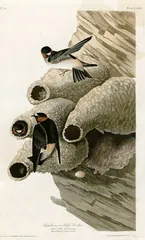
John James Audubon, The Birds of America (1827–38) 1 Cliff Swallowabout 150 per routeon 68% of routesno clear trend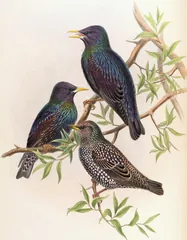
John Gould and Henry Constantine Richter, The Birds of Asia, vol. 5 (1850–83) 2 European Starlingabout 92 per routeon 97% of routesno clear trendintroduced species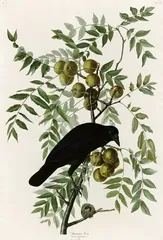
John James Audubon, The Birds of America (1827–38) about 48 per routeon 100% of routesfalling since 2015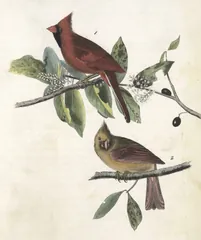
John James Audubon, The Birds of America (1840–44) about 42 per routeon 100% of routesno clear trend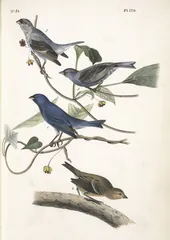
John James Audubon, The Birds of America (1840–44) 5 Indigo Buntingabout 37 per routeon 100% of routesfalling since 2015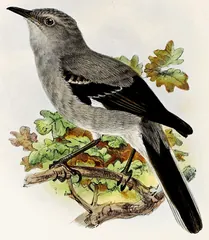
John Gerrard Keulemans, Onze Vogels in Huis en Tuin (1869–76) about 34 per routeon 97% of routesno clear trend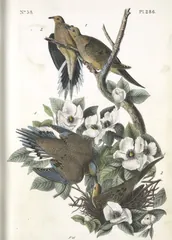
John James Audubon, The Birds of America (1840–44) about 33 per routeon 100% of routesno clear trend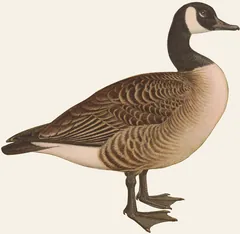
Marinus Adrianus Koekkoek, E. D. van Oort's Ornithologia Neerlandica (1922) about 33 per routeon 58% of routesno clear trend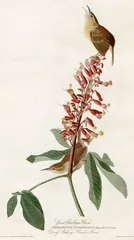
John James Audubon, The Birds of America (1827–38) about 28 per routeon 100% of routesno clear trend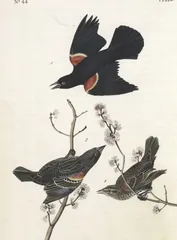
John James Audubon, The Birds of America (1840–44) about 25 per routeon 97% of routesfalling since 2015
Show all 25
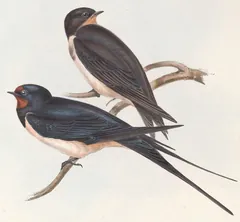
John and Elizabeth Gould, The Birds of Europe (1832–37) 11 Barn Swallowabout 22 per routeon 94% of routesno clear trend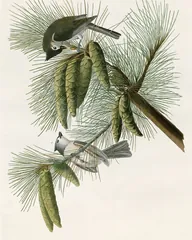
John James Audubon, The Birds of America (1827–38) about 22 per routeon 100% of routesno clear trend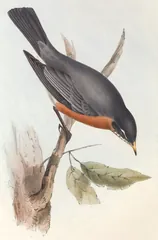
John and Elizabeth Gould, The Birds of Europe (1832–37) about 21 per routeon 97% of routesfalling since 2015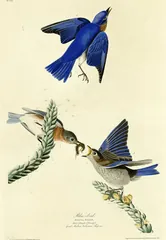
John James Audubon, The Birds of America (1827–38) about 16 per routeon 97% of routesno clear trend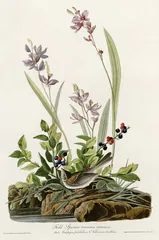
John James Audubon, The Birds of America (1827–38) 15 Field Sparrowabout 16 per routeon 97% of routesfalling since 2015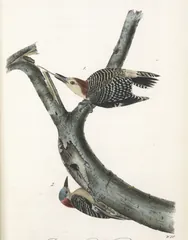
John James Audubon, The Birds of America (1840–44) about 15 per routeon 100% of routesno clear trend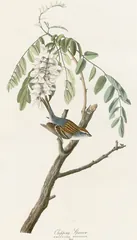
John James Audubon, The Birds of America (1827–38) 17 Chipping Sparrowabout 15 per routeon 100% of routesno clear trend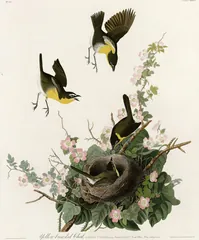
John James Audubon, The Birds of America (1827–38) 18 Yellow-breasted Chatabout 15 per routeon 94% of routesfalling since 2015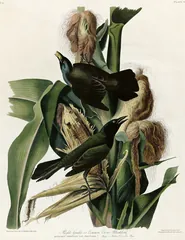
John James Audubon, The Birds of America (1827–38) 19 Common Grackleabout 15 per routeon 97% of routesfalling since 2015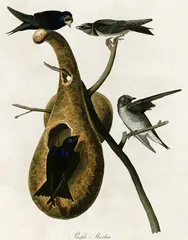
John James Audubon, The Birds of America (1827–38) 20 Purple Martinabout 15 per routeon 84% of routesrising since 2015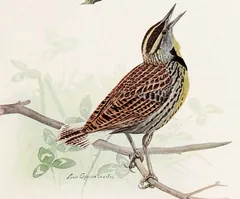
Louis Agassiz Fuertes, Elon H. Eaton’s Birds of New York (1910–14) 21 Eastern Meadowlarkabout 13 per routeon 87% of routesno clear trend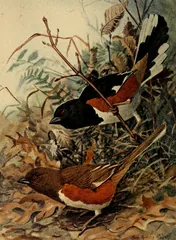
Louis Agassiz Fuertes, True Bird Stories from My Note-Books (1903) 22 Eastern Towheeabout 13 per routeon 100% of routesfalling since 2015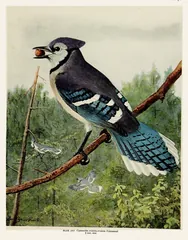
Louis Agassiz Fuertes, Elon H. Eaton's Birds of New York (1910–14) 23 Blue Jayabout 12 per routeon 100% of routesfalling since 2015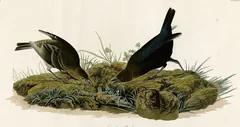
John James Audubon, The Birds of America (1827–38) 24 Brown-headed Cowbirdabout 12 per routeon 100% of routesno clear trend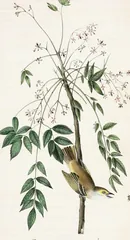
John James Audubon, The Birds of America (1840–44) 25 White-eyed Vireoabout 12 per routeon 97% of routesno clear trend
From the Cliff Swallow to the White-eyed Vireo, these are Tennessee’s common summer birds; for the rest of its 437 species, our guide to the best bird books of 2026 compares the five big North American guides, Sibley’s and Peterson’s among them.
What is the most common bird in Tennessee?
The Cliff Swallow leads Tennessee’s summer survey: about 150 a route on average in 2021–2025, ahead of the European Starling at about 92, seen on 68% of the 31 routes. USGS finds no clear rise or fall in its Tennessee numbers since 2015.
In winter, the Ring-billed Gull. Tennessee's 31 Christmas Bird Counts of 2024-25 found 51,252, more than any other bird, ahead of the Red-winged Blackbird (47,218), Common Grackle (43,873), European Starling (34,231) and Mallard (20,537), by our ranking of the count table in The Migrant.
Spring counts tell a different story: on the seven spring bird counts of 2025, the American Robin led with 1,920, just ahead of the Northern Cardinal's 1,645.
Sources: The Migrant 96:1, March 2025 (Tennessee Ornithological Society); The Migrant 96:2, June 2025, with the 2025 Tennessee Spring Bird Counts (Tennessee Ornithological Society), read October 10, 2026.
How was this list made?
Each of Tennessee’s 31 routes is a roadside count, 50 stops along about 25 miles, run once a year in early summer by a volunteer. We took USGS’s yearly estimate for each species in Tennessee, the number of birds a typical route records, averaged it over the five latest survey years (there was no survey in 2020) and ranked the birds by it. To keep the list to birds you’re likely to meet across Tennessee, we left out species recorded on fewer than one in five of its routes, and those USGS can only estimate very roughly, which usually means big flocks or colonies on a few routes.
The share of routes is our own count from USGS’s route data for Tennessee, using only counts that met the survey’s standards; “rising” and “falling” are USGS’s trends for the state since 2015, named only where it finds a clear change. Roadside counts on early-summer mornings miss most of Tennessee’s owls and waterbirds, and its winter visitors aren’t here at all.
Tennessee’s counts come from two USGS data releases, the North American Breeding Bird Survey Analysis Results 1966–2025 (Hostetler et al., 2026) and its Dataset 1966–2025 (Ziolkowski et al., 2026), gathered by volunteer observers and free for anyone to use; Birdfolio isn’t connected with the USGS.
How many bird species are in Tennessee?
| Official count | 437 species |
|---|---|
| List’s date | November 2026 |
| Kept by | Tennessee Bird Records Committee (Tennessee Ornithological Society) |
| Status codes | 290 regular, 45 casual, 98 accidental (our count) |
| Gone from Tennessee | 2 extinct, 2 extirpated |
| Nesting records | 180 species (our count of the list's breeding mark) |
| Records committee | Proposed in 1981, formed in 1982; first official list in 1983 |
| Among US states | 37th highest of the 49 states with a verified count |
| Official list | Official List of the Birds of Tennessee (Updated November 2026) |
What does Tennessee’s count include?
- 290 species coded Regular, expected every year in the right season and habitat; 45 Casual, seen in some years but not every year; and 98 Accidental, very rare and unpredictable visitors (our count of the codes).
- The extinct Passenger Pigeon and Carolina Parakeet.
- 2 species no longer found in Tennessee: the Greater Prairie-Chicken and the Red-cockaded Woodpecker, which the list marks as having nested here. Bewick's Wren, another former nester, is coded Accidental and marked likely extirpated.
- 10 provisional species, among them the Northern Gannet, the Gyrfalcon and the Great Kiskadee.
- Introduced birds that now live wild here, the European Starling and House Sparrow among them.
- Names and order follow the American Ornithological Society's checklist.
Why do other sources give a different number?
Tennessee's committee posts each edition of its list as a file, and the older editions are still online, so several totals turn up:
- 434. The December 2024 edition. The November 2026 edition adds the Southern Lapwing and the Great Cormorant, and counts the Willet as two species, the Prairie Willet and the Saltmarsh Willet, after the American Ornithological Society's split of October 20, 2026 (our comparison of the two editions). Source: Official List of the Birds of Tennessee, updated December 2024 (Tennessee Bird Records Committee).
- 432. The February 2023 edition, which the first paragraph of the committee's own page still links. By December 2024 the Ancient Murrelet and the Snail Kite had joined, and the Pacific-slope Flycatcher's line read Western Flycatcher (our comparison of the two editions). Source: Official List of the Birds of Tennessee, updated February 2023 (Tennessee Bird Records Committee).
- 423. An earlier edition with no date printed on it, filed among the society's uploads for February 2020. Eleven species have joined since, among them the American Flamingo, the Whooping Crane, the Burrowing Owl and Cassin's Kingbird (our comparison). Source: Official List of the Birds of Tennessee, an undated edition filed in February 2020 (Tennessee Bird Records Committee).
- 409. The April 2014 list, still on the society's web page called The Official List of the Birds of Tennessee. Its names followed the American Ornithologists' Union's seventh edition (1998) and the supplements after it. Source: The Official List of the Birds of Tennessee, April 2014 (Tennessee Ornithological Society web page).
- 283. Every species ever found on Tennessee's Christmas Bird Counts, which the society has compiled since 1930; the 2024-25 season was the 81st in a row. It is a winter-only total, so it stays well below the state list. Source: The Migrant 96:1, March 2025 (Tennessee Ornithological Society).
Tennessee’s list follows its own committee’s rules, and so does every other state’s: see why the counts differ from state to state.
Tennessee records, from a power-plant owl to hurricane seabirds
- Tennessee's first Snail Kite, a juvenile, was photographed on the Buffalo River in Wayne County on June 19, 2024. The committee accepted it 6-0 in its 2024 report, and it joined the list in the December 2024 edition. Sources: The Migrant 95:4, December 2024 (Tennessee Ornithological Society); Official List of the Birds of Tennessee, updated December 2024 (Tennessee Bird Records Committee), read October 6, 2026.
- Tennessee's first Burrowing Owl, a banded bird, came back for a fifth year to the Tennessee Valley Authority's New Johnsonville plant in Humphreys County, a restricted site, on October 17, 2024, and was last seen there on November 4. Source: The Migrant 95:4, December 2024 (Tennessee Ornithological Society), read October 6, 2026.
- Some of Tennessee's seabirds arrive with storms. An adult and a juvenile Sooty Tern turned up at Bruton Branch in Hardin County on July 9, 2024, with the remnants of Hurricane Beryl. The committee's page names two more ocean birds among the species added from 2016 to 2020: the Black-capped Petrel and the Brown Noddy. Sources: The Migrant 95:4, December 2024 (Tennessee Ornithological Society); Tennessee Bird Records Committee (Tennessee Ornithological Society), read October 6, 2026.
- An adult Brown Booby stayed at O'Neal Lake on Hatchie National Wildlife Refuge in Haywood County from July 18 to August 3, 2025, long enough for birders from across the state to see it. The Migrant counted it as apparently the tenth Tennessee record. Source: The Migrant 96:3, September 2025 (Tennessee Ornithological Society), read October 6, 2026.
- Some records end with two names. A kingbird photographed at Reelfoot Lake on December 2, 2024, was most likely a Tropical Kingbird, experts told the committee, but that species is almost identical to Couch's Kingbird and is best told apart by voice, which nobody recorded. The committee turned it down as a Tropical Kingbird and accepted it, 6-0, as the state's first Couch's or Tropical Kingbird. Source: The Migrant 95:4, December 2024 (Tennessee Ornithological Society), read October 6, 2026.
- A Purple Sandpiper spent January 13 to February 6, 2025, at a spot birders call Snow Bunting Peninsula, on Old Hickory Lake in Davidson County. The Migrant's winter report called it the fifth state record, the first since 1976 and the first ever photographed, and said well over 100 birders reported it. Source: The Migrant 96:1, March 2025 (Tennessee Ornithological Society), read October 6, 2026.
Questions people ask about Tennessee’s birds
Which US state has the most bird species?
California, with 696 species, ahead of Texas with 682, according to the two states' official lists of October 27 and October 24, 2026. Tennessee's November 2026 list counts 437, three more than its December 2024 edition.
Sources: Official California Checklist, 696 species, updated 27 October 2026 (California Bird Records Committee, Western Field Ornithologists); Texas State List, 682 species, last updated October 24, 2026 (Texas Bird Records Committee, Texas Ornithological Society); Official List of the Birds of Tennessee, updated November 2026 (Tennessee Bird Records Committee); Official List of the Birds of Tennessee, updated December 2024 (Tennessee Bird Records Committee), read October 6, 2026.
What is the rarest bird in Tennessee?
The rarest are the 98 species the official list codes Accidental, very rare and unpredictable visitors (our count); the list gives no record counts. In 2024 the records committee accepted only the second state records of the Broad-billed Hummingbird, Cassin's Kingbird and Sage Thrasher. The Red-cockaded Woodpecker, gone from Tennessee since 1994, may come back: the state wildlife agency has announced a plan, with federal partners, to reintroduce it.
Sources: Official List of the Birds of Tennessee, updated November 2026 (Tennessee Bird Records Committee); The Migrant 95:4, December 2024 (Tennessee Ornithological Society); Birds of Tennessee (Tennessee Wildlife Resources Agency), read October 10, 2026.
What are common birds in Tennessee?
The Northern Cardinal, Carolina Chickadee, Tufted Titmouse, Carolina Wren, Eastern Bluebird, American Robin, Northern Mockingbird, House Finch and American Goldfinch are among the everyday birds on the state wildlife agency's list of 100 Common Birds of Tennessee, which also takes in the Canada Goose, Wild Turkey and House Sparrow. The mockingbird, the state bird, turned up on all 27 of Tennessee's Christmas Bird Counts in 2020-21, and so did the Blue Jay, American Crow and Eastern Bluebird.
Sources: 100 Common Birds of Tennessee (Tennessee Wildlife Resources Agency); The 121st Christmas Bird Count in Tennessee (National Audubon Society, December 2, 2021), read October 10, 2026.
Where can I find a list of Tennessee birds?
On the Tennessee Ornithological Society's website, on its records committee's page: the Official List of the Birds of Tennessee, a PDF last updated in November 2026. The state wildlife agency's Watchable Wildlife site sends readers there for the complete list, and the agency and the society also print a 2013 field checklist, which says plainly that it isn't complete.
Sources: Tennessee Bird Records Committee, with the November 2026 list (Tennessee Ornithological Society); Birds, Tennessee's Watchable Wildlife (Tennessee Wildlife Resources Agency); 2013 Field Checklist of Tennessee Birds, WR-0986 (Tennessee Wildlife Resources Agency and Tennessee Ornithological Society), read October 10, 2026.
Which birds live in Tennessee?
Birds of the high Smokies, the forests of the Cumberland Mountains, the grasslands of Middle Tennessee, the big reservoirs, and the cypress swamps and bottomlands along the Mississippi River. The state's specialty is the Cerulean Warbler, which nests at North Cumberland Wildlife Management Area at the highest density anywhere in its range, the state wildlife agency says.
Mountains: Great Smoky Mountains National Park has more than 240 species on record, and nearly 120 nest there, 52 of them migrants from Central and South America. Its checklist marks the high-elevation birds, found from about 3,500 feet, such as the Northern Saw-whet Owl, Black-capped Chickadee, Red-breasted Nuthatch, Veery, Canada Warbler and Dark-eyed Junco.
Forests: besides the Cerulean Warblers in its mature woods, North Cumberland, about 205,000 acres of the Cumberland Mountains, has Golden-winged Warblers nesting on old strip mines grown over with grass and black locust. At Big South Fork National River and Recreation Area, birds of the forest interior dominate, and over 170 species have been recorded.
Grasslands: at Bark Camp Barrens, in Middle Tennessee, the Henslow's Sparrow is a common nesting bird, 25 to 40 pairs a year, with Dickcissels, Grasshopper Sparrows, Blue Grosbeaks and Northern Bobwhites.
Lakes and rivers: up to 750,000 waterfowl may use Reelfoot Lake at once in winter, and Prothonotary Warblers nest in its cypress swamps. Some 200 species have been reported at Meeman-Shelby Forest, in bottomland forests of oak, cypress and tupelo near the Mississippi, where Barred Owls are abundant. On the mudflats of upper Douglas Lake, Rankin Bottoms is East Tennessee's best place for herons, egrets and sandpipers in the warm months, with 89 kinds of waterbirds recorded.
Sources: North Cumberland WMA (Tennessee Wildlife Resources Agency); Birds, Great Smoky Mountains National Park, last updated January 23, 2026 (National Park Service); Birds Checklist, Great Smoky Mountains National Park, revised May 2010 (National Park Service); Birds of Big South Fork, last updated May 4, 2024 (National Park Service); Bark Camp Barrens WMA (Tennessee Wildlife Resources Agency); Reelfoot WMA (Tennessee Wildlife Resources Agency); Meeman-Shelby Forest WMA and State Park (Tennessee Wildlife Resources Agency); Rankin WMA (Tennessee Wildlife Resources Agency), read October 10, 2026.
Why do so many Bald Eagles spend the winter at Reelfoot Lake?
Reelfoot Lake, in the state's northwest corner near Tiptonville, was made by a series of violent New Madrid earthquakes in the winter of 1811-1812, and it is now a national natural landmark. Its open water, marshes and cypress sloughs draw Bald Eagles down from the upper Great Lakes and Canada, and a 2012 state press release called the flock one of the largest wintering populations outside Alaska. In 2014 Reelfoot Lake State Park ran its annual eagle bus tours seven days a week through March 2.
Reelfoot was also the eagles' last stronghold in the state. In 1955 Tennessee's only 14 known active eagle nests were all at the lake, and by 1961, after the pesticide DDT caused breeding failures, there were none. From 1980 to 2003 the Tennessee Wildlife Resources Agency, working with the Tennessee Ornithological Society and others, released young eagles from artificial nests, a method called hacking; 326 had gone out by 2010. A pair nested again in 1983, 130 pairs were counted in 2009, and the society now puts the state's total at more than 175 nesting pairs.
Sources: Reelfoot Lake State Park Hosts Eagle Tours (Tennessee Department of Environment and Conservation, January 10, 2014); 8th Annual Reelfoot Lake Eagle Festival Set for Feb. 3-5 (Tennessee Department of Environment and Conservation, January 17, 2012); Bald Eagle (Tennessee Wildlife Resources Agency); Bald Eagles Making Comeback in Tennessee (Tennessee Wildlife Resources Agency, April 12, 2010); History of TOS (Tennessee Ornithological Society), read October 6, 2026.
Why are there Whooping Cranes among the Sandhill Cranes at Hiwassee Refuge?
Hiwassee Refuge covers 6,000 acres of land and water where the Hiwassee River meets the Tennessee River on Chickamauga Lake, and it holds the largest winter flock of Sandhill Cranes in the Southeast outside Florida, the state wildlife agency says. The cranes are there from November through February and peak in January. The refuge itself is closed from November 15 to the end of February, but its observation platform near Birchwood stays open all year.
The Whooping Cranes came with an experiment. Operation Migration taught cranes to migrate by leading them behind ultralight aircraft, and in the first years of that effort it used the refuge as a rest stop; as a result, the agency said in 2013, several Whooping Cranes now spend most of the winter there with the Sandhill Cranes. That February a young female hurt in Florida was set free at the refuge after vets at Disney's Animal Kingdom amputated a toe, working in costume and without speaking so she would stay wild. In 2014 the records committee said it would not act on these reintroduced birds unless their population became established and self-sustaining. The Whooping Crane is now on the official list, coded Casual, and two stayed at Hiwassee through the winter of 2024-25.
Sources: Hiwassee Refuge (Tennessee Wildlife Resources Agency); Rehabilitated Whooping Crane Released at Hiwassee Refuge (Tennessee Wildlife Resources Agency, February 25, 2013); The Official List of the Birds of Tennessee, April 2014 (Tennessee Ornithological Society web page); Official List of the Birds of Tennessee, updated December 2024 (Tennessee Bird Records Committee); The Migrant 96:1, March 2025 (Tennessee Ornithological Society), read October 6, 2026.
How did Tennessee birders help find where Chimney Swifts spend the winter?
By putting bands on them. In the 1930s and 1940s a Memphis couple in the Tennessee Ornithological Society, among others, banded thousands of Chimney Swifts, and that work led to the discovery of the swifts' winter home in Peru, the society says. Its members solved other puzzles too. In the 1950s Amelia Laskey looked into why thousands of birds were crashing onto the runways of the Nashville airport at night. The cause was the intense light of an instrument that measures the height of the clouds, which disoriented the birds, above all in migration, and she persuaded the U.S. military to order airports to fit special filters over those lights.
The society itself began on October 7, 1915, when six Nashville men, not one of them a professional ornithologist, met in a private dining room at Faucon's Restaurant. It describes itself as the first state-organized bird study and conservation group in the southeastern United States. Its quarterly journal, The Migrant, has been published since 1930.
Sources: History of TOS (Tennessee Ornithological Society); The Migrant (Tennessee Ornithological Society), read October 6, 2026.
Where is the official Tennessee bird list, and how often is it updated?
On the Tennessee Ornithological Society's website, on the Tennessee Bird Records Committee page: the Official List of the Birds of Tennessee, a PDF updated November 2026, with 437 species, a status code for each and an asterisk for those with a breeding record in the state. The page gives no update schedule. The editions we found are dated April 2014, February 2023, December 2024 and November 2026, plus an undated one, and the older ones are still online. The committee's report for 2024, listing each record it voted on and the vote, ran in the December 2024 issue of The Migrant, the society's journal.
The committee has six voting members and an alternate, who can serve consecutive two-year terms, and a record needs at least 5 of the 6 votes. It reviews every species coded anything other than Regular or Casual, and a species stays provisional until a specimen, a photo or sound recording, or written accounts from three independent observers back it up. It is strict about the evidence: in 2024 it turned down a reported Giant Hummingbird, 6-0, as a Ruby-throated Hummingbird. It began as the society's Certification Committee, proposed in 1981 and voted in at the spring meeting of 1982. It published the first official list in The Migrant in 1983, took its present name in 1989 and got today's six-member rules in 1998.
Sources: Tennessee Bird Records Committee, with the November 2026 list (Tennessee Ornithological Society); Official List of the Birds of Tennessee, updated November 2026 (Tennessee Bird Records Committee); Official List of the Birds of Tennessee, updated December 2024 (Tennessee Bird Records Committee); Official List of the Birds of Tennessee, updated February 2023 (Tennessee Bird Records Committee); Official List of the Birds of Tennessee, an undated edition filed in February 2020 (Tennessee Bird Records Committee); The Official List of the Birds of Tennessee, April 2014 (Tennessee Ornithological Society web page); The Migrant 95:4, December 2024 (Tennessee Ornithological Society); The Migrant (Tennessee Ornithological Society), read October 6, 2026.
How do you count your own Tennessee list?
Your Tennessee list is every species you’ve seen in Tennessee. eBird can filter your life list to Tennessee, and your eBird data download gives the state of every sighting. On paper, count the species you’ve seen in Tennessee; what is a life list? explains how birders keep their lists.
To print your whole list, Tennessee birds and all, see how to print your bird life list, or let Birdfolio make it a hardcover book.
Tennessee’s state bird
Tennessee’s state bird is the Northern Mockingbird (officially, the “Mockingbird”), the state bird since 1933. Its story, the state flower and animal, and a free picture card for a report are on our Tennessee state bird page.
Birding festivals in Tennessee
Our birding festivals calendar lists 2 in Tennessee, with dates from each festival’s own website:
- Tennessee Sandhill Crane Festival, Birchwood: January 16–17, 2027
- Hatchie BirdFest, Brownsville: dates not announced yet; expected in April 2027 (2026 festival: April 24–26, 2026)
Christmas Bird Count in Tennessee
Tennessee had 38 Christmas Bird Count circles on Audubon’s map last winter, each counted on a single day between December 14 and January 5. Our guide shows where to find Tennessee’s counts and lists 1 Tennessee count date already announced for this winter; it’s free, and beginners are welcome.
More about bird counts
- How many bird species are in each state: Tennessee beside all 50 states, DC and Canada.
- Bird lists of nearby states: Alabama, Arkansas, Georgia, Kentucky, Mississippi, Missouri, North Carolina and Virginia.
- State birds of all 50 states, Tennessee’s Northern Mockingbird among them
- How many bird species are in the US and Canada
- Bird splits and lumps
If you’re shopping for a birder in Tennessee, our gift guide for birders and our pick of coffee table bird books are good places to start.