Reference
How many bird species are in Missouri?
Missouri has 445 bird species on its official list (Missouri Bird Records Committee, no date on the list), the 34th highest count of the 49 states with a verified count. It includes 10 provisional species, 5 extinct ones and 3 no longer found in Missouri. The committee's last annual report gave 443, as of December 2025.
Missouri’s state bird is the Eastern Bluebird: our Missouri state bird page tells how it was chosen.
Updated
What are the most common birds in Missouri?
In summer, the 25 most common birds in Missouri are led by the Cliff Swallow, at about 181 birds per survey route, then the Red-winged Blackbird and the Dickcissel, by the USGS Breeding Bird Survey’s counts for 2021–2025. Together these 25 made up 72% of all the birds counted on Missouri’s 80 survey routes.
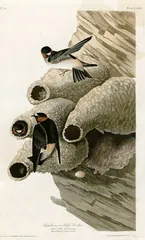
John James Audubon, The Birds of America (1827–38) 1 Cliff Swallowabout 181 per routeon 69% of routesno clear trend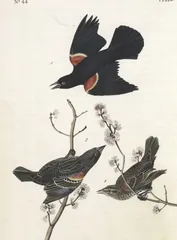
John James Audubon, The Birds of America (1840–44) about 106 per routeon 100% of routesfalling since 2015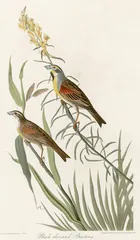
John James Audubon, The Birds of America (1827–38) 3 Dickcisselabout 67 per routeon 92% of routesno clear trend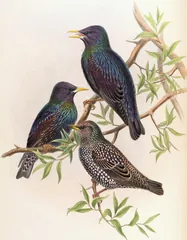
John Gould and Henry Constantine Richter, The Birds of Asia, vol. 5 (1850–83) 4 European Starlingabout 45 per routeon 96% of routesno clear trendintroduced species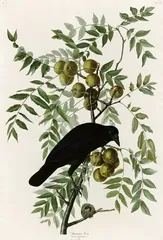
John James Audubon, The Birds of America (1827–38) about 44 per routeon 99% of routesno clear trend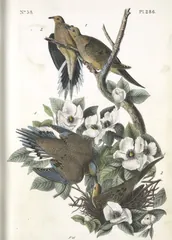
John James Audubon, The Birds of America (1840–44) about 43 per routeon 100% of routesno clear trend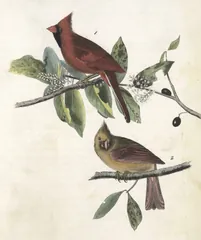
John James Audubon, The Birds of America (1840–44) about 42 per routeon 100% of routesrising since 2015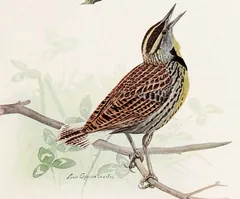
Louis Agassiz Fuertes, Elon H. Eaton’s Birds of New York (1910–14) 8 Eastern Meadowlarkabout 41 per routeon 99% of routesfalling since 2015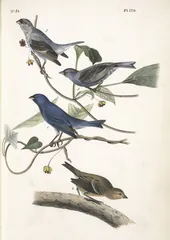
John James Audubon, The Birds of America (1840–44) 9 Indigo Buntingabout 37 per routeon 100% of routesfalling since 2015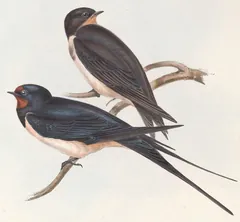
John and Elizabeth Gould, The Birds of Europe (1832–37) 10 Barn Swallowabout 29 per routeon 100% of routesno clear trend
Show all 25
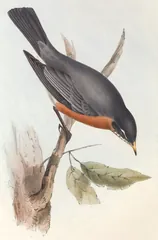
John and Elizabeth Gould, The Birds of Europe (1832–37) about 29 per routeon 99% of routesfalling since 2015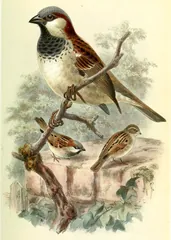
John Gerrard Keulemans, Lord Lilford’s Coloured Figures of the Birds of the British Islands (1885–97) 12 House Sparrowabout 27 per routeon 94% of routesfalling since 2015introduced species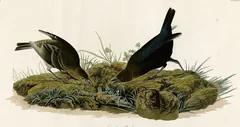
John James Audubon, The Birds of America (1827–38) 13 Brown-headed Cowbirdabout 23 per routeon 100% of routesno clear trend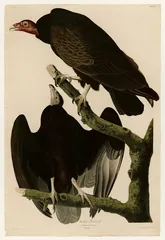
John James Audubon, The Birds of America (1827–38) about 18 per routeon 99% of routesno clear trend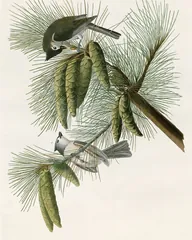
John James Audubon, The Birds of America (1827–38) about 17 per routeon 98% of routesno clear trend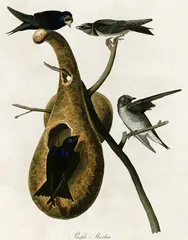
John James Audubon, The Birds of America (1827–38) 16 Purple Martinabout 17 per routeon 92% of routesno clear trend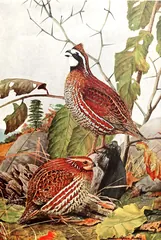
Louis Agassiz Fuertes, Elon H. Eaton’s Birds of New York (1910–14) 17 Northern Bobwhiteabout 16 per routeon 92% of routesfalling since 2015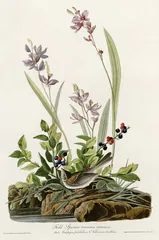
John James Audubon, The Birds of America (1827–38) 18 Field Sparrowabout 15 per routeon 100% of routesfalling since 2015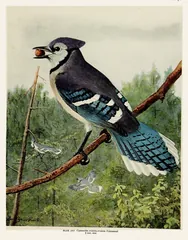
Louis Agassiz Fuertes, Elon H. Eaton's Birds of New York (1910–14) 19 Blue Jayabout 15 per routeon 100% of routesno clear trend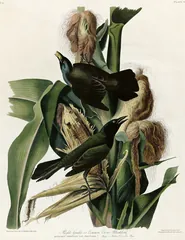
John James Audubon, The Birds of America (1827–38) 20 Common Grackleabout 15 per routeon 95% of routesfalling since 2015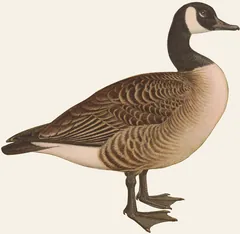
Marinus Adrianus Koekkoek, E. D. van Oort's Ornithologia Neerlandica (1922) 21 Canada Gooseabout 14 per routeon 59% of routesno clear trend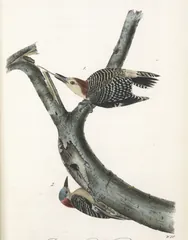
John James Audubon, The Birds of America (1840–44) about 12 per routeon 99% of routesno clear trend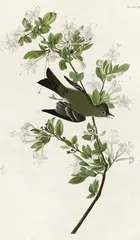
John James Audubon, The Birds of America (1827–38) 23 Eastern Wood-Peweeabout 11 per routeon 96% of routesrising since 2015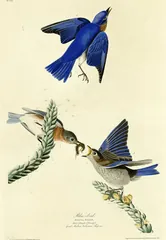
John James Audubon, The Birds of America (1827–38) about 11 per routeon 99% of routesno clear trend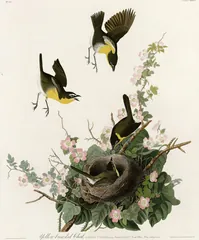
John James Audubon, The Birds of America (1827–38) 25 Yellow-breasted Chatabout 10 per routeon 91% of routesno clear trend
From the Cliff Swallow to the Yellow-breasted Chat, these are Missouri’s common summer birds; for the rest of its 445 species, our guide to the best bird books of 2026 compares the five big North American guides, Sibley’s and Peterson’s among them.
What is the most common bird in Missouri?
The Cliff Swallow leads Missouri’s summer survey: about 181 a route on average in 2021–2025, ahead of the Red-winged Blackbird at about 106, seen on 69% of the 80 routes. USGS finds no clear rise or fall in its Missouri numbers since 2015.
In winter, the latest Christmas Bird Count report, for 2025-26, tallied 823,789 birds of 155 species on 34 counts without ranking them. It lists the 24 species found on every one of those counts, from the Canada Goose and Mourning Dove to the Bald Eagle, Blue Jay, American Robin and House Sparrow, and calls it only the second time the Red-shouldered Hawk has made that list.
Source: The Bluebird 93:2, June 2026, with the Missouri Christmas Bird Counts of 2025-2026 (Missouri Birding Society), read October 6, 2026.
How was this list made?
Each of Missouri’s 80 routes is a roadside count, 50 stops along about 25 miles, run once a year in early summer by a volunteer. We took USGS’s yearly estimate for each species in Missouri, the number of birds a typical route records, averaged it over the five latest survey years (there was no survey in 2020) and ranked the birds by it. To keep the list to birds you’re likely to meet across Missouri, we left out species recorded on fewer than one in five of its routes, and those USGS can only estimate very roughly, which usually means big flocks or colonies on a few routes.
The share of routes is our own count from USGS’s route data for Missouri, using only counts that met the survey’s standards; “rising” and “falling” are USGS’s trends for the state since 2015, named only where it finds a clear change. Roadside counts on early-summer mornings miss most of Missouri’s owls and waterbirds, and its winter visitors aren’t here at all.
Missouri’s counts come from two USGS data releases, the North American Breeding Bird Survey Analysis Results 1966–2025 (Hostetler et al., 2026) and its Dataset 1966–2025 (Ziolkowski et al., 2026), gathered by volunteer observers and free for anyone to use; Birdfolio isn’t connected with the USGS.
How many bird species are in Missouri?
| Official count | 445 species |
|---|---|
| List’s date | Not given on the Missouri list (we read it on October 2, 2026) |
| Kept by | Missouri Bird Records Committee (Missouri Birding Society) |
| Seen every year | Roughly 330 species, the society says; nearly 100 more are casual or accidental visitors |
| Provisional | 10 species, shown in brackets |
| Extinct or gone | 5 extinct, 3 no longer found in Missouri |
| Records committee | Approved October 3, 1987; seven voting members |
| Among US states | 34th highest of the 49 states with a verified count |
| Official list | Missouri and its Birds (Missouri Birding Society) |
What does Missouri’s count include?
- 435 fully accepted species, by our count: the 445 numbered lines less the 10 provisional ones.
- 10 provisional species, shown in brackets, among them the Mountain Plover, the Canada Jay and the Violet-green Swallow. Each has a record the committee accepted but nothing definitive: no specimen, no photo or sound recording that settles it, and not several written accounts. The Barnacle Goose is provisional for another reason: nobody can be sure where any of its Missouri birds came from.
- 5 extinct birds, marked #: the Passenger Pigeon, Eskimo Curlew, Ivory-billed Woodpecker, Carolina Parakeet and Bachman's Warbler.
- 3 birds no longer found in Missouri, marked *: the Red-cockaded Woodpecker, the Common Raven and the Brown-headed Nuthatch. The woodpecker and the nuthatch both once lived year-round in the southeastern Ozarks, the checklist notes.
- One line for a stint listed as either a Red-necked Stint or a Little Stint, an accidental visitor.
- A status for every species by season and by region of the state, which few other states' lists give, the committee says. Names and order follow the American Ornithological Society.
Why do other sources give a different number?
Missouri's committee reports a total once a year, while its online checklist changes as decisions come in, so the figures drift apart:
- 443. The committee's 38th annual report, in The Bluebird of March 2026: 433 fully accepted species as of December 2025, five extinct and three extirpated among them, plus 10 provisional ones. Its one new species that year was the Arctic Tern. Source: The Bluebird 93:1, March 2026, with the 38th annual report of the Missouri Bird Records Committee (Missouri Birding Society).
- 442. The 37th annual report, a year earlier: 432 fully accepted species as of December 2024, plus 10 provisional ones. That year the Red-footed Booby and the Brambling joined the list, and the Hoary Redpoll left it. Source: The Bluebird 92:1, March 2025, with the 37th annual report of the Missouri Bird Records Committee (Missouri Birding Society).
- 440. The heading of the society's printable field checklist, made for ticking off birds outdoors. It leaves out the 8 extinct and extirpated species; we counted 437 names on it. Source: Field Checklist of the Birds of Missouri, the printable version (Missouri Birding Society).
- 191. The species reported in Missouri in the winter of 2025-26, the society's seasonal report says. A single season brings well under half the state list. Source: The Bluebird 93:3, September 2026, with the Missouri winter seasonal report for 2025-2026 (Missouri Birding Society).
Missouri’s list follows its own committee’s rules, and so does every other state’s: see why the counts differ from state to state.
Missouri records, from a downtown seabird to a gull from overseas
- Missouri's first Red-footed Booby, an immature female, was found at the side of a street in downtown St. Louis, near Compton Hill Reservoir, in November 2023. It went to the Wildlife Rescue Center but died the next day; tests found a damaged artery, likely from a car strike. The committee allowed that it may have ridden a ship or barge up from the Gulf of Mexico. It called that natural behavior for a seabird, counted the bird as wild and accepted it in 2024. Source: The Bluebird 92:1, March 2025, with the 37th annual report of the Missouri Bird Records Committee (Missouri Birding Society), read October 6, 2026.
- The Brambling, a Eurasian finch that strays to many places in the northern U.S. and Canada, joined the list thanks to an adult male at a home in Saddlebrooke, Taney County, on April 2-4, 2024. A second one came to Pasadena Park in St. Louis County on December 1, 2025, and the committee accepted that one too. Sources: The Bluebird 92:1, March 2025, with the 37th annual report of the Missouri Bird Records Committee (Missouri Birding Society); The Bluebird 93:3, September 2026, with the Missouri winter seasonal report for 2025-2026 (Missouri Birding Society), read October 6, 2026.
- The Arctic Tern took its time. The society's spring report called it long overdue when an adult was photographed over the Mississippi River in Pemiscot County on May 23, 2025, keeping company with a small flock of Black Terns. It was the only new species the committee accepted that year. Source: The Bluebird 93:1, March 2026, with the 38th annual report of the Missouri Bird Records Committee (Missouri Birding Society), read October 6, 2026.
- Missouri's first Common Gull, an Old World gull of Europe and Asia, turned up at Riverlands Migratory Bird Sanctuary in St. Charles County on December 7, 2025, and was seen again at Creve Coeur Lake in St. Louis County on December 8-10. It was a hard bird to name. The gull once called the Mew Gull has been split into the Short-billed Gull of North America and the Common Gull of the Old World, and in March 2026 The Bluebird ran an essay on the Creve Coeur bird, then still a mystery, which some birders took for the state's fifth Short-billed Gull. The September issue lists it as accepted, as a Common Gull. Sources: The Bluebird 93:3, September 2026, with the Missouri winter seasonal report for 2025-2026 (Missouri Birding Society); The Bluebird 93:1, March 2026, with the 38th annual report of the Missouri Bird Records Committee (Missouri Birding Society), read October 6, 2026.
- Lists can shrink too. In 2024 the committee deleted the Hoary Redpoll after the American Ornithological Society lumped it with other forms as simply the Redpoll, and the checklist now has one Redpoll line. Sources: The Bluebird 92:1, March 2025, with the 37th annual report of the Missouri Bird Records Committee (Missouri Birding Society); Annotated Checklist of Missouri Birds (Missouri Birding Society), read October 6, 2026.
Questions people ask about Missouri’s birds
Which US state has the most bird species?
California, with 696 species on the checklist its records committee updated on September 8, 2026, followed by Texas at 682 (our table). Missouri's online checklist numbers 445, including 10 provisional species shown in brackets.
Sources: Official California Checklist, updated 8 September 2026 (California Bird Records Committee, Western Field Ornithologists); Annotated Checklist of Missouri Birds (Missouri Birding Society), read October 6, 2026.
What is the rarest bird in Missouri?
The rarest are the 52 species the official checklist codes only as Accidental, vagrants with 1 to 4 Missouri records (our count), among them the American Flamingo, Ivory Gull, Ross's Gull and Mexican Violetear. The checklist doesn't say which of them have a single record.
Sources: Species Spotlight: Common Raven, with the checklist's key to its status codes (Missouri Birding Society); Annotated Checklist of Missouri Birds (Missouri Birding Society), read October 6, 2026.
What are common birds in Missouri?
The official checklist calls 22 birds common all year across the whole state (our count), among them the Northern Cardinal, Blue Jay, American Crow, Tufted Titmouse, White-breasted Nuthatch, Carolina Wren, Downy and Red-bellied Woodpeckers, American Goldfinch and Eastern Meadowlark. The Carolina Chickadee is the common chickadee in the south, the Black-capped Chickadee in the north.
Sources: Annotated Checklist of Missouri Birds (Missouri Birding Society); Species Spotlight: Common Raven, with the checklist's key to its status codes (Missouri Birding Society), read October 6, 2026.
Where can I find a list of Missouri birds?
On the Missouri Birding Society's website, under Birds: the Annotated Checklist of Missouri Birds, which the Missouri Bird Records Committee keeps up to date, with a printable field checklist beside it. For the St. Louis area there is a separate printable checklist, version 3 of May 2022, covering the city and everything within 50 miles of it.
Sources: Annotated Checklist of Missouri Birds (Missouri Birding Society); St. Louis Circle Checklist, version 3, May 2022 (Missouri Birding Society), read October 10, 2026.
Which birds live in Missouri?
Birds of the farmland and remnant prairie of the north and west, the forested Ozarks, the flat alluvial plain of the southeast, and the Mississippi and Missouri Rivers, the state's migration corridors. Missouri lies in the middle of the continent, the Missouri Birding Society says, so its specialties come from every side: Swainson's Warblers and Painted Buntings nest in the southernmost counties, Northern Shrikes and Rough-legged Hawks are regular winter visitors in the north, and western birds such as the Greater Roadrunner turn up too.
Prairie: at The Nature Conservancy's Dunn Ranch Prairie in Harrison County, Greater Prairie-Chickens, endangered in Missouri, still put on their spring booming displays, Upland Sandpipers call over the grass, and over 100 species have been recorded.
Ozarks and forests: canebrakes along the rivers of Ozark National Scenic Riverways hold the Swainson's Warbler, endangered in the state, Bald Eagles are fairly common there in winter, and nearly two hundred species nest in or pass through the area. In the state park at Cuivre River, a big block of forest holds Cerulean Warblers, Wood Thrushes and Worm-eating Warblers in the nesting season.
Swamps and rivers: Big Oak Tree State Park is the last piece of the unbroken bottomland hardwood forest that once covered the Bootheel, with swamp forest where Mississippi Kites are seen in summer. Near St. Louis, the Great Rivers Confluence draws thousands of waterfowl and shorebirds each migration, and on the 2024-25 Christmas Bird Count Loess Bluffs National Wildlife Refuge had the country's highest counts of Trumpeter Swans, 3,779, and Mallards, 50,752.
Sources: Missouri and its Birds (Missouri Birding Society); Dunn Ranch Prairie (The Nature Conservancy in Missouri); Birds, Ozark National Scenic Riverways (National Park Service); Important Bird Areas (St. Louis Audubon Society); Plants and Animals, Big Oak Tree State Park (Missouri State Parks); The 125th Christmas Bird Count High Counts of Species in the United States (National Audubon Society, October 29, 2025), read October 10, 2026.
Why is the American Flamingo on Missouri's bird list?
Hurricanes keep bringing them. On July 20-21, 2019, a flamingo spent its time mostly near Donaldson Point Conservation Area in New Madrid County. Photos showed it was the same bird that had lived for months at St. Marks National Wildlife Refuge in Florida, then was presumably carried north by Hurricane Barry across western Tennessee, where it was seen on July 13. Nobody knew where the St. Marks bird had come from, and flamingos sometimes escape from captive flocks, so the committee kept the species as provisional, with no definitive record.
Then came 2023. After Hurricane Idalia, wild flamingos turned up across the eastern U.S. that fall, Missouri and Kansas included, and one was photographed standing on a bank of the Current River in Shannon County on October 7. The committee accepted two Missouri flamingos from 2023 as wild. At its annual meeting on August 27, 2025, it looked at the 2019 bird again and accepted it too: it was driven by a hurricane like the others, and it came from a refuge far from the known captive flocks. The flamingo now sits on the checklist as an accidental visitor.
Sources: The Bluebird 93:1, March 2026, with the 38th annual report of the Missouri Bird Records Committee (Missouri Birding Society); Annotated Checklist of Missouri Birds (Missouri Birding Society), read October 6, 2026.
Why are there Eurasian Tree Sparrows in St. Louis?
German immigrants brought them. On April 25, 1870, a small flock was set free in Lafayette Park in south St. Louis, so newcomers from Europe could see the birds of their homeland. A guide from the Webster Groves Nature Study Society puts the number at twelve. Goldfinches, bullfinches, chaffinches, greenfinches and linnets from Europe were let go too, but only the tree sparrows took hold. They were the first Eurasian Tree Sparrows in North America.
The House Sparrow arrived in 1878 and began to push them from their nesting places, and the growing city moved them outward. They spread north along the Mississippi to southern Iowa and up the Illinois River, yet never swept across the country the way the House Sparrow and the European Starling did. Missouri's checklist calls them common year-round in St. Louis and north along the Mississippi, rare in the northeast and north-central parts of the state, and casual elsewhere. The St. Louis Audubon Society says St. Louis is still the one big metro area where visiting birders can easily find one. The Webster Groves guide names Dogtown, the neighborhood southwest of Forest Park, about 5 miles west of the release spot, as one of the most consistent places to find them in the city.
Sources: Bird of the Week: Eurasian Tree Sparrow (St. Louis Audubon Society); Where to find Eurasian Tree Sparrow in the St. Louis Missouri area (Webster Groves Nature Study Society); Annotated Checklist of Missouri Birds (Missouri Birding Society), read October 6, 2026.
Where do Missouri's huge winter flocks of Snow Geese and Trumpeter Swans gather?
Loess Bluffs National Wildlife Refuge in Holt County is the giant. In the winter of 2025-26, Snow Goose flocks topped 100,000 birds in several parts of the state, and estimates at Loess Bluffs approached 1 million in late February, the society's seasonal report says. The same report counted more than 2,000 Trumpeter Swans at Loess Bluffs in early January and at least 1,000 at Riverlands Migratory Bird Sanctuary in St. Charles County. The checklist calls the Snow Goose a common winter resident and the Trumpeter Swan an uncommon, local one.
The swans are a comeback story. They were once on the brink of extinction and the focus of hard work to restore them, the society's Christmas Bird Count report for 2025-26 says, and they now turn up on more Missouri counts each year. The Montrose Christmas count found 147, nearly triple its old high, after having no record at all before 2009. In June 2025 a breeding pair was found on a private wetland easement in Sullivan County. The Bald Eagle, which the checklist calls common in winter on large rivers and lakes, was one of only 24 species found on all 34 Missouri counts that season.
Sources: The Bluebird 93:3, September 2026, with the Missouri winter seasonal report for 2025-2026 (Missouri Birding Society); The Bluebird 93:2, June 2026, with the Missouri Christmas Bird Counts of 2025-2026 (Missouri Birding Society); The Bluebird 93:1, March 2026, with the 38th annual report of the Missouri Bird Records Committee (Missouri Birding Society); Annotated Checklist of Missouri Birds (Missouri Birding Society), read October 6, 2026.
Where is the official Missouri bird list, and how often is it updated?
On the Missouri Birding Society's website, under Birds: the Annotated Checklist of Missouri Birds, an online table that numbers every species from 1 to 445 and gives each a status code by season and region. Each name opens a page about the species, with the key to the codes. The list prints no date. The committee calls it up to date and frequently revised, and its bylaws make it the society's official list, with every relevant decision built in. A printable field checklist and a St. Louis area checklist sit beside it. The committee's annual report runs in the March issue of The Bluebird, the society's journal; the 38th, in March 2026, covered 2025, and the next is due in March 2027.
The Missouri Bird Records Committee is a standing committee of the society, approved on October 3, 1987, by the board of what was then the Audubon Society of Missouri. It has seven voting members; one seat comes up each year, for a seven-year term. A record passes with a vote of 7-0 or 6-1. The committee reviews species that are casual or accidental (accidental means 1 to 4 records), birds out of season, record-early and record-late dates, and first nesting records. To be fully accepted, a species needs a definitive record: a diagnostic photo or sound recording, a photo of a specimen, or two independent written accounts that both pass, unless the book Birds of Missouri already lists it as fully accepted. In 2025 the committee reviewed 60 new records, accepted 50, turned down 7 and held 3 over. Each year it also picks the ten best Missouri records of the year before.
Sources: Annotated Checklist of Missouri Birds (Missouri Birding Society); Missouri Bird Records Committee (Missouri Birding Society); By-laws of the Missouri Bird Records Committee, revision of August 2018 with name changes of 2020 (Missouri Birding Society); Species Spotlight: Common Raven, with the checklist's key to its status codes (Missouri Birding Society); Missouri and its Birds (Missouri Birding Society); The Bluebird 93:1, March 2026, with the 38th annual report of the Missouri Bird Records Committee (Missouri Birding Society), read October 6, 2026.
How do you count your own Missouri list?
Your Missouri list is every species you’ve seen in Missouri. eBird can filter your life list to Missouri, and your eBird data download gives the state of every sighting. On paper, count the species you’ve seen in Missouri; what is a life list? explains how birders keep their lists.
To print your whole list, Missouri birds and all, see how to print your bird life list, or let Birdfolio make it a hardcover book.
Missouri’s state bird
Missouri’s state bird is the Eastern Bluebird (officially, the “native “bluebird” (Sialia Sialis)”), the state bird since 1927. Its story, the state flower and animal, and a free picture card for a report are on our Missouri state bird page.
Christmas Bird Count in Missouri
Missouri had 34 Christmas Bird Count circles on Audubon’s map last winter, each counted on a single day between December 14 and January 5. Our guide shows where to find Missouri’s counts and lists 14 Missouri count dates already announced for this winter; it’s free, and beginners are welcome.
More about bird counts
- How many bird species are in each state: Missouri beside all 50 states, DC and Canada.
- Bird lists of nearby states: Arkansas, Illinois, Iowa, Kansas, Kentucky, Nebraska, Oklahoma and Tennessee.
- State birds of all 50 states, Missouri’s Eastern Bluebird among them
- How many bird species are in the US and Canada
- Bird splits and lumps
If you’re shopping for a birder in Missouri, our gift guide for birders and our pick of coffee table bird books are good places to start.