Reference
How many bird species are in North Carolina?
North Carolina has 490 bird species on its official list (North Carolina Bird Records Committee, 2025 annual report), the 17th highest count of the 49 states with a verified count. It counts the committee's definitive list, and 11 provisional species are listed separately. The same club keeps South Carolina's list.
North Carolina’s state bird is the Northern Cardinal: our North Carolina state bird page tells how it was chosen.
Updated
What are the most common birds in North Carolina?
In summer, the 25 most common birds in North Carolina are led by the American Crow, at about 59 birds per survey route, then the Northern Cardinal and the Mourning Dove, by the USGS Breeding Bird Survey’s counts for 2021–2025. Together these 25 made up 68% of all the birds counted on North Carolina’s 74 survey routes.
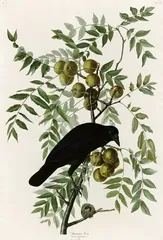
John James Audubon, The Birds of America (1827–38) about 59 per routeon 100% of routesno clear trend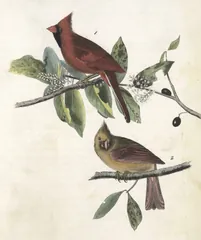
John James Audubon, The Birds of America (1840–44) about 47 per routeon 100% of routesno clear trend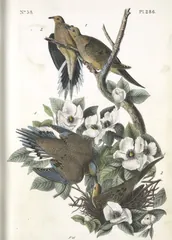
John James Audubon, The Birds of America (1840–44) about 46 per routeon 100% of routesfalling since 2015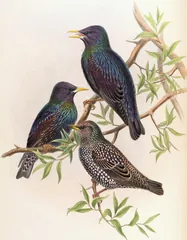
John Gould and Henry Constantine Richter, The Birds of Asia, vol. 5 (1850–83) 4 European Starlingabout 45 per routeon 95% of routesfalling since 2015introduced species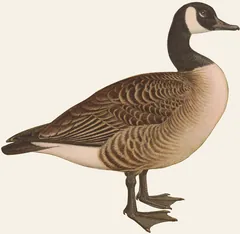
Marinus Adrianus Koekkoek, E. D. van Oort's Ornithologia Neerlandica (1922) about 44 per routeon 77% of routesno clear trend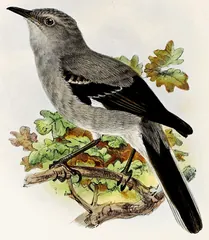
John Gerrard Keulemans, Onze Vogels in Huis en Tuin (1869–76) about 42 per routeon 95% of routesno clear trend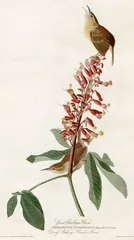
John James Audubon, The Birds of America (1827–38) about 39 per routeon 100% of routesno clear trend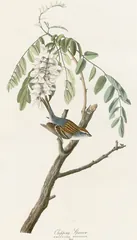
John James Audubon, The Birds of America (1827–38) 8 Chipping Sparrowabout 24 per routeon 97% of routesno clear trend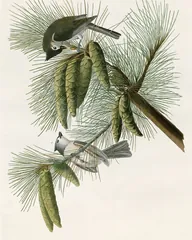
John James Audubon, The Birds of America (1827–38) about 23 per routeon 100% of routesno clear trend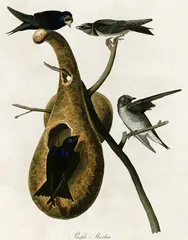
John James Audubon, The Birds of America (1827–38) 10 Purple Martinabout 22 per routeon 77% of routesfalling since 2015
Show all 25
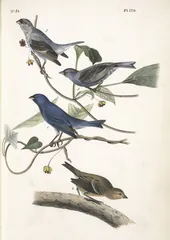
John James Audubon, The Birds of America (1840–44) 11 Indigo Buntingabout 22 per routeon 99% of routesfalling since 2015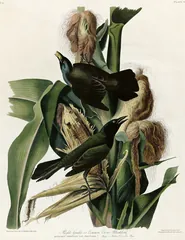
John James Audubon, The Birds of America (1827–38) 12 Common Grackleabout 21 per routeon 95% of routesfalling since 2015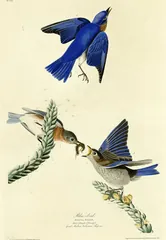
John James Audubon, The Birds of America (1827–38) about 20 per routeon 100% of routesno clear trend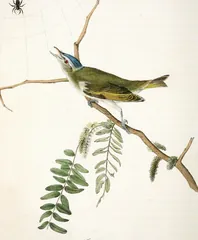
John James Audubon, The Birds of America (1840–44) 14 Red-eyed Vireoabout 15 per routeon 96% of routesno clear trend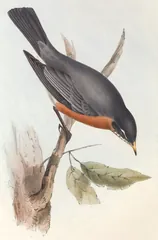
John and Elizabeth Gould, The Birds of Europe (1832–37) about 14 per routeon 97% of routesfalling since 2015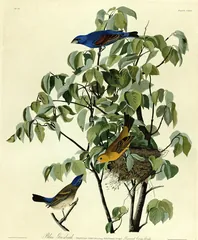
John James Audubon, The Birds of America (1827–38) 16 Blue Grosbeakabout 14 per routeon 92% of routesno clear trend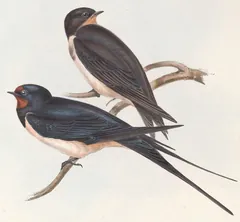
John and Elizabeth Gould, The Birds of Europe (1832–37) 17 Barn Swallowabout 13 per routeon 96% of routesfalling since 2015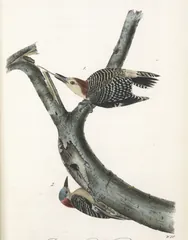
John James Audubon, The Birds of America (1840–44) about 13 per routeon 100% of routesno clear trend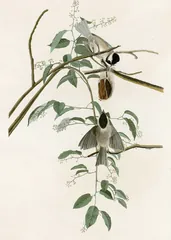
John James Audubon, The Birds of America (1827–38) 19 Carolina Chickadeeabout 12 per routeon 100% of routesno clear trend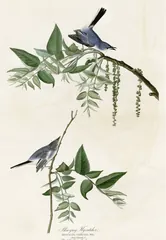
John James Audubon, The Birds of America (1827–38) 20 Blue-gray Gnatcatcherabout 12 per routeon 93% of routesfalling since 2015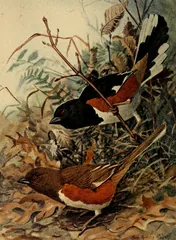
Louis Agassiz Fuertes, True Bird Stories from My Note-Books (1903) 21 Eastern Towheeabout 12 per routeon 99% of routesfalling since 2015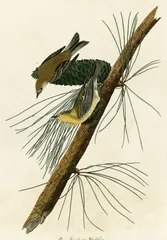
John James Audubon, The Birds of America (1827–38) 22 Pine Warblerabout 12 per routeon 93% of routesno clear trend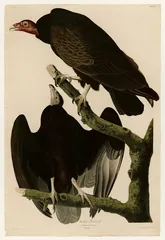
John James Audubon, The Birds of America (1827–38) about 11 per routeon 95% of routesno clear trend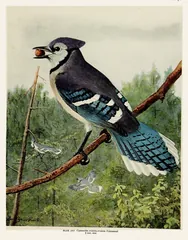
Louis Agassiz Fuertes, Elon H. Eaton's Birds of New York (1910–14) 24 Blue Jayabout 11 per routeon 99% of routesno clear trend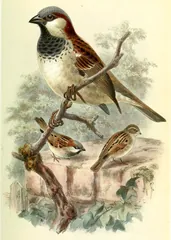
John Gerrard Keulemans, Lord Lilford’s Coloured Figures of the Birds of the British Islands (1885–97) 25 House Sparrowabout 11 per routeon 77% of routesno clear trendintroduced species
Once you know the American Crow, the Mourning Dove and the rest of these 25, a field guide takes you further into North Carolina’s list of 490 species; our comparison of the best bird books of 2026 shows which one to start with.
What is the most common bird in North Carolina?
The American Crow leads North Carolina’s summer survey: about 59 a route on average in 2021–2025, ahead of the Northern Cardinal at about 47, seen on every one of the 74 routes. USGS finds no clear rise or fall in its North Carolina numbers since 2015.
On the state's spring bird counts it's the Northern Cardinal: it was the most numerous species on North Carolina's spring migration counts in both 2016 and 2017, with 3,886 and 3,852 birds. In 2017 the American Crow, Tufted Titmouse and Carolina Wren came next. In 2016 second place went to the Double-crested Cormorant, extremely abundant along the coast but scarce away from the coastal plain.
Sources: 2016 Spring Migration Counts in North Carolina (The Chat 82:1, Winter 2018, Carolina Bird Club); 2017 Spring Migration Counts in North Carolina (The Chat 83:1, Winter 2019, Carolina Bird Club), read October 10, 2026.
How was this list made?
Each of North Carolina’s 74 routes is a roadside count, 50 stops along about 25 miles, run once a year in early summer by a volunteer. We took USGS’s yearly estimate for each species in North Carolina, the number of birds a typical route records, averaged it over the five latest survey years (there was no survey in 2020) and ranked the birds by it. To keep the list to birds you’re likely to meet across North Carolina, we left out species recorded on fewer than one in five of its routes, and those USGS can only estimate very roughly, which usually means big flocks or colonies on a few routes.
For North Carolina that left out the Laughing Gull.
The share of routes is our own count from USGS’s route data for North Carolina, using only counts that met the survey’s standards; “rising” and “falling” are USGS’s trends for the state since 2015, named only where it finds a clear change. Roadside counts on early-summer mornings miss most of North Carolina’s owls and waterbirds, and its winter visitors aren’t here at all.
North Carolina’s counts come from two USGS data releases, the North American Breeding Bird Survey Analysis Results 1966–2025 (Hostetler et al., 2026) and its Dataset 1966–2025 (Ziolkowski et al., 2026), gathered by volunteer observers and free for anyone to use; Birdfolio isn’t connected with the USGS.
How many bird species are in North Carolina?
| Official count | 490 species |
|---|---|
| List’s date | 2025 annual report |
| Kept by | North Carolina Bird Records Committee (Carolina Bird Club) |
| Provisional species | 11, without a specimen or photo; not counted |
| Extinct species | 4, counted in the 490 |
| Review species | 90 reviewed anywhere in the state, 91 more only in some regions or seasons (our count) |
| Committee reconstituted | 1990 |
| Among US states | 17th highest of the 49 states with a verified count |
| Official list | Official list of the birds of North Carolina |
What does North Carolina’s count include?
- The definitive list, as of the committee's 2025 annual report, with species names updated through the American Ornithological Society's 67th checklist supplement (October 2026).
- 4 extinct species: the Passenger Pigeon, Ivory-billed Woodpecker, Carolina Parakeet and Bachman's Warbler.
- Introduced or reintroduced birds once their populations have kept going on their own for 10 years or more.
- Not counted: 11 provisional species, such as the Western Meadowlark and Gyrfalcon; the Whooping Crane and Monk Parakeet, on a separate Not Established list; and 3 subspecies in a table of their own.
Why do other sources give a different number?
North Carolina's committee has printed a running total in its yearly reports since 1990, and a 1919 book on the state's birds counted subspecies as well:
- 488. The list page as we read it in October 2026, as of the 2023 report. It now stands at 490, as of the 2025 report and with names through the American Ornithological Society's 67th Supplement: the Eurasian Whimbrel, until then in the table of subspecies, now counts as a species, and the Willet as two, the Prairie and Saltmarsh Willets (our comparison). Source: Official list of the birds of North Carolina, as of the 2023 annual report (Carolina Bird Club), the Internet Archive's copy of September 19, 2026.
- 487. The definitive list at the end of 2023, in the committee's own summary of that year's report, up from 483 a year earlier. Source: North Carolina Bird Records Committee Annual Reports, capsule summaries since 1990 (Carolina Bird Club).
- 493. Every species accepted by the end of 2021, provisional and not-established ones included: 479 definitive, 12 provisional and 2 not established. Source: North Carolina Bird Records Committee Annual Reports, capsule summaries since 1990 (Carolina Bird Club).
- 422. The whole accepted list through February 1994, as the committee printed it in The Chat that fall: 402 species on what was then called the Official List and 20 provisional ones. Source: North Carolina Bird List, through February 1994 (North Carolina Bird Records Committee, The Chat 58:4, Fall 1994).
- 342. The species and subspecies in Birds of North Carolina (1919) by T. Gilbert Pearson, C. S. Brimley and H. H. Brimley, which The Auk's reviewer called "one of the most satisfactory works of this kind that has yet appeared." Source: Recent Literature: The Birds of North Carolina (The Auk, January 1920), full text at the Internet Archive.
North Carolina’s list follows its own committee’s rules, and so does every other state’s: see why the counts differ from state to state.
North Carolina records, from a petrel nobody could prove to a swallow taken off the list
- In 1995 the North Carolina State Museum's survey of the state's seabirds noted that Bermuda Petrels were not officially recognized off North Carolina, or anywhere in North American waters, for want of a specimen. On May 26, 1996, one was seen by several dozen birders on a pelagic trip off Cape Hatteras, and the photos made it the first accepted record for the state and for North America. Sources: Marine Birds off the Coast of North Carolina (North Carolina State Museum survey, The Chat 59:4, Fall 1995); 1996 Report of the North Carolina Bird Records Committee (The Chat 61:4, Fall 1997), read October 5, 2026.
- On October 7, 2017, a swift photographed near Pea Island National Wildlife Refuge in Dare County became North Carolina's first Common Swift. The first vote, 6-3, fell short because Apus swifts are hard to identify to species from photos of that quality; the record went back out with comments from Old World experts and passed 9-0 on the second ballot. Source: 2018 Annual Report of the North Carolina Bird Records Committee (The Chat 83:1, Winter 2019), read October 5, 2026.
- The list can shrink, too. In 2013 the committee struck the Violet-green Swallow from every list after learning that the photo behind a 2011 record from Chapel Hill might show a bird from outside the state; at the observer's own request, the species is now treated as never recorded in North Carolina. Source: 2013 Annual Report of the North Carolina Bird Records Committee (The Chat 78:1, Winter 2014), read October 5, 2026.
- Four species joined the definitive list in the 2023 round alone: the American Flamingo, White-crowned Pigeon, Elegant Tern and Plumbeous Vireo. Source: North Carolina Bird Records Committee Annual Reports, capsule summaries since 1990 (Carolina Bird Club), read October 5, 2026.
- Scopoli's Shearwater arrived by taxonomy. The committee had accepted it as a subspecies of Cory's Shearwater in 2014, so when the American Ornithological Society split the two in July 2024, it went straight onto the North Carolina list. Sources: North Carolina Bird Records Committee Annual Reports, capsule summaries since 1990 (Carolina Bird Club); Taxonomic Change History (Carolina Bird Club), read October 5, 2026.
Questions people ask about North Carolina’s birds
What is the rarest bird in North Carolina?
No single bird holds the title, but the state's endangered list, last amended in October 2024, names the Red-cockaded Woodpecker, the Roseate Tern, the Piping Plover of the Great Lakes population, the American Peregrine Falcon, the Common Tern, Henslow's Sparrow and Wayne's Black-throated Green Warbler. The same rule still lists Bachman's Warbler and the Ivory-billed Woodpecker as endangered.
Six more birds are threatened under state law alone: the Bald Eagle, Black Skimmer, Caspian Tern, Gull-billed Tern, Northern Saw-whet Owl and Rusty Blackbird. The Eastern Black Rail, the Atlantic coast's Piping Plovers, the Red Knot and the Wood Stork are on the same list as federally threatened birds.
Sources: 15A NCAC 10I .0103, Endangered Species Listed, amended October 1, 2024 (North Carolina Administrative Code, Office of Administrative Hearings); 15A NCAC 10I .0104, Threatened Species Listed, amended October 1, 2024 (North Carolina Administrative Code, Office of Administrative Hearings), read October 10, 2026.
What birds are common in North Carolina?
The ones found on every one of the state's spring counts in 2016, birds that live throughout North Carolina all year: the Mourning Dove, Downy Woodpecker, Eastern Phoebe, Blue Jay, American Crow, Carolina Chickadee, Tufted Titmouse, Carolina Wren, American Robin, Brown Thrasher, American Goldfinch, Eastern Towhee and Northern Cardinal. Besides the cardinal, the American Robin and the American Crow each passed 2,700 birds on those counts.
Source: 2016 Spring Migration Counts in North Carolina (The Chat 82:1, Winter 2018, Carolina Bird Club), read October 10, 2026.
Which state has the most species of birds?
California, with 696 species on its official checklist of October 27, 2026, and Texas, with 682, lead the country; North Carolina's definitive list of 490 trails only Virginia's 494 among its neighbors.
Sources: Official California Checklist, 696 species, updated 27 October 2026 (California Bird Records Committee, Western Field Ornithologists); Texas State List, 682 species, last updated October 24, 2026 (Texas Bird Records Committee, Texas Ornithological Society); Official list of the birds of North Carolina, as of the 2025 annual report (North Carolina Bird Records Committee, Carolina Bird Club), read November 19, 2026.
What are some of the big birds that can be found in North Carolina?
Bald Eagles, Wild Turkeys, Great Blue Herons and, in winter, swans. The eagle, one of North America's largest raptors, weighs 8 to 13 pounds and spreads wings 7 or 8 feet across, the state Wildlife Resources Commission says; a male turkey weighs about 20 pounds; and the Great Blue Heron, one of the largest herons in the world, stands more than 3 feet tall on wings of nearly 6.5 feet.
Eagles came back after the commission raised young birds in captivity and released them near Lake Mattamuskeet from 1982; in 1984 the state's first wild nest since the DDT years was found 7 miles from the lake. Turkeys are common again after the commission trapped and moved birds to places they had vanished from, and Mattamuskeet's refuge draws more than 200,000 ducks, geese and swans from November through February.
Sources: Bald Eagle (North Carolina Wildlife Resources Commission); Eastern Wild Turkey, North Carolina Wildlife Profiles, updated 2017 (North Carolina Wildlife Resources Commission); Great Blue Heron (North Carolina Wildlife Resources Commission); Wild Turkey (North Carolina Wildlife Resources Commission); About Us, Mattamuskeet National Wildlife Refuge (U.S. Fish and Wildlife Service), the Internet Archive's copy of July 19, 2026, read October 11, 2026.
Which birds live in North Carolina?
Birds of the beaches and sounds, of the longleaf pine forests and of the spruce-fir forests on the highest peaks, where birds of far more northern forests nest, with the familiar backyard birds living statewide in between. Among the specialties are the Red-cockaded Woodpecker, Bachman's Sparrow and Brown-headed Nuthatch of the longleaf pine, and the Tundra Swans of the east: Audubon North Carolina, citing the U.S. Fish and Wildlife Service, says about 70 to 80 percent of the eastern population winters in eastern North Carolina.
Coast: the bird islands of the lower Cape Fear River hold about 30 percent of the state's coastal nesting waterbirds and about 20 percent of its Brown Pelicans. In 2026 three Least Tern colonies on Lea-Hutaff Island, south of Topsail Beach, totaled 1,146 pairs, about a third of the 3,500 or so the whole state usually has, and 19 pairs of Black Skimmers raised young there.
Sounds and lakes in winter: Pungo-Pocosin Lakes, an Important Bird Area around Lake Phelps and Pungo Lake in Hyde, Tyrrell and Washington counties, holds 80,000 to 110,000 waterfowl in an average winter, including the state's largest wintering concentration of Snow Geese.
Longleaf pine: at the Sandhills Game Land, some 58,000 acres and one of the largest stretches of longleaf pine open to the public in the state, the key birds all year are the Red-cockaded Woodpecker, Brown-headed Nuthatch and Bachman's Sparrow, easiest to find from May to July, when the sparrows sing.
High mountains: the Black Mountains, around Mount Mitchell, have 18 peaks over 6,300 feet and are the highest range east of the Mississippi. Birds of the north nest there, among them the Northern Saw-whet Owl, Common Raven, Brown Creeper, Winter Wren, Golden-crowned Kinglet, Hermit Thrush and Red Crossbill; the Black-capped Chickadee, reported there before 1900, is gone.
Sources: Pungo-Pocosin Lakes Important Bird Area (Audubon North Carolina), the Internet Archive's copy of July 1, 2025; A Record-Breaking Summer for Oystercatchers, Stewards at Coastal Sanctuaries (Audubon North Carolina, September 16, 2025); Terns, Skimmers Thrive on Recently Conserved Island in North Carolina (Audubon North Carolina, September 15, 2026); Sandhills Game Land, Birding North Carolina site guide (Carolina Bird Club); Mount Mitchell and the Black Mountains, site guide (Carolina Bird Club), read October 10, 2026.
Why are so many rare seabirds found off Cape Hatteras?
Because of where the state sits. After 15 years of offshore surveys, from 1975 to 1989, the North Carolina State Museum reported the most diverse assemblage of seabirds anywhere in the North Atlantic off the state's northern coast. Part of that, it allowed, reflected its own fieldwork; the rest came from North Carolina's latitude and its position beside the Gulf Stream, the Labrador Current and the edge of the continental shelf, which bring temperate, northern and subtropical seabirds into the same small area.
Some of what turns up has no earlier record anywhere near. The Black-capped Petrel, which the survey found regular and common offshore, had not been documented in the state before 1976; on May 22, 1980, more than 160 were counted. A Swinhoe's Storm-Petrel photographed on a trip out of Hatteras on August 8, 1998, was the first for North America, and a Tahiti Petrel in the Gulf Stream off Hatteras on May 29, 2018, the first for the whole Atlantic Ocean. The committee called the Tahiti Petrel "one of the most incredible bird sightings in North Carolina's ornithological history."
Sources: Marine Birds off the Coast of North Carolina (North Carolina State Museum survey, The Chat 59:4, Fall 1995); 1999-2000 Report of the North Carolina Bird Records Committee (The Chat 65:3, Summer 2001); 2018 Annual Report of the North Carolina Bird Records Committee (The Chat 83:1, Winter 2019), read October 5, 2026.
How did Zino's Petrel get onto North Carolina's list?
Slowly: 18 years passed between the photo and the vote. A petrel photographed off Hatteras on September 16, 1995, was published in a 2012 photographic guide as a Zino's Petrel. The committee turned it down at first. It doubted the field marks used, noted that the bird's wing proportions contradicted published descriptions, and felt too little was known about telling Zino's from Fea's Petrel at sea to rule Fea's out.
Then the evidence grew. Work published in 2010 and 2013 added new information, and the committee, working with the American Birding Association's checklist committee, asked outside experts for written reviews. With those in hand it reconsidered, voted unanimously to accept, and Zino's Petrel joined the definitive list in the 2013 round.
Sources: 2013 Annual Report of the North Carolina Bird Records Committee (The Chat 78:1, Winter 2014); North Carolina Bird Records Committee Annual Reports, capsule summaries since 1990 (Carolina Bird Club), read October 5, 2026.
Which extinct birds are on North Carolina's list?
Four, and all of them count toward the 490: the Passenger Pigeon, Ivory-billed Woodpecker, Carolina Parakeet and Bachman's Warbler, each marked Extinct on the definitive list rather than kept apart from it.
The federal endangered species list treats two of them differently. The U.S. Fish and Wildlife Service took Bachman's Warbler off it in October 2023 because the species is extinct; its last confirmed nest was found in 1937. The same rule put off a decision on the Ivory-billed Woodpecker, citing substantial disagreement among scientists over the evidence, and promised a separate ruling.
Sources: Official list of the birds of North Carolina, as of the 2025 annual report (North Carolina Bird Records Committee, Carolina Bird Club); Removal of 21 Species From the List of Endangered and Threatened Wildlife, final rule (U.S. Fish and Wildlife Service, Federal Register, October 17, 2023), read October 5, 2026.
Where is the official North Carolina bird list, and how often is it updated?
On the Carolina Bird Club's website: the Official list of the birds of North Carolina, a web page with Excel and CSV downloads, has the definitive, provisional and not-established lists and a table of subspecies. Its review column shows where a sighting needs documenting: anywhere in the state, or only inland, in the mountains, downstate, on the coast or in spring. The page is dated by annual report; it now reflects the 2025 report, with names through the 67th checklist supplement of October 2026. Rare sightings go to the committee through the club's online report form.
The committee was reconstituted in 1990, and its annual reports appear in The Chat, the club's quarterly journal, with a page of yearly summaries going back to that year. Under bylaws adopted in August 2012 and amended in March 2015, North and South Carolina have separate committees, each with a voting chair and six or eight members. At least once a year the chair sends out a voting packet, with votes due within four weeks. A species reaches the definitive list on a specimen, an archived photo or recording, or, by majority vote, on three or more occurrences reported by three or more observers; a report that wins a majority but draws two or more votes against goes to at least two outside reviewers.
Sources: Official list of the birds of North Carolina, as of the 2025 annual report (North Carolina Bird Records Committee, Carolina Bird Club); The Carolina Bird Club Bird Records Committees (Carolina Bird Club); North Carolina Bird Records Committee Annual Reports, capsule summaries since 1990 (Carolina Bird Club); Bylaws of the North Carolina Bird Records Committee, adopted August 2012, amended March 2015 (Carolina Bird Club), read October 5, 2026.
How do you count your own North Carolina list?
Your North Carolina list is every species you’ve seen in North Carolina. eBird can filter your life list to North Carolina, and your eBird data download gives the state of every sighting. On paper, count the species you’ve seen in North Carolina; what is a life list? explains how birders keep their lists.
To print your whole list, North Carolina birds and all, see how to print your bird life list, or let Birdfolio make it a hardcover book.
North Carolina’s state bird
North Carolina’s state bird is the Northern Cardinal (officially, the “cardinal”), the state bird since 1943. Its story, the state flower and animal, and a free picture card for a report are on our North Carolina state bird page.
Birding festivals in North Carolina
Our birding festivals calendar lists 2 in North Carolina, with dates from each festival’s own website:
- Wings Over Water Wildlife Festival Encore, Manteo and nearby refuges: December 4–6, 2026
- Wings Over Water Wildlife Festival, Manteo and nearby refuges: dates not announced yet; expected in October 2027 (2026 festival: October 13–18, 2026)
Christmas Bird Count in North Carolina
North Carolina had 55 Christmas Bird Count circles on Audubon’s map last winter, each counted on a single day between December 14 and January 5. Our guide shows where to find North Carolina’s counts and lists 25 North Carolina count dates already announced for this winter; it’s free, and beginners are welcome.
More about bird counts
- How many bird species are in each state: North Carolina beside all 50 states, DC and Canada.
- Bird lists of nearby states: Georgia, South Carolina, Tennessee and Virginia.
- State birds of all 50 states, North Carolina’s Northern Cardinal among them
- How many bird species are in the US and Canada
- Bird splits and lumps
If you’re shopping for a birder in North Carolina, our gift guide for birders and our pick of coffee table bird books are good places to start.