Reference
How many bird species are in Mississippi?
Mississippi has 440 bird species on its official list (Mississippi Ornithological Society Bird Records Committee, November 2026), tied for the 35th highest count of the 49 states with a verified count. Of these, 18 rest on written sight reports alone, and 4 no longer occur in Mississippi, among them the Ivory-billed Woodpecker.
Mississippi’s state bird is the Northern Mockingbird: our Mississippi state bird page tells how it was chosen.
Updated
What are the most common birds in Mississippi?
In summer, the 25 most common birds in Mississippi are led by the Cliff Swallow, at about 168 birds per survey route, then the Red-winged Blackbird and the Northern Cardinal, by the USGS Breeding Bird Survey’s counts for 2021–2025. Together these 25 made up 69% of all the birds counted on Mississippi’s 24 survey routes.
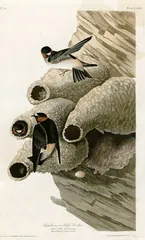
John James Audubon, The Birds of America (1827–38) 1 Cliff Swallowabout 168 per routeon 75% of routesno clear trend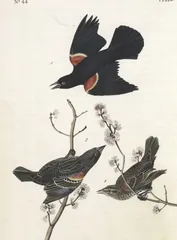
John James Audubon, The Birds of America (1840–44) about 46 per routeon 100% of routesno clear trend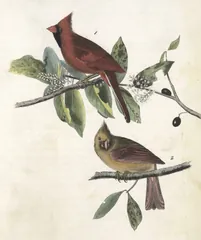
John James Audubon, The Birds of America (1840–44) about 44 per routeon 100% of routesfalling since 2015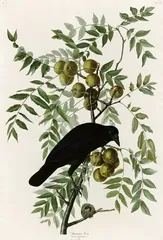
John James Audubon, The Birds of America (1827–38) about 38 per routeon 100% of routesno clear trend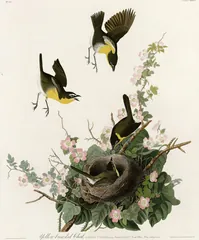
John James Audubon, The Birds of America (1827–38) 5 Yellow-breasted Chatabout 30 per routeon 100% of routesno clear trend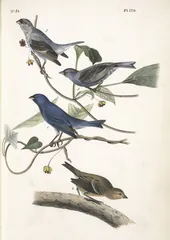
John James Audubon, The Birds of America (1840–44) 6 Indigo Buntingabout 29 per routeon 100% of routesno clear trend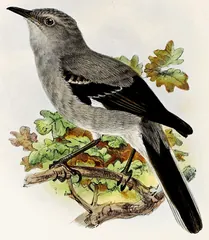
John Gerrard Keulemans, Onze Vogels in Huis en Tuin (1869–76) about 27 per routeon 100% of routesfalling since 2015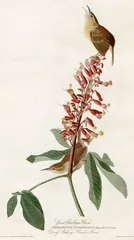
John James Audubon, The Birds of America (1827–38) about 24 per routeon 100% of routesno clear trend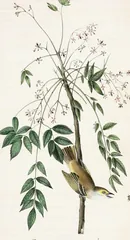
John James Audubon, The Birds of America (1840–44) 9 White-eyed Vireoabout 24 per routeon 100% of routesno clear trend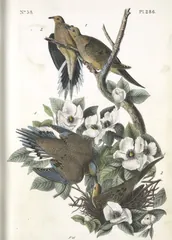
John James Audubon, The Birds of America (1840–44) about 24 per routeon 100% of routesfalling since 2015
Show all 25
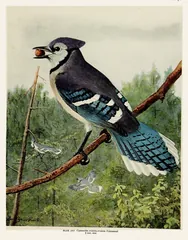
Louis Agassiz Fuertes, Elon H. Eaton's Birds of New York (1910–14) 11 Blue Jayabout 22 per routeon 100% of routesfalling since 2015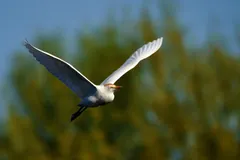
Photo: Bill Levine, CC BY 4.0 12 Western Cattle-Egretabout 21 per routeon 58% of routesno clear trend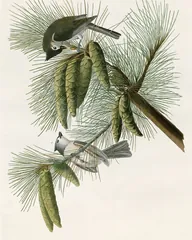
John James Audubon, The Birds of America (1827–38) about 21 per routeon 100% of routesno clear trend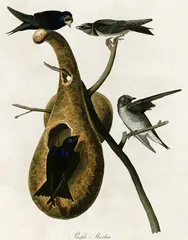
John James Audubon, The Birds of America (1827–38) 14 Purple Martinabout 17 per routeon 92% of routesno clear trend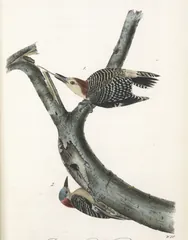
John James Audubon, The Birds of America (1840–44) about 16 per routeon 100% of routesno clear trend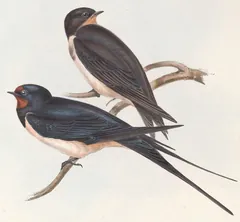
John and Elizabeth Gould, The Birds of Europe (1832–37) 16 Barn Swallowabout 16 per routeon 100% of routesno clear trend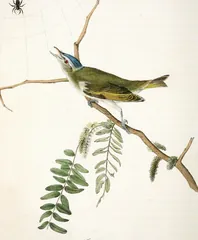
John James Audubon, The Birds of America (1840–44) 17 Red-eyed Vireoabout 13 per routeon 92% of routesrising since 2015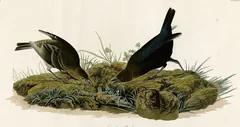
John James Audubon, The Birds of America (1827–38) 18 Brown-headed Cowbirdabout 12 per routeon 92% of routesno clear trend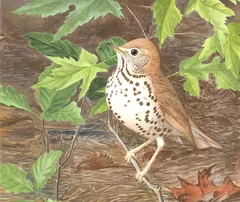
Louis Agassiz Fuertes, Annual Reports of the New York Forest, Fish and Game Commission (1901–12) 19 Wood Thrushabout 12 per routeon 96% of routesno clear trend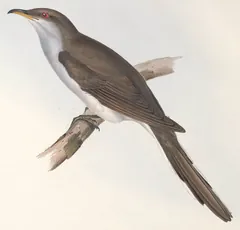
John and Elizabeth Gould, The Birds of Europe (1832–37) 20 Yellow-billed Cuckooabout 11 per routeon 100% of routesno clear trend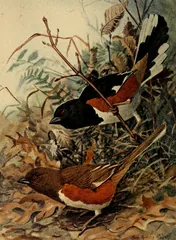
Louis Agassiz Fuertes, True Bird Stories from My Note-Books (1903) 21 Eastern Towheeabout 11 per routeon 96% of routesfalling since 2015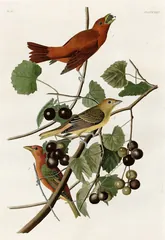
John James Audubon, The Birds of America (1827–38) 22 Summer Tanagerabout 11 per routeon 96% of routesno clear trend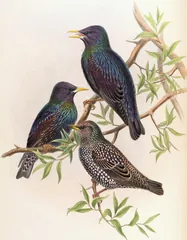
John Gould and Henry Constantine Richter, The Birds of Asia, vol. 5 (1850–83) 23 European Starlingabout 10 per routeon 88% of routesno clear trendintroduced species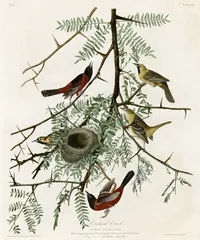
John James Audubon, The Birds of America (1827–38) 24 Orchard Orioleabout 9.7 per routeon 100% of routesno clear trend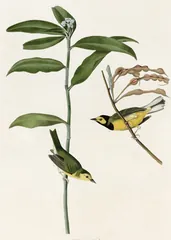
John James Audubon, The Birds of America (1827–38) 25 Hooded Warblerabout 9.5 per routeon 71% of routesno clear trend
A field guide to North America covers the Red-winged Blackbird, the Northern Cardinal and most of the 440 species on Mississippi’s list; we compared the best bird books of 2026 to find the one that suits a beginner.
What is the most common bird in Mississippi?
The Cliff Swallow leads Mississippi’s summer survey: about 168 a route on average in 2021–2025, more than twice the Red-winged Blackbird’s 46, seen on 75% of the 24 routes. USGS finds no clear rise or fall in its Mississippi numbers since 2015.
The state checklist rates each species, and dozens are coded common and present all year, among them the Northern Mockingbird, Northern Cardinal, Mourning Dove, Blue Jay, Carolina Wren and Red-winged Blackbird. Others are common in one season only: the Purple Martin and Chimney Swift in summer, the White-throated Sparrow in winter.
Source: Checklist of Birds of Mississippi, November 2026 (Mississippi Ornithological Society Bird Records Committee), read November 19, 2026.
How was this list made?
Each of Mississippi’s 24 routes is a roadside count, 50 stops along about 25 miles, run once a year in early summer by a volunteer. We took USGS’s yearly estimate for each species in Mississippi, the number of birds a typical route records, averaged it over the five latest survey years (there was no survey in 2020) and ranked the birds by it. To keep the list to birds you’re likely to meet across Mississippi, we left out species recorded on fewer than one in five of its routes, and those USGS can only estimate very roughly, which usually means big flocks or colonies on a few routes.
For Mississippi that left out the Canada Goose.
The share of routes is our own count from USGS’s route data for Mississippi, using only counts that met the survey’s standards; “rising” and “falling” are USGS’s trends for the state since 2015, named only where it finds a clear change. Roadside counts on early-summer mornings miss most of Mississippi’s owls and waterbirds, and its winter visitors aren’t here at all.
Mississippi’s counts come from two USGS data releases, the North American Breeding Bird Survey Analysis Results 1966–2025 (Hostetler et al., 2026) and its Dataset 1966–2025 (Ziolkowski et al., 2026), gathered by volunteer observers and free for anyone to use; Birdfolio isn’t connected with the USGS.
How many bird species are in Mississippi?
| Official count | 440 species |
|---|---|
| List’s date | November 2026 |
| Kept by | Mississippi Ornithological Society Bird Records Committee |
| Sight records only | 18 species, in brackets (our count) |
| No longer in Mississippi | 4, marked Ext |
| Earlier totals | 429 in June 2022; 426 in March 2018; 417 in January 2014 |
| Among US states | Tied for 35th highest of the 49 states with a verified count, alongside South Dakota |
| Official list | Checklist of Birds of Mississippi (November 2026) |
What does Mississippi’s count include?
- Every species the Mississippi Bird Records Committee had accepted by November 2026, named as in the American Ornithological Society's supplements through the 67th (October 2026).
- 18 species in brackets, known only from sight records with acceptable written descriptions, such as the King Eider, Connecticut Warbler and Thick-billed Longspur (our count).
- 4 species marked Ext, no longer found in Mississippi: the Passenger Pigeon, Carolina Parakeet, Ivory-billed Woodpecker and Bachman's Warbler.
- Codes for how common each bird is and in which season, with G for the Gulf Coast, I for inland, and an asterisk on species proven to nest.
- Not counted: birds whose wild origin is in doubt, such as the Whooping Crane and Monk Parakeet, which the committee tracks separately.
Why do other sources give a different number?
Mississippi revises its checklist only now and then, so the printed totals trail the newest records:
- 417. The January 2014 checklist, still on the society's website as a spreadsheet, with names as of the 54th supplement (July 2013). Source: Checklist of Birds of Mississippi, January 2014, spreadsheet version (Mississippi Ornithological Society Bird Records Committee).
- 426. The March 2018 checklist, with names as of the 58th supplement (July 2017), which older lists still quote. The Internet Archive keeps a copy. Source: Checklist of Birds of Mississippi, March 2018 (Mississippi Ornithological Society Bird Records Committee), the Internet Archive's copy of January 25, 2019.
- 429. The June 2022 checklist, the official list until November 2026. The November 2026 edition has 11 more species, among them the Great Kiskadee and Fork-tailed Flycatcher (below) and the American Flamingo, and it counts the Willet as two species, the Prairie and Saltmarsh Willets, after the American Ornithological Society's split of October 20, 2026 (our comparison). Source: Checklist of Birds of Mississippi, June 2022 (Mississippi Ornithological Society Bird Records Committee).
Mississippi’s list follows its own committee’s rules, and so does every other state’s: see why the counts differ from state to state.
Mississippi records, from a kiskadee heard from a porch to a crane taken off the list
- On the Friday after Thanksgiving 2022, a visitor having coffee on a porch at Henderson Point, on the coast in Harrison County, heard a call she didn't recognize, then saw the bird and recorded its voice. It was a Great Kiskadee, and in 2023 the records committee accepted it as Mississippi's first. Source: The Mississippi Kite 53, December 2023, with the Mississippi Bird Records Committee Annual Report for 2022 (Mississippi Ornithological Society), read October 8, 2026.
- On April 10, 2023, a driver on Hamp Lea Road west of Magnolia, in Amite County, noticed an odd bird among the Eastern Kingbirds on a barbed-wire fence and got a few fuzzy phone pictures. The committee accepted them that year as the state's first Fork-tailed Flycatcher; the bird was never found again. Source: The Mississippi Kite 53, December 2023, with the Mississippi Bird Records Committee Annual Report for 2022 (Mississippi Ornithological Society), read October 8, 2026.
- The Whooping Crane was once on the Mississippi list on the strength of one sight report, from Bay St. Louis on April 15, 1902, printed in a federal migration table. Nobody could find out who had seen the bird, so it was deleted. The committee now names the species among birds seen in Mississippi whose wild origin is questionable. Sources: Annotated Checklist of the Birds of the Mississippi Gulf Coast Counties, 2019 (Mississippi Ornithological Society); The Mississippi Kite 53, December 2023, with the Mississippi Bird Records Committee Annual Report for 2022 (Mississippi Ornithological Society), read October 8, 2026.
Questions people ask about Mississippi’s birds
Which US state has the most bird species?
California, with 696 species on its records committee's checklist of October 27, 2026, ahead of Texas with 682. Mississippi's official total is 440, from its November 2026 checklist, 11 more than the June 2022 edition.
Sources: Official California Checklist, 696 species, updated 27 October 2026 (California Bird Records Committee, Western Field Ornithologists); Texas State List, 682 species, last updated October 24, 2026 (Texas Bird Records Committee, Texas Ornithological Society); Checklist of Birds of Mississippi, November 2026 (Mississippi Ornithological Society Bird Records Committee), read November 19, 2026.
What are some rare birds to see in Mississippi?
The checklist codes the rarest living visitors A, for accidental: birds that turn up in three or fewer years out of ten, such as the Jabiru, Brown Noddy, King Eider and Mexican Violetear. Its four Ext species are gone for good, and the Ivory-billed Woodpecker is the one still searched for. Its last Mississippi specimens were two birds taken near Mississippi City, in Harrison County, in March and April 1893, and surveys of the Pascagoula Basin between 2007 and 2011 found none, the U.S. Fish and Wildlife Service reported.
Sources: Checklist of Birds of Mississippi, November 2026 (Mississippi Ornithological Society Bird Records Committee); Annotated Checklist of the Birds of the Mississippi Gulf Coast Counties, 2019 (Mississippi Ornithological Society); Removal of 23 Extinct Species From the Lists of Endangered and Threatened Wildlife and Plants, proposed rule (Federal Register 86:187, September 30, 2021), read October 8, 2026.
What is the filthiest bird?
Vultures usually get that name, though they earn their keep by clearing away dead animals, which helps stop diseases such as rabies from spreading, the National Park Service says. Mississippi has plenty: its checklist codes both the Black Vulture and the Turkey Vulture as common all year, and both are proven to nest in the state.
Sources: NETN Species Spotlight: Turkey and Black Vultures (National Park Service, last updated August 15, 2021); Checklist of Birds of Mississippi, November 2026 (Mississippi Ornithological Society Bird Records Committee), read November 19, 2026.
Which birds live in Mississippi?
The state checklist answers by region and season. It codes the Clapper Rail and Seaside Sparrow as year-round residents of the Gulf Coast, and the Brown Pelican, Reddish Egret and Black Skimmer as coastal birds that are only accidental inland. Summer brings the Mississippi Kite, Swallow-tailed Kite and Prothonotary Warbler, all proven to nest in the state.
Some birds are local, found in only a small area: the Red-cockaded Woodpecker is coded as a local, rare resident all year, and the Sandhill Crane as a rare year-round resident on the coast and an uncommon winter visitor inland. Many others come only for the winter, such as the White-throated Sparrow, common then.
Source: Checklist of Birds of Mississippi, November 2026 (Mississippi Ornithological Society Bird Records Committee), read November 19, 2026.
Why does Mississippi have a sandhill crane of its own?
Because a small flock of sandhill cranes that never migrate held on in the wet pine savannas of Jackson County, on the coast. The Mississippi Sandhill Crane is one of the smallest crane populations in the world and lives in the wild nowhere else, the U.S. Fish and Wildlife Service's refuge biologist wrote in 1994. Such cranes once lived along the Gulf from Louisiana to the western Florida panhandle, but the last known nests were in 1919 in Louisiana and 1960 in Alabama. In Mississippi they weren't even reported until 1929, when Aldo Leopold noted them during a state game survey.
An interstate highway being built through their range set off the first serious study of the birds. They were described as their own subspecies in 1972, listed as endangered in 1973 and given a national wildlife refuge in 1975, by which time only 30 to 40 remained. Eggs collected since the mid-1960s had started a captive flock at the Patuxent Wildlife Research Center, and from 1980 its young were released on the refuge; by 1994, 220 had been set free and made up 85 percent of the 120 to 130 wild birds. The state checklist still codes the species as a rare year-round resident of the coast.
Sources: The Endangered Mississippi Sandhill Crane and Wet Pine Savanna (U.S. Fish and Wildlife Service, in the 1994 Proceedings of the North American Conference on Savannas and Barrens, EPA archive); Checklist of Birds of Mississippi, November 2026 (Mississippi Ornithological Society Bird Records Committee), read November 19, 2026.
Can one person's report put a bird on Mississippi's list?
Yes, if the committee accepts it. Its bylaws let a species onto the official state list with a Class III record, an accepted sight record written up by a single observer, as well as with a specimen, photo or recording (Class I) or written reports from two or more observers (Class II). Species known only from sight records are printed in brackets; there are 18 of them.
Acceptance isn't automatic. In 2022 the committee reached decisions on 64 records and accepted 62, covering 32 species. When it turns a report down, the reason is usually poorly written documentation rather than a wrong identification, its annual report says, and some are turned down because the bird's wild origin is in question.
Sources: Bylaws of the Mississippi Bird Records Committee, revised 2009 (Mississippi Ornithological Society); The Mississippi Kite 53, December 2023, with the Mississippi Bird Records Committee Annual Report for 2022 (Mississippi Ornithological Society); Checklist of Birds of Mississippi, November 2026 (Mississippi Ornithological Society Bird Records Committee), read November 19, 2026.
Where is the official Mississippi bird list, and how often is it updated?
On the Mississippi Ornithological Society's website, missbird.org, under Bird Checklist and Records: the Checklist of Birds of Mississippi, a two-page PDF dated November 2026, and the January 2014 version as a spreadsheet. The same page has the committee's review list, updated in January 2026, of birds whose every sighting needs full details, plus a report form and an annotated checklist of the six Gulf Coast counties, last updated in 2019.
The Mississippi Bird Records Committee, five voting members counting its chair, meets once a year, votes on records and reports in the society's journal, The Mississippi Kite; its 16th report, for 2022, came out in December 2023. Its bylaws, revised in 2009, cover the state's coastal waters too, out to a line extending the Alabama border and a line halfway between Mississippi and Louisiana, and call for a review of each species' status at least every five years. The society itself dates from 1955.
Sources: Checklist of Birds of Mississippi, November 2026 (Mississippi Ornithological Society Bird Records Committee); Bird Checklist and Records, with the November 2026 checklist (Mississippi Ornithological Society); Checklist of Birds of Mississippi, January 2014, spreadsheet version (Mississippi Ornithological Society Bird Records Committee); Review Species List, January 2026 (Mississippi Bird Records Committee); Bylaws of the Mississippi Bird Records Committee, revised 2009 (Mississippi Ornithological Society); The Mississippi Kite 53, December 2023, with the Mississippi Bird Records Committee Annual Report for 2022 (Mississippi Ornithological Society); Mississippi Ornithological Society, home page, read October 8, 2026.
How do you count your own Mississippi list?
Your Mississippi list is every species you’ve seen in Mississippi. eBird can filter your life list to Mississippi, and your eBird data download gives the state of every sighting. On paper, count the species you’ve seen in Mississippi; what is a life list? explains how birders keep their lists.
To print your whole list, Mississippi birds and all, see how to print your bird life list, or let Birdfolio make it a hardcover book.
Mississippi’s state bird
Mississippi’s state bird is the Northern Mockingbird (officially, the “Mockingbird”), the state bird since 1944. Its story, the state flower and animal, and a free picture card for a report are on our Mississippi state bird page.
Birding festivals in Mississippi
Our birding festivals calendar lists one festival in Mississippi, with dates from its own website:
- North Mississippi Hummingbird Festival, Southaven: dates not announced yet; expected in September 2027 (2026 festival: September 12–13, 2026)
Christmas Bird Count in Mississippi
Mississippi had 21 Christmas Bird Count circles on Audubon’s map last winter, each counted on a single day between December 14 and January 5. Our guide shows where to find Mississippi’s counts and lists 1 Mississippi count date already announced for this winter; it’s free, and beginners are welcome.
More about bird counts
- How many bird species are in each state: Mississippi beside all 50 states, DC and Canada.
- Bird lists of nearby states: Alabama, Arkansas, Louisiana and Tennessee.
- State birds of all 50 states, Mississippi’s Northern Mockingbird among them
- How many bird species are in the US and Canada
- Bird splits and lumps
If you’re shopping for a birder in Mississippi, our gift guide for birders and our pick of coffee table bird books are good places to start.