Reference
How many bird species are in Kentucky?
Kentucky has 400 bird species on its official list (Kentucky Bird Records Committee, January 2025), the 46th highest count of the 49 states with a verified count. The list is labeled January 2025: it takes in the committee's decisions through December 2024 and was published in May 2025.
Kentucky’s state bird is the Northern Cardinal: our Kentucky state bird page tells how it was chosen.
Updated
What are the most common birds in Kentucky?
In summer, the 25 most common birds in Kentucky are led by the European Starling, at about 110 birds per survey route, then the Red-winged Blackbird and the American Crow, by the USGS Breeding Bird Survey’s counts for 2021–2025. Together these 25 made up 72% of all the birds counted on Kentucky’s 38 survey routes.
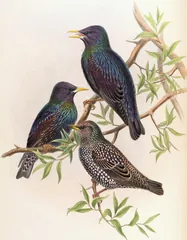
John Gould and Henry Constantine Richter, The Birds of Asia, vol. 5 (1850–83) 1 European Starlingabout 110 per routeon 100% of routesfalling since 2015introduced species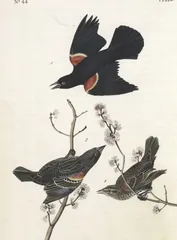
John James Audubon, The Birds of America (1840–44) about 61 per routeon 100% of routesfalling since 2015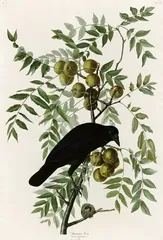
John James Audubon, The Birds of America (1827–38) about 45 per routeon 100% of routesfalling since 2015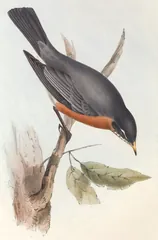
John and Elizabeth Gould, The Birds of Europe (1832–37) about 44 per routeon 100% of routesfalling since 2015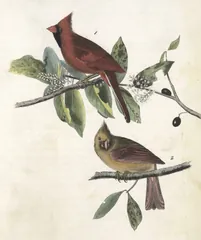
John James Audubon, The Birds of America (1840–44) about 43 per routeon 100% of routesno clear trend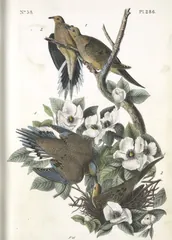
John James Audubon, The Birds of America (1840–44) about 43 per routeon 100% of routesno clear trend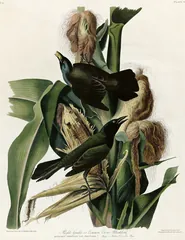
John James Audubon, The Birds of America (1827–38) 7 Common Grackleabout 42 per routeon 92% of routesfalling since 2015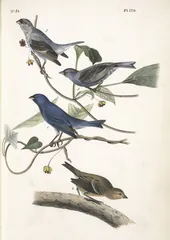
John James Audubon, The Birds of America (1840–44) 8 Indigo Buntingabout 39 per routeon 100% of routesno clear trend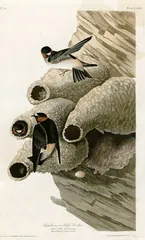
John James Audubon, The Birds of America (1827–38) 9 Cliff Swallowabout 34 per routeon 55% of routesno clear trend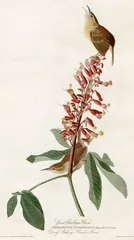
John James Audubon, The Birds of America (1827–38) about 26 per routeon 100% of routesrising since 2015
Show all 25
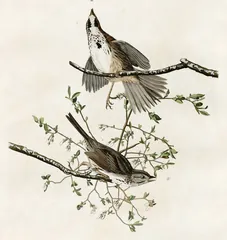
John James Audubon, The Birds of America (1827–38) 11 Song Sparrowabout 24 per routeon 97% of routesno clear trend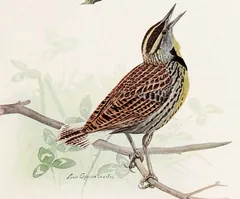
Louis Agassiz Fuertes, Elon H. Eaton’s Birds of New York (1910–14) 12 Eastern Meadowlarkabout 22 per routeon 95% of routesno clear trend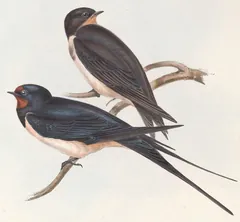
John and Elizabeth Gould, The Birds of Europe (1832–37) 13 Barn Swallowabout 22 per routeon 100% of routesno clear trend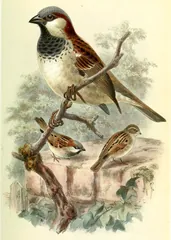
John Gerrard Keulemans, Lord Lilford’s Coloured Figures of the Birds of the British Islands (1885–97) 14 House Sparrowabout 21 per routeon 100% of routesno clear trendintroduced species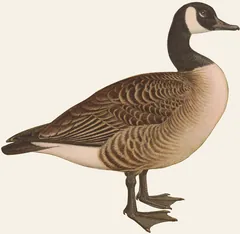
Marinus Adrianus Koekkoek, E. D. van Oort's Ornithologia Neerlandica (1922) 15 Canada Gooseabout 20 per routeon 66% of routesno clear trend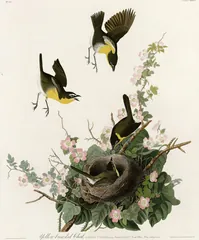
John James Audubon, The Birds of America (1827–38) 16 Yellow-breasted Chatabout 17 per routeon 97% of routesno clear trend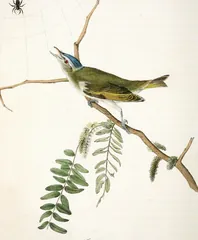
John James Audubon, The Birds of America (1840–44) 17 Red-eyed Vireoabout 17 per routeon 100% of routesno clear trend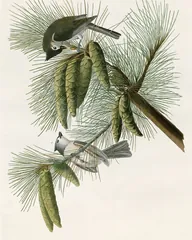
John James Audubon, The Birds of America (1827–38) about 17 per routeon 100% of routesfalling since 2015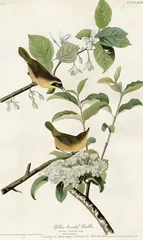
John James Audubon, The Birds of America (1827–38) 19 Common Yellowthroatabout 16 per routeon 97% of routesno clear trend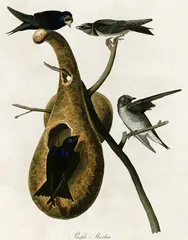
John James Audubon, The Birds of America (1827–38) 20 Purple Martinabout 16 per routeon 95% of routesno clear trend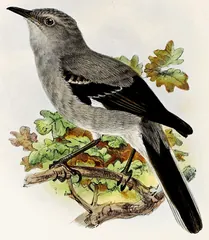
John Gerrard Keulemans, Onze Vogels in Huis en Tuin (1869–76) about 15 per routeon 100% of routesno clear trend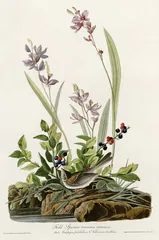
John James Audubon, The Birds of America (1827–38) 22 Field Sparrowabout 13 per routeon 100% of routesno clear trend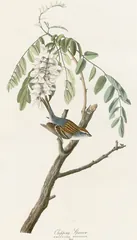
John James Audubon, The Birds of America (1827–38) 23 Chipping Sparrowabout 12 per routeon 97% of routesfalling since 2015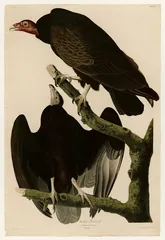
John James Audubon, The Birds of America (1827–38) about 12 per routeon 97% of routesno clear trend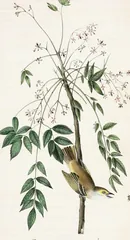
John James Audubon, The Birds of America (1840–44) 25 White-eyed Vireoabout 11 per routeon 95% of routesno clear trend
Once you know the European Starling, the American Crow and the rest of these 25, a field guide takes you further into Kentucky’s list of 400 species; our comparison of the best bird books of 2026 shows which one to start with.
What is the most common bird in Kentucky?
The European Starling, a bird people brought to North America, leads Kentucky’s summer survey: about 110 a route on average in 2021–2025, ahead of the Red-winged Blackbird at about 61, seen on every one of the 38 routes. USGS’s estimate has its Kentucky numbers falling since 2015.
In winter it's the European Starling: Kentucky's 40 Christmas Bird Counts in 2022-23 tallied 102,229 of them, more than the next two species, the Common Grackle and the Red-winged Blackbird, put together. The Northern Cardinal, the state bird, came eighth that winter with 6,342, and The Nature Conservancy calls the Indigo Bunting one of the most common summer migrants in Kentucky.
Sources: The Kentucky Warbler, volume 99 (2023), full text at the Internet Archive; Kentucky Birds (The Nature Conservancy, updated November 3, 2025), read October 8, 2026.
How was this list made?
Each of Kentucky’s 38 routes is a roadside count, 50 stops along about 25 miles, run once a year in early summer by a volunteer. We took USGS’s yearly estimate for each species in Kentucky, the number of birds a typical route records, averaged it over the five latest survey years (there was no survey in 2020) and ranked the birds by it. To keep the list to birds you’re likely to meet across Kentucky, we left out species recorded on fewer than one in five of its routes, and those USGS can only estimate very roughly, which usually means big flocks or colonies on a few routes.
The share of routes is our own count from USGS’s route data for Kentucky, using only counts that met the survey’s standards; “rising” and “falling” are USGS’s trends for the state since 2015, named only where it finds a clear change. Roadside counts on early-summer mornings miss most of Kentucky’s owls and waterbirds, and its winter visitors aren’t here at all.
Kentucky’s counts come from two USGS data releases, the North American Breeding Bird Survey Analysis Results 1966–2025 (Hostetler et al., 2026) and its Dataset 1966–2025 (Ziolkowski et al., 2026), gathered by volunteer observers and free for anyone to use; Birdfolio isn’t connected with the USGS.
How many bird species are in Kentucky?
| Official count | 400 species |
|---|---|
| List’s date | January 2025 |
| Kept by | Kentucky Bird Records Committee (Kentucky Ornithological Society) |
| Extinct or gone | 7 species, counted in the 400 |
| Review species | 110, coded rare or extremely rare (our count) |
| Hypothetical | 9 species, listed after the 400 and not counted |
| Earlier totals | 396 in 2022; 390 in 2019; 340 in 1988 |
| Among US states | 46th highest of the 49 states with a verified count |
| Official list | KBRC Official State List of Birds |
What does Kentucky’s count include?
- Every species the Kentucky Bird Records Committee has accepted as conclusively documented, numbered 1 to 400 in the order of the American Ornithological Society's July 2025 checklist supplement.
- 7 species extinct or gone from the state, from the Passenger Pigeon and Carolina Parakeet to the Red-cockaded Woodpecker and Whooping Crane.
- Introduced birds that live wild here, such as the European Starling, House Sparrow and Eurasian Collared-Dove.
- A code for how hard each bird is to find in a typical year, from 1 (most birders will see it) to 5 (extremely rare); 204 species are coded 1 (our count).
- Not counted: 9 hypothetical species, such as Kirtland's Warbler and the Black Rail, that won a favorable vote but aren't yet proven to the list's standard.
Why do other sources give a different number?
Kentucky's committee and its ornithological society have printed a running total for decades, and it grows a few species at a time:
- 396. The list after the committee's 20th report (2022), which added six first state records; the 21st report added four more. Source: The Kentucky Warbler, volume 98 (2022), with the 20th Report of the Kentucky Bird Records Committee, full text at the Internet Archive.
- 390, 363 and 340. The species in the three editions of the society's Annotated Checklist of the Birds of Kentucky: 2019, 2003 and 1988. Source: Annotated Checklist of the Birds of Kentucky (Kentucky Ornithological Society).
Kentucky’s list follows its own committee’s rules, and so does every other state’s: see why the counts differ from state to state.
Kentucky records, from a goose from Greenland to a hummingbird that outlasted the cold
- In autumn 1813, riding from his home in Henderson to Louisville, John James Audubon tried to count the Passenger Pigeon flocks passing overhead and made 163 marks in 21 minutes before giving up. The noon light was obscured "as by an eclipse," he wrote, and the birds kept passing for three days. The species is on today's list as extinct. Sources: John James Audubon, Ornithological Biography, volume 1 (1831), full text at the Internet Archive; Official Kentucky State List of Birds (Kentucky Bird Records Committee, Kentucky Ornithological Society), read October 8, 2026.
- The committee's 20th report, covering October 2019 to December 2022, added six birds never before documented in Kentucky: the Burrowing Owl, Anna's Hummingbird, Brown Booby, American Oystercatcher, Pink-footed Goose and Limpkin. It also dropped the Black-bellied Whistling-Duck and White-winged Dove from the review list because they had become more frequent. Source: The Kentucky Warbler, volume 98 (2022), with the 20th Report of the Kentucky Bird Records Committee, full text at the Internet Archive, read October 8, 2026.
- Kentucky's first Anna's Hummingbird, a bird of western North America, turned up in a backyard on the edge of Louisville on November 9, 2021. It seemed to feed on persimmons, visited two heated feeders, came through cold snaps in the low teens Fahrenheit and stayed until February 19, 2022. Source: The Kentucky Warbler, volume 98 (2022), with the 20th Report of the Kentucky Bird Records Committee, full text at the Internet Archive, read October 8, 2026.
- A Pink-footed Goose, a European goose that nests in Greenland and Iceland, arrived with Canada Geese around Shelbyville on November 16, 2022, turned up again on the Lexington Christmas Bird Count on December 17 and stayed until New Year's Day; birders came from across Kentucky and neighboring states to see it. That December the state also got its first Limpkin, on a pond near Sharon Grove in Todd County. Source: The Kentucky Warbler, volume 99 (2023), full text at the Internet Archive, read October 8, 2026.
Questions people ask about Kentucky’s birds
What is the rarest bird in Kentucky?
The rarest are the 75 species the official list codes 5, extremely rare, such as the American Flamingo, the Pink-footed Goose and the Black-capped Petrel, an ocean bird; every sighting of them needs the records committee's review (our count of the codes). Seven more are extinct or gone from the state, from the Passenger Pigeon to the Whooping Crane, and 9 hypothetical species, among them Kirtland's Warbler, aren't counted at all.
Source: Official Kentucky State List of Birds (Kentucky Bird Records Committee, Kentucky Ornithological Society), read October 8, 2026.
Which US state has the most bird species?
California, with 696 species on its official checklist as of September 8, 2026, ahead of Texas with 682 as of October 24, 2026 (our table). Kentucky, which has no seacoast, counts 400.
Source: Official California Checklist, updated 8 September 2026 (California Bird Records Committee, Western Field Ornithologists), read October 10, 2026.
What's the biggest bird in Kentucky?
The American White Pelican is one of the biggest, with a wingspan of up to nine and a half feet, a weight of about 20 pounds and a length of five feet, the lead naturalist at Land Between the Lakes told WKMS in 2019. More and more of them stay on Kentucky Lake and Lake Barkley from fall to spring, often several hundred at a time, and the official list codes the pelican 1, likely to be seen in a typical year.
Sources: Recent Pelican Migrations to LBL Provide Unique Bird Watching Opportunities in Western KY (WKMS, September 3, 2019); Official Kentucky State List of Birds (Kentucky Bird Records Committee, Kentucky Ornithological Society), read October 8, 2026.
Which birds live in Kentucky?
Birds of the eastern mountains, the central hills and grasslands, and the western lakes and river bottoms. Of the 400 species on the official list, 204 are coded as likely to be seen by most birders in a typical year, and 57 more turn up most years in smaller numbers (our count).
The Kentucky Ornithological Society's guide to birding places describes the lowlands around Henderson, with flooded sloughs, swamps and hardwood forest; the rolling hills, old grasslands and reservoirs around Lexington; and the Ohio River and the Knobs at Louisville. Kentucky State Parks point birders to wood warblers in the east, birds of prey over the lakes and waterfowl in the west.
The society's quarterly journal, The Kentucky Warbler, is named for the only bird that carries the state's name, coded 1 on the list.
Sources: Official Kentucky State List of Birds (Kentucky Bird Records Committee, Kentucky Ornithological Society); Birding Locations of Note (Kentucky Ornithological Society); Birding (Kentucky State Parks); The Kentucky Warbler (Kentucky Ornithological Society), read October 8, 2026.
How did an oystercatcher from Nantucket end up beside a Kentucky highway?
Nobody knows. On October 31, 2022, two birders at Barren River Lake heard a call they couldn't place, then watched two American Oystercatchers, big shorebirds of the seacoast, land on the shore: an adult and a young bird. They were Kentucky's first, and among very few ever found inland.
The adult wore yellow bands marked F2. It had been banded on Nantucket Island, Massachusetts, in 2006, which made it at least 19 years old; it nested there each spring and usually spent the winter on Florida's Gulf Coast. Two days later F2 was found exhausted beside a highway in Jackson County. A state wildlife technician took it to the Liberty Nature Center, but it died.
Most inland oystercatchers in the East have come with the remains of tropical storms. Hurricanes Fiona and Ian had hit the Atlantic coast in the weeks before, but whether either brought these two, the authors wrote in The Kentucky Warbler, will remain a mystery.
Sources: The Kentucky Warbler, volume 99 (2023), full text at the Internet Archive; The Kentucky Warbler, volume 98 (2022), with the 20th Report of the Kentucky Bird Records Committee, full text at the Internet Archive, read October 8, 2026.
What happened when Alexander Wilson met John James Audubon in Kentucky?
Audubon nearly became Wilson's customer. In March 1810 Wilson, the author of American Ornithology, walked into Audubon's business in Louisville looking for subscribers. Audubon had a pen in hand when his partner said in French that Audubon's own drawings were better, so he didn't sign. Instead he showed Wilson his drawings, more than 200 by then; Wilson, he recalled, had never imagined anyone else was making such a collection.
They went hunting together, and Audubon offered his drawings for Wilson's book, but Wilson left for New Orleans without answering. Years later Audubon read Wilson's entry for March 23, 1810, printed in the ninth volume of American Ornithology: "Science or literature has not one friend in this place." Audubon lived in Henderson from 1810 to 1819, and John James Audubon State Park there now holds the world's largest collection of Audubon artifacts.
Kentucky made it into Wilson's book all the same. In 1811 he named the Kentucky Warbler, which he said "inhabits the country whose name it bears," and he first found the Prairie Warbler in the Kentucky Barrens. Both are on today's list, coded 1.
Sources: John James Audubon, Ornithological Biography, volume 1 (1831), full text at the Internet Archive; John James Audubon State Park (Kentucky State Parks); Alexander Wilson, American Ornithology, volume 3 (1811), full text at the Internet Archive; Official Kentucky State List of Birds (Kentucky Bird Records Committee, Kentucky Ornithological Society), read October 8, 2026.
Where is the official Kentucky bird list, and how often is it updated?
On the Kentucky Ornithological Society's website, under Publications: the Official Kentucky State List of Birds, a web page with a printable PDF, headed Latest Update: January 2025. Each species has a number, a code for how hard it is to find and an R if sightings need the committee's review; the 9 hypothetical species come at the end. The committee updates the list periodically; the latest update came with its 21st report, which appeared in The Kentucky Warbler in May 2025.
The Kentucky Bird Records Committee has had its own bylaws since 2016 and five voting members. A species joins the list only with a specimen, a photo, video or recording, or reports from several independent observers, and a record passes unanimously on the first vote or with four of five votes on a second. Its reports appear in The Kentucky Warbler, published since 1925; issues go online free about a year later.
Sources: Official Kentucky State List of Birds (Kentucky Bird Records Committee, Kentucky Ornithological Society); Kentucky Bird Records Committee (Kentucky Ornithological Society); Bylaws of the Kentucky Bird Records Committee, November 2016 (Kentucky Ornithological Society); The Kentucky Warbler (Kentucky Ornithological Society); History of the Kentucky Ornithological Society, read October 8, 2026.
How do you count your own Kentucky list?
Your Kentucky list is every species you’ve seen in Kentucky. eBird can filter your life list to Kentucky, and your eBird data download gives the state of every sighting. On paper, count the species you’ve seen in Kentucky; what is a life list? explains how birders keep their lists.
To print your whole list, Kentucky birds and all, see how to print your bird life list, or let Birdfolio make it a hardcover book.
Kentucky’s state bird
Kentucky’s state bird is the Northern Cardinal (officially, the “cardinal”), the state bird since 1926. Its story, the state flower and animal, and a free picture card for a report are on our Kentucky state bird page.
Birding festivals in Kentucky
Our birding festivals calendar lists one festival in Kentucky, with dates from its own website:
- Land Between the Lakes Hummingbird Festival, Cadiz: dates not announced yet; expected in August 2027 (2026 festival: August 1–2, 2026)
Christmas Bird Count in Kentucky
Kentucky had 42 Christmas Bird Count circles on Audubon’s map last winter, each counted on a single day between December 14 and January 5. Our guide shows where to find Kentucky’s counts and how to join one; it’s free, and beginners are welcome.
More about bird counts
- How many bird species are in each state: Kentucky beside all 50 states, DC and Canada.
- Bird lists of nearby states: Illinois, Indiana, Missouri, Ohio, Tennessee, Virginia and West Virginia.
- State birds of all 50 states, Kentucky’s Northern Cardinal among them
- How many bird species are in the US and Canada
- Bird splits and lumps
If you’re shopping for a birder in Kentucky, our gift guide for birders and our pick of coffee table bird books are good places to start.