Reference
How many bird species are in Arkansas?
Arkansas has 428 bird species on its official list (Arkansas Bird Records Committee, no date on the list), tied for the 41st highest count of the 49 states with a verified count. By our count, 263 rest on a specimen, 139 on a photo and 26 on written notes alone, and 4 are extinct birds.
Arkansas’s state bird is the Northern Mockingbird: our Arkansas state bird page tells how it was chosen.
Updated
What are the most common birds in Arkansas?
In summer, the 25 most common birds in Arkansas are led by the Red-winged Blackbird, at about 132 birds per survey route, then the Dickcissel and the American Crow, by the USGS Breeding Bird Survey’s counts for 2021–2025. Together these 25 made up 74% of all the birds counted on Arkansas’s 40 survey routes.
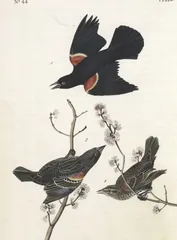
John James Audubon, The Birds of America (1840–44) about 132 per routeon 90% of routesfalling since 2015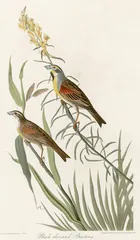
John James Audubon, The Birds of America (1827–38) 2 Dickcisselabout 56 per routeon 80% of routesno clear trend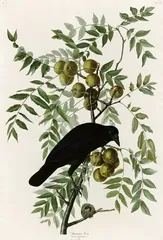
John James Audubon, The Birds of America (1827–38) about 52 per routeon 100% of routesno clear trend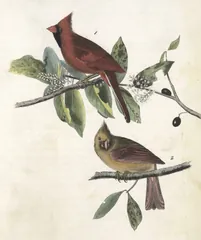
John James Audubon, The Birds of America (1840–44) about 41 per routeon 100% of routesno clear trend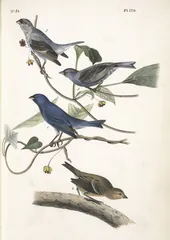
John James Audubon, The Birds of America (1840–44) 5 Indigo Buntingabout 32 per routeon 100% of routesno clear trend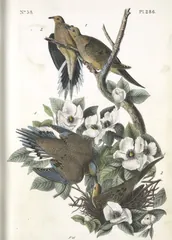
John James Audubon, The Birds of America (1840–44) about 22 per routeon 100% of routesfalling since 2015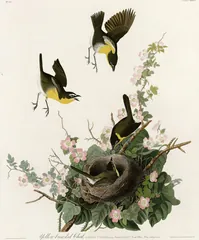
John James Audubon, The Birds of America (1827–38) 7 Yellow-breasted Chatabout 21 per routeon 95% of routesno clear trend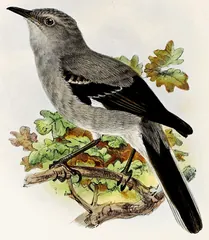
John Gerrard Keulemans, Onze Vogels in Huis en Tuin (1869–76) about 20 per routeon 92% of routesfalling since 2015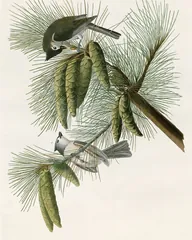
John James Audubon, The Birds of America (1827–38) about 19 per routeon 100% of routesno clear trend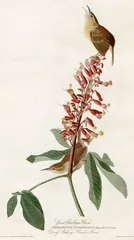
John James Audubon, The Birds of America (1827–38) about 18 per routeon 100% of routesno clear trend
Show all 25
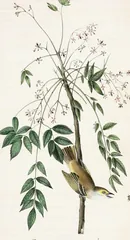
John James Audubon, The Birds of America (1840–44) 11 White-eyed Vireoabout 15 per routeon 92% of routesno clear trend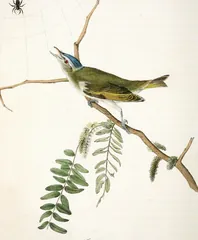
John James Audubon, The Birds of America (1840–44) 12 Red-eyed Vireoabout 15 per routeon 88% of routesrising since 2015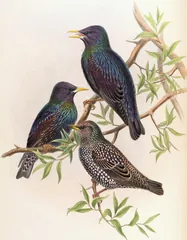
John Gould and Henry Constantine Richter, The Birds of Asia, vol. 5 (1850–83) 13 European Starlingabout 14 per routeon 80% of routesfalling since 2015introduced species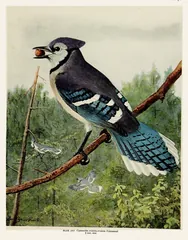
Louis Agassiz Fuertes, Elon H. Eaton's Birds of New York (1910–14) 14 Blue Jayabout 13 per routeon 100% of routesno clear trend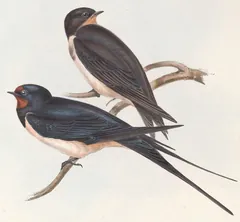
John and Elizabeth Gould, The Birds of Europe (1832–37) 15 Barn Swallowabout 12 per routeon 88% of routesno clear trend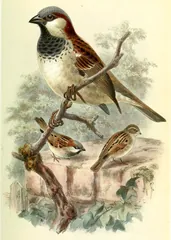
John Gerrard Keulemans, Lord Lilford’s Coloured Figures of the Birds of the British Islands (1885–97) 16 House Sparrowabout 9.4 per routeon 72% of routesfalling since 2015introduced species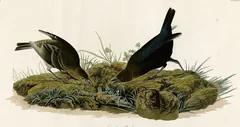
John James Audubon, The Birds of America (1827–38) 17 Brown-headed Cowbirdabout 9.4 per routeon 100% of routesfalling since 2015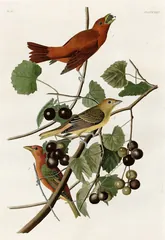
John James Audubon, The Birds of America (1827–38) 18 Summer Tanagerabout 8.9 per routeon 95% of routesno clear trend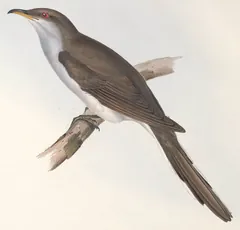
John and Elizabeth Gould, The Birds of Europe (1832–37) 19 Yellow-billed Cuckooabout 8.9 per routeon 98% of routesno clear trend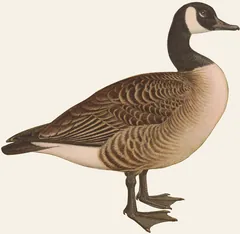
Marinus Adrianus Koekkoek, E. D. van Oort's Ornithologia Neerlandica (1922) 20 Canada Gooseabout 8.6 per routeon 50% of routesno clear trend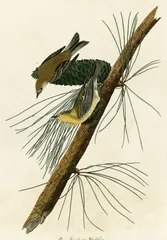
John James Audubon, The Birds of America (1827–38) 21 Pine Warblerabout 8.3 per routeon 70% of routesno clear trend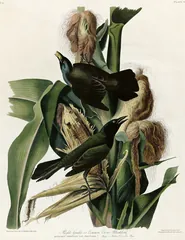
John James Audubon, The Birds of America (1827–38) 22 Common Grackleabout 8.2 per routeon 82% of routesfalling since 2015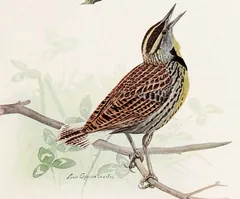
Louis Agassiz Fuertes, Elon H. Eaton’s Birds of New York (1910–14) 23 Eastern Meadowlarkabout 7.6 per routeon 88% of routesfalling since 2015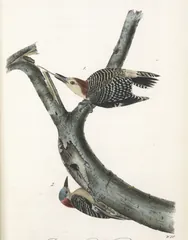
John James Audubon, The Birds of America (1840–44) about 7.4 per routeon 100% of routesfalling since 2015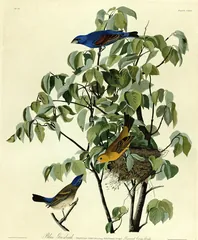
John James Audubon, The Birds of America (1827–38) 25 Blue Grosbeakabout 7.1 per routeon 92% of routesno clear trend
A field guide to North America covers the Dickcissel, the American Crow and most of the 428 species on Arkansas’s list; we compared the best bird books of 2026 to find the one that suits a beginner.
What is the most common bird in Arkansas?
The Red-winged Blackbird leads Arkansas’s summer survey: about 132 a route on average in 2021–2025, more than twice the Dickcissel’s 56, seen on 90% of the 40 routes. USGS’s estimate has its Arkansas numbers falling since 2015.
In winter the Game and Fish Commission's aerial surveys of the Delta show which come in the biggest numbers: geese. In January 2026 its biologists estimated 1,409,809 light geese, meaning Snow and Ross's Geese, and 466,550 Greater White-fronted Geese there, against 544,705 ducks of all kinds.
Among the ducks the Mallard leads by far, with 334,110 in that count, and it usually makes up about 63 percent of the Delta's ducks in midwinter; the commission calls it the most common duck in the state.
Sources: Midwinter numbers take a tumble: aerial survey count of Delta notes 544,705 total ducks in early January (Arkansas Game and Fish Commission, January 21, 2026); Waterfowl (Arkansas Game and Fish Commission), read October 8, 2026.
How was this list made?
Each of Arkansas’s 40 routes is a roadside count, 50 stops along about 25 miles, run once a year in early summer by a volunteer. We took USGS’s yearly estimate for each species in Arkansas, the number of birds a typical route records, averaged it over the five latest survey years (there was no survey in 2020) and ranked the birds by it. To keep the list to birds you’re likely to meet across Arkansas, we left out species recorded on fewer than one in five of its routes, and those USGS can only estimate very roughly, which usually means big flocks or colonies on a few routes.
For Arkansas that left out the Cliff Swallow and the Black-necked Stilt.
The share of routes is our own count from USGS’s route data for Arkansas, using only counts that met the survey’s standards; “rising” and “falling” are USGS’s trends for the state since 2015, named only where it finds a clear change. Roadside counts on early-summer mornings miss most of Arkansas’s owls and waterbirds, and its winter visitors aren’t here at all.
Arkansas’s counts come from two USGS data releases, the North American Breeding Bird Survey Analysis Results 1966–2025 (Hostetler et al., 2026) and its Dataset 1966–2025 (Ziolkowski et al., 2026), gathered by volunteer observers and free for anyone to use; Birdfolio isn’t connected with the USGS.
How many bird species are in Arkansas?
| Official count | 428 species |
|---|---|
| List’s date | Not given on the Arkansas list (we read it on October 2, 2026) |
| Kept by | Arkansas Bird Records Committee (Arkansas Bird Alliance) |
| Best evidence | 263 specimens, 139 photos, 26 written reports (our count) |
| Nesting species | 160, printed in blue (our count) |
| Among US states | Tied for 41st highest of the 49 states with a verified count, alongside New Hampshire |
| Official list | Birds of Arkansas (online state checklist) |
What does Arkansas’s count include?
- Every species the Arkansas Bird Records Committee has accepted, each with a letter for its best evidence: S for a specimen, P for a photo, A for a sound recording, D for written documentation. None rests on a recording alone.
- 4 extinct species, printed in red: the Passenger Pigeon, Eskimo Curlew, Carolina Parakeet and Bachman's Warbler.
- The Ivory-billed Woodpecker, backed by a specimen and not printed in red with the extinct birds.
- An asterisk on the 75 species with ten or fewer Arkansas records; a sighting of one of them needs a long report to the committee.
- 26 species proven by written documentation alone, among them the Whooping Crane, the Brant and the Golden-winged Warbler.
Why do other sources give a different number?
The society's own earlier totals, each right for its date:
- 425. The society's 2023 Field Reference to Arkansas Birds, with names as of the American Ornithological Society's 63rd supplement (August 2022) and each bird's usual arrival and departure dates. Source: 2023 Field Reference to Arkansas Birds (Arkansas Audubon Society, now the Arkansas Bird Alliance).
- 424. The printable field checklist on the same website, undated, which leaves out the four extinct species (our check). Source: Checklist of the Birds of Arkansas, printable field checklist (Arkansas Audubon Society).
- 415. The 2015 edition of the field reference, with names as of the 56th supplement (July 2015); the Audubon Society of Central Arkansas still keeps a copy online. Source: Arkansas Audubon Society field reference, 2015 edition (hosted by the Audubon Society of Central Arkansas).
Arkansas’s list follows its own committee’s rules, and so does every other state’s: see why the counts differ from state to state.
Arkansas records, from a Siberian goose to a crane guarded by birdwatchers
- On January 25, 2018, a hunter near Dumas took a Tundra Bean-Goose, which the society's season report called exceptional anywhere in the US and a most unexpected first for the state. Source: Arkansas Birds, Winter 2018 (Arkansas Audubon Society newsletter), with the winter season report, read October 8, 2026.
- In the fall of 2018 a female Whooping Crane released in Louisiana, tagged L4-17, settled into a rice field between Roe and Aberdeen in Monroe County from mid-October to mid-December. Local hunters and landowners, afraid an illegal shooter would kill her, asked the Game and Fish Commission to tell birders where she was, so that a crowd with binoculars and cameras would keep her safe, and the commission agreed. Source: Louisiana-released whooping crane enjoys layover in The Natural State (Arkansas Game and Fish Commission, January 9, 2019), read October 8, 2026.
- Bachman's Warbler, one of the four printed in red, once nested here: northeast Arkansas is one of only five areas where its nesting was ever documented. A search of Arkansas, Missouri and South Carolina from 1975 to 1979 found none, and in October 2023 the U.S. Fish and Wildlife Service declared the species extinct, unseen in the US or Cuba since the 1980s. Sources: Birds of Arkansas, the online state checklist (Arkansas Bird Alliance); Removal of 23 Extinct Species From the Lists of Endangered and Threatened Wildlife and Plants, proposed rule (Federal Register 86:187, September 30, 2021); Removal of 21 Species From the List of Endangered and Threatened Wildlife, final rule (Federal Register 88:199, October 17, 2023), read October 8, 2026.
Questions people ask about Arkansas’s birds
Which US state has the most bird species?
California, with 696 species on the checklist its records committee updated on September 8, 2026. Texas comes next with 682, and Arkansas's 428 tie it with New Hampshire for 41st place among the 49 states with a verified count (our table).
Sources: Official California Checklist, updated 8 September 2026 (California Bird Records Committee); Birds of Arkansas, the online state checklist (Arkansas Bird Alliance), read October 8, 2026.
What is the rarest bird in Arkansas?
Perhaps the Ivory-billed Woodpecker, if any are left: the list keeps it and doesn't mark it extinct, while the society's 2023 field reference says only that its recent status is unclear. Among birds that certainly still fly, 75 species have ten or fewer Arkansas records, such as the Tundra Bean-Goose, the Garganey and Rivoli's Hummingbird, each known from one or two.
Sources: Birds of Arkansas, the online state checklist (Arkansas Bird Alliance); 2023 Field Reference to Arkansas Birds (Arkansas Audubon Society, now the Arkansas Bird Alliance), read October 8, 2026.
What is the filthiest bird?
Nobody ranks birds by cleanliness, but vultures usually get the label, and it's unfair: by eating dead animals along roads and in forests they help keep diseases such as rabies from spreading, the National Park Service says. Arkansas's list has two of them, the Turkey Vulture, backed by a specimen, and the Black Vulture.
Sources: NETN Species Spotlight: Turkey and Black Vultures (National Park Service, last updated August 15, 2021); Birds of Arkansas, the online state checklist (Arkansas Bird Alliance), read October 8, 2026.
Which birds live in Arkansas?
About 160 species have nested here, the names the official list prints in blue (our count); the rest pass through on migration or come for the winter. In the east lies the Delta, whose forests once covered 24 million acres, the largest forested wetland in North America, and 550,000 acres survive in Arkansas as the Big Woods, the Game and Fish Commission says. The levee trails of Dagmar Wildlife Management Area there are the place to look for waterfowl, wading birds, birds of prey, woodpeckers and songbirds.
In the southwest corner, the 18,155 acres of Sulphur River Wildlife Management Area are the largest tract of bottomland hardwoods left in the Red River Valley. Swallow-tailed Kites have been confirmed nesting there, outside their traditional range, and Bald Eagles nest there too. In the 1960s no eagles nested anywhere in Arkansas; the commission now estimates 150 to 160 pairs.
Sources: Birds of Arkansas, the online state checklist (Arkansas Bird Alliance); Dagmar WMA Birding Trails (Arkansas Game and Fish Commission); New trails at Sulphur River WMA offer glimpses of birds and beasts (Arkansas Game and Fish Commission, December 6, 2024); Eagles inspire awe, appreciation for conservation efforts (Arkansas Game and Fish Commission, January 29, 2025), read October 8, 2026.
Why is Stuttgart called the Duck Capital of the World?
Because Arkansas is where the Mallards end up. The state sits at the bottom of the funnel for Mallards flying south down the Mississippi Flyway, where the Arkansas, White, Cache and Mississippi rivers come together and much of the land floods in winter, the Game and Fish Commission says. In the 2018-19 season hunters' reports to the federal Harvest Information Program put Arkansas's take at an estimated 477,817 Mallards, more than any other state and more than the entire Atlantic Flyway.
The ducks feed in flooded woods and rice fields. Since the 1950s greentree reservoirs, stands of bottomland hardwoods that can be flooded reliably, have been built for them, and wildlife management areas open more than 50,000 acres of them to the public. Flooded rice fields are estimated to supply 11 percent of all the food energy ducks find in the Mississippi Delta, and the commission pays farmers to leave their stubble and flood their fields while the birds pass through.
Sources: Waterfowl (Arkansas Game and Fish Commission); Arkansas still leads nation in mallard harvest (Arkansas Game and Fish Commission, September 30, 2019); Wetland Management: greentree reservoirs (Arkansas Game and Fish Commission); Arkansas Waterfowl Rice Program, WRICE (Arkansas Game and Fish Commission), read October 8, 2026.
Is the Ivory-billed Woodpecker still on Arkansas's list?
Yes, backed by a specimen and not printed in red. The society's 2023 field reference says it was once present all year.
Arkansas is where the last serious hope for it was raised. In 2004, along Bayou DeView in Cache River National Wildlife Refuge, observers reported sightings and sound recordings and filmed a bird that was interpreted as an Ivory-bill: the most compelling evidence for the species since the last commonly accepted sighting, in Louisiana in 1944, the U.S. Fish and Wildlife Service wrote. Researchers later concluded that few if any Ivory-bills could have gone undetected in the Big Woods from 2005 to 2009, and ornithologists still argue over whether the bird in the video was an Ivory-bill or a Pileated Woodpecker.
In 2021 the Service proposed declaring the species extinct; its final rule of October 2023 set the woodpecker aside for a separate decision, citing substantial disagreement among scientists. The Game and Fish Commission puts it plainly: no irrefutable evidence has turned up.
Sources: Birds of Arkansas, the online state checklist (Arkansas Bird Alliance); 2023 Field Reference to Arkansas Birds (Arkansas Audubon Society, now the Arkansas Bird Alliance); Removal of 23 Extinct Species From the Lists of Endangered and Threatened Wildlife and Plants, proposed rule (Federal Register 86:187, September 30, 2021); Removal of 21 Species From the List of Endangered and Threatened Wildlife, final rule (Federal Register 88:199, October 17, 2023); Dagmar WMA Birding Trails (Arkansas Game and Fish Commission), read October 8, 2026.
Where is the official Arkansas bird list, and how often is it updated?
On the Arkansas Bird Alliance's website, arbirds.org, under Birds: the online state checklist, headed with its total but no date. Beside it are the printable checklist, the 2023 field reference and a search of the society's rare-bird database, which held 55,901 records when we read it. The committee uses accepted records to update the checklist from time to time; it gives no schedule.
The society, formerly the Arkansas Audubon Society but never part of National Audubon, was founded in 1955 at Petit Jean State Park. Its first curator's report for 1955-56 counted 3,600 sight records from 60 people, kept on 3-by-5-inch index cards; the file grew to 40,000 records and became the basis of the 1986 book Arkansas Birds. The society added a records committee in the spring of 1984 and gave it bylaws in 1996; its five members, chaired by the curator, now review reports mostly by email. Its rule of thumb, passed from one curator to the next: better to reject a good record than to accept a poor one.
Sources: Birds of Arkansas, the online state checklist (Arkansas Bird Alliance); Rare Birds of Arkansas, the review list (Arkansas Bird Alliance); Search for Significant Bird Records (Arkansas Bird Alliance); Arkansas Bird Records Committee, with a brief history (Arkansas Bird Alliance); About Arkansas Bird Alliance, read October 8, 2026.
How do you count your own Arkansas list?
Your Arkansas list is every species you’ve seen in Arkansas. eBird can filter your life list to Arkansas, and your eBird data download gives the state of every sighting. On paper, count the species you’ve seen in Arkansas; what is a life list? explains how birders keep their lists.
To print your whole list, Arkansas birds and all, see how to print your bird life list, or let Birdfolio make it a hardcover book.
Arkansas’s state bird
Arkansas’s state bird is the Northern Mockingbird (officially, the “mockingbird”), the state bird since 1929. Its story, the state flower and animal, and a free picture card for a report are on our Arkansas state bird page.
Birding festivals in Arkansas
Our birding festivals calendar lists one festival in Arkansas, with dates from its own website:
- Birding Festival of the South, Hot Springs: dates not announced yet; expected in October 2027 (2026 festival: October 8–10, 2026)
Christmas Bird Count in Arkansas
Arkansas had 32 Christmas Bird Count circles on Audubon’s map last winter, each counted on a single day between December 14 and January 5. Our guide shows where to find Arkansas’s counts and lists 1 Arkansas count date already announced for this winter; it’s free, and beginners are welcome.
More about bird counts
- How many bird species are in each state: Arkansas beside all 50 states, DC and Canada.
- Bird lists of nearby states: Louisiana, Mississippi, Missouri, Oklahoma, Tennessee and Texas.
- State birds of all 50 states, Arkansas’s Northern Mockingbird among them
- How many bird species are in the US and Canada
- Bird splits and lumps
If you’re shopping for a birder in Arkansas, our gift guide for birders and our pick of coffee table bird books are good places to start.