In short: the best bird books in 2026 are The Sibley Guide to Birds (Second Edition, $45) for naming the birds you see, Jennifer Ackerman's The Genius of Birds ($20) for a great read, and Abbeville's Baby Elephant Folio of Audubon's Birds of America ($195) for the coffee table. For the newest field guide, get the eighth edition of the National Geographic guide, out in September 2025. For a beginner, start with a small guide to the birds of your own state.
Bird books come in four kinds: books for naming birds, books for learning to bird, books to look at and books to read. This guide picks the best of each, all in print in October 2026, and says which edition to look for and who each book suits. We read every book's details on its publisher's page, or a bookseller's where we say so, on October 8, 2026. We don't sell any of these books and earn nothing if you buy one.
The best bird books at a glance
| Book | Edition | Best for | Format and size | Price |
|---|---|---|---|---|
| The Sibley Guide to Birds, David Allen Sibley | 2nd edition, 2014 | Naming any bird in North America | Flexible cover, 624 pages, 6 × 9½ in | $45 |
| National Geographic Field Guide to the Birds of the United States and Canada, Ted Floyd | 8th edition, 2025 | The newest field guide, Hawaii included | Paperback, 592 pages, 6 × 9 in | $32.99 |
| Stan Tekiela's Birds of [your state] Field Guide | Editions vary by state | A beginner's first guide | Pocket paperback, birds sorted by color | $14.95 (Birds of Ohio) |
| Sibley's Birding Basics, David Allen Sibley | 2002 | Learning how to tell birds apart | Paperback, 168 pages | $16.95 |
| What It's Like to Be a Bird, David Allen Sibley | 2020 | A backyard bird lover; a gift | Hardcover, 240 pages, 8½ × 11 in | $35 |
| Audubon's Birds of America: The Baby Elephant Folio, edited by Roger Tory and Virginia Marie Peterson | Abbeville Press, current printing | The classic coffee table book | Hardcover, 696 pages, about 15 pounds | $195 |
| Bird: Exploring the Winged World (Phaidon) | 2021 | Bird art from every age | Hardcover, 352 pages, about 11½ × 10 in | $64.95 |
| Birds, Tim Flach, with text by Richard O. Prum | 2021 | A coffee table book of photographs | Hardcover, 336 pages, 200 photographs | $65 |
| The Genius of Birds, Jennifer Ackerman | 2016 | Any curious reader | Paperback, 352 pages | $20 |
| H Is for Hawk, Helen Macdonald | 2015 in the US | Readers of memoir | Paperback, 320 pages | $18 |
| The Return of the Oystercatcher, Scott Weidensaul | April 2026 | A hopeful new read | Hardcover, 368 pages | $32.99 |
Prices are publishers' list prices, checked October 8, 2026, except the Tekiela guide and the Baby Elephant Folio (booksellers' prices). They change, and the big art books go in and out of stock, so check before you buy.
What is the best bird guide book?
For most people in the US and Canada, the best bird guide book is The Sibley Guide to Birds, Second Edition. If you want the newest, choose the eighth edition of the National Geographic guide, published in September 2025. A field guide is a book for identifying birds: a picture of each kind of bird, a map of where it lives and notes on the marks that tell it apart from the birds it looks like.
These are the five big North American guides, in their current editions:
| Guide | Latest edition | Pictures | Covers | Size | Price |
|---|---|---|---|---|---|
| The Sibley Guide to Birds | 2nd, 2014 | Nearly 7,000 paintings | North America, with 700+ range maps | 624 pages, 6 × 9½ in | $45 |
| National Geographic Field Guide to the Birds of the United States and Canada | 8th, 2025 | Paintings, 240 of them new | 1,155 species, Hawaii included | 592 pages, 6 × 9 in | $32.99 |
| Peterson Field Guide to Birds of North America | 2nd, 2020 | Paintings | North America, with 25 new plates of Hawaii's birds | About 520 pages | $32.50 ($26 at HarperCollins) |
| Kaufman Field Guide to Birds of North America | 2005 | Photographs | North America | 392 pages, compact | $24.99 ($19.99 at HarperCollins) |
| National Audubon Society Birds of North America | 2021 | More than 3,500 photographs | More than 800 species | Hardcover, 912 pages | $49.95 |
The Sibley Guide to Birds: the one most birders know
David Allen Sibley wrote and illustrated it. The second edition, from 2014, has nearly 7,000 paintings, more than 600 of them new, all printed 15 to 20 percent larger than in the first edition, and more than 700 range maps, its publisher says. The first edition of 2000 was widely seen as setting a new standard for North American field guides.
Good for: anyone who wants one guide for life. Less good for: a coat pocket. At 624 pages, it usually lives in the car or by the kitchen window. Writing on his website in 2022, Sibley said a new edition of the printed guide was still several years away. None has been announced, so the second edition is the one to buy.
National Geographic, 8th edition: the newest
The eighth edition, written by Ted Floyd and published on September 9, 2025, has a new name: Field Guide to the Birds of the United States and Canada. It covers 1,155 species and is the first edition to include the birds of Hawaii. It has 240 new paintings, all-new text and new range maps. If someone you know owns an older edition, this is a real update, not a reprint.
Peterson: the classic, brought up to date
The second edition of the Peterson Field Guide to Birds of North America (Mariner Books, 2020) keeps the famous system of identification that Roger Tory Peterson began in 1934 (more on that below). It added 25 new plates of Hawaii's birds after the American Birding Association added Hawaii to its checklist, HarperCollins says.
Kaufman: the friendliest for beginners
Kenn Kaufman's guide first came out in 2000, built from more than 2,000 photographs that he digitally edited to show each bird's marks clearly. The current edition is from 2005. It's compact, and its publisher pitches it at people just getting started. It's also the least expensive of the big guides.
A photo guide: National Audubon Society Birds of North America
Prefer photographs to paintings? This 2021 hardcover from Knopf has more than 3,500 of them, for over 800 species. At 912 pages it's a book for the house, not the trail.
One big guide or two small ones?
Both Sibley and National Geographic sell smaller regional editions that fit a pocket better. Sibley's Eastern and Western guides (second editions, 2016) are 4½ × 7½ inch paperbacks at $27 and $28. National Geographic's East and West guides, new in 2025, are $24.99 each. You can keep the big guide at home and carry a regional one.
The best bird books for beginners
For a beginner, the best bird book is a small guide to the birds of their own state, used next to a window or a feeder. A guide to all of North America shows hundreds of birds they'll never see at home, which can make it harder, not easier, to find the right one.
- Stan Tekiela's guides are written state by state. Birds of Ohio, for example, has 124 species, sorted by color: see a yellow bird, turn to the yellow section. It costs $14.95.
- National Geographic Backyard Guide to the Birds of North America (2nd edition, 2019) covers 150 common birds, with tips on feeding and attracting them. It's a $21.99 paperback.
- The Kaufman guide, above, is the best full field guide to grow into.
- Sibley's Birding Basics (2002) teaches how to identify a bird, not which bird it is: what to notice about feathers, shape, behavior, habitat and sound, in 16 short essays with 200 illustrations. It's a $16.95 paperback.
- How to Know the Birds, by Ted Floyd (National Geographic, 2019), is a book to read rather than carry: one-page essays on 200 species, arranged through a calendar year, each teaching one lesson about birding. It's a $28 hardcover.
What are the steps to starting birding as a beginner?
Start by watching the birds where you already are, then learn to name them one at a time:
- Look out the window. A feeder or a birdbath brings birds close enough to study.
- Get a guide to your state and learn the five or six birds you see most often.
- Use a free app when you're stuck. Merlin, from the Cornell Lab of Ornithology, helps you identify a bird from a photo, its sound or a description.
- Add binoculars when you want to see birds farther away.
- Write down what you see, with the date and place. That's the start of a life list, and our guide to birding log books and journals compares the notebooks.
- Join a bird walk. Local Audubon chapters and bird clubs run them, and you'll learn from people who know the local birds.
What is the best coffee table book about birds?
The best coffee table book about birds is Audubon's Birds of America, in Abbeville's Baby Elephant Folio: all 435 of his plates in one big volume, edited by Roger Tory Peterson and Virginia Marie Peterson, for $195. For photographs instead of paintings, choose Tim Flach's Birds ($65). A coffee table book is a large, heavy book of pictures, made to be left out and paged through.
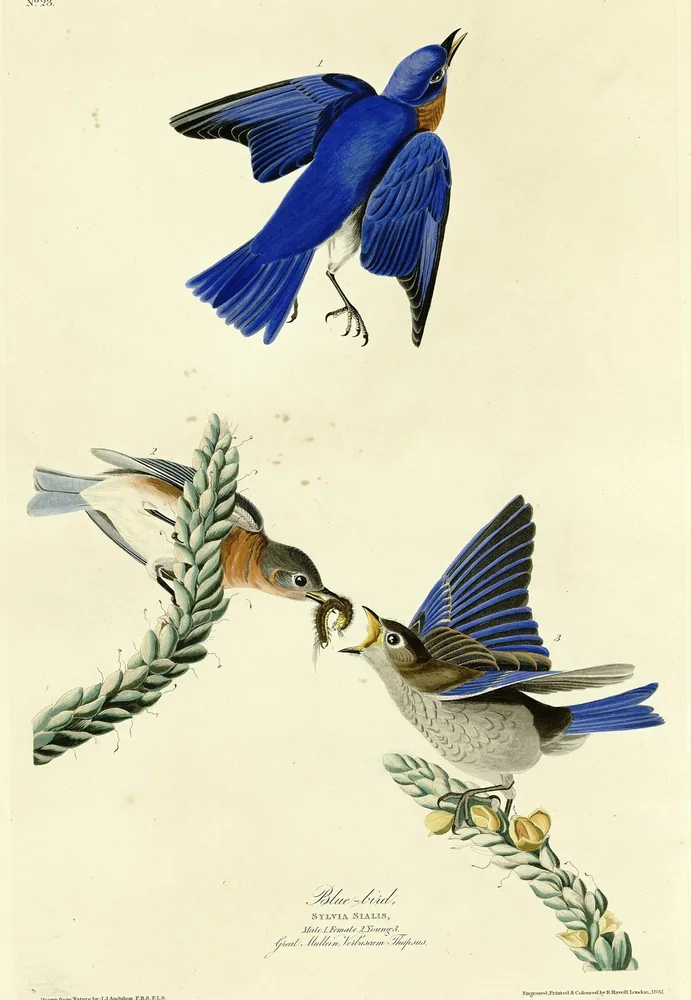
Audubon's Birds of America
John James Audubon's The Birds of America holds the auction record for a natural-history book, and several publishers print all 435 of its plates today. The Baby Elephant Folio is the big one: 696 pages and about 15 pounds, the New York Public Library Shop says. The Library Shop showed it sold out on October 8, 2026, so you may need to try a few sellers, including a local bookstore. On a small budget, Abbeville's palm-size Tiny Folio has every plate for $13.95.
We compare every edition, with sizes and prices, in our guide to which Audubon Birds of America book to buy. To see the plates before you buy, browse our table of all 435 Audubon plates, each with the name the bird goes by today.
Bird: Exploring the Winged World (Phaidon)
For someone who loves art as much as birds, Phaidon's book pairs 300 pictures of birds from 4,000 years of art, science and photography, from ancient Egypt to today. It's a 352-page hardcover, about 11½ by 10 inches, with an introduction by Katrina van Grouw, at $64.95. Phaidon was taking orders for it on October 8, 2026, and one bookstore that sells it at $65 showed it sold out, so allow time.
John Gould's and Elizabeth Gould's birds
John Gould published some of the most beautiful bird books of the 1800s, and his hummingbirds were printed with gold leaf to make their throats shine. The Family of Hummingbirds: The Complete Prints of John Gould (Rizzoli Electa, 2018) collects all 418 of his hand-colored hummingbird lithographs in a 9 × 12 inch hardcover of 304 pages, at $65.
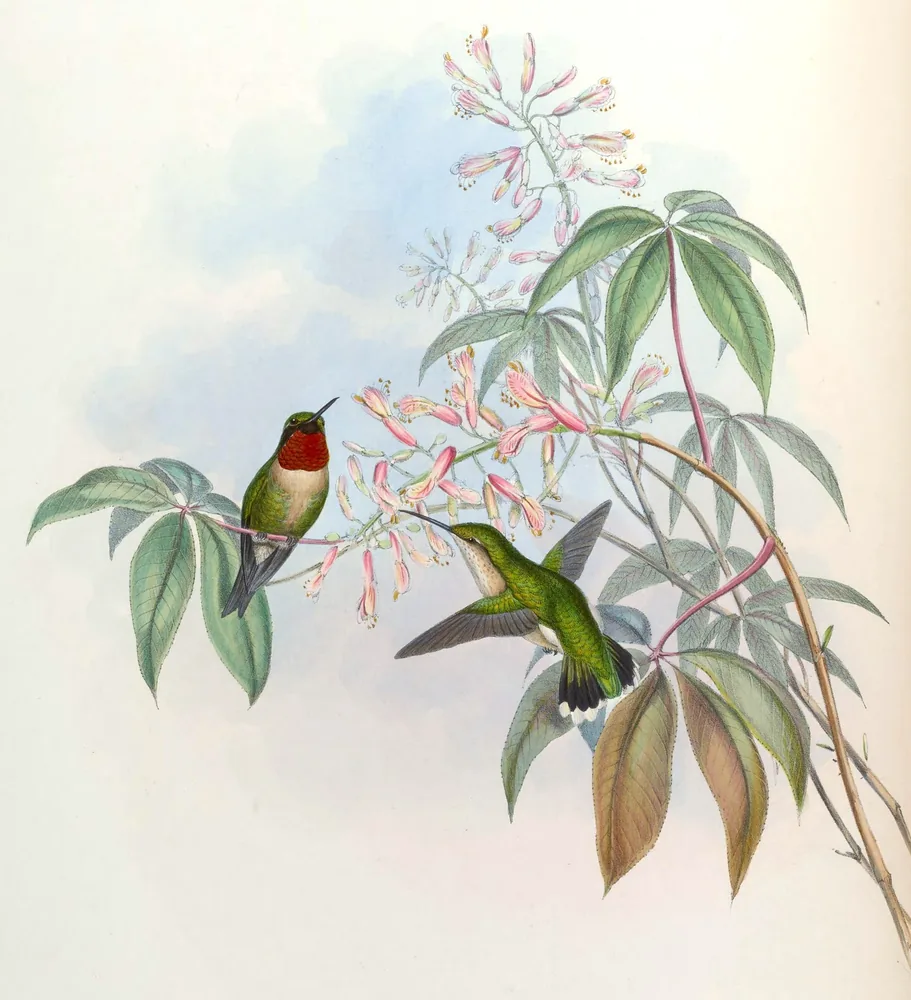
Gould drew little himself, though: his wife, Elizabeth, drew the plates for his first books, with help from Edward Lear. Birds of the World: The Art of Elizabeth Gould by Andrea Hart and Ann Datta (Prestel, 2023) gives her work a book of its own: 248 pages, 9½ × 13½ inches, $70. Our guide to John Gould tells their story.
Louis Agassiz Fuertes
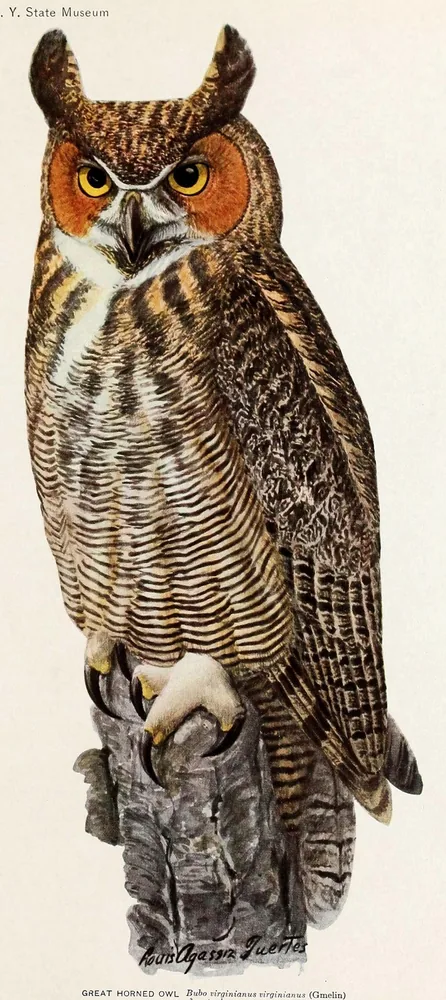
Louis Agassiz Fuertes (1874–1927) painted at least 700 color plates for bird books, magazines and government reports, but we couldn't find a book of his paintings in print in October 2026. Look secondhand for the two classics: Louis Agassiz Fuertes and the Singular Beauty of Birds (Harper & Row, 1971) and Robert McCracken Peck's A Celebration of Birds (1982). Our guide to Louis Agassiz Fuertes shows a selection of his plates, and our guide to famous bird painters introduces the others.
Photographs
- Birds, by Tim Flach (Abrams, 2021): 200 fine-art portraits of birds, with text by Richard O. Prum. 336 pages, $65.
- Birds of the Photo Ark (National Geographic, 2018): Joel Sartore's portraits of hundreds of species, with text by Noah Strycker. 240 pages, 8½ inches square, $30. The best value here.
- Birds of Paradise (National Geographic, 2012): Tim Laman and Edwin Scholes photographed all 39 species of these extraordinary birds over eight years of expeditions. 228 pages, $50.
- Bird Photographer of the Year, Collection 10 (Princeton University Press, September 2025): 245 winning photographs from the international competition. 256 pages, $39.95.
For a big reference rather than a picture book, DK's Bird (new edition, 2022) covers more than 1,400 species in 512 pages, at $50.
What is the most famous coffee table book?
Among bird books, it's Audubon's The Birds of America. An original set holds the auction record for any natural-history book: £7,321,250, about $11.4 million, at Sotheby's in London on December 7, 2010 (Guinness World Records). The modern one-volume editions are what most people mean by an Audubon coffee table book.
Are coffee table books valuable?
Rarely, as an investment: buy one to enjoy it. Condition is a major factor in what any book is worth, the Library of Congress notes, and a book that lives on a coffee table gets handled. The value is in having a book that's a pleasure to open. The Audubon original above is the great exception, and complete sets of it are very rare.
What is a good bird book for adults?
A good bird book for adults is a true story you can't put down, and The Genius of Birds by Jennifer Ackerman is the one to start with. It's about new research showing that some birds rival primates in intelligence, and you don't need to know any birds to enjoy it. These are the best reads in print now, at the publisher's paperback price where there is one:
| Book | What it's about | Price |
|---|---|---|
| The Genius of Birds, Jennifer Ackerman (2016) | How clever birds are, from the latest research | $20, 352 pages |
| What It's Like to Be a Bird, David Allen Sibley (2020) | Short answers to the questions people ask about more than 200 common birds, with over 330 new paintings, most of the main ones life-size | $35 hardcover |
| H Is for Hawk, Helen Macdonald (US 2015) | A memoir of grief and of training a goshawk; it won the Samuel Johnson Prize and the Costa Book Award | $18, 320 pages |
| The Feather Thief, Kirk Wallace Johnson (2018) | True crime: a young flutist steals rare bird skins from a British museum | $18, 336 pages |
| The Big Year, Mark Obmascik (2004) | Three men race to see the most birds in North America in 1998; it was made into a film | $20 at Barnes & Noble |
| Kingbird Highway, Kenn Kaufman (1997) | At 16, Kaufman sets off to hitchhike across America, chasing birds | $21.99 at Barnes & Noble |
| Better Living Through Birding, Christian Cooper (2023) | A birder's memoir, from Marvel Comics to Central Park | $19, 304 pages |
| A World on the Wing, Scott Weidensaul (2021) | What science now knows about how birds migrate around the world | $18.95 at Barnes & Noble |
| The Return of the Oystercatcher, Scott Weidensaul (2026) | Birds that are coming back, and the people helping them | $32.99 hardcover, 368 pages |
Liked The Genius of Birds? Ackerman's The Bird Way (2020) and What an Owl Knows (2023) are $19 paperbacks, and her next book, Pluck, about the new science of female birds, is due in April 2027.
New this year: The Return of the Oystercatcher came out in April 2026 and is a finalist for the 2026 Wainwright Prize for Conservation Writing, Barnes & Noble notes. Turning to Birds, the actor Lili Taylor's essays on learning to notice birds, came out in paperback in May 2026 ($20).
What is the best book about birds?
The Genius of Birds is the best book about birds for most readers. It won a place on the Wall Street Journal's best nonfiction of 2016 and was named the Sunday Times Nature Book of the Year, its publisher says, and it suits anyone, birder or not. For a birder, Sibley's What It's Like to Be a Bird comes a close second, because it answers the questions people ask about the birds in their own backyard.
What to get for someone who loves birds?
Match the book to the way they enjoy birds. A field guide suits someone who's starting to name the birds at the feeder, a picture book suits someone who loves birds but rarely goes looking for them, and a good story suits a reader.
- A new birder: a guide to their state, with Sibley's Birding Basics.
- A keen birder: they almost certainly own a field guide, so give a great read instead, or the new National Geographic guide if theirs is older.
- A bird lover who doesn't go birding: What It's Like to Be a Bird, or a coffee table book of paintings or photographs.
- A reader: The Genius of Birds or H Is for Hawk.
- Someone who has every book: a book of the birds they've seen themselves (more on that below).
For more ideas at every budget, from feeders to binoculars, see our gifts for birders and bird lovers.
The one bird book nobody else can buy
Every book above is the same for everyone who buys it. If the birder you're shopping for keeps a life list, the list of every kind of bird they've ever seen, there's one more kind of bird book: their own.
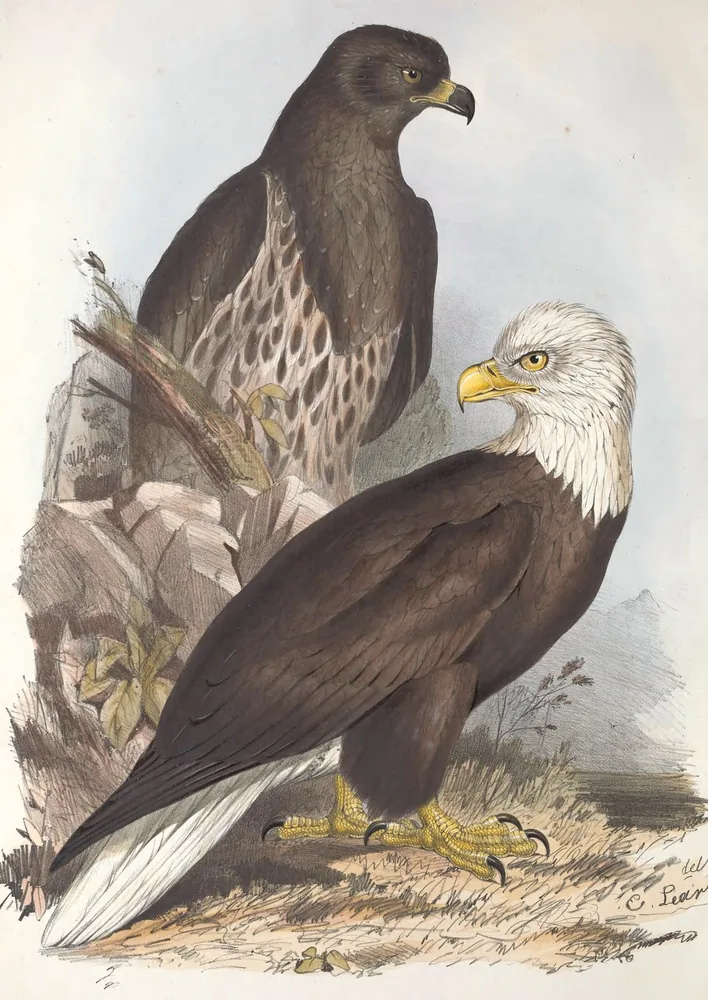
A Birdfolio is printed from that list. It's a hardcover, 8.5 × 11 inches, with every bird they've seen and the date and place they first saw it. Each bird gets a classic painting or a credited photo; about 7 in 10 are paintings, by Audubon, Gould, Fuertes and other classic painters. Birdfolio is ours, so we'll keep it short:
- It reads the lists birders already keep, such as a download from the free eBird app, which includes birds saved in Merlin.
- Prices: $79 for lists up to 300 species, $99 up to 1,000, and $129 above that, with US shipping included.
- Orders open November 1, 2026, for US addresses only. You see the first pages of the book free, before you pay.
It isn't a field guide, and it won't teach anyone a new bird. It's a keepsake of the birds they've already found. Page through a Birdfolio, or make one from a list.
Questions people ask about bird books
What is the most famous bird guide?
Roger Tory Peterson's A Field Guide to the Birds. Peterson was 25 when it came out in April 1934, and Houghton Mifflin printed only 2,000 copies, which sold out within a week, the Linda Hall Library notes. Its pictures with marks pointed out by arrows created the look of the modern field guide. Today's descendant is the Peterson Field Guide to Birds of North America.
What is the best birding book?
For naming birds, The Sibley Guide to Birds; for learning how to look, Sibley's Birding Basics; and for reading, The Genius of Birds. Most birders end up owning one of each kind.
What are some good books about birds?
Beyond the picks above: Ackerman's The Bird Way and What an Owl Knows; The Feather Thief for a true-crime story; Birds of the Photo Ark for pictures; and Scott Weidensaul's A World on the Wing and The Return of the Oystercatcher for the big story of migration and recovery.
Should I use eBird or Merlin?
Use both. They're free apps from the Cornell Lab of Ornithology, and one free account works for both. Merlin helps you put a name to a bird you've seen or heard; eBird keeps your sightings and adds up your life list. Birds you save in Merlin while signed in go to your eBird account too.
Birdfolio is not affiliated with eBird, the Cornell Lab of Ornithology or iNaturalist.