Reference
How many bird species are in Virginia?
Virginia has 494 bird species on its official list (Virginia Avian Records Committee, December 2025), the 14th highest count of the 49 states with a verified count. Four extinct species are listed separately after the main list, which marks whether each species is backed by physical evidence or sight records alone.
Virginia’s state bird is the Northern Cardinal: our Virginia state bird page tells how it was chosen.
Updated
What are the most common birds in Virginia?
In summer, the 25 most common birds in Virginia are led by the American Crow, at about 64 birds per survey route, then the European Starling and the Northern Cardinal, by the USGS Breeding Bird Survey’s counts for 2021–2025. Together these 25 made up 71% of all the birds counted on Virginia’s 47 survey routes.
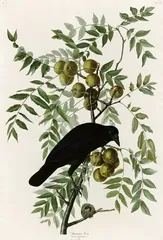
John James Audubon, The Birds of America (1827–38) about 64 per routeon 100% of routesfalling since 2015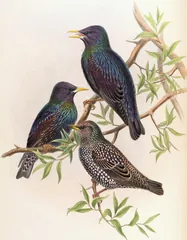
John Gould and Henry Constantine Richter, The Birds of Asia, vol. 5 (1850–83) 2 European Starlingabout 58 per routeon 100% of routesno clear trendintroduced species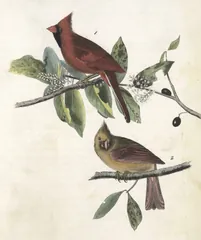
John James Audubon, The Birds of America (1840–44) about 39 per routeon 100% of routesrising since 2015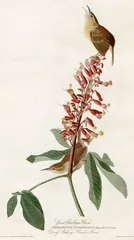
John James Audubon, The Birds of America (1827–38) about 33 per routeon 100% of routesrising since 2015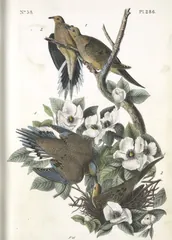
John James Audubon, The Birds of America (1840–44) about 33 per routeon 100% of routesno clear trend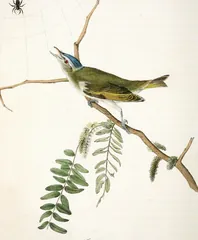
John James Audubon, The Birds of America (1840–44) 6 Red-eyed Vireoabout 31 per routeon 100% of routesrising since 2015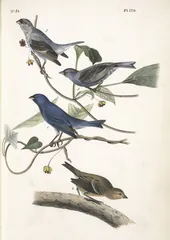
John James Audubon, The Birds of America (1840–44) 7 Indigo Buntingabout 31 per routeon 100% of routesfalling since 2015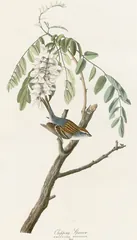
John James Audubon, The Birds of America (1827–38) 8 Chipping Sparrowabout 26 per routeon 100% of routesno clear trend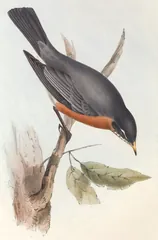
John and Elizabeth Gould, The Birds of Europe (1832–37) about 26 per routeon 98% of routesfalling since 2015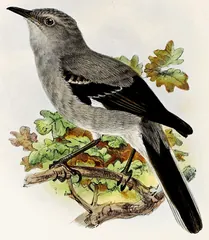
John Gerrard Keulemans, Onze Vogels in Huis en Tuin (1869–76) about 23 per routeon 100% of routesno clear trend
Show all 25
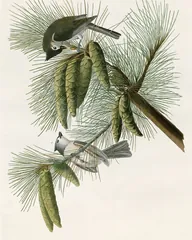
John James Audubon, The Birds of America (1827–38) about 22 per routeon 100% of routesfalling since 2015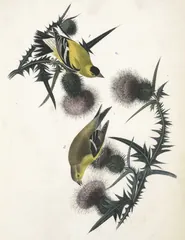
John James Audubon, The Birds of America (1840–44) about 20 per routeon 100% of routesno clear trend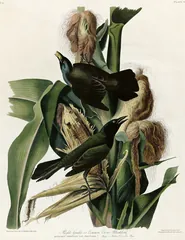
John James Audubon, The Birds of America (1827–38) 13 Common Grackleabout 19 per routeon 96% of routesfalling since 2015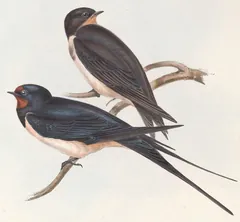
John and Elizabeth Gould, The Birds of Europe (1832–37) 14 Barn Swallowabout 18 per routeon 98% of routesfalling since 2015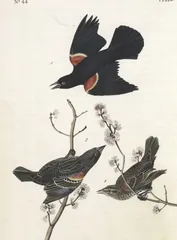
John James Audubon, The Birds of America (1840–44) about 16 per routeon 100% of routesno clear trend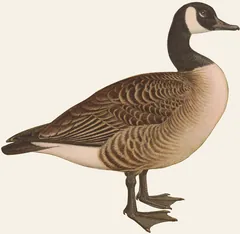
Marinus Adrianus Koekkoek, E. D. van Oort's Ornithologia Neerlandica (1922) 16 Canada Gooseabout 16 per routeon 60% of routesno clear trend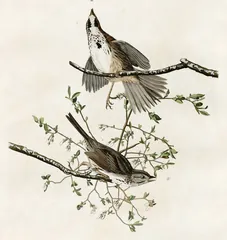
John James Audubon, The Birds of America (1827–38) 17 Song Sparrowabout 15 per routeon 62% of routesrising since 2015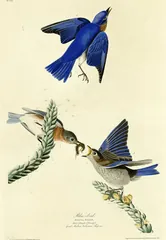
John James Audubon, The Birds of America (1827–38) about 15 per routeon 100% of routesrising since 2015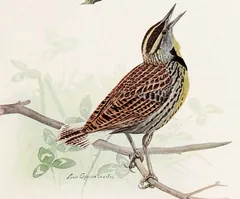
Louis Agassiz Fuertes, Elon H. Eaton’s Birds of New York (1910–14) 19 Eastern Meadowlarkabout 13 per routeon 94% of routesno clear trend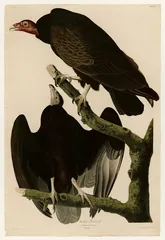
John James Audubon, The Birds of America (1827–38) about 11 per routeon 96% of routesno clear trend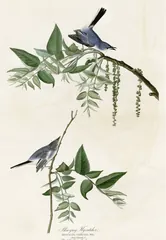
John James Audubon, The Birds of America (1827–38) 21 Blue-gray Gnatcatcherabout 10 per routeon 96% of routesno clear trend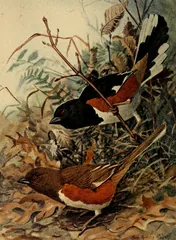
Louis Agassiz Fuertes, True Bird Stories from My Note-Books (1903) 22 Eastern Towheeabout 10 per routeon 100% of routesfalling since 2015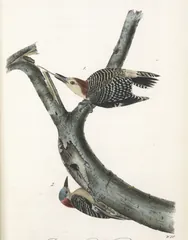
John James Audubon, The Birds of America (1840–44) about 10 per routeon 100% of routesno clear trend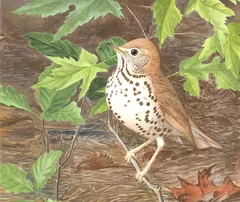
Louis Agassiz Fuertes, Annual Reports of the New York Forest, Fish and Game Commission (1901–12) 24 Wood Thrushabout 10 per routeon 100% of routesno clear trend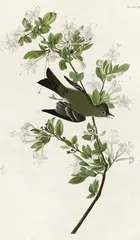
John James Audubon, The Birds of America (1827–38) 25 Eastern Wood-Peweeabout 9.8 per routeon 100% of routesrising since 2015
These 25, led by the American Crow and the European Starling, are a small part of the 494 species on Virginia’s official list; to name the rest, our comparison of the best bird books of 2026 shows which field guide suits a beginner.
What is the most common bird in Virginia?
The American Crow leads Virginia’s summer survey: about 64 a route on average in 2021–2025, ahead of the European Starling at about 58, seen on every one of the 47 routes. USGS’s estimate has its Virginia numbers falling since 2015.
The Northern Cardinal, by the estimate of the Second Atlas of Breeding Birds in Virginia: about 3,080,000 of them, the most of any species the atlas could estimate, found at almost half of its 15,764 survey points. The Carolina Wren, at about 2,583,000, and the American Goldfinch, at about 2,212,000, come next, followed by the Chipping Sparrow, Tufted Titmouse, Red-eyed Vireo, Indigo Bunting, American Robin, Carolina Chickadee and Blue-gray Gnatcatcher.
The atlas's field technicians counted over 230,000 birds at those points between 2017 and 2020.
Sources: Results, The Second Atlas of Breeding Birds in Virginia (Virginia Society of Ornithology, Virginia Department of Wildlife Resources and Virginia Tech Conservation Management Institute); Virginia Breeding Bird Atlas (Virginia Department of Wildlife Resources), read October 10, 2026.
How was this list made?
Each of Virginia’s 47 routes is a roadside count, 50 stops along about 25 miles, run once a year in early summer by a volunteer. We took USGS’s yearly estimate for each species in Virginia, the number of birds a typical route records, averaged it over the five latest survey years (there was no survey in 2020) and ranked the birds by it. To keep the list to birds you’re likely to meet across Virginia, we left out species recorded on fewer than one in five of its routes, and those USGS can only estimate very roughly, which usually means big flocks or colonies on a few routes.
The share of routes is our own count from USGS’s route data for Virginia, using only counts that met the survey’s standards; “rising” and “falling” are USGS’s trends for the state since 2015, named only where it finds a clear change. Roadside counts on early-summer mornings miss most of Virginia’s owls and waterbirds, and its winter visitors aren’t here at all.
Virginia’s counts come from two USGS data releases, the North American Breeding Bird Survey Analysis Results 1966–2025 (Hostetler et al., 2026) and its Dataset 1966–2025 (Ziolkowski et al., 2026), gathered by volunteer observers and free for anyone to use; Birdfolio isn’t connected with the USGS.
How many bird species are in Virginia?
| Official count | 494 species |
|---|---|
| List’s date | December 2025 |
| Kept by | Virginia Avian Records Committee (Virginia Society of Ornithology) |
| Sight records only | 14 species, the list's Category 2 (our count) |
| Accidental | 105 entries with fewer than six accepted records in 50 years (our count) |
| Records committee since | 1989 |
| Among US states | 14th highest of the 49 states with a verified count |
| Official list | Official State Checklist (effective December 2025) |
What does Virginia’s count include?
- Each species is marked by its evidence: physical evidence, sight records only, uncertain origin, or historical records.
- Introduced species, marked as established or not.
- One sand-plover not identified to species, numbered among the 494 because any species it could be would be new to the list.
- Listed after the 494, not in it: 4 extinct species with historical records, the Passenger Pigeon, Eskimo Curlew, Carolina Parakeet and Bachman's Warbler.
- Subspecies shown in the table are not counted.
Why do other sources give a different number?
Virginia's committee revises its checklist in batches, so the figure depends on which version you meet:
- 490. The checklist before the update that took effect in December 2025. That update added the Snail Kite, found in Albemarle County in 2024, and Scopoli's Shearwater, split from Cory's, plus the Short-billed and Vega Gulls, whose records had been accepted but missed in earlier updates. Other splits added one more on balance (the Whimbrel, for one, is now Hudsonian and Eurasian Whimbrels, both recorded in Virginia), and the Hoary Redpoll went when it was merged into a single Redpoll. Source: Virginia State Checklist Now Updated (VSO Newsletter 72:1, Winter 2025-26, Virginia Society of Ornithology).
- 400. A round number from the Virginia Department of Wildlife Resources, which credits the state with 400 species of birds on its Virginia Bird and Wildlife Trail pages. Source: Virginia Bird and Wildlife Trail (Virginia Department of Wildlife Resources).
Virginia’s list follows its own committee’s rules, and so does every other state’s: see why the counts differ from state to state.
Virginia records, from a Snail Kite in Albemarle County to a hummingbird that changed its name
- The latest entry in the committee's table of additions is a Snail Kite, seen in Albemarle County on May 20, 2024, and accepted on April 1, 2025. Two more strays were accepted a year earlier: a Gray-crowned Rosy-Finch in Amherst County, February 8-19, 2024, and a Mexican Violetear in Carroll County from October 30 to November 1, 2023. Source: Recent Changes to the VA Official List, effective December 2025 (Virginia Avian Records Committee, Virginia Society of Ornithology), read October 5, 2026.
- Among the additions accepted between December 2021 and February 2022 were a Gray Heron that stayed in Accomack County from October 31 to November 9, 2021; a White Wagtail in Hampton, April 12-15, 2021; and a European Storm-Petrel off Northampton County on August 9, 2020. Source: Recent Changes to the VA Official List, effective December 2025 (Virginia Avian Records Committee, Virginia Society of Ornithology), read October 5, 2026.
- A hummingbird seen in Radford on October 22-25, 2003, was first accepted as a Magnificent Hummingbird. After that species was split, the committee re-reviewed the record and accepted it as a Rivoli's Hummingbird in November 2017. Source: Recent Changes to the VA Official List, effective December 2025 (Virginia Avian Records Committee, Virginia Society of Ornithology), read October 5, 2026.
- Some decisions take years. A Brown-chested Martin seen in Northampton County on August 28, 2011, was accepted in February 2017, and a Garganey at Chincoteague National Wildlife Refuge on May 24, 1992, only in 2015. Source: Recent Changes to the VA Official List, effective December 2025 (Virginia Avian Records Committee, Virginia Society of Ornithology), read October 5, 2026.
- Species can leave the list as well: in 2019 the committee removed the European Goldfinch after re-reviewing its record and deciding the bird was a likely escapee. Source: Recent Changes to the VA Official List, effective December 2025 (Virginia Avian Records Committee, Virginia Society of Ornithology), read October 5, 2026.
- The December 2025 update also changed how rarity is described, adding an Occasional status for birds expected every year but hard to find, and a Pelagic one for birds found reliably offshore but rarely from land. Many species changed status; the Anhinga, listed as rare before, now breeds in Virginia, as the state's breeding bird atlas has shown. Sources: Virginia State Checklist Now Updated (VSO Newsletter 72:1, Winter 2025-26, Virginia Society of Ornithology); Official State Checklist, effective December 2025 (Virginia Avian Records Committee, Virginia Society of Ornithology), read October 5, 2026.
Questions people ask about Virginia’s birds
What is the rarest bird in Virginia?
No one bird, but Virginia's own endangered list, effective October 1, 2026, names four: the Wilson's Plover, the Black Rail, the Red-cockaded Woodpecker and Bewick's Wren. Bewick's Wren may already be gone as a nesting bird: the last breeding record in the state came from Highland County in 1989, and the atlas calls the eastern population functionally extirpated. Bachman's Sparrow, listed as threatened, was last reported in Virginia in 2003, in Suffolk.
Sources: 4VAC15-20-130, Endangered and threatened species, effective October 1, 2026 (Virginia Administrative Code, Legislative Information System); Results, The Second Atlas of Breeding Birds in Virginia (Virginia Society of Ornithology, Virginia Department of Wildlife Resources and Virginia Tech Conservation Management Institute), read October 10, 2026.
What birds are common in Virginia?
The ten species the breeding bird atlas estimates as most abundant all live statewide, in forests, at forest edges and in open, shrubby country. At feeders the state wildlife agency names goldfinches, which favor Nyjer seed, and the nuthatches, wrens, Downy Woodpeckers and chickadees that use suet cages. Some birds are spreading: the Common Raven, once found almost only west of the Blue Ridge, has moved east into the Piedmont and Coastal Plain, and the atlas found the state's first nesting Painted Buntings.
Sources: Results, The Second Atlas of Breeding Birds in Virginia (Virginia Society of Ornithology, Virginia Department of Wildlife Resources and Virginia Tech Conservation Management Institute); Safe Bird Feeding (Virginia Department of Wildlife Resources), read October 10, 2026.
What U.S. state has the most bird species?
California, with 696 species on its official checklist of September 8, 2026, is followed by Texas with 682 (our table); Virginia's checklist, effective December 2025, counts 494, the most of any of its neighbors.
Sources: Official California Checklist, updated 8 September 2026 (California Bird Records Committee); Official State Checklist, effective December 2025 (Virginia Avian Records Committee, Virginia Society of Ornithology), read October 10, 2026.
What birds sing at night in Virginia?
Owls and nightjars, mostly. The Barred Owl, more heard than seen, gives its baritone who-cooks-for-you call at night, Virginia's Department of Wildlife Resources says, and in spring a sound like a horse whinnying is likely a pair of Eastern Screech-Owls. Eastern Whip-poor-wills and Northern Saw-whet Owls are more vocal on moonlit nights, and the Chuck-will's-widow and Common Nighthawk are hard to find without going out after dark.
Northern Mockingbirds sometimes sing into the night as well, most of them males without mates and more often under a full moon, the National Park Service says.
Sources: Virginia's Most Mysterious Birds (Virginia Department of Wildlife Resources); Atlasing After Dark: an overview of nocturnal surveys (Virginia Department of Wildlife Resources, February 9, 2018); The 2nd Virginia Breeding Bird Atlas Handbook and Guidelines, 2017 (Virginia Department of Wildlife Resources); Mockingbirds and Thrashers, Harpers Ferry National Historical Park (National Park Service), read October 11, 2026.
Which birds live in Virginia?
Birds of the Atlantic barrier islands and the Chesapeake Bay, of southern swamps and pine savannas, and of the Blue Ridge and the high mountains of the southwest. Among the specialties are the Wilson's Plover, which nests in Virginia only on the barrier islands, Swainson's Warbler in the Great Dismal Swamp and the Red-cockaded Woodpecker in the pine savannas of Big Woods and Piney Grove.
Barrier islands: more than 100,000 shorebirds pass Virginia's 14 barrier islands each spring, and they are the only places in the state where Piping and Wilson's Plovers nest; Piping Plover pairs there rose from 104 in 1986 to a record 291 in 2016. At Chincoteague the eggs of spawning horseshoe crabs make the refuge second only to Delaware Bay as a spring feeding stop for Red Knots, Ruddy Turnstones, Dunlins, Semipalmated Sandpipers and Sanderlings.
Chesapeake Bay and its rivers: when the Endangered Species Act passed, Virginia had only about 30 pairs of Bald Eagles, against more than 2,000 in the past. The eagle came off the state's endangered list in 2013, and in 2024-25 the Christmas Bird Counts of Virginia and Washington, DC, set a fourth straight record, 1,919 eagles.
Swamps and pine savannas: the Great Dismal Swamp has recorded over 200 species, among them 35 kinds of warblers, and Prothonotary, Swainson's, Prairie and Kentucky Warblers nest there. Red-cockaded Woodpeckers have spread from Piney Grove Preserve onto the neighboring Big Woods Wildlife Management Area, where the first nestlings hatched in 2019.
Mountains: Shenandoah National Park records more than 190 species, about half of them nesting, 18 kinds of warblers among them, and the Cerulean Warbler breeds in Virginia's big mountain forests. In the southwest, spruce-fir forest covers just 100 square miles of the state; its rare birds include the Winter Wren, Brown Creeper and Golden-crowned Kinglet.
Sources: Virginia's Barrier Islands: A Vital Refuge for Shorebirds and Seabirds (Virginia Department of Wildlife Resources, July 12, 2018); Chincoteague National Wildlife Refuge, Virginia Bird and Wildlife Trail (Virginia Department of Wildlife Resources); No Longer Endangered: The Bald Eagle is an Icon of the ESA (Virginia Department of Wildlife Resources, June 30, 2023); The 125th Christmas Bird Count in Virginia - Washington DC (National Audubon Society, November 11, 2025); Great Dismal Swamp National Wildlife Refuge, Virginia Bird and Wildlife Trail (Virginia Department of Wildlife Resources); First Nestlings of the Endangered Red-cockaded Woodpecker Hatched on Big Woods Wildlife Management Area (Virginia Department of Wildlife Resources, May 23, 2019); Birds, Shenandoah National Park (National Park Service); Catching the Blue Streak: Following the Cerulean Warbler on its Trans-continental Migration (Virginia Department of Wildlife Resources, August 3, 2018); High Elevation Birding in SWVA (Virginia Department of Wildlife Resources, May 30, 2019), read October 10, 2026.
What did Thomas Jefferson write about Virginia's birds?
In Notes on the State of Virginia, written in 1781 and enlarged the following winter, Jefferson noted that Catesby had described "Between ninety and an hundred of our birds," then set them out himself in a table with their Linnaean names, Catesby's Latin names and their popular names. He judged Catesby's drawings "better as to form and attitude, than colouring."
The table includes the "Pigeon of passage," the Passenger Pigeon, and the "Parrot of Carolina," the Carolina Parakeet: two of the four extinct species Virginia's checklist now keeps after its main list. It also has a "White bill woodpecker," Picus principalis, the Ivory-billed Woodpecker, which the modern list does not include. After the table Jefferson named more than 30 other birds, from the Royston crow to a Mississippi pelican "whose pouch holds a peck," and expected "doubtless many others" not yet described.
Sources: Notes on the State of Virginia, by Thomas Jefferson (Philadelphia, 1788), Documenting the American South (University of North Carolina at Chapel Hill); Official State Checklist, effective December 2025 (Virginia Avian Records Committee, Virginia Society of Ornithology), read October 5, 2026.
Which Virginia birds are on the list from sight records alone?
Fourteen, by our count: the species in the list's Category 2, accepted on written descriptions from one or more observers without a photo, specimen or recording good enough for Category 1. They range from the Barrow's Goldeneye and Black Guillemot to the Desertas Petrel, Ancient Murrelet, Brown-chested Martin and Spotted Towhee.
One of them matters beyond Virginia: a Western Marsh Harrier seen in Accomack County in December 1994. When New Jersey's first turned up in November 2022, that state's committee wrote that the Accomack bird was the only earlier North American report, accepted by Virginia's committee but never evaluated by the American Birding Association's checklist committee.
Sources: Official State Checklist, effective December 2025 (Virginia Avian Records Committee, Virginia Society of Ornithology); New Jersey Bird Records Committee Annual Report 2023, on 2022 records, read October 5, 2026.
Are Monk Parakeets and Ring-necked Pheasants wild Virginia birds?
Not by the committee's standard. Both are on the list in Category 6, for introduced species that are not keeping up self-sustaining wild populations in Virginia. Six introduced species are marked as established, Category 5: the Mute Swan, Rock Pigeon, Eurasian Collared-Dove, European Starling, House Sparrow and House Finch.
The bylaws set the bar. To count as established, a population generally must have bred in Virginia for 15 years in a row, be growing or holding steady, and live where permanent establishment seems likely; one kept going by repeated releases or intensive management doesn't qualify. Birds the committee judges likely to be escaped or released captives are kept out of these categories altogether.
Sources: Official State Checklist, effective December 2025 (Virginia Avian Records Committee, Virginia Society of Ornithology); VARCOM Bylaws, as amended March 19, 2022 (Virginia Society of Ornithology), read October 5, 2026.
Where is the official Virginia bird list, and how often is it updated?
On the Virginia Society of Ornithology's website: the Official State Checklist page (its web address spells it "offical"), effective December 2025, numbers each species and gives its category and a State Status, such as Accidental, Rare, Occasional, Pelagic or Extirpated; a blank status means a bird expected regularly in season. A Recent Changes table lists each new species with where and when it was seen and the day it was accepted, and the society's winter 2025-26 newsletter explains the latest update, which also began moving the list to AviList taxonomy. The review list says which species need a report anywhere in the state and which only away from places where they are regular, such as the Eastern Shore, Norfolk and Virginia Beach.
The Virginia Avian Records Committee, formed in 1989, belongs to the society, whose history runs from 1929 and whose journal is The Raven. Under bylaws amended on March 19, 2022, it has seven voting members on four-year terms, plus a non-voting chair and secretary. A record passes in any round in which every eligible member votes to accept and fails if four or more vote against; anything else goes round again, and two or more votes against after three rounds still sink it. Its area takes in Virginia's adjacent ocean as the bylaws define it.
Sources: Official State Checklist, effective December 2025 (Virginia Avian Records Committee, Virginia Society of Ornithology); Recent Changes to the VA Official List, effective December 2025 (Virginia Avian Records Committee, Virginia Society of Ornithology); Virginia State Checklist Now Updated (VSO Newsletter 72:1, Winter 2025-26, Virginia Society of Ornithology); VARCOM Review List (Virginia Society of Ornithology); The Virginia Avian Records Committee (Virginia Society of Ornithology); Our Mission and History (Virginia Society of Ornithology); VARCOM Bylaws, as amended March 19, 2022 (Virginia Society of Ornithology), read October 5, 2026.
How do you count your own Virginia list?
Your Virginia list is every species you’ve seen in Virginia. eBird can filter your life list to Virginia, and your eBird data download gives the state of every sighting. On paper, count the species you’ve seen in Virginia; what is a life list? explains how birders keep their lists.
To print your whole list, Virginia birds and all, see how to print your bird life list, or let Birdfolio make it a hardcover book.
Virginia’s state bird
Virginia’s state bird is the Northern Cardinal (officially, the “Northern Cardinal (Cardinalis cardinalis)”), the state bird since 1950. Its story, the state flower and animal, and a free picture card for a report are on our Virginia state bird page.
Birding festivals in Virginia
Our birding festivals calendar lists 2 in Virginia, with dates from each festival’s own website:
- Winter Wildlife Festival, Virginia Beach: January 23–31, 2027
- Virginia Osprey Festival, Colonial Beach: April 10, 2027
Christmas Bird Count in Virginia
Virginia had 56 Christmas Bird Count circles on Audubon’s map last winter, each counted on a single day between December 14 and January 5. Our guide shows where to find Virginia’s counts and lists 11 Virginia count dates already announced for this winter; it’s free, and beginners are welcome.
More about bird counts
- How many bird species are in each state: Virginia beside all 50 states, DC and Canada.
- Bird lists of nearby states: District of Columbia, Kentucky, Maryland, North Carolina, Tennessee and West Virginia.
- State birds of all 50 states, Virginia’s Northern Cardinal among them
- How many bird species are in the US and Canada
- Bird splits and lumps
If you’re shopping for a birder in Virginia, our gift guide for birders and our pick of coffee table bird books are good places to start.