Reference
How many bird species are in Maryland?
Maryland has 463 bird species on its official list (Maryland/District of Columbia Records Committee, October 2, 2024), tied for the 23rd highest count of the 49 states with a verified count. Birds of questionable or captive origin are listed separately and not counted. The list has grown by eight species since June 2020, when it held 455.
Maryland’s state bird is the Baltimore Oriole: our Maryland state bird page tells how it was chosen.
Updated
What are the most common birds in Maryland?
In summer, the 25 most common birds in Maryland are led by the Canada Goose, at about 181 birds per survey route, then the European Starling and the American Crow, by the USGS Breeding Bird Survey’s counts for 2021–2025. Together these 25 made up 68% of all the birds counted on Maryland’s 45 survey routes.
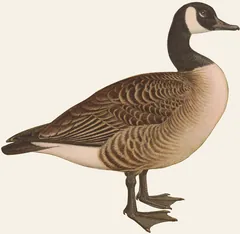
Marinus Adrianus Koekkoek, E. D. van Oort's Ornithologia Neerlandica (1922) about 181 per routeon 91% of routesno clear trend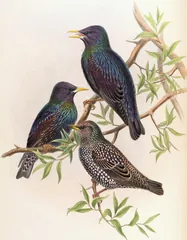
John Gould and Henry Constantine Richter, The Birds of Asia, vol. 5 (1850–83) 2 European Starlingabout 108 per routeon 98% of routesno clear trendintroduced species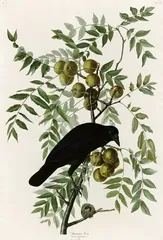
John James Audubon, The Birds of America (1827–38) about 61 per routeon 100% of routesno clear trend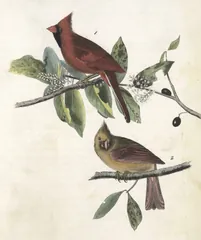
John James Audubon, The Birds of America (1840–44) about 53 per routeon 100% of routesrising since 2015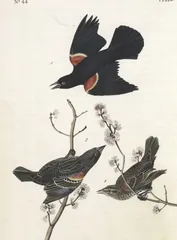
John James Audubon, The Birds of America (1840–44) about 50 per routeon 100% of routesrising since 2015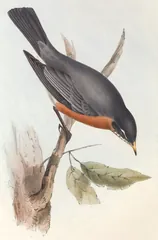
John and Elizabeth Gould, The Birds of Europe (1832–37) about 50 per routeon 100% of routesno clear trend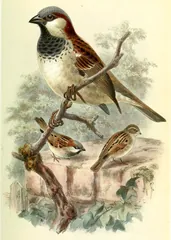
John Gerrard Keulemans, Lord Lilford’s Coloured Figures of the Birds of the British Islands (1885–97) 7 House Sparrowabout 47 per routeon 98% of routesno clear trendintroduced species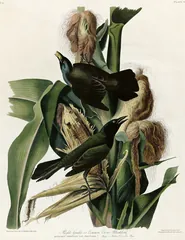
John James Audubon, The Birds of America (1827–38) 8 Common Grackleabout 44 per routeon 100% of routesfalling since 2015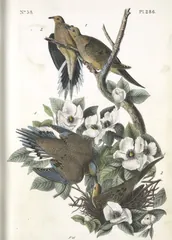
John James Audubon, The Birds of America (1840–44) about 40 per routeon 100% of routesrising since 2015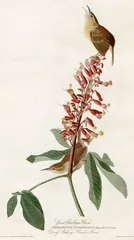
John James Audubon, The Birds of America (1827–38) about 36 per routeon 100% of routesrising since 2015
Show all 25
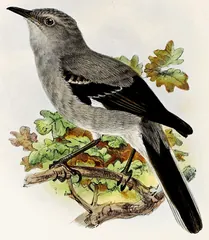
John Gerrard Keulemans, Onze Vogels in Huis en Tuin (1869–76) about 33 per routeon 93% of routesrising since 2015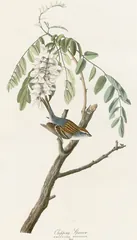
John James Audubon, The Birds of America (1827–38) 12 Chipping Sparrowabout 32 per routeon 100% of routesno clear trend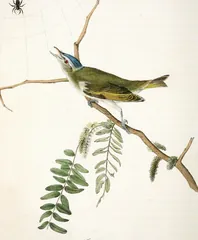
John James Audubon, The Birds of America (1840–44) 13 Red-eyed Vireoabout 24 per routeon 100% of routesno clear trend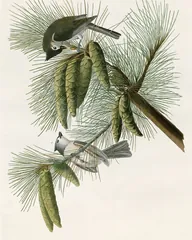
John James Audubon, The Birds of America (1827–38) about 23 per routeon 100% of routesno clear trend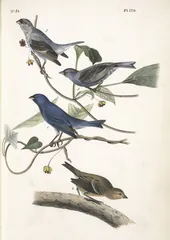
John James Audubon, The Birds of America (1840–44) 15 Indigo Buntingabout 23 per routeon 100% of routesfalling since 2015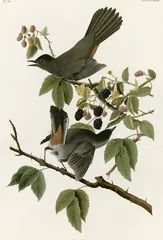
John James Audubon, The Birds of America (1827–38) 16 Gray Catbirdabout 22 per routeon 98% of routesno clear trend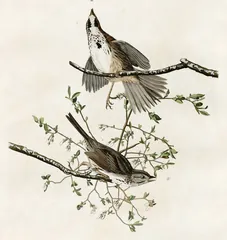
John James Audubon, The Birds of America (1827–38) 17 Song Sparrowabout 20 per routeon 84% of routesno clear trend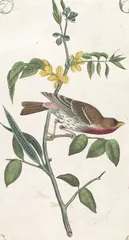
John James Audubon, The Birds of America (1840–44) 18 House Finchabout 18 per routeon 93% of routesrising since 2015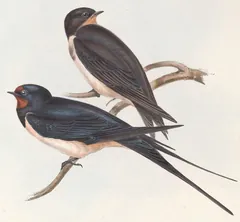
John and Elizabeth Gould, The Birds of Europe (1832–37) 19 Barn Swallowabout 18 per routeon 100% of routesno clear trend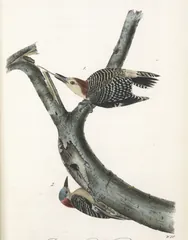
John James Audubon, The Birds of America (1840–44) about 16 per routeon 100% of routesrising since 2015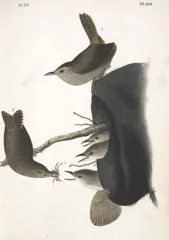
John James Audubon, The Birds of America (1840–44) 21 Northern House Wrenabout 16 per routeon 93% of routesno clear trend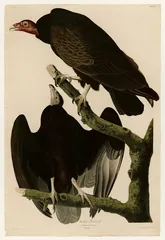
John James Audubon, The Birds of America (1827–38) about 16 per routeon 100% of routesno clear trend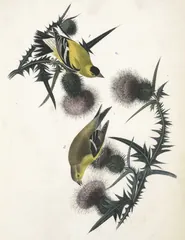
John James Audubon, The Birds of America (1840–44) about 14 per routeon 100% of routesno clear trend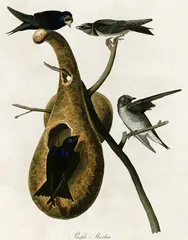
John James Audubon, The Birds of America (1827–38) 24 Purple Martinabout 13 per routeon 78% of routesno clear trend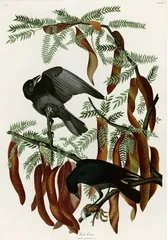
John James Audubon, The Birds of America (1827–38) 25 Fish Crowabout 13 per routeon 80% of routesno clear trend
Around homes, they're familiar backyard birds such as the American Robin, the Red-winged Blackbird and the House Sparrow. The Chesapeake Bay Program calls the robin one of the most common birds in the Chesapeake region and the blackbird one of the most abundant in North America, and the Maryland Ornithological Society names the House Sparrow among the most common birds you're likely to see.
Sources: American Robin, Chesapeake Bay field guide (Chesapeake Bay Program); Red-winged Blackbird, Chesapeake Bay field guide (Chesapeake Bay Program); Backyard Birds (Maryland Ornithological Society), read October 8, 2026.
These 25, led by the Canada Goose and the European Starling, are a small part of the 463 species on Maryland’s official list; to name the rest, our comparison of the best bird books of 2026 shows which field guide suits a beginner.
What is the most common bird in Maryland?
The Canada Goose leads Maryland’s summer survey: about 181 a route on average in 2021–2025, ahead of the European Starling at about 108, seen on 91% of the 45 routes. USGS finds no clear rise or fall in its Maryland numbers since 2015.
How was this list made?
Each of Maryland’s 45 routes is a roadside count, 50 stops along about 25 miles, run once a year in early summer by a volunteer. We took USGS’s yearly estimate for each species in Maryland, the number of birds a typical route records, averaged it over the five latest survey years (there was no survey in 2020) and ranked the birds by it. To keep the list to birds you’re likely to meet across Maryland, we left out species recorded on fewer than one in five of its routes, and those USGS can only estimate very roughly, which usually means big flocks or colonies on a few routes.
For Maryland that left out the Laughing Gull.
The share of routes is our own count from USGS’s route data for Maryland, using only counts that met the survey’s standards; “rising” and “falling” are USGS’s trends for the state since 2015, named only where it finds a clear change. Roadside counts on early-summer mornings miss most of Maryland’s owls and waterbirds, and its winter visitors aren’t here at all.
Maryland’s counts come from two USGS data releases, the North American Breeding Bird Survey Analysis Results 1966–2025 (Hostetler et al., 2026) and its Dataset 1966–2025 (Ziolkowski et al., 2026), gathered by volunteer observers and free for anyone to use; Birdfolio isn’t connected with the USGS.
How many bird species are in Maryland?
| Official count | 463 species |
|---|---|
| List’s date | October 2, 2024 |
| Kept by | Maryland/District of Columbia Records Committee (Maryland Ornithological Society) |
| Earlier totals | 455 in June 2020; 399 in 1996; 329 in 1968 |
| Among US states | Tied for 23rd highest of the 49 states with a verified count, alongside Illinois |
| Official list | Official List of the Birds of Maryland (as of 2 October 2024) |
What does Maryland’s count include?
- Species accepted for Maryland, numbered 1 to 463 in the first part of the list.
- Introduced birds that now live wild, such as the Mute Swan, the European Starling and the House Sparrow.
- Seabirds seen far offshore: the committee also reviews reports from the Atlantic up to 200 miles east of Maryland, its first report said in 1996.
- Not counted: subspecies and forms, birds of questionable origin, and exotic birds, each in a separate part of the list.
Why do other sources give a different number?
Maryland's total has been printed many times, and each figure counts something a little different:
- 455. The official list in June 2020, as the society's history of Maryland birding gives it. Source: A Brief History of Ornithology in Maryland, updated October 2020 (Maryland Ornithological Society and Maryland Bird Conservation Partnership).
- 452. The society's printable field checklist of September 2021, which leaves out extinct birds, birds of doubtful origin and species under review. Source: Field Checklist of the Birds of Maryland, September 2021 (Maryland Ornithological Society).
- 399 and 329. The society's Field List of the Birds of Maryland, known as the Yellow Book, in its 1996 and 1968 editions. Source: A Brief History of Ornithology in Maryland, updated October 2020 (Maryland Ornithological Society and Maryland Bird Conservation Partnership).
- 300. The species seen regularly in Maryland through the year, says the Maryland Bird Conservation Partnership, besides more than 150 rarities. Source: Maryland Bird Conservation Partnership, home page.
- 200. The species that nest in Maryland and the District of Columbia, the society's breeding bird atlas page says. Source: Breeding Bird Atlases (Maryland Ornithological Society).
Maryland’s list follows its own committee’s rules, and so does every other state’s: see why the counts differ from state to state.
Maryland records, from a duck shot in 1905 to a goldeneye known by its wing
- Maryland's one Masked Duck record goes back to September 8, 1905, when a man hunting rails in the Elk River marshes near Elkton, Cecil County, shot one. In the 1990s the records committee studied photos of the specimen and accepted it as wild, partly because the species is rarely kept in captivity; its 1998 report called it the state's only record. Source: Second Report of the Maryland/DC Records Committee (Maryland Birdlife 54:1, 1998), read October 8, 2026.
- A Yellow-nosed Albatross was photographed off Ocean City on February 1, 1975. The committee's 1996 report called it the only substantiated winter record in the western North Atlantic, and said many birders had sailed out of Ocean City in later winters, waiting in vain for another. Source: First Report of the Maryland/DC Records Committee (Maryland Birdlife 52:1, 1996), read October 8, 2026.
- A Black-tailed Gull, an Asian species, turned up at Sandy Point State Park on July 4-7, 1984, near busy shipping lanes; gulls ride ships, so the committee treated it as of questionable origin, its 1996 report says. The society's 2021 field checklist, which leaves such birds out, now lists it. Sources: First Report of the Maryland/DC Records Committee (Maryland Birdlife 52:1, 1996); Field Checklist of the Birds of Maryland, September 2021 (Maryland Ornithological Society), read October 8, 2026.
- Maryland's first accepted Barrow's Goldeneye was a wing. A female shot at Patuxent Naval Air Station in St. Mary's County on December 29, 1994, was identified after the fact from its wing, sent to the U.S. Fish and Wildlife Service's waterfowl harvest survey. Live ones came to the same base the next two winters. Source: Second Report of the Maryland/DC Records Committee (Maryland Birdlife 54:1, 1998), read October 8, 2026.
Questions people ask about Maryland’s birds
What U.S. state has the most bird species?
California, with 696 species on its official list (California Bird Records Committee, September 8, 2026). Texas is second with 682 (Texas Bird Records Committee, October 24, 2026; our table).
Source: Official California Checklist, updated 8 September 2026 (California Bird Records Committee), read October 8, 2026.
What are the rarest birds in Maryland?
Maryland's rarest birds are the ones so seldom seen that the records committee asks for evidence of every sighting: the society's 2021 field checklist marks 115 of them, from the Yellow-nosed Albatross to the Corn Crake (our count). A few have a single Maryland record; besides the Masked Duck, the 1998 report listed the state's only Groove-billed Ani, Sage Thrasher and Smith's Longspur.
Sources: Field Checklist of the Birds of Maryland, September 2021 (Maryland Ornithological Society); Second Report of the Maryland/DC Records Committee (Maryland Birdlife 54:1, 1998), read October 8, 2026.
What rare bird was recently found in Maryland?
A MacGillivray's Warbler, a bird of the West, caught on September 2, 2026, at the U.S. Geological Survey's fall banding station on Patuxent Research Refuge. The banders first took it for a Mourning Warbler, but its bold white eye-arcs and white throat said otherwise. USGS called it Maryland's first documented record; a 1964 report was never confirmed.
Source: MacGillivray's Warbler First Confirmed State Record for Maryland (USGS Bird Banding Laboratory, September 24, 2026), read October 8, 2026.
What is the largest bird in Maryland?
The Mute Swan, which the Chesapeake Bay Program calls the largest bird in the Chesapeake Bay region: up to five feet long, with a wingspan of seven to eight feet and a weight of up to 25 pounds. It isn't native, and Maryland has removed almost all of its Mute Swans.
Source: Mute Swan, Chesapeake Bay field guide (Chesapeake Bay Program), read October 8, 2026.
What big birds are in Maryland?
The Bald Eagle, with a wingspan of up to seven feet, the Osprey, up to six feet, and the Tundra Swan, about four and a half feet long, a winter visitor from the Arctic. The Chesapeake Bay had about 3,000 nesting pairs of Bald Eagles in 2020, and about a quarter of all the Ospreys in the lower 48 states nest in the Chesapeake region.
Sources: Bald Eagle, Chesapeake Bay field guide (Chesapeake Bay Program); Osprey, Chesapeake Bay field guide (Chesapeake Bay Program); Tundra Swan, Chesapeake Bay field guide (Chesapeake Bay Program), read October 8, 2026.
What bird is Maryland known for?
The Baltimore Oriole, its state bird, named for the orange and black on the first Lord Baltimore's coat of arms; the Maryland Manual says the state is known for it. The Chesapeake is known for winter waterfowl: about a third of those wintering along the Atlantic Coast come to the Bay. Six counties have official birds too, from Montgomery's American Robin to Calvert's Purple Martin.
Source: Maryland Birds (Maryland Manual, Maryland State Archives), read October 8, 2026.
Why did Maryland remove almost all of its Mute Swans?
Because they eat the Chesapeake Bay's underwater grasses. Mute Swans are European birds, and Maryland's wild flock began in 1962, when five escaped from a collection on the Miles River in Talbot County. From 1986 to 1999 their numbers in Maryland grew from 264 to 3,955, a Maryland Sea Grant brief says.
An adult eats more than eight pounds of bay grasses a day, roots and all, the Chesapeake Bay Program says, and unlike native Tundra Swans, which come only in winter, Mute Swans feed all year. In 2001 a state task force proposed swan-free areas; the Department of Natural Resources then destroyed eggs and, where gentler methods failed, killed birds. By 2009 all but 500 of nearly 4,000 were gone, and by 2012 fewer than 100 were left.
Sources: Aquatic Invasive Species in the Chesapeake Bay: Mute Swans (Maryland Sea Grant brief, September 2013); Mute Swan, Chesapeake Bay field guide (Chesapeake Bay Program), read October 8, 2026.
How did a question about robins start the North American Breeding Bird Survey in Maryland?
In 1965 a worried bird-watcher asked Chandler Robbins, a biologist at the federal research center in Laurel, Maryland, whether common birds such as American Robins were becoming rarer. His answer used Americans' love of birds and of cars: volunteers drive a set route on a summer morning, starting half an hour before dawn and stopping every half mile to count the birds they see or hear. Maryland and Delaware were the trial states in 1965, and the survey proper began in 1966.
Robbins and his Laurel colleagues had already documented what DDT did to birds, down to Bald Eagle and Osprey eggs so thin they shattered in the nest; his colleague and editor Rachel Carson drew on that work in Silent Spring. In the 1970s the survey's data revealed hidden declines among bluebirds, orioles, sparrows and meadowlarks.
Sources: Chandler Robbins Inspired Generations of Scientists and Birders, 1918-2017 (U.S. Geological Survey news release, March 23, 2017); A Brief History of Ornithology in Maryland, updated October 2020 (Maryland Ornithological Society and Maryland Bird Conservation Partnership), read October 8, 2026.
How did a Kelp Gull from the Southern Hemisphere get onto Maryland's list?
Slowly. A gull first reported as a possible Lesser Black-backed Gull was at Sandgates, on the Patuxent River in St. Mary's County, by January 25, 1998; in February 1999 birders identified it as a Kelp Gull, a bird of South America, Africa and the Antarctic. It stayed for years, slipping away each spring.
Every Kelp Gull in American collections came from eggs Sea World took in the South Shetland Islands, near Antarctica, so the committee had to rule out an escape. It compared the bird with Smithsonian specimens and tried DNA from a molted feather with the National Zoo. The wing pattern matched Brazilian birds rather than Antarctic ones, and in November 2003 all nine voting members accepted it, as species number 418 on the Maryland list. Its arrival coincided with the El Niño of 1997-98, the most powerful on record when the committee wrote.
Source: Decision Summary: Kelp Gull, Sandgates, St. Mary's County, November 28, 2003 (Maryland/District of Columbia Records Committee), read October 8, 2026.
Where is the official Maryland bird list, and how often is it updated?
On the Maryland Ornithological Society's website, under Records, the Maryland Bird Records page links the Official List of the Birds of Maryland, a PDF in Google Drive dated October 2, 2024. The page calls it a guide to the historical records, not a checklist, and links a chronology of the species added year by year, a database of Maryland reports and records, and the review lists. It gives no update schedule.
The Maryland/District of Columbia Records Committee was set up in 1982 as a committee of the society and keeps the District's list too. It has nine voting members on three-year terms, a chair and a non-voting secretary; it meets once a year and reviews reports by email in between. Its first report, in 1996, covered 303 reports since 1982, 198 of them accepted.
Sources: Maryland Bird Records (Maryland Ornithological Society); Records Committee (Maryland Ornithological Society); Records Committee Business & Operations (Maryland Ornithological Society); First Report of the Maryland/DC Records Committee (Maryland Birdlife 52:1, 1996), read October 8, 2026.
How do you count your own Maryland list?
Your Maryland list is every species you’ve seen in Maryland. eBird can filter your life list to Maryland, and your eBird data download gives the state of every sighting. On paper, count the species you’ve seen in Maryland; what is a life list? explains how birders keep their lists.
To print your whole list, Maryland birds and all, see how to print your bird life list, or let Birdfolio make it a hardcover book.
Maryland’s state bird
Maryland’s state bird is the Baltimore Oriole, the state bird since 1947. Its story, the state flower and animal, and a free picture card for a report are on our Maryland state bird page.
Birding festivals in Maryland
Our birding festivals calendar lists 2 in Maryland, with dates from each festival’s own website:
- Eagle Festival at Blackwater National Wildlife Refuge, Cambridge: dates not announced yet; expected in March 2027 (2026 festival: March 14, 2026)
- Waterfowl Festival, Easton: dates not announced yet; expected in November 2027 (2026 festival: November 13–15, 2026)
Christmas Bird Count in Maryland
Maryland had 26 Christmas Bird Count circles on Audubon’s map last winter, each counted on a single day between December 14 and January 5. Our guide shows where to find Maryland’s counts and lists 16 Maryland count dates already announced for this winter; it’s free, and beginners are welcome.
More about bird counts
- How many bird species are in each state: Maryland beside all 50 states, DC and Canada.
- Bird lists of nearby states: Delaware, District of Columbia, Pennsylvania, Virginia and West Virginia.
- State birds of all 50 states, Maryland’s Baltimore Oriole among them
- How many bird species are in the US and Canada
- Bird splits and lumps
If you’re shopping for a birder in Maryland, our gift guide for birders and our pick of coffee table bird books are good places to start.