Reference
How many bird species are in West Virginia?
West Virginia has 357 bird species on its official list (West Virginia Bird Records Committee, May 28, 2025), the 48th highest count of the 49 states with a verified count. It counts the main list only; 14 hypothetical species, many of them seen just once and never proved, are listed separately.
West Virginia’s state bird is the Northern Cardinal: our West Virginia state bird page tells how it was chosen.
Updated
What are the most common birds in West Virginia?
In summer, the 25 most common birds in West Virginia are led by the European Starling, at about 65 birds per survey route, then the American Robin and the Red-eyed Vireo, by the USGS Breeding Bird Survey’s counts for 2021–2025. Together these 25 made up 72% of all the birds counted on West Virginia’s 51 survey routes.
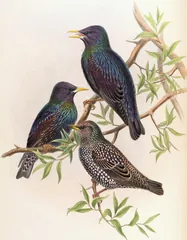
John Gould and Henry Constantine Richter, The Birds of Asia, vol. 5 (1850–83) 1 European Starlingabout 65 per routeon 98% of routesfalling since 2015introduced species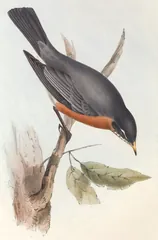
John and Elizabeth Gould, The Birds of Europe (1832–37) about 58 per routeon 100% of routesno clear trend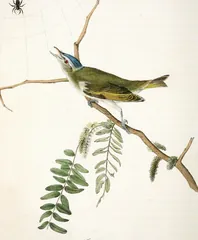
John James Audubon, The Birds of America (1840–44) 3 Red-eyed Vireoabout 46 per routeon 100% of routesno clear trend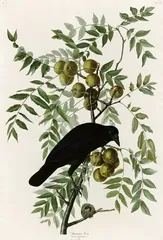
John James Audubon, The Birds of America (1827–38) about 44 per routeon 100% of routesno clear trend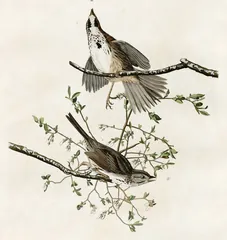
John James Audubon, The Birds of America (1827–38) about 43 per routeon 100% of routesno clear trend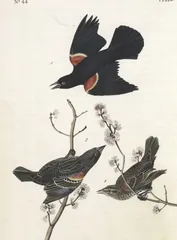
John James Audubon, The Birds of America (1840–44) about 33 per routeon 100% of routesno clear trend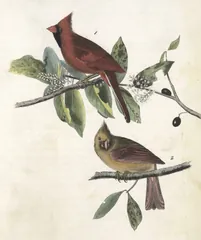
John James Audubon, The Birds of America (1840–44) about 29 per routeon 100% of routesno clear trend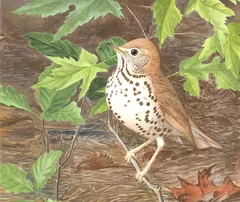
Louis Agassiz Fuertes, Annual Reports of the New York Forest, Fish and Game Commission (1901–12) 8 Wood Thrushabout 23 per routeon 100% of routesno clear trend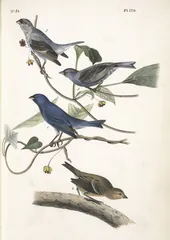
John James Audubon, The Birds of America (1840–44) 9 Indigo Buntingabout 21 per routeon 100% of routesfalling since 2015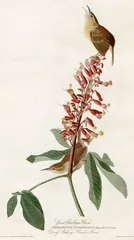
John James Audubon, The Birds of America (1827–38) about 21 per routeon 100% of routesno clear trend
Show all 25
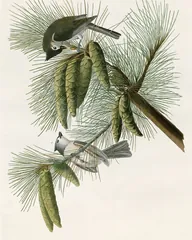
John James Audubon, The Birds of America (1827–38) about 20 per routeon 100% of routesno clear trend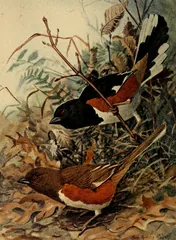
Louis Agassiz Fuertes, True Bird Stories from My Note-Books (1903) 12 Eastern Towheeabout 20 per routeon 100% of routesno clear trend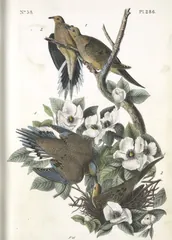
John James Audubon, The Birds of America (1840–44) about 19 per routeon 100% of routesfalling since 2015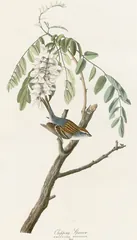
John James Audubon, The Birds of America (1827–38) 14 Chipping Sparrowabout 17 per routeon 100% of routesno clear trend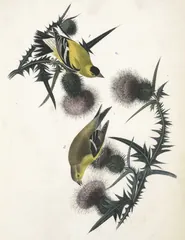
John James Audubon, The Birds of America (1840–44) about 17 per routeon 100% of routesno clear trend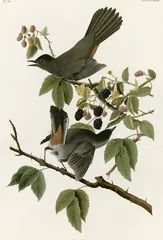
John James Audubon, The Birds of America (1827–38) 16 Gray Catbirdabout 16 per routeon 100% of routesno clear trend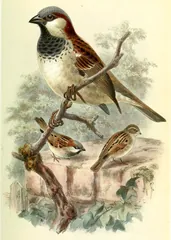
John Gerrard Keulemans, Lord Lilford’s Coloured Figures of the Birds of the British Islands (1885–97) 17 House Sparrowabout 14 per routeon 94% of routesfalling since 2015introduced species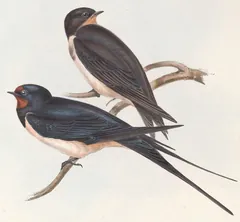
John and Elizabeth Gould, The Birds of Europe (1832–37) 18 Barn Swallowabout 14 per routeon 100% of routesno clear trend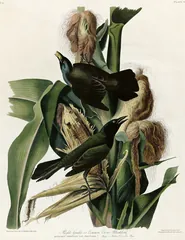
John James Audubon, The Birds of America (1827–38) 19 Common Grackleabout 11 per routeon 94% of routesfalling since 2015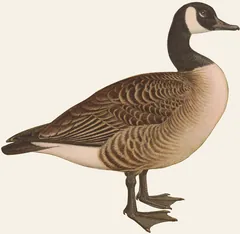
Marinus Adrianus Koekkoek, E. D. van Oort's Ornithologia Neerlandica (1922) 20 Canada Gooseabout 11 per routeon 51% of routesno clear trend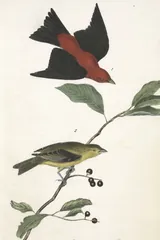
John James Audubon, The Birds of America (1840–44) 21 Scarlet Tanagerabout 10 per routeon 100% of routesno clear trend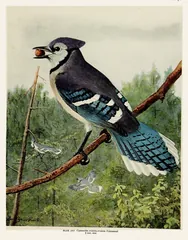
Louis Agassiz Fuertes, Elon H. Eaton's Birds of New York (1910–14) 22 Blue Jayabout 9.6 per routeon 100% of routesno clear trend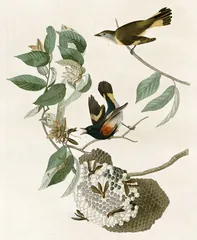
John James Audubon, The Birds of America (1827–38) 23 American Redstartabout 9.1 per routeon 96% of routesno clear trend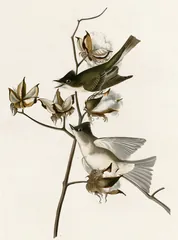
John James Audubon, The Birds of America (1827–38) 24 Eastern Phoebeabout 9.1 per routeon 100% of routesno clear trend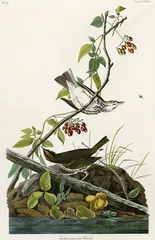
John James Audubon, The Birds of America (1827–38) 25 Ovenbirdabout 9.0 per routeon 94% of routesno clear trend
Away from the survey's roadsides, the state Division of Natural Resources gives the American Robin as its example of a bird found almost anywhere, at most times of year, while most species need a particular habitat: a forest for the Scarlet Tanager, a pasture or hayfield for the Eastern Meadowlark.
Source: Birds in West Virginia (West Virginia Division of Natural Resources), read October 8, 2026.
From the European Starling to the Ovenbird, these are West Virginia’s common summer birds; for the rest of its 357 species, our guide to the best bird books of 2026 compares the five big North American guides, Sibley’s and Peterson’s among them.
What is the most common bird in West Virginia?
The European Starling, a bird people brought to North America, leads West Virginia’s summer survey: about 65 a route on average in 2021–2025, ahead of the American Robin at about 58, seen on 98% of the 51 routes. USGS’s estimate has its West Virginia numbers falling since 2015.
How was this list made?
Each of West Virginia’s 51 routes is a roadside count, 50 stops along about 25 miles, run once a year in early summer by a volunteer. We took USGS’s yearly estimate for each species in West Virginia, the number of birds a typical route records, averaged it over the five latest survey years (there was no survey in 2020) and ranked the birds by it. To keep the list to birds you’re likely to meet across West Virginia, we left out species recorded on fewer than one in five of its routes, and those USGS can only estimate very roughly, which usually means big flocks or colonies on a few routes.
The share of routes is our own count from USGS’s route data for West Virginia, using only counts that met the survey’s standards; “rising” and “falling” are USGS’s trends for the state since 2015, named only where it finds a clear change. Roadside counts on early-summer mornings miss most of West Virginia’s owls and waterbirds, and its winter visitors aren’t here at all.
West Virginia’s counts come from two USGS data releases, the North American Breeding Bird Survey Analysis Results 1966–2025 (Hostetler et al., 2026) and its Dataset 1966–2025 (Ziolkowski et al., 2026), gathered by volunteer observers and free for anyone to use; Birdfolio isn’t connected with the USGS.
How many bird species are in West Virginia?
| Official count | 357 species |
|---|---|
| List’s date | May 28, 2025 |
| Kept by | West Virginia Bird Records Committee (Brooks Bird Club) |
| Hypothetical list | 14 species, not counted |
| Extinct | Passenger Pigeon and Carolina Parakeet |
| Records committee | Seven voting members; five-year terms |
| Among US states | 48th highest of the 49 states with a verified count |
| Official list | West Virginia State Bird List (May 28, 2025) |
What does West Virginia’s count include?
- The main list of West Virginia birds as of May 28, 2025, which grew from the list in the 1983 book West Virginia Birds and its later supplements.
- Two extinct species, the Passenger Pigeon and Carolina Parakeet.
- Species on the committee's review and watch lists are part of the 357, not extra. Watch-list birds carry the year they were last documented, such as 2024 for the Black-bellied Whistling-Duck and Trumpeter Swan.
- Not counted: 14 hypothetical species, records the committee thinks probably right but short of proof, such as a Kelp Gull and a Gyrfalcon. The Ivory-billed Woodpecker is marked both extinct and hypothetical.
- Not counted: subspecies the committee reviews on their own, such as the Pacific Black Brant and the Common Teal, the Eurasian form of the Green-winged Teal.
Why do other sources give a different number?
West Virginia's lists come in several sizes, depending on who made them, when, and what they count:
- 371. The main list and the hypothetical list together, 357 plus 14 (our arithmetic).
- 354. The committee's main list of July 9, 2021, an older edition still quoted in places; the list has gained 3 species since (our arithmetic). Source: West Virginia State Bird List, July 9, 2021 (West Virginia Bird Records Committee, Brooks Bird Club).
- 256. The species on the state Division of Natural Resources' field checklist, the birds most often encountered in the state. It points to the records committee for the complete list. Source: Birds of West Virginia Checklist (West Virginia Division of Natural Resources).
- More than 170. The species that breed in West Virginia, by the Division of Natural Resources' count. Source: Birds in West Virginia (West Virginia Division of Natural Resources).
West Virginia’s list follows its own committee’s rules, and so does every other state’s: see why the counts differ from state to state.
West Virginia records, from terns in 1926 to a hummingbird hundreds came to see
- Two Sooty Terns were found in the summer of 1926, far from any ocean: one near Charleston on July 31, reported in the journal The Auk, and one near Wheeling on August 2. Source: West Virginia Bird Review List, May 28, 2025 (West Virginia Bird Records Committee), read October 8, 2026.
- The state's only Boreal Chickadee was recorded at Morgantown on November 10, 1969. The list still marks it with a single West Virginia record. Sources: West Virginia Bird Review List, May 28, 2025 (West Virginia Bird Records Committee); West Virginia State Bird List, May 28, 2025 (West Virginia Bird Records Committee, Brooks Bird Club), read October 8, 2026.
- A Mexican Violetear, a hummingbird, visited Terra Alta in Preston County from June 26 to August 20, 2003, and hundreds of people came to see it. Sources: West Virginia Bird Review List, May 28, 2025 (West Virginia Bird Records Committee); West Virginia State Bird List, May 28, 2025 (West Virginia Bird Records Committee, Brooks Bird Club), read October 8, 2026.
- West Virginia's first Limpkin was found at Steamboat Run in Jefferson County on August 16, 2021. Three more followed in October and November 2023, at Stonewall Jackson Lake, Hurricane and Dunbar. Source: West Virginia Bird Review List, May 28, 2025 (West Virginia Bird Records Committee), read October 8, 2026.
- A Tufted Duck at Terra Alta on March 4, 2023, became a first state record, the same town where a Roseate Spoonbill had turned up in June 2018. Source: West Virginia Bird Review List, May 28, 2025 (West Virginia Bird Records Committee), read October 8, 2026.
Questions people ask about West Virginia’s birds
Which state has the most species of birds?
California, with 696 species on its official checklist of September 8, 2026, then Texas with 682 (our table). West Virginia's main list has 357, plus 14 hypothetical species it keeps apart.
Sources: Official California Checklist, updated 8 September 2026 (California Bird Records Committee); West Virginia State Bird List, May 28, 2025 (West Virginia Bird Records Committee, Brooks Bird Club), read October 8, 2026.
What is the rarest bird in West Virginia?
The rarest are the birds on the list that no one will see again, the extinct Passenger Pigeon and Carolina Parakeet. Among living birds, many of the 14 hypothetical species and some on the main list, such as the Boreal Chickadee and Cave Swallow, have a single West Virginia record each, and the committee's review list covers every species with fewer than five accepted records.
Sources: West Virginia State Bird List, May 28, 2025 (West Virginia Bird Records Committee, Brooks Bird Club); West Virginia Bird Review List, May 28, 2025 (West Virginia Bird Records Committee); West Virginia Bird Records Committee Bylaws, 2023 (Brooks Bird Club), read October 8, 2026.
What is the official bird of WV?
The Northern Cardinal. The state's public school students and civic groups voted on the state bird and the cardinal won by more than 11,000 votes; the West Virginia State Museum gives March 7, 1949, as the day the Legislature adopted it. Only the males wear the rich scarlet and black mask; females and young birds show just tinges of red. The cardinal's scarlet is one of the colors of the state tartan too.
Source: West Virginia State Symbols (West Virginia State Museum Education), read October 8, 2026.
Are there 10,000 species of birds?
There are more than 11,000. AviList, the global checklist first released in June 2025, counts 11,131 species in 46 orders (our sum), so West Virginia's 357 are about 3.2 percent of the world's birds.
Sources: AviList: The Global Avian Checklist, v2025, first released June 11, 2025 (AviList Core Team, CC BY 4.0); West Virginia State Bird List, May 28, 2025 (West Virginia Bird Records Committee, Brooks Bird Club), read October 8, 2026.
Which birds live in West Virginia?
Forest birds above all: with more than 12 million forested acres, the state matters to millions of them, the Division of Natural Resources says. It counts more than 170 breeding species and notes some edges of range: Swainson's Warblers reach their northernmost nesting grounds in the Cumberland Mountains, while the Allegheny Mountains are the southernmost place Olive-sided Flycatchers and Nashville Warblers nest. The Alleghenies hold Northern Saw-whet Owls and Blue-headed Vireos in northern hardwoods and spruce, and Bald Eagles and Pine Warblers live along the river valleys and oak-pine ridges of the Eastern Panhandle.
In New River Gorge National Park and Preserve, warblers, vireos and thrushes that winter in the tropics nest in unbroken forest, thousands of hawks cross the area each fall, and the Park Service and the state have worked to bring Peregrine Falcons back to the gorge's cliffs.
Sources: Birds in West Virginia (West Virginia Division of Natural Resources); Birds, New River Gorge National Park and Preserve (National Park Service), read October 8, 2026.
Why does West Virginia matter so much to the Cerulean Warbler?
Because so much of the species nests here. Roughly 80 percent of the world's Cerulean Warblers breed in the Appalachian Mountains, and a third of those nest in West Virginia, which makes it home to more than a quarter of the world's population (our arithmetic). The small songbird, named for the male's sky-blue feathers, spends the summer in the state's oak and hickory forests and winters in the Andes of South America.
It is declining steeply, and the Division of Natural Resources has made it the focus of a large forest restoration at Summersville Wildlife Management Area. The warblers nest high in the trees and feed in gaps where sunlight reaches the forest floor. The state's ornithologist says that if West Virginia had an unofficial state bird, "it would be the cerulean warbler."
Sources: Revitalizing Cerulean Warbler Habitat in West Virginia (West Virginia Division of Natural Resources); Birds in West Virginia (West Virginia Division of Natural Resources), read October 8, 2026.
What does it take to add a bird to West Virginia's list?
Proof, and the committee's agreement. The list once added species only on a specimen in a museum, the committee says, but collecting permits are now hard to get and most birders dislike collecting. Its rules now accept a specimen, a recognizable photograph, a bird handled by a bander, or sight records each made by at least three people who already knew the species; its 2023 bylaws also accept audio recordings, DNA testing and geospatial location data as evidence.
A record passes on a unanimous first vote of the seven members; otherwise it goes round again and needs 7-0 or 6-1. A sighting that is probably right but falls short of proof, such as a single observer's bird with nothing to show, goes on the hypothetical list instead, which is where the Kelp Gull reported at Pike Island Lock and Dam on February 11, 2015, sits today.
Sources: West Virginia Bird Records Committee (Brooks Bird Club); West Virginia Bird Records Committee Bylaws, 2023 (Brooks Bird Club); West Virginia Bird Review List, May 28, 2025 (West Virginia Bird Records Committee), read October 8, 2026.
Where is the official West Virginia bird list, and how often is it updated?
On the Brooks Bird Club's website, brooksbirdclub.org, on the West Virginia Bird Records Committee page: the State Bird List, dated May 28, 2025, with the review list of species with fewer than five records, the committee's bylaws and its report form. Each record the committee has voted on recently is posted there as well, with the report and the vote, year by year.
The committee has seven voting members, who serve five-year terms, and a non-voting secretary who keeps the official list, the review list and a separate list of exotic birds. Its decisions are published each year in The Redstart, the club's journal, which has printed natural history papers since 1933. The club itself was founded in 1932 by a group that took weekly bird walks in Wheeling's Oglebay Park with the West Virginia naturalist A. B. Brooks, for whom it is named.
Sources: West Virginia Bird Records Committee (Brooks Bird Club); West Virginia State Bird List, May 28, 2025 (West Virginia Bird Records Committee, Brooks Bird Club); West Virginia Bird Review List, May 28, 2025 (West Virginia Bird Records Committee); West Virginia Bird Records Committee Bylaws, 2023 (Brooks Bird Club); What is the Brooks Bird Club? (Brooks Bird Club), read October 8, 2026.
How do you count your own West Virginia list?
Your West Virginia list is every species you’ve seen in West Virginia. eBird can filter your life list to West Virginia, and your eBird data download gives the state of every sighting. On paper, count the species you’ve seen in West Virginia; what is a life list? explains how birders keep their lists.
To print your whole list, West Virginia birds and all, see how to print your bird life list, or let Birdfolio make it a hardcover book.
West Virginia’s state bird
West Virginia’s state bird is the Northern Cardinal (officially, the “cardinal”), the state bird since 1949. Its story, the state flower and animal, and a free picture card for a report are on our West Virginia state bird page.
Birding festivals in West Virginia
Our birding festivals calendar lists one festival in West Virginia, with dates from its own website:
- New River Birding & Nature Festival, Fayette County: April 26 – May 1, 2027
Christmas Bird Count in West Virginia
West Virginia had 23 Christmas Bird Count circles on Audubon’s map last winter, each counted on a single day between December 14 and January 5. Our guide shows where to find West Virginia’s counts and how to join one; it’s free, and beginners are welcome.
More about bird counts
- How many bird species are in each state: West Virginia beside all 50 states, DC and Canada.
- Bird lists of nearby states: Kentucky, Maryland, Ohio, Pennsylvania and Virginia.
- State birds of all 50 states, West Virginia’s Northern Cardinal among them
- How many bird species are in the US and Canada
- Bird splits and lumps
If you’re shopping for a birder in West Virginia, our gift guide for birders and our pick of coffee table bird books are good places to start.