Reference
How many bird species are in Nebraska?
Nebraska has 473 bird species on its official list (Nebraska Ornithologists' Union, no date on the list), the 20th highest count of the 49 states with a verified count. Of these, 347 are regular, 24 casual and 96 accidental (the list's words for rare visitors), 4 are no longer found in Nebraska and 2 are extinct.
Nebraska’s state bird is the Western Meadowlark: our Nebraska state bird page tells how it was chosen.
Updated
What are the most common birds in Nebraska?
In summer, the 25 most common birds in Nebraska are led by the Red-winged Blackbird, at about 162 birds per survey route, then the Western Meadowlark and the Cliff Swallow, by the USGS Breeding Bird Survey’s counts for 2021–2025. Together these 25 made up 81% of all the birds counted on Nebraska’s 64 survey routes.
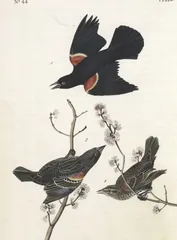
John James Audubon, The Birds of America (1840–44) about 162 per routeon 100% of routesno clear trend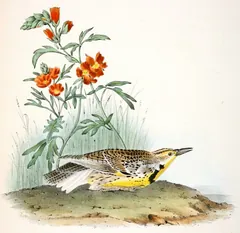
John James Audubon, The Birds of America (1840–44) about 158 per routeon 98% of routesfalling since 2015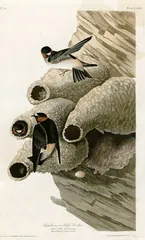
John James Audubon, The Birds of America (1827–38) 3 Cliff Swallowabout 143 per routeon 84% of routesno clear trend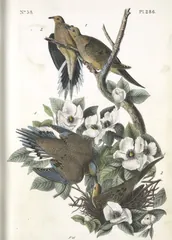
John James Audubon, The Birds of America (1840–44) about 93 per routeon 100% of routesno clear trend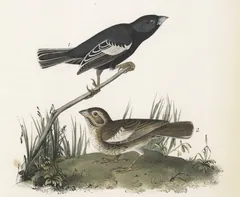
John James Audubon, The Birds of America (1840–44) 5 Lark Buntingabout 73 per routeon 30% of routesno clear trend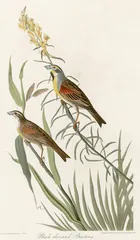
John James Audubon, The Birds of America (1827–38) 6 Dickcisselabout 70 per routeon 98% of routesno clear trend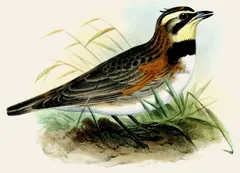
Joseph Wolf, Proceedings of the Zoological Society of London (1855) 7 Horned Larkabout 57 per routeon 95% of routesno clear trend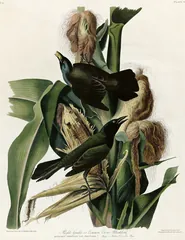
John James Audubon, The Birds of America (1827–38) 8 Common Grackleabout 50 per routeon 100% of routesno clear trend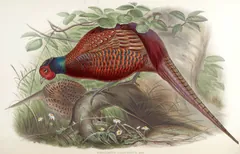
Joseph Wolf and Henry Constantine Richter, in John Gould's The Birds of Asia, part XXI (1869) 9 Ring-necked Pheasantabout 45 per routeon 97% of routesno clear trendintroduced species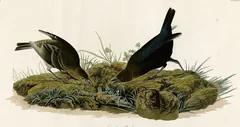
John James Audubon, The Birds of America (1827–38) 10 Brown-headed Cowbirdabout 41 per routeon 98% of routesno clear trend
Show all 25
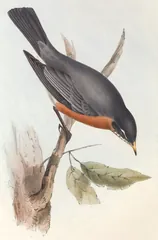
John and Elizabeth Gould, The Birds of Europe (1832–37) about 41 per routeon 97% of routesno clear trend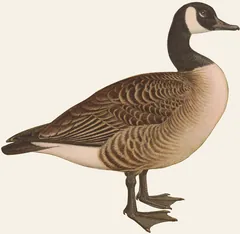
Marinus Adrianus Koekkoek, E. D. van Oort's Ornithologia Neerlandica (1922) 12 Canada Gooseabout 26 per routeon 53% of routesno clear trend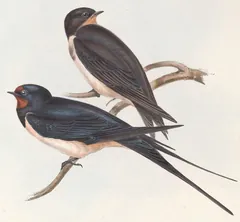
John and Elizabeth Gould, The Birds of Europe (1832–37) 13 Barn Swallowabout 25 per routeon 100% of routesno clear trend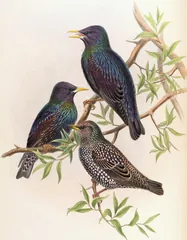
John Gould and Henry Constantine Richter, The Birds of Asia, vol. 5 (1850–83) 14 European Starlingabout 23 per routeon 94% of routesno clear trendintroduced species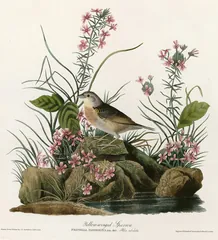
John James Audubon, The Birds of America (1827–38) 15 Grasshopper Sparrowabout 21 per routeon 91% of routesno clear trend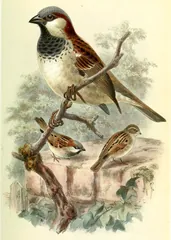
John Gerrard Keulemans, Lord Lilford’s Coloured Figures of the Birds of the British Islands (1885–97) 16 House Sparrowabout 19 per routeon 78% of routesrising since 2015introduced species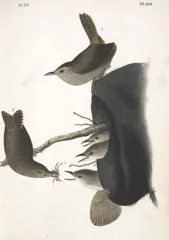
John James Audubon, The Birds of America (1840–44) 17 Northern House Wrenabout 15 per routeon 91% of routesno clear trend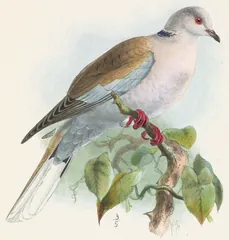
John Gerrard Keulemans, R. B. Sharpe’s Scientific Results of the Second Yarkand Mission (1891) 18 Eurasian Collared-Doveabout 14 per routeon 92% of routesno clear trendintroduced species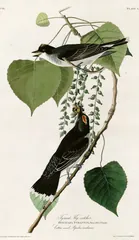
John James Audubon, The Birds of America (1827–38) 19 Eastern Kingbirdabout 14 per routeon 97% of routesno clear trend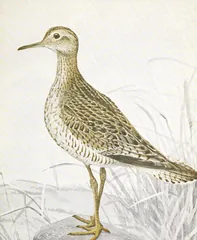
Louis Agassiz Fuertes, Portraits and Habits of Our Birds (1925) 20 Upland Sandpiperabout 14 per routeon 89% of routesno clear trend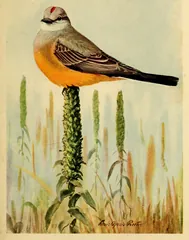
Louis Agassiz Fuertes, Food of Our More Important Flycatchers (1912) 21 Western Kingbirdabout 13 per routeon 94% of routesno clear trend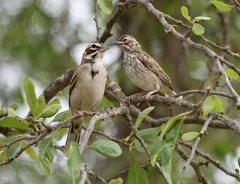
Photo: Cody Stricker, CC BY 4.0 22 Lark Sparrowabout 10 per routeon 94% of routesno clear trend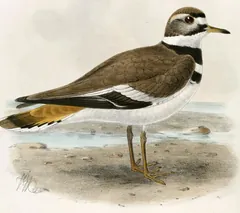
John Gerrard Keulemans, H. E. Dresser's A History of the Birds of Europe, Supplement (1895–96) 23 Killdeerabout 10 per routeon 98% of routesno clear trend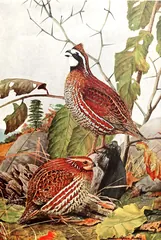
Louis Agassiz Fuertes, Elon H. Eaton’s Birds of New York (1910–14) 24 Northern Bobwhiteabout 8.3 per routeon 73% of routesno clear trend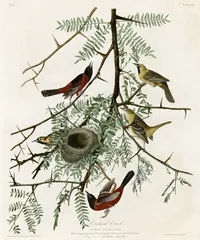
John James Audubon, The Birds of America (1827–38) 25 Orchard Orioleabout 7.7 per routeon 95% of routesno clear trend
Nebraska's most famous crowd belongs to the Sandhill Crane: between February and April about a million use the Platte River, the world's largest population of the species, the National Audubon Society says. The union's list counts 347 species as regular, reported in at least 9 of the past 10 years.
Winter is quieter. The state's 20 Christmas Bird Counts of 2024-25 tallied 310,304 birds of 153 species, and 13 species, the Bald Eagle among them, turned up on every one of the counts.
Sources: Tracking Data Show Us One of North America's Most Epic Migrations (National Audubon Society, May 10, 2024); Birds of Nebraska, the state list, 473 species (Nebraska Ornithologists' Union); 2024-2025 Christmas Bird Counts (Nebraska Bird Review, 2025), abstract, read October 8, 2026.
These 25, led by the Red-winged Blackbird and the Western Meadowlark, are a small part of the 473 species on Nebraska’s official list; to name the rest, our comparison of the best bird books of 2026 shows which field guide suits a beginner.
What is the most common bird in Nebraska?
The Red-winged Blackbird leads Nebraska’s summer survey: about 162 a route on average in 2021–2025, ahead of the Western Meadowlark at about 158, seen on every one of the 64 routes. USGS finds no clear rise or fall in its Nebraska numbers since 2015.
How was this list made?
Each of Nebraska’s 64 routes is a roadside count, 50 stops along about 25 miles, run once a year in early summer by a volunteer. We took USGS’s yearly estimate for each species in Nebraska, the number of birds a typical route records, averaged it over the five latest survey years (there was no survey in 2020) and ranked the birds by it. To keep the list to birds you’re likely to meet across Nebraska, we left out species recorded on fewer than one in five of its routes, and those USGS can only estimate very roughly, which usually means big flocks or colonies on a few routes.
For Nebraska that left out the Greater Prairie-Chicken and the American White Pelican.
The share of routes is our own count from USGS’s route data for Nebraska, using only counts that met the survey’s standards; “rising” and “falling” are USGS’s trends for the state since 2015, named only where it finds a clear change. Roadside counts on early-summer mornings miss most of Nebraska’s owls and waterbirds, and its winter visitors aren’t here at all.
Nebraska’s counts come from two USGS data releases, the North American Breeding Bird Survey Analysis Results 1966–2025 (Hostetler et al., 2026) and its Dataset 1966–2025 (Ziolkowski et al., 2026), gathered by volunteer observers and free for anyone to use; Birdfolio isn’t connected with the USGS.
How many bird species are in Nebraska?
| Official count | 473 species |
|---|---|
| List’s date | Not given on the Nebraska list (we read it on November 19, 2026) |
| Kept by | Nebraska Ornithologists' Union (Records Committee) |
| Regular | 347 species, reported in 9 or 10 of the past 10 years |
| Rare visitors | 24 casual, 96 accidental |
| Extinct or gone | 2 extinct, 4 not reported in 50 years |
| Official List 2024 | 471 species (printed September 2025) |
| Among US states | 20th highest of the 49 states with a verified count |
| Official list | Birds of Nebraska (NOU state list) |
What does Nebraska’s count include?
- Every species the Nebraska Ornithologists' Union Records Committee has accepted, each labeled by how often it was acceptably reported in the past 10 years: regular in 9 or 10, casual in 4 to 7, accidental in 2 or fewer.
- 4 species not acceptably reported in the past 50 years, the Ruffed Grouse, Greater Sage-Grouse, Lesser Prairie-Chicken and Eskimo Curlew, and 2 extinct ones, the Passenger Pigeon and Carolina Parakeet.
- The best evidence for each: a specimen for 369 species, a photo for 91, a sound recording for 4 and written sight reports alone for 9, among them the Fish Crow, Canada Jay and Scott's Oriole.
- An X on the 225 species confirmed nesting in Nebraska (our count).
Why do other sources give a different number?
Nebraska's committee also prints a dated official list in the union's journal, so you may see these totals:
- 471. The Official List of the Birds of Nebraska: 2024, printed in the Nebraska Bird Review in September 2025. The undated web list is two higher. Source: The Official List of the Birds of Nebraska: 2024 (Nebraska Bird Review 93:3, September 2025), abstract.
- 472. The undated web list as we read it in October 2026. It now counts the Eastern and Western Marsh Wrens, which the American Ornithological Society split on October 20, 2026, as two species (our comparison). Source: Birds of Nebraska, the state list (Nebraska Ornithologists' Union), the Internet Archive's copy of July 20, 2026.
- 462. The previous full edition, of 2017. Ten species have been added since, among them the Great Kiskadee, Mexican Duck and Pink-footed Goose, and one was lost when the Hoary and Common Redpolls were merged. Source: The Official List of the Birds of Nebraska: 2024 (Nebraska Bird Review 93:3, September 2025), abstract.
- 469. The running total after the committee's decisions for 2023, which added the Western Gull and Western Bluebird. Source: 2023 (35th) Report of the NOU Records Committee (Nebraska Bird Review, 2024), abstract.
Nebraska’s list follows its own committee’s rules, and so does every other state’s: see why the counts differ from state to state.
Nebraska records, from a Limpkin to two new state birds on one April day
- On June 23, 2022, a Limpkin was found and photographed at the Wehrspann mitigation pond in Sarpy County, Nebraska's first. It stayed until at least November 8, and one photographed on October 14 at Heron Haven in Douglas County, about 12 miles north, was probably the same bird. With it the official list reached 467. Source: 2022 (34th) Report of the NOU Records Committee (Nebraska Bird Review, September 2023), abstract, read October 8, 2026.
- April 7, 2023, brought two new state birds at once: a Western Gull photographed at Lake Minatare in Scotts Bluff County, and three Western Bluebirds just north of the Colorado line in Kimball County, two of them photographed. Source: 2023 (35th) Report of the NOU Records Committee (Nebraska Bird Review, 2024), abstract, read October 8, 2026.
- Nebraska's 20 Christmas Bird Counts of 2024-25 found 153 species between them, four more than the previous high of 149, set in 2010. Lake McConaughy led with 106, and a Couch's Kingbird, far out of place, was new to the state's counts. Source: 2024-2025 Christmas Bird Counts (Nebraska Bird Review, 2025), abstract, read October 8, 2026.
- The Burrowing Owl, on the cover of the union's journal from its first issue in 1933 and later called its mascot, was first made known to science in 1825 from specimens the Long Expedition collected in June 1820 along the Platte River in central Nebraska. That first issue noted it had even been suggested as the state bird. Source: About the NOU: Who We Are (Nebraska Ornithologists' Union), read October 8, 2026.
Questions people ask about Nebraska’s birds
Which US state has the most bird species?
California, with 696 species as of its committee's update of October 27, 2026, ahead of Texas with 682. Nebraska's web list stands at 473, and its printed Official List 2024 at 471.
Sources: Official California Checklist, 696 species, updated 27 October 2026 (California Bird Records Committee, Western Field Ornithologists); Texas State List, 682 species, last updated October 24, 2026 (Texas Bird Records Committee, Texas Ornithological Society); Birds of Nebraska, the state list, 473 species (Nebraska Ornithologists' Union), read November 19, 2026.
What are some rare birds in Nebraska?
The list calls 96 species accidental, reported in two or fewer of the past ten years, from the Emperor Goose and Hooded Crane to Ross's Gull and the Great Gray Owl, and 24 casual, reported in four to seven. Rarest of all are the six gone from the state: the Passenger Pigeon and Carolina Parakeet are extinct, and the Ruffed Grouse, Greater Sage-Grouse, Lesser Prairie-Chicken and Eskimo Curlew haven't been acceptably reported in 50 years.
Source: Birds of Nebraska, the state list (Nebraska Ornithologists' Union), read October 8, 2026.
Are there 10,000 species of birds?
More than 11,000: AviList's 2025 global checklist lists 11,131 species in 46 orders (our sum). Nebraska's 473 come to about 4.2 percent of the world's birds.
Sources: AviList: The Global Avian Checklist, v2025, first released June 11, 2025 (AviList Core Team, CC BY 4.0); Birds of Nebraska, the state list, 473 species (Nebraska Ornithologists' Union), read November 19, 2026.
Which birds live in Nebraska?
Birds of the East, the West and the North meet here. In the Niobrara Valley alone, five western species reach their eastern limits and six northern ones their southern limits, the National Park Service says, and eastern and western pairs interbreed there: Indigo with Lazuli Buntings, Yellow-shafted with Red-shafted Flickers, Baltimore with Bullock's Orioles.
The union's list marks 225 species as confirmed nesters in Nebraska (our count). Least Terns and Piping Plovers nest on the Niobrara's sandbars, Bald Eagles are especially common along the river in winter, and Whooping Cranes pass through on migration. Some prairie birds are gone: the Lesser Prairie-Chicken and Greater Sage-Grouse are both listed as extirpated.
Sources: Birds, Niobrara National Scenic River (National Park Service); Birds of Nebraska, the state list, 473 species (Nebraska Ornithologists' Union), read November 19, 2026.
Why do so many Sandhill Cranes stop on Nebraska's Platte River?
To rest and refuel on the way north. Between February and April about a million Sandhill Cranes use the Platte, roosting on the sandbars of its braided channels beside wet meadows and feeding in the farmland around it, the National Audubon Society says. Since the 1930s and 1940s, corn left in the fields has let them stay a month or more to build up fat, and few stop long anywhere farther south: in a U.S. Geological Survey tracking study, only 14 percent of tagged cranes spent more than five days at stopovers south of Nebraska.
That study, from 1998 to 2007, found that of the more than half a million cranes staging in the Central Platte River Valley, 64 percent were Lesser and 36 percent Greater Sandhill Cranes. It also traced nearly a quarter of the population that uses the Platte to breeding grounds in northeastern Russia, tripling the species' known breeding range in northeast Asia. One of its biologists caught more than 3,000 cranes over his career and never once recaught a banded bird.
Source: Tracking Data Show Us One of North America's Most Epic Migrations (National Audubon Society, May 10, 2024), read October 8, 2026.
Where is the official Nebraska bird list, and how often is it updated?
On the Nebraska Ornithologists' Union's website, noubirds.org, under Birds of Nebraska: the state list, headed with its total but no date, with each species' status, best evidence and nesting mark, county maps and a printable field checklist. The dated version is the committee's Official List of the Birds of Nebraska, printed in full in 2017, appended every year since and printed again as the Official List 2024 in the union's journal, the Nebraska Bird Review, in September 2025. Back issues of the journal are on the University of Nebraska-Lincoln's DigitalCommons.
The committee, at least seven members on three-year terms under bylaws of 2010, needs at least six votes on a record and accepts it only with one vote against at most. Since 2020 it has reviewed mainly the accidental species, leaving casual and out-of-range birds to the journal's seasonal reports, and its files are kept in the union's archives at the University of Nebraska State Museum in Lincoln. The union itself was founded in 1899.
Sources: Birds of Nebraska, the state list, 473 species (Nebraska Ornithologists' Union); The Official List of the Birds of Nebraska: 2024 (Nebraska Bird Review 93:3, September 2025), abstract; Nebraska Bird Review archive (Nebraska Ornithologists' Union, on the University of Nebraska-Lincoln's DigitalCommons); NOU Records Committee (Nebraska Ornithologists' Union); By-laws of the Nebraska Ornithologists' Union Records Committee (2010); 2024 (36th) Report of the NOU Records Committee (Nebraska Bird Review 93:3, September 2025), abstract; About the NOU: Who We Are (Nebraska Ornithologists' Union), read October 8, 2026.
How do you count your own Nebraska list?
Your Nebraska list is every species you’ve seen in Nebraska. eBird can filter your life list to Nebraska, and your eBird data download gives the state of every sighting. On paper, count the species you’ve seen in Nebraska; what is a life list? explains how birders keep their lists.
To print your whole list, Nebraska birds and all, see how to print your bird life list, or let Birdfolio make it a hardcover book.
Nebraska’s state bird
Nebraska’s state bird is the Western Meadowlark, the state bird since 1929. Its story, the state flower and animal, and a free picture card for a report are on our Nebraska state bird page.
Christmas Bird Count in Nebraska
Nebraska had 16 Christmas Bird Count circles on Audubon’s map last winter, each counted on a single day between December 14 and January 5. Our guide shows where to find Nebraska’s counts and how to join one; it’s free, and beginners are welcome.
More about bird counts
- How many bird species are in each state: Nebraska beside all 50 states, DC and Canada.
- Bird lists of nearby states: Colorado, Iowa, Kansas, Missouri and South Dakota.
- State birds of all 50 states, Nebraska’s Western Meadowlark among them
- How many bird species are in the US and Canada
- Bird splits and lumps
If you’re shopping for a birder in Nebraska, our gift guide for birders and our pick of coffee table bird books are good places to start.