Reference
How many bird species are in Iowa?
Iowa has 432 bird species on its official list (Iowa Ornithologists' Union, no date on the list), tied for the 38th highest count of the 49 states with a verified count. The list marks 214 of its species as nesting in Iowa. It also includes 3 extinct species and 1 that is no longer found in the state.
Iowa’s state bird is the American Goldfinch: our Iowa state bird page tells how it was chosen.
Updated
What are the most common birds in Iowa?
In summer, the 25 most common birds in Iowa are led by the Cliff Swallow, at about 393 birds per survey route, then the Red-winged Blackbird and the Dickcissel, by the USGS Breeding Bird Survey’s counts for 2021–2025. Together these 25 made up 86% of all the birds counted on Iowa’s 32 survey routes.
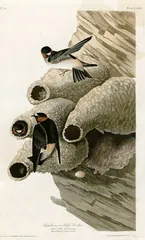
John James Audubon, The Birds of America (1827–38) 1 Cliff Swallowabout 393 per routeon 84% of routesno clear trend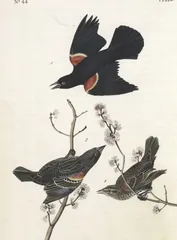
John James Audubon, The Birds of America (1840–44) about 300 per routeon 100% of routesfalling since 2015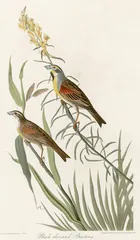
John James Audubon, The Birds of America (1827–38) 3 Dickcisselabout 141 per routeon 100% of routesno clear trend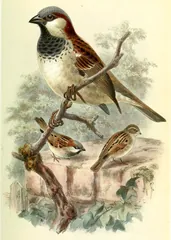
John Gerrard Keulemans, Lord Lilford’s Coloured Figures of the Birds of the British Islands (1885–97) 4 House Sparrowabout 127 per routeon 100% of routesfalling since 2015introduced species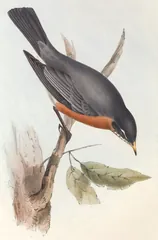
John and Elizabeth Gould, The Birds of Europe (1832–37) about 100 per routeon 100% of routesfalling since 2015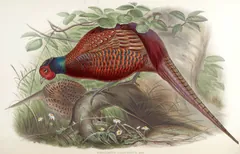
Joseph Wolf and Henry Constantine Richter, in John Gould's The Birds of Asia, part XXI (1869) 6 Ring-necked Pheasantabout 81 per routeon 97% of routesno clear trendintroduced species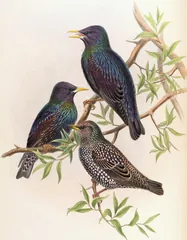
John Gould and Henry Constantine Richter, The Birds of Asia, vol. 5 (1850–83) 7 European Starlingabout 55 per routeon 100% of routesfalling since 2015introduced species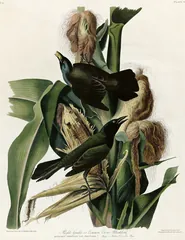
John James Audubon, The Birds of America (1827–38) 8 Common Grackleabout 54 per routeon 100% of routesfalling since 2015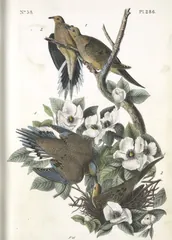
John James Audubon, The Birds of America (1840–44) about 38 per routeon 100% of routesfalling since 2015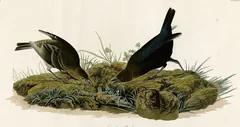
John James Audubon, The Birds of America (1827–38) 10 Brown-headed Cowbirdabout 35 per routeon 100% of routesno clear trend
Show all 25
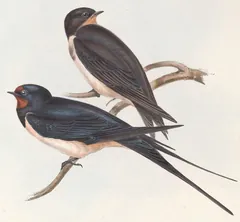
John and Elizabeth Gould, The Birds of Europe (1832–37) 11 Barn Swallowabout 34 per routeon 100% of routesno clear trend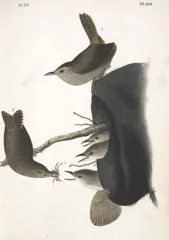
John James Audubon, The Birds of America (1840–44) 12 Northern House Wrenabout 33 per routeon 97% of routesrising since 2015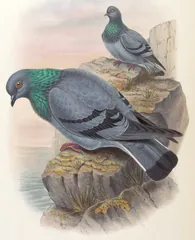
John Gould and William Matthew Hart, The Birds of Asia (1850–83) 13 Rock Pigeonabout 27 per routeon 88% of routesno clear trendintroduced species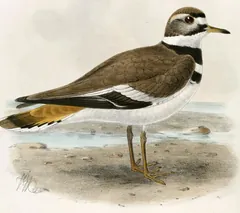
John Gerrard Keulemans, H. E. Dresser's A History of the Birds of Europe, Supplement (1895–96) 14 Killdeerabout 24 per routeon 100% of routesno clear trend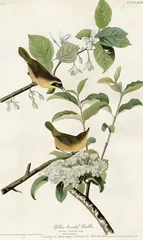
John James Audubon, The Birds of America (1827–38) 15 Common Yellowthroatabout 20 per routeon 100% of routesno clear trend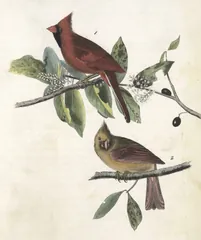
John James Audubon, The Birds of America (1840–44) about 15 per routeon 94% of routesno clear trend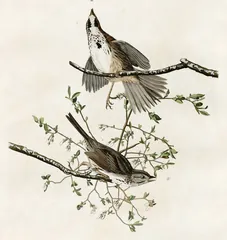
John James Audubon, The Birds of America (1827–38) 17 Song Sparrowabout 15 per routeon 100% of routesno clear trend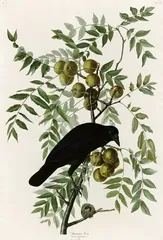
John James Audubon, The Birds of America (1827–38) about 14 per routeon 100% of routesno clear trend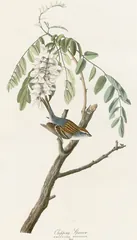
John James Audubon, The Birds of America (1827–38) 19 Chipping Sparrowabout 12 per routeon 100% of routesfalling since 2015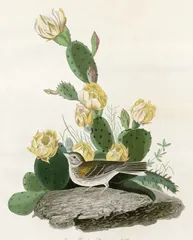
John James Audubon, The Birds of America (1827–38) 20 Vesper Sparrowabout 11 per routeon 78% of routesfalling since 2015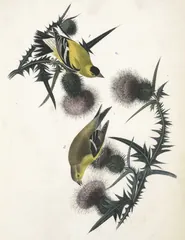
John James Audubon, The Birds of America (1840–44) about 8.0 per routeon 97% of routesfalling since 2015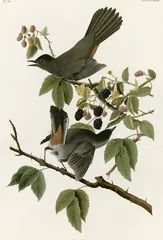
John James Audubon, The Birds of America (1827–38) 22 Gray Catbirdabout 7.9 per routeon 100% of routesno clear trend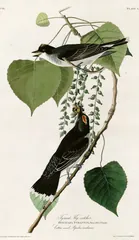
John James Audubon, The Birds of America (1827–38) 23 Eastern Kingbirdabout 6.6 per routeon 97% of routesrising since 2015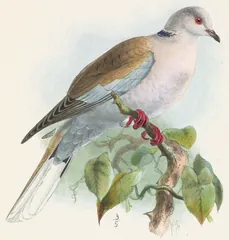
John Gerrard Keulemans, R. B. Sharpe’s Scientific Results of the Second Yarkand Mission (1891) 24 Eurasian Collared-Doveabout 6.3 per routeon 94% of routesno clear trendintroduced species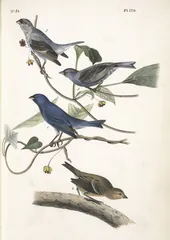
John James Audubon, The Birds of America (1840–44) 25 Indigo Buntingabout 6.0 per routeon 97% of routesno clear trend
Once you know the Cliff Swallow, the Dickcissel and the rest of these 25, a field guide takes you further into Iowa’s list of 432 species; our comparison of the best bird books of 2026 shows which one to start with.
What is the most common bird in Iowa?
The Cliff Swallow leads Iowa’s summer survey: about 393 a route on average in 2021–2025, ahead of the Red-winged Blackbird at about 300, seen on 84% of the 32 routes. USGS finds no clear rise or fall in its Iowa numbers since 2015.
Iowa's checklist codes 309 species as regular, recorded in at least 7 of the last 10 years, and some birds have clearly boomed. The state's second breeding bird atlas, 2008 to 2012, found the Eurasian Collared-Dove, missing from the first atlas, widespread statewide, and huge increases in grassland birds such as Henslow's Sparrow and the Sedge Wren after grassland restoration.
Sources: Iowa Checklist, the official state checklist (Iowa Ornithologists' Union); Results, Iowa Breeding Bird Atlas II, 2008-2012 (Iowa Ornithologists' Union), read October 8, 2026.
How was this list made?
Each of Iowa’s 32 routes is a roadside count, 50 stops along about 25 miles, run once a year in early summer by a volunteer. We took USGS’s yearly estimate for each species in Iowa, the number of birds a typical route records, averaged it over the five latest survey years (there was no survey in 2020) and ranked the birds by it. To keep the list to birds you’re likely to meet across Iowa, we left out species recorded on fewer than one in five of its routes, and those USGS can only estimate very roughly, which usually means big flocks or colonies on a few routes.
For Iowa that left out the Canada Goose. The survey counts Eastern and Western Meadowlarks together in Iowa, so neither is listed on its own, though as a group they would rank 15th, at about 23 a route.
The share of routes is our own count from USGS’s route data for Iowa, using only counts that met the survey’s standards; “rising” and “falling” are USGS’s trends for the state since 2015, named only where it finds a clear change. Roadside counts on early-summer mornings miss most of Iowa’s owls and waterbirds, and its winter visitors aren’t here at all.
Iowa’s counts come from two USGS data releases, the North American Breeding Bird Survey Analysis Results 1966–2025 (Hostetler et al., 2026) and its Dataset 1966–2025 (Ziolkowski et al., 2026), gathered by volunteer observers and free for anyone to use; Birdfolio isn’t connected with the USGS.
How many bird species are in Iowa?
| Official count | 432 species |
|---|---|
| List’s date | Not given on the Iowa list (we read it on October 3, 2026) |
| Kept by | Iowa Ornithologists' Union (Iowa Bird Records Committee) |
| Nesting species | 214 |
| Extinct or gone | 3 extinct, 1 no longer found in Iowa |
| Review species | 97, the ones coded accidental (our count) |
| Records committee | Formed in 1982; 6 members |
| Among US states | Tied for 38th highest of the 49 states with a verified count, alongside Delaware and Idaho |
| Official list | Iowa Checklist (Official State Checklist) |
What does Iowa’s count include?
- 214 species the list marks as nesting in Iowa.
- 3 extinct species, the Passenger Pigeon, Eskimo Curlew and Carolina Parakeet, and 1 no longer found in Iowa, the Sharp-tailed Grouse.
- The list also marks how often each species is recorded, from regular to accidental (seen in 0 to 4 of the last 10 years).
- 97 review species, the same 97 coded accidental: a sighting of any of them goes to the records committee (our count).
- A code for the best evidence behind each species: 317 rest on a specimen, and 11, among them the Carolina Parakeet, on written documentation alone.
- Nonnative birds now nesting in Iowa, such as the Eurasian Collared-Dove and the Eurasian Tree Sparrow, neither of them found in the state's first breeding bird atlas.
- A flag on 78 species that are part of the Iowa Wildlife Action Plan (our count).
Why do other sources give a different number?
Iowa numbers each new species as the committee accepts it, and a few other totals describe something narrower:
- 433. The number the records committee gave its newest species, a Tundra Bean-Goose in Decatur County in late 2022, one above today's checklist total. Source: Species Added to Iowa List Since 2000 (Iowa Bird Records, Iowa Ornithologists' Union).
- 196. The species the state's second breeding bird atlas found in the nesting seasons of 2008 to 2012, of which 166 were confirmed nesting. Source: Results, Iowa Breeding Bird Atlas II, 2008-2012 (Iowa Ornithologists' Union).
- 139. The species on Iowa's 35 Christmas Bird Counts in the winter of 2024-25, four below the state's average for the counts. Source: The 125th Christmas Bird Count in Iowa, 2024-2025 (National Audubon Society, November 10, 2025).
Iowa’s list follows its own committee’s rules, and so does every other state’s: see why the counts differ from state to state.
Iowa records, from a summer Limpkin to both kinds of bean-goose
- On June 23, 2022, a Limpkin turned up in Lucas County, number 432 on the state list. The committee has accepted 19 Limpkin records in all, though the checklist still codes the species accidental. Sources: Species Added to Iowa List Since 2000 (Iowa Bird Records, Iowa Ornithologists' Union); Summary of Records (Iowa Bird Records, Iowa Ornithologists' Union), read October 8, 2026.
- A Tundra Bean-Goose found near Lamoni on November 29, 2022, was still with Canada Geese on December 17, the day of the Lamoni Christmas Bird Count: species number 433. Iowa had already had a bean-goose of the taiga form, at DeSoto National Wildlife Refuge on December 29, 1984, so once the Bean Goose was split in two in 2007, the state had both. Sources: Species Added to Iowa List Since 2000 (Iowa Bird Records, Iowa Ornithologists' Union); The 123rd Christmas Bird Count in Iowa, 2022-2023 (National Audubon Society, January 18, 2024); Iowa Checklist, the official state checklist (Iowa Ornithologists' Union), read October 8, 2026.
- Ranges are shifting both ways. The White-winged Dove, a southern bird, went from accidental to nesting in Iowa within a decade, the records committee says, while the Evening Grosbeak, formerly regular in Iowa though prone to sudden invasions, has pulled back abruptly. Source: About the Iowa Committee (Iowa Bird Records, Iowa Ornithologists' Union), read October 8, 2026.
- The extinct Carolina Parakeet is on Iowa's list from written documentation alone: it is one of 11 species whose best evidence, by the list's own code, is a written report. The Passenger Pigeon, also extinct, is backed by a specimen and marked as a former nester. Source: Iowa Checklist, the official state checklist (Iowa Ornithologists' Union), read October 8, 2026.
Questions people ask about Iowa’s birds
What US state has the most bird species?
California, with 696 species on the list its records committee updated on September 8, 2026. Texas is second with 682 (our table), and inland Iowa has 432.
Sources: Official California Checklist, updated 8 September 2026 (California Bird Records Committee); Iowa Checklist, the official state checklist (Iowa Ornithologists' Union), read October 8, 2026.
Are there 10,000 species of birds?
Yes, more than 11,000. AviList, the global bird checklist first released on June 11, 2025, names 11,131 species in 46 orders (our sum of its counts by order). Iowa's 432 are fewer than 4 percent of them.
Sources: AviList: The Global Avian Checklist, v2025, first released June 11, 2025 (AviList Core Team, CC BY 4.0); Iowa Checklist, the official state checklist (Iowa Ornithologists' Union), read October 8, 2026.
Which birds live in Iowa?
Birds of the prairie, woods and rivers. The state Department of Natural Resources sends birders to places with a mix of forest, prairie, oak savanna and water. The official checklist marks 214 species as nesting, and in the second breeding bird atlas most survey blocks held 60 to 90 species in summer.
Grassland birds are the state's success story: the atlas calls Henslow's Sparrow, a threatened species in Iowa, the greatest success among its breeding birds, thanks to more land enrolled in the Conservation Reserve Program. Along the Mississippi, Peregrine Falcons have nested on the river cliffs again since 1999, for the first time in nearly 40 years; DDT had cut them to 39 pairs in the whole lower 48 by 1975. Most of Iowa's peregrines nest in the eastern half of the state.
Sources: Bird Watching (Iowa Department of Natural Resources); Iowa Checklist, the official state checklist (Iowa Ornithologists' Union); Results, Iowa Breeding Bird Atlas II, 2008-2012 (Iowa Ornithologists' Union); Iowa Breeding Bird Atlas II, home page (Iowa Ornithologists' Union); 7 Iowa Wildlife Comebacks (Iowa Department of Natural Resources, March 2, 2020), read October 8, 2026.
Why is the prairie-chicken, once Iowa's most abundant gamebird, now a review species?
Because it vanished, and came back only in one corner of the state. In the 1880s the Greater Prairie-Chicken was the most abundant gamebird on Iowa's prairies; bags of 25 to 50 a day were common, and some hunters took 200. In 1878 Iowa limited each hunter to 25 a day, which the state Department of Natural Resources believes was the first daily bag limit ever used.
The last hunting season was in 1915, the prairie kept turning into farmland, and the last known nest was in 1952. Birds trapped in Kansas were released in the 1980s, and more in the early 1990s; those set free around Ringgold County held on, at a booming ground near Kellerton, and from 2012 to 2017 more were brought from Nebraska.
The population is still small, so the official checklist codes the bird accidental and wants every sighting reviewed. The place to see one is the viewing platform at the Kellerton Bird Conservation Area, from late March to early May, when the males inflate orange air sacs on their necks and make an eerie booming sound.
Sources: Greater Prairie Chicken (Iowa Department of Natural Resources); Iowa Checklist, the official state checklist (Iowa Ornithologists' Union), read October 8, 2026.
How did Trumpeter Swans come back to Iowa after 115 years?
With swans raised by private breeders, county conservation boards and zoos. Wetland drainage and unregulated hunting ended their nesting in Iowa in 1883, and a count in the early 1930s found only 69 in the continental United States, all in southwest Montana. In 1993 the Department of Natural Resources wrote a plan to bring them back.
Between 1995 and 2021 it released over 1,200 swans at more than 80 sites. The first wild Iowa cygnets since 1883 hatched in Dubuque County in 1998, and by 2005 there were 25 nesting pairs. In the winter of 2024-25 Iowa's Christmas Bird Counts found over five thousand Trumpeter Swans, and the official checklist now codes the species regular and nesting.
Sources: Trumpeter Swans (Iowa Department of Natural Resources); 7 Iowa Wildlife Comebacks (Iowa Department of Natural Resources, March 2, 2020); The 125th Christmas Bird Count in Iowa, 2024-2025 (National Audubon Society, November 10, 2025); Iowa Checklist, the official state checklist (Iowa Ornithologists' Union), read October 8, 2026.
Where is the official Iowa bird list, and how often is it updated?
On the Iowa Ornithologists' Union's website, under Iowa's Birds: the Iowa Checklist, a web page headed 432 Species (214 Nesting), with no date. Each species has codes for status, review, nesting, evidence and the state's Wildlife Action Plan, a range map and photos taken in Iowa, and the page offers printable field checklists and a download to Excel. The committee's bylaws require it to keep the official list up to date and publish it in the union's journal, Iowa Bird Life, at least every ten years.
The Iowa Records Committee, formed in 1982, has six members elected for six-year terms and a secretary they appoint. It judges the evidence for future researchers rather than whether a sighting happened, and its permanent files are kept online and at Iowa State University's Special Collections library; its database holds 1,829 accepted records.
Sources: Iowa Checklist, the official state checklist (Iowa Ornithologists' Union); Bylaws of the Records Committee, approved March 10, 2002 (Iowa Ornithologists' Union); About the Iowa Committee (Iowa Bird Records, Iowa Ornithologists' Union); Summary of Records (Iowa Bird Records, Iowa Ornithologists' Union), read October 8, 2026.
How do you count your own Iowa list?
Your Iowa list is every species you’ve seen in Iowa. eBird can filter your life list to Iowa, and your eBird data download gives the state of every sighting. On paper, count the species you’ve seen in Iowa; what is a life list? explains how birders keep their lists.
To print your whole list, Iowa birds and all, see how to print your bird life list, or let Birdfolio make it a hardcover book.
Iowa’s state bird
Iowa’s state bird is the American Goldfinch (officially, the “Eastern Goldfinch”), the state bird since 1933. Its story, the state flower and animal, and a free picture card for a report are on our Iowa state bird page.
Christmas Bird Count in Iowa
Iowa had 41 Christmas Bird Count circles on Audubon’s map last winter, each counted on a single day between December 14 and January 5. Our guide shows where to find Iowa’s counts and lists 9 Iowa count dates already announced for this winter; it’s free, and beginners are welcome.
More about bird counts
- How many bird species are in each state: Iowa beside all 50 states, DC and Canada.
- Bird lists of nearby states: Illinois, Minnesota, Missouri, Nebraska, South Dakota and Wisconsin.
- State birds of all 50 states, Iowa’s American Goldfinch among them
- How many bird species are in the US and Canada
- Bird splits and lumps
If you’re shopping for a birder in Iowa, our gift guide for birders and our pick of coffee table bird books are good places to start.