Many birds leave for the winter, some only a few states south and some as far as South America, while chickadees, cardinals, woodpeckers and other year-round birds stay and get by on fluffed feathers, shivering, fat and sheltered roosts. Some let their bodies cool on cold nights to save fuel. A few, like the junco, arrive for winter.
Where do birds go in winter?
Mostly south, and only as far as food makes them: some robins stay as far north as they can find berries, while a Blackpoll Warbler crosses the Atlantic toward South America without stopping.
For most migrants the trouble is food, not cold. The insects, fruit and nectar that migrants live on are plentiful here in spring and summer but "not sufficiently available through the winter," says the Smithsonian Migratory Bird Center. So the distance depends on the menu:
- A few states. "Some robins retreat all the way to southern Texas and Florida," says Journey North, a University of Wisconsin–Madison project, "but others winter as far north as they can find berries" (as quoted by The Nature Conservancy).
- The tropics. About a third of the roughly 180 species that nest in Ohio spend the winter in Central and South America, says the state's Division of Wildlife.
- Over open ocean. The Blackpoll Warbler, a songbird of about half an ounce, flies 1,410 to 1,721 miles nonstop over the Atlantic in two to three days, from New England and eastern Canada toward the Caribbean and northern South America. Researchers at UMass Amherst proved it in 2015 with dime-sized light sensors that work out a bird's position from day length and the time of noon, "a method used for centuries by mariners and explorers."
- Halfway around the world. In October 2022 a young Bar-tailed Godwit flew about 8,425 miles from Alaska to Tasmania without stopping, in 11 days and one hour, the longest nonstop migration Guinness World Records lists. To make room for fat, godwits can "shrink the size of their internal organs." Alaska's other long-haul birds are on our Alaska page.
Which birds stay for the winter?
The year-round residents: chickadees, titmice, nuthatches, woodpeckers, cardinals and Blue Jays, plus goldfinches and many robins across much of the country. Goldfinches "will probably stick around for the winter," says Michigan's Department of Natural Resources, trading their lemon yellow for "brownish yellow plumage." Robins stay wherever berries last (The Nature Conservancy).
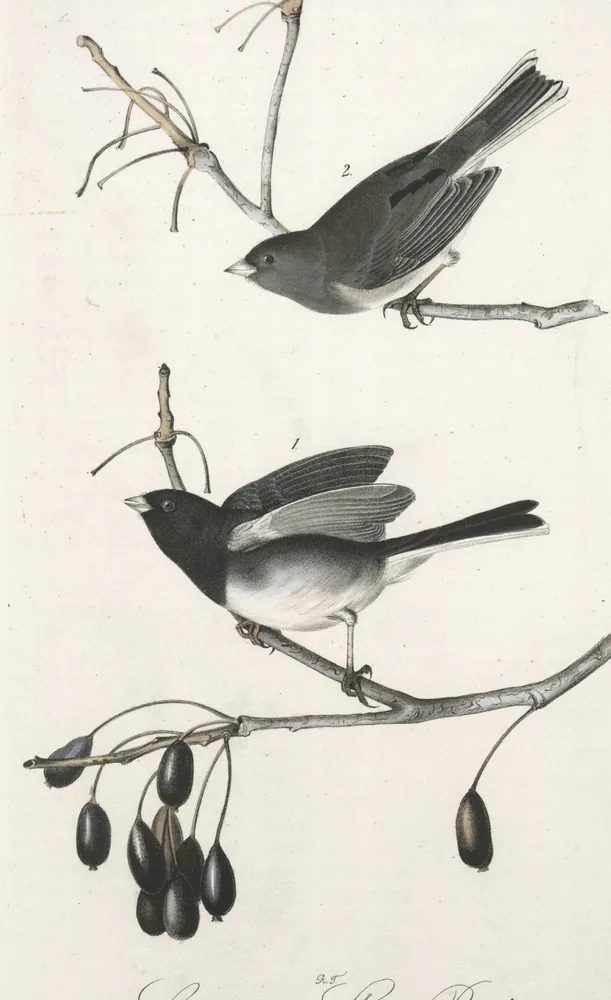
Other birds come south to spend the winter with us. The junco is "sometimes called a snowbird from the way it arrives every winter," says Michigan's DNR, and its males "tend to winter slightly farther north than females" (Audubon guide). In Indiana, American Tree Sparrows and Fox Sparrows follow the juncos (Indiana Audubon). Snowy Owls come only in years when food runs short on their Arctic breeding grounds: what an irruption is. Northern finches move the same way, and this year's outlook is in the 2026–27 winter finch forecast.
Do birds migrate in winter?
Mostly not: fall bird migration runs "in overlapping waves from August into November," says Indiana Audubon, and the spring flights begin again in late winter. Tundra swans and snow geese pass through Pennsylvania "in late winter and early spring" (Game Commission).
Some birds do keep moving in midwinter, pushed by hunger or hard weather. Wisconsin's DNR called the winter of 2020–21 a "superflight," when poor seed crops in Canada sent six or seven northern species south in unusual numbers. And in the frigid winter of 1977–78, counts at grackle and blackbird roosts in Kentucky "dropped by 75%"; the study's authors hoped the birds had gone farther south rather than died (The Nature Conservancy).
How do birds stay warm in winter?
Feathers come first: a bird fluffs its down into a coat of trapped air, then adds heat by shivering, burns fat it stored in fall, tucks in its feet and bill, and keeps out of the wind.
- Fluffed feathers. When birds puff up, says Audubon magazine, "they create hundreds of air pockets between their feathers that trap heat." A Black-capped Chickadee's plumage is heavier in winter than in summer, a 1983 review of the research in Polar Research notes.
- Shivering. "Just like people, birds shiver to stay warm," says the U.S. Fish and Wildlife Service, and to keep that furnace going a chickadee eats "more than 35 percent of their weight every day."
- Fat. In small birds such as chickadees and finches, fat can make up "more than 10 percent of their winter body weight" (Audubon).
- Shelter. For titmice and juncos, "the denser the tree or shrub, the better," and cavity nesters such as nuthatches, titmice and Downy Woodpeckers use tree holes and nest boxes to stay warm.
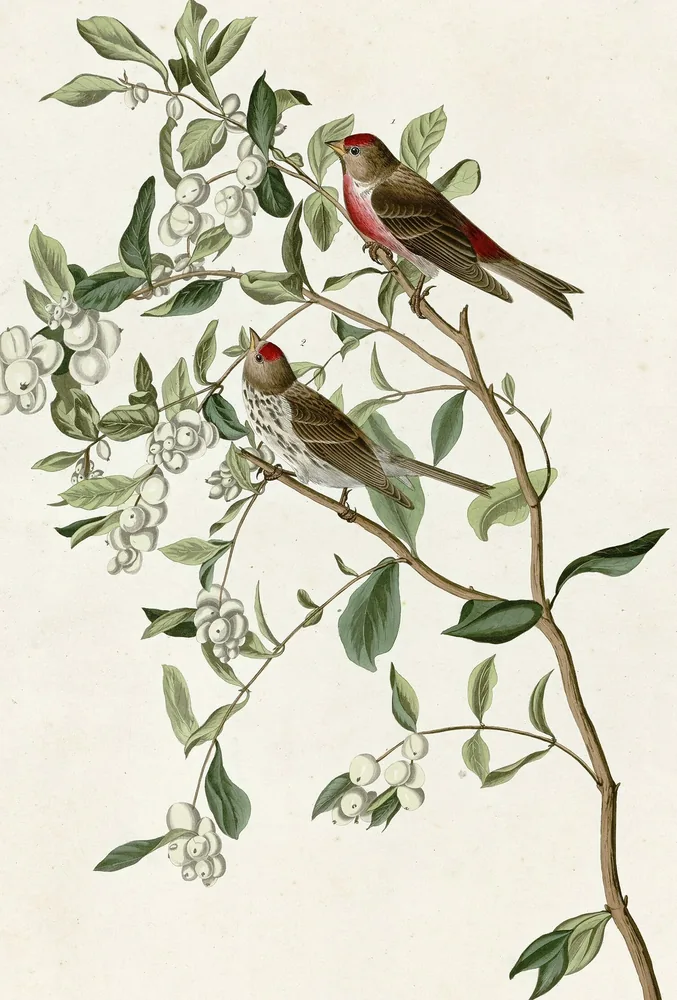
How much cold can that handle? Redpolls weigh less than 15 grams, about half an ounce, yet "survive temperatures that plunge nearly 100 degrees below the freezing point," says the Fish and Wildlife Service.
Why don't birds' feet freeze?
Because warm blood flowing down the leg heats the cold blood coming back up, so the feet run just above freezing and lose little heat. Mass Audubon explains that arteries and veins lie side by side: "By keeping their feet just above freezing, birds vastly reduce heat loss." The Fish and Wildlife Service calls the system a countercurrent heat exchange and notes that ducks, geese, gulls and swans save more heat by standing on one leg or sitting down. Small birds have their own trick: watch a foraging junco "stop and crouch for a few seconds," pulling its feathers down over its feet.
How do birds stay warm in the snow?
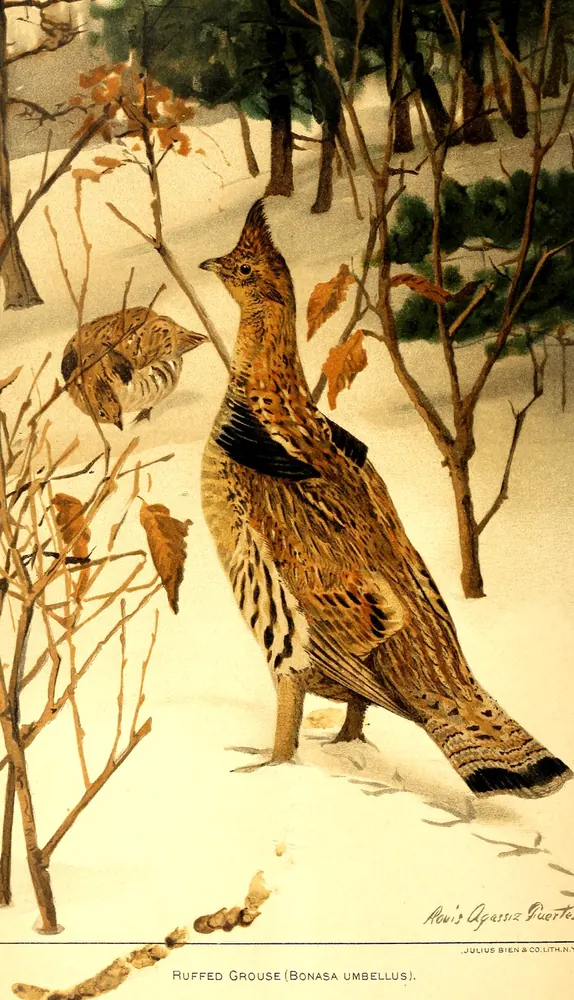
Some use the snow itself: a Ruffed Grouse dives into deep, soft snow and seals itself into a tunnel, says the National Park Service. Its snow burrows "rarely drop below 20 degrees," at least 40 degrees warmer than the air on a 20-below night in the Northeast. The same bird has "the ability to grow their own snowshoes," as the Park Service puts it: as days shorten in fall, comb-like fringes sprout along its toes, and they drop off by May.
How do birds stay warm at night?
They roost out of the wind, often packed together, and some let their body temperature fall so the long night burns less fuel.
- A cooler body. On a winter night a Black-capped Chickadee's temperature "slowly drops from their normal 108 degrees to just 86 degrees," says the National Park Service, in a roost of dense pine boughs "slightly warmer than the air temperature." Small northern birds lower their body temperature "by some 10°C" (18°F) at night, the Polar Research review found, and birds in temperate regions can save "as much as 75%" of the energy a warm night would cost.
- Company. "Bunches of bluebirds and sparrows" lined up on a branch are a typical winter sight (Audubon). Pygmy Nuthatches of western pine forests spend the winter in flocks of 5 to 15, "all roosting together at night in one cavity," says the Audubon guide.
- A hole or a box. Chickadees, nuthatches, titmice and woodpeckers sleep in tree cavities and nest boxes. The Fish and Wildlife Service suggests putting up roosting boxes and leaving dead trees standing.
- Torpor. Hummingbirds and swifts can drop into "a deep sleep called torpor" (Mass Audubon). How the hummingbirds that winter in the US get through the night is in our guide's answer to how hummingbirds survive cold nights.
Do any birds hibernate?
One comes close: the Common Poorwill of the West, "famous as the first known hibernating bird," says the Audubon guide. In cool weather it can go torpid, its temperature, heartbeat and breathing lowered, "for days or even weeks at a time." Science found out in the 1940s, when the ornithologist Edmund Jaeger and his students came upon one in a California canyon (KNAU, Arizona public radio). The Hopi knew long before: their name for the bird means "the sleeping one."
What happens to birds in a winter storm?
Most eat heavily before it arrives, then sit tight in evergreens, tree holes and thickets until it passes; the real danger is a long freeze that seals their food under snow and ice.
Do birds know when a storm is coming?
Many seem to: in a 2013 study, White-crowned Sparrows ate more when researchers lowered the air pressure, the way it falls 12 to 24 hours before a snowstorm. The study appeared in the Journal of Experimental Biology. How birds sense pressure is "not fully understood," says Mass Audubon, though an organ in the middle ear, the para-tympanic organ, is thought to play a part.
Some birds may hear storms coming from hundreds of miles away. In late April 2014, Golden-winged Warblers, each about the weight of four dimes, left their nesting grounds in Tennessee's Cumberland Mountains one to two days before a storm system that produced 84 confirmed tornadoes, while it was still 250 to 560 miles off. They flew at least 932 miles and came home after it passed. While television forecasters were still tracking the storm, the lead researcher told UC Berkeley's news office, the birds "were apparently already packing their bags and evacuating the area." The likeliest cue is infrasound, sound too low for people to hear, which tornadoes produce in strength. It travels so far that a worldwide network of infrasound sensors listens for nuclear bomb tests.
Where do birds go in winter storms?
Into shelter: chickadees and woodpeckers use the same tree holes they might nest in, and many others retreat into dense evergreens, says Mass Audubon. Feeders help most in temperature extremes (Tufts Wildlife Clinic), so clear snow and ice from feeding areas and keep them filled (Indiana Audubon).
Can birds freeze to death?
Yes: healthy birds handle ordinary cold, but a long, hard freeze can kill many. In January 1977 an ongoing bird survey in southern Illinois caught one by accident. The month averaged 15°F and fell to -18°F, and afterward Carolina Wrens, bluebirds, Hermit Thrushes and both kinglets had vanished from the survey; researchers found dead birds of 20 species (The Nature Conservancy). The same winter New Jersey's salt marshes froze solid, and more than half of the East Coast's wintering brant, waterfowl that live on saltwater plants, died. Volunteers nursed weakened ones, whose clear favorite food turned out to be commercial turkey chow. The brant recovered within a few years.
Do cardinals stay in winter?
Yes: the Northern Cardinal doesn't migrate, so the one at your feeder in January is a year-round neighbor. Puffed into a red ball, it is doing what other small birds do: "A puffed-up Northern Cardinal is a familiar sight when the mercury plummets," says Audubon magazine.
Winter cardinals in the North are fairly new. A 1960 report noted that cardinals first nested in southern Connecticut around 1943 and in eastern Massachusetts in 1958, and in the past 30 years they have become residents of northern Minnesota, Maine and southern Canada, says The Nature Conservancy. It credits shrubby edges, suburbs and feeders more than milder winters: "the more likely answer is related to habitat and food." Audubon's painting of the cardinal has a page of its own.
Our cardinal guide covers the rest: whether cardinals stay all winter, what they eat in winter and whether the males stay red. Three cardinal states answer it for themselves: Ohio, Illinois and Indiana.
What should you feed birds in winter?
Black-oil sunflower seed first, since most species eat it, then suet for fat, nyjer for small finches and unsalted peanuts for woodpeckers, jays and chickadees.
| Food | Who comes for it | Why |
|---|---|---|
| Black-oil sunflower | Most feeder birds | "The single best seed to offer," high in fat (Wisconsin DNR) |
| Suet | Woodpeckers, chickadees, nuthatches (Wisconsin DNR) | "Especially important in cold weather because it supplies fat for warmth" (Penn State Extension) |
| Nyjer (thistle) | Goldfinches, siskins, redpolls | The small finches' favorite (Wisconsin DNR); needs a thistle feeder |
| Peanuts | Woodpeckers, flickers, nuthatches | Shelled, dry-roasted and unsalted (Audubon) |
| Safflower | Cardinals, sparrows | Its bitter taste puts squirrels off (Mass Audubon) |
| White millet | Sparrows, doves, juncos and other ground feeders | Recommended for ground-feeding birds (Wisconsin DNR) |
| Berries, fruit | Robins, bluebirds | Robins can't digest seed well (The Nature Conservancy); plant native fruiting shrubs |
What should you not feed birds?
Bread and other kitchen food: "bread is junk food for birds," says Penn State Extension. It "provides no real nutritional value," adds the Tufts Wildlife Clinic; moldy bread can harm birds, chocolate "is toxic to birds, just as it is to dogs and cats," and table scraps draw mice and rats. Skip cheap mixes padded with "junk seeds that most birds won't eat" (Audubon), salted nuts, and any seed that looks discolored or moldy (Virginia Tech's extension service).
Will birds starve if I stop feeding them?
No: most birds get only about a quarter of their food from feeders, says Mass Audubon. In a Wisconsin study, Black-capped Chickadees with feeders still got just 21 percent of their daily energy from them (Brittingham and Temple, 1992, as Virginia Tech reports it). A break while you travel is fine: "wild birds will find other food in your absence," says Tufts, except in the most severe weather. Feeding helps most "during temperature extremes, migration, and in late winter or early spring," when wild seed runs low.
Keep feeders clean: Mass Audubon suggests every two weeks, with one part bleach to nine parts water, and taking them down for two weeks if sick birds appear. Wisconsin's DNR names the disease to prevent, salmonellosis. If your feeders are busy, Project FeederWatch turns what you see from November to April into data for scientists.
Do birds need water in winter?
Yes, and unfrozen water is often harder to find than food: birds can eat snow, but "melting snow inside the body uses energy," says The Nature Conservancy. Water "tends to be scarcest in the winter," says Mass Audubon, and a birdbath "can draw more visitors than seed when everything else is frozen," says Indiana Audubon.
A heated birdbath helps if birds can drink from it but not bathe in it. The Nature Conservancy cites "documented records of starlings dropping from the sky seconds after taking off from heated birdbaths," and of mourning doves' wet tails freezing to branches. Wisconsin's DNR suggests a heated dish "deep enough for birds to drink from but not bathe in"; The Nature Conservancy, a shallow bowl you bring in once it ices. Never add glycerin, which "acts as antifreeze" and can mat feathers.
Winter birds by state
What each state's wildlife agency or Audubon society says to look for. Each state's full bird list is on its page.
Winter birds in Pennsylvania
About 35 species come to Pennsylvania feeders in winter, says Penn State Extension, and 150 to 200 Bald Eagles winter along the Upper Delaware, peaking in January and February (Pennsylvania Game Commission). See Pennsylvania's birds.
Winter birds in Ohio
Dark-eyed Juncos above all, "a widespread and abundant winter visitor," says Ohio's Division of Wildlife, with Short-eared Owls at wintering grounds such as Killdeer Plains Wildlife Area and Snowy Owls along Lake Erie in some winters. Some winters bring only one or two Snowies, while "peak years might bring a dozen or more reports." See Ohio's birds.
Winter birds in Michigan
For some birds, "Michigan is their warm spot," says the state's DNR: Snowy Owls, Bald Eagles and Snow Buntings are regular winter residents. Look for Snow Buntings along harvested fields and Snowy Owls at airports and shorelines. See Michigan's birds.
Winter birds in Wisconsin
Year-round birds plus northern visitors: "one or two" northern species often overwinter, says the state's DNR, and some years bring far more. In 2020 it reported six or seven in unusual numbers, including "more evening grosbeaks than any year in recent history." See Wisconsin's birds.
Winter birds in Minnesota
Minnesota's 2022–23 Christmas Bird Counts found 132 species, with the Canada Goose the most abundant, says Audubon's state summary. Eight of the ten finches Minnesota expects arrive in irruptive bursts, plentiful one winter and nearly absent the next; in a poor year they "did not head into Minnesota and its warmer weather." See Minnesota's birds.
Winter birds in Illinois
Bald Eagles above all: the Missouri and Illinois river areas hold "the second largest wintering population of bald eagles in the lower 48 states," says the Illinois DNR. January and February are best, when the eagles gather at open water to fish, mostly for gizzard shad. Southern Illinois is also where the January 1977 freeze emptied the woods. See Illinois's birds.
Winter birds in Indiana
Juncos first, then American Tree Sparrows and Fox Sparrows, with Pine Siskins, redpolls and the rare Evening Grosbeak in some years, says Indiana Audubon. Midwinter surveys from 1979 to 2020 also "showed a dramatic increase in wintering eagles," says the Indiana DNR. See Indiana's birds.
Winter birds in Massachusetts
Beyond cardinals, jays and goldfinches, Mass Audubon points to robins and Eastern Bluebirds, which "can be found in large suburban and rural backyards" in winter. Some Gray Catbirds stay in the state's southeast, though their usual winter home "can be as far away as Belize," and robins full of fermented honeysuckle berries have been seen stumbling. See Massachusetts's birds.
The paintings on this page
John James Audubon titled the junco plate at the top "Common Snow-Bird" in the octavo edition of The Birds of America (1840–44). His "Lesser Red-Poll" is plate 375 of the original large edition (1827–38). Louis Agassiz Fuertes painted the Ruffed Grouse in snow for Sylvester D. Judd's The Grouse and Wild Turkeys of the United States (1905), a bulletin of the government's Biological Survey. More of his work is in our Fuertes guide, and Audubon's life is in our Audubon guide.
Count the birds you see this winter
Winter is count season. Project FeederWatch runs at your own feeder from November 1, 2026 to April 30, 2027; the Christmas Bird Count runs from December 14, 2026 to January 5, 2027; and the Great Backyard Bird Count comes in February. Whatever turns up, note the date and the place: a Birdfolio prints every bird on your life list beside a classic painting like the three on this page.