The 30th Great Backyard Bird Count runs from Friday, February 12 to Monday, February 15, 2027, over Presidents' Day weekend. It's free and open to anyone: count the birds you see or hear for at least 15 minutes, on one or more of the four days, wherever you happen to be, then report them online.
The Great Backyard Bird Count (GBBC) is a worldwide snapshot of birds, taken every February by ordinary people at kitchen windows, in parks and on walks. It's run by the National Audubon Society, the Cornell Lab of Ornithology and Birds Canada. The first count, in 1998, drew more than 14,000 people. In February 2026, an estimated 1,146,284 took part, and together they found 8,257 species of birds.
The 2027 count at a glance
| Question | Answer |
|---|---|
| Dates | Friday, February 12 to Monday, February 15, 2027 |
| Which count | The 30th (the first was in 1998) |
| How long you count | At least 15 minutes, on one or more of the four days; longer if you like |
| Where | Anywhere: a window, your yard, a park, a trip |
| What you count | Every wild bird you see or hear, and how many of each |
| Cost | Free |
| Sign-up | Nothing to book: you report your list online afterward |
| How to report | The Merlin Bird ID or eBird app, or the count's website, birdcount.org |
| Run by | The National Audubon Society, the Cornell Lab of Ornithology and Birds Canada |
| Latest results | 2026: about 1,146,284 people, 8,257 species, 216 countries and regions |
| First count | 1998: more than 14,000 people tallied more than half a million birds |
Dates and facts checked: October 21, 2026.
When is the Great Backyard Bird Count 2027?
From Friday, February 12 to Monday, February 15, 2027. Audubon's page for the count says the 30th annual GBBC "will be held February 12-15, 2027." We read it on October 21, 2026.
- It's Presidents' Day weekend. Presidents' Day falls on the third Monday of February, which in 2027 is February 15, the count's last day.
- Valentine's Day is the Sunday, February 14, right in the middle of the count.
- It follows the usual pattern: Friday to Monday in mid-February. The 2026 count ran Friday to Monday, February 13 to 16, and the 2025 count February 14 to 17.
- It's the 30th count, since the first one took place in 1998.
- Looking further ahead: the 2028 dates aren't announced. If the pattern holds, the count would run Friday, February 18 to Monday, February 21, 2028. That's our guess from the calendar, not a date the organizers have given.
What is the Great Backyard Bird Count?
It's a free, four-day count each February in which anyone, anywhere in the world, counts birds for at least 15 minutes and reports them online, to give scientists a snapshot of bird populations. Audubon calls it "a real-time snapshot." Every list helps researchers at Audubon, the Cornell Lab of Ornithology and Birds Canada learn how birds are doing and how to protect them.
- Why February: the count catches birds just before spring migration gets under way, as both the Connecticut Ornithological Association and Britannica explain.
- Not only backyards: despite the name, you can count anywhere. The Connecticut Ornithological Association says plainly that you don't have to count in your backyard.
- Any level: Audubon says anyone can take part, from beginners to experts.
- Worldwide since 2013: the count began in 1998 as a North American event and opened to the world in 2013, the Connecticut Ornithological Association notes. Birds were reported from 216 countries and regions in 2026.
How do you take part in the Great Backyard Bird Count?
Pick a spot, watch for at least 15 minutes on any of the four days, count every bird you see or hear, and send in your list. Here's a first count that takes 15 minutes, start to finish.
Before the count: get set up
- Choose how you'll send your list. On a phone, use Merlin Bird ID or the eBird app. On a computer, use the count's website, birdcount.org. Paper works too: Audubon's how-to says pencil and paper are fine, and you type the list in afterward.
- Sign in. Sending a list needs an account. Audubon's how-to says an existing eBird or other Cornell Lab login, such as the one for Project FeederWatch, works, and that making a new one is easy.
- Pick your spot. A window that looks out on a feeder is perfect. So is a yard, a balcony, a park or a walk.
During your 15 minutes: count
- Note the time you start. Watch for at least 15 minutes. Stay longer if the birds are busy.
- Write down every bird you see or hear. Birds you only hear count too.
- For each kind, record the most you see at one time. If juncos come and go, don't add up every visit, or you'll count the same birds again and again. Since its first years, the count has asked people to tally the highest number of each species seen at once. The count's own counting instructions have the details.
- Leave off anything you're unsure of. Audubon's how-to advises ruling out the common lookalikes before you report a rare bird, and making a note of what you saw.
After: send your list
- Send one list for each place and each stretch of time. If you count again later, or somewhere else, start a new list. Audubon's how-to asks you to keep track of your start and end times, and roughly how far you walked if you moved.
- Count again if you like. Each day, and each new spot, can be a new list.
Here's what a first list from a kitchen window might look like, made up for this guide:
| Bird | Most seen at one time |
|---|---|
| Dark-eyed Junco | 7 |
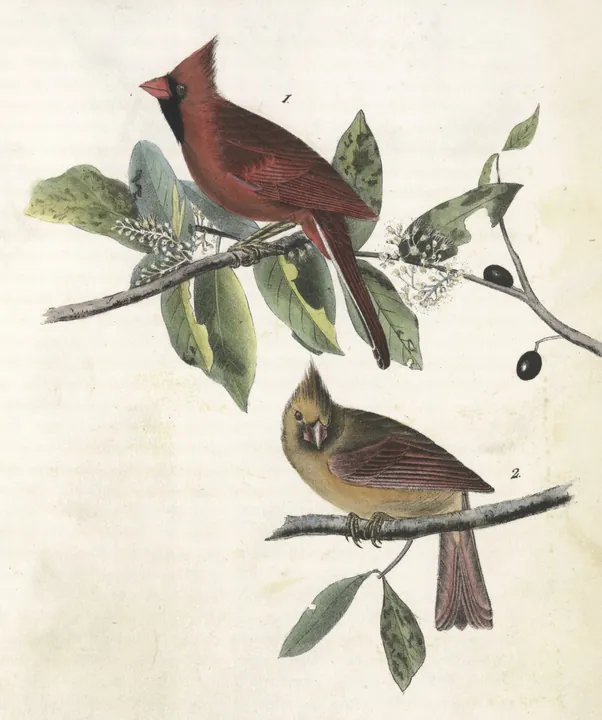
| Northern Cardinal | 2 |
| Mourning Dove | 4 |
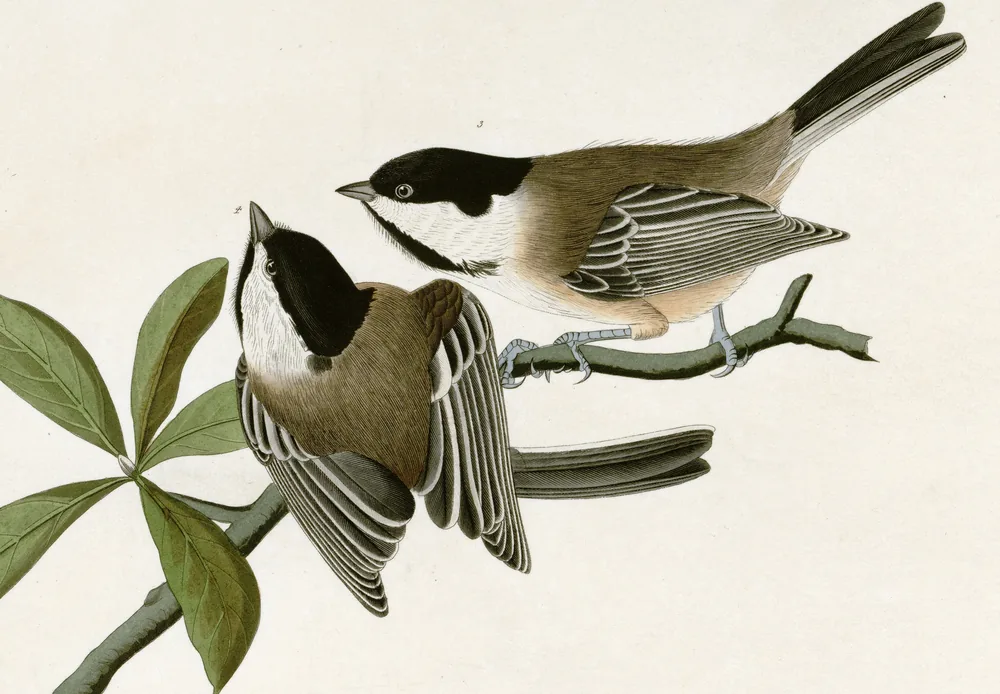
| Black-capped Chickadee | 3 |
| Blue Jay | 1 (heard, then seen) |
If the juncos showed up as 3, then 7, then 5, the list says 7, not 15. Seven is the number you know were there together.
How long do you have to count for the Great Backyard Bird Count?
At least 15 minutes, on at least one of the four days. Audubon says you can count for as little as 15 minutes or as long as you wish, on one or more days. Fifteen minutes from the kitchen table is a complete count. A whole weekend of lists from different places is welcome too.
What counts in the Great Backyard Bird Count?
Any wild bird you can identify, whether you see it or only hear it. That's how the Connecticut Ornithological Association puts it, and Birds Canada asks counters to identify all the birds they see or hear.
- Heard birds count. An owl calling in the dark goes on the list, even if you never see it.
- Common birds count as much as rare ones. In Audubon's words, "rarity doesn't matter": a crowd of House Sparrows matters just as much as an unusual visitor.
- How many, not just which. For each kind, give the most you saw at one time. Estimate a big flock as well as you can. Audubon's how-to suggests that if you count 20 birds and there seem to be twice that many, 40 is a fair estimate.
- Wild birds only. Pet and farm birds stay off the list.
Do you need to register for the Great Backyard Bird Count?
You don't book a place or pay anything: you count, then send your list in online. Audubon describes the count as free and open to anyone. The one thing you need is a login to send your list. If you already have one for eBird or another Cornell Lab project, Audubon's how-to says it works for the count.
Some local groups hold bird walks or group counts over the weekend. If one asks you to sign up, that's for the walk, not for the count itself.
Which app do you use for the Great Backyard Bird Count?
Use Merlin Bird ID or the eBird app on a phone, or the count's website on a computer. You can enter your count in eBird or Merlin; both come from the Cornell Lab of Ornithology, which runs the count with Audubon and Birds Canada.
- Merlin Bird ID helps you put a name to a bird from a photo, a sound recording or a few simple questions. In 2026, counters saved 1,239,329 bird IDs in Merlin during the count.
- The eBird app keeps a checklist of what you saw, with the time and place. The 2026 count gathered 467,696 eBird checklists.
- No smartphone? Audubon's how-to says you can enter your list on a computer instead.
Can you do the Great Backyard Bird Count from home, without a feeder?
Yes: you can count from a window, a yard or a balcony, with or without a feeder. Audubon says you can take part from your backyard or anywhere in the world, and its how-to says you're welcome to stick to your window or yard.
A feeder brings birds closer to the glass, which makes counting easier, but it isn't required. Some winters also bring northern finches south to feeders, and others don't: this season's finch forecast says which may turn up.
How do I find a Great Backyard Bird Count event near me?
Look at the count's community map on birdcount.org, which shows in-person events, or ask a local Audubon chapter, bird club, nature center or library. Local governments point people to it too: the Town of Carrboro, North Carolina, sends residents to the count's community map to find an in-person event.
In 2026, organizers recorded 435 community events around the world. You don't need one, though. A count on your own, at home, counts just as much. For bigger days out, our calendar of US birding festivals lists festivals by month and state.
Can kids and classrooms take part?
Yes: Audubon calls the count kid-friendly and open to bird watchers of all ages, and a 15-minute count fits easily into a school day. As early as its second year, in 1999, the organizers asked kids, adults, seniors, families, classrooms and community groups to join.
- At home. Counting is a good job to share with children or grandchildren: one watches, the other keeps the tally of the most seen at once.
- In school. A class can count from a window or the schoolyard. For lesson ideas, see the count's page for educators.
- Reading about it. Britannica's news site for students covered the 2025 count and its results, a good way in for kids before the weekend.
What were the results of the 2026 Great Backyard Bird Count?
An estimated 1,146,284 people took part and found 8,257 bird species in 216 countries and regions, according to the final results reported in March 2026. Scientists estimate there are 10,000 to 11,000 known bird species in the world, so in four days, counters found at least three in four of them (our arithmetic).
The count has grown a long way since 1998:
| Count | People | What they found | Source |
|---|---|---|---|
| 1998, the first | More than 14,000 | More than half a million birds | Cornell Chronicle, 1999 |
| 2025 | More than 800,000 | 8,078 species, 158 more than in 2024 | Britannica, citing the count's website |
| 2026 | About 1,146,284 (estimated) | 8,257 species | Final results, March 2026 |
That's roughly 80 times as many people as the first count (our arithmetic).
- Lists and IDs, 2026: 467,696 eBird checklists and 1,239,329 saved Merlin Bird IDs.
- Where: the United States sent in more than a million eBird and Merlin submissions; India and Canada were the other leading countries. Even counters in Mali, Yemen and Syria shared sightings.
- Most species, 2025: people in Colombia reported 1,374 species, more than any other country.
- Surprises: in 2025, counters in the US and Canada reported the Tufted Duck, a bird of Europe, Asia and Africa. Audubon's how-to recalls Philadelphia counters finding the count's first Barnacle Geese, which usually spend the winter in Europe.
- Not quite final: the organizers say the numbers can still shift slightly as the last checklists are added and reviewed.
What is the purpose of the Great Backyard Bird Count?
To take a snapshot of where birds are in mid-February, just before spring migration, so researchers can see how bird populations are doing and how to protect them. Audubon's how-to lists the kinds of questions the counts help with: how birds are adapting to suburban sprawl, West Nile virus and climate change.
The count was built on the internet from the start. In 1999, introducing the second count, the Cornell Lab and Audubon said they wanted to know what the 1998 El Niño had done to birds, and counters reported to a website called BirdSource. The promise was that within hours, they'd see how their counts combined with everyone else's across the continent. The Cornell Lab's director pointed out that the number of people online worldwide had just doubled to 140 million in 18 months. For people without a computer, Wild Birds Unlimited stores took paper counts and entered them.
Great Backyard Bird Count vs. Christmas Bird Count vs. Project FeederWatch
The Great Backyard Bird Count is four days in February, from anywhere; the Christmas Bird Count is one day in a fixed circle, organized by a local compiler; and Project FeederWatch is a whole winter at your own count site. You can do all three.
| Great Backyard Bird Count | Christmas Bird Count | Project FeederWatch | |
|---|---|---|---|
| When (2026–27) | February 12–15, 2027 (the 30th) | One day between December 14, 2026 and January 5, 2027 | November 1, 2026 to April 30, 2027 |
| How long | As little as 15 minutes, on one or more of the four days | One count day: field teams often all day, feeder counts shorter | Two days in a row, as often as once a week, or just once all season |
| Where | Anywhere: your backyard, a park, a trip | Inside a fixed 15-mile circle | Your own count site, such as your yard |
| Who gets your counts | The project, online | Your circle's compiler, who sends them to Audubon | The project, online |
| Cost | Free | Free | $18 a year in the US; a donation of any amount in Canada |
| Run by | Audubon, the Cornell Lab of Ornithology and Birds Canada | National Audubon Society | Cornell Lab of Ornithology and Birds Canada |
The Christmas Bird Count comes first, from December 14: our Christmas Bird Count guide explains how to find a count near you. To count at your feeder all winter, see how Project FeederWatch works, from November 1.
After the count: your own list
Your list goes to the project, and your sightings are yours to keep too. A February count is a good moment to start, or catch up on, your own record: our guide to what a life list is explains how birders keep one, and our free birding tools count and check a list you already have. If you'd like every bird you've ever seen in one place, a Birdfolio prints them all as a hardcover book, each beside a classic painting: page through a Birdfolio.
Questions people ask
Is the Great Backyard Bird Count free?
Yes. Audubon describes it as free, and there's no fee to send in your list.
Who started the Great Backyard Bird Count?
The Cornell Lab of Ornithology and the National Audubon Society, in 1998. Birds Canada is now the third partner.
Can I count birds I only hear?
Yes. Any wild bird you identify by sight or by sound counts.
Can I count in more than one place?
Yes. Start a new list for each place, and for each new stretch of time in the same place.
Do I have to count on all four days?
No. One count of 15 minutes, on any one of the four days, is enough.
Does it have to be in my backyard?
No. You can count in a park, at a nature reserve, on a trip or anywhere else.
When will the 2027 results come out?
Probably in March 2027. The final results for 2026 had been reported by March 23, 2026, about five weeks after the count ended.
The Great Backyard Bird Count is run by the National Audubon Society, the Cornell Lab of Ornithology and Birds Canada. We have no connection with it.
Birdfolio is not affiliated with eBird, the Cornell Lab of Ornithology or iNaturalist.