Louis Agassiz Fuertes (1874–1927) was an American bird painter from Ithaca, New York. He painted at least 700 color plates for bird books, magazines and government reports, and he was known for birds that look alive, with a bright eye and soft feathers. Many critics have ranked him above Audubon.
He has fewer plates in our library than Audubon or Gould: about 50 of the 1,188 birds on our US and Canada list. But he painted the birds people see every day. Among the 400 most commonly recorded birds on our list, he is the second most frequent painter, after Audubon.
A plate is a full-page printed picture in a book. Here is who Fuertes was, and why his birds look so alive.
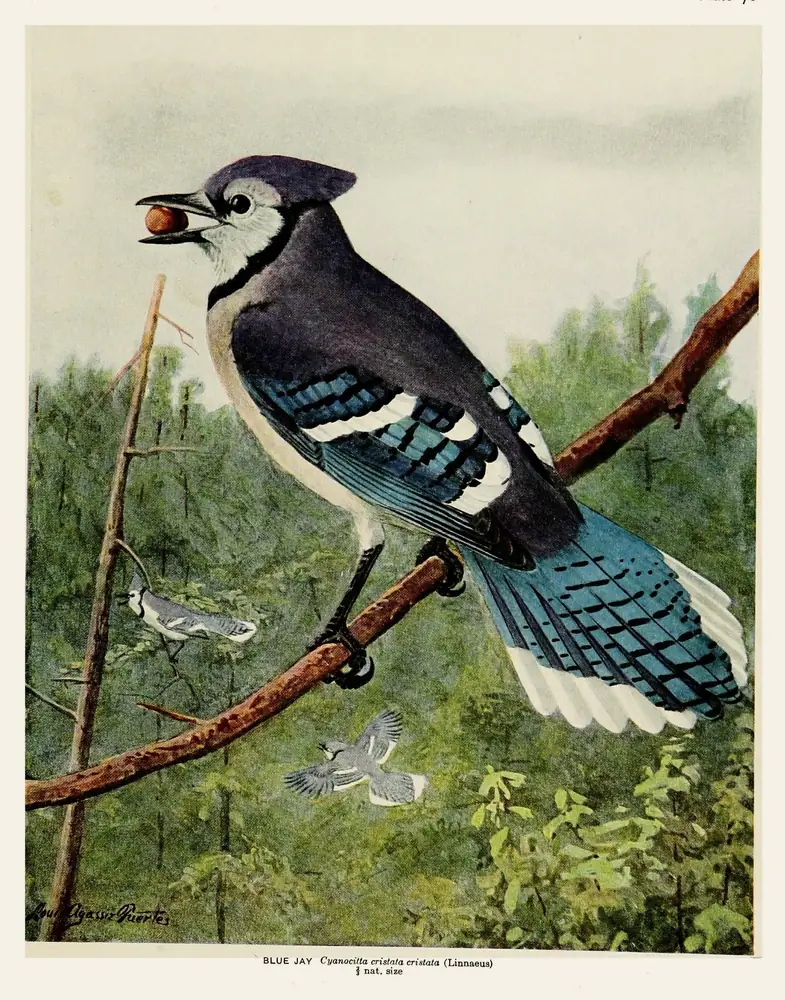
Key facts
- Fuertes was born in Ithaca, New York, on February 7, 1874, and was killed at a railroad crossing on August 22, 1927 (Cornell University Library).
- He made at least 700 color plates and at least 400 black-and-white drawings (US Fish and Wildlife Service).
- Elon Howard Eaton's Birds of New York (1910–14) has 106 color plates by Fuertes (Linda Hall Library).
- The Field Museum in Chicago holds 115 of his watercolors and sketches from the 1926–27 expedition to Ethiopia.
Facts checked: September 30, 2026.
An Ithaca boy who drew birds
Fuertes was born in Ithaca, New York, on February 7, 1874. His father, Estevan Antonio Fuertes, came from a Spanish family.
The earliest record of him painting a bird dates from age 14. It was a Red Crossbill, with its oddly crossed beak. By 17 he was an associate member of the American Ornithologists' Union.
He went to Cornell and at first studied architecture. In 1894, on a trip to Washington, D.C., with the college glee club, he met the ornithologist Elliott Coues. Coues saw his paintings and gave him crucial encouragement, advice and practical help.
His first professional illustrations appeared in 1896, in Florence Merriam Bailey's A-Birding on a Bronco. He graduated from Cornell in 1897. Afterward he studied with the painter and naturalist Abbott H. Thayer, and his technique improved a great deal.
A life of expeditions
Fuertes traveled widely to see and paint birds.
- Alaska, 1899. At 25 he joined the Harriman Alaska Expedition, alongside the naturalists John Muir and John Burroughs.
- The Americas, 1902 to 1913. He traveled with Frank M. Chapman of the American Museum of Natural History. Their trips took him to the Bahamas, the Pacific Coast, Saskatchewan, the Canadian Rockies, Florida, Yucatán, Mexico and Colombia.
- Ethiopia, 1926 to 1927. He joined a Field Museum expedition to Abyssinia, now Ethiopia, with his longtime friend Wilfred H. Osgood. The Field Museum still holds 115 of his watercolors and sketches from that trip.
From 1923 he also lectured on ornithology at Cornell. He mentored younger artists, notably George Miksch Sutton, and he had more commissions than he could complete.
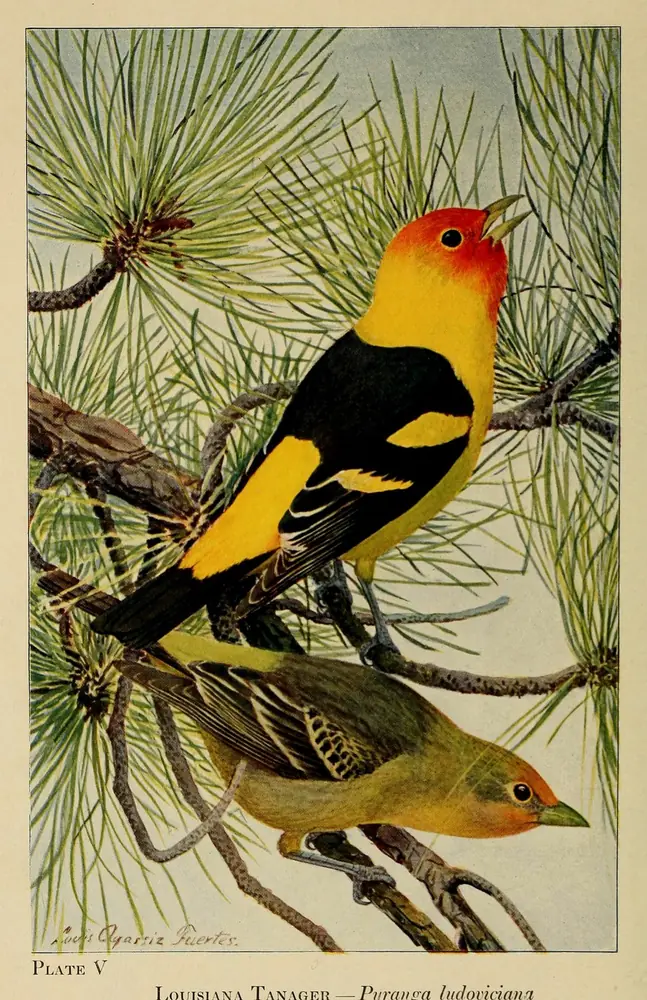
Louis Agassiz Fuertes' paintings on the page
Fuertes worked for publishers, museums, magazines and government. In all he made at least 700 color plates and at least 400 black-and-white drawings.
Some of his best-known work:
- Birds of New York by Elon Howard Eaton (1910–14), with 106 color plates by Fuertes.
- Magazines such as Bird-Lore and National Geographic, including the National Geographic book of birds of 1918.
- Album of Abyssinian Birds and Mammals (1930), from his Ethiopia paintings. It was his last work.
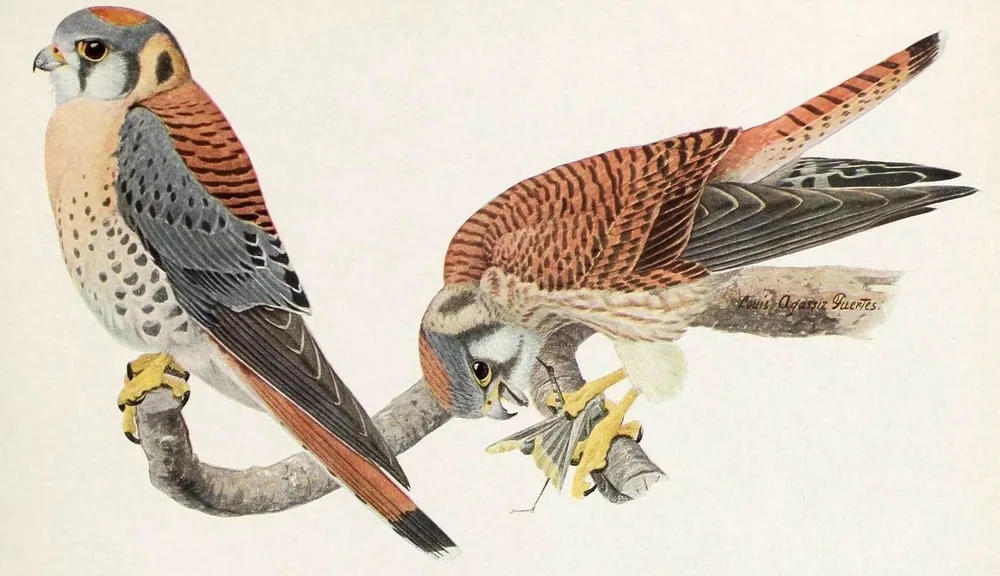
What makes his birds distinctive
Fuertes called his approach bird portraiture. The US Fish and Wildlife Service says he caught "a sense of stare and personality" in the faces of living birds.
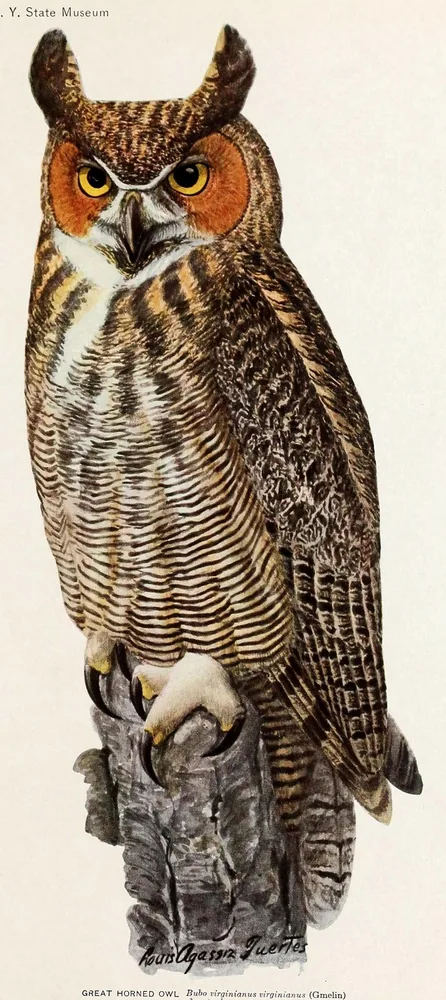
- The eyes. Many of his birds seem to look right back at you. See the owl further down.
- Soft feathers. He was known for catching the soft texture of plumage, which set him apart from earlier painters.
- Real birds, real places. He always worked from real specimens, often birds he had shot and prepared himself. He took care to show each bird in the right setting.
Many critics have ranked him above Audubon as a painter. He also helped make birds popular with the public, through magazines, children's books and talks, and he spoke up for protecting them.
A sudden end
On August 22, 1927, soon after he returned from Ethiopia, Fuertes was killed when a train hit his car at a railroad crossing. He was 53. The paintings he had with him survived undamaged, and they became the Album of Abyssinian Birds and Mammals.
Where to see Fuertes' paintings today
- The Field Museum, Chicago. Its library holds 115 watercolors and sketches from the Ethiopia expedition.
- Cornell University Library, Ithaca. Its rare and manuscript collections hold the Louis Agassiz Fuertes papers.
- Free online scans. Cornell University Library's copy of Eaton's Birds of New York, with Fuertes' color plates, is free on the Internet Archive. So is the Library of Congress's copy of Chapman's Handbook of Birds of Eastern North America (1912). Many single plates are on Wikimedia Commons.
For more free archives and the checks to make before reusing an image, see where to find vintage bird illustrations.
Fuertes in your book
Here is how Fuertes shows up in our library, counted in September 2026:
- About 50 birds on our US and Canada list are illustrated with his plates.
- About 3 in 4 of those are among our 400 most commonly recorded birds, such as the Blue Jay, Baltimore Oriole, Wood Duck, American Kestrel, Great Horned Owl and Red-breasted Nuthatch.
- About 20 come from New York State publications, including Eaton's Birds of New York and the state's annual reports.
- Others come from US government bird bulletins, books on the birds of California and the Rocky Mountains, the magazine Bird-Lore, and Frank Chapman's Handbook of Birds of Eastern North America (1912).
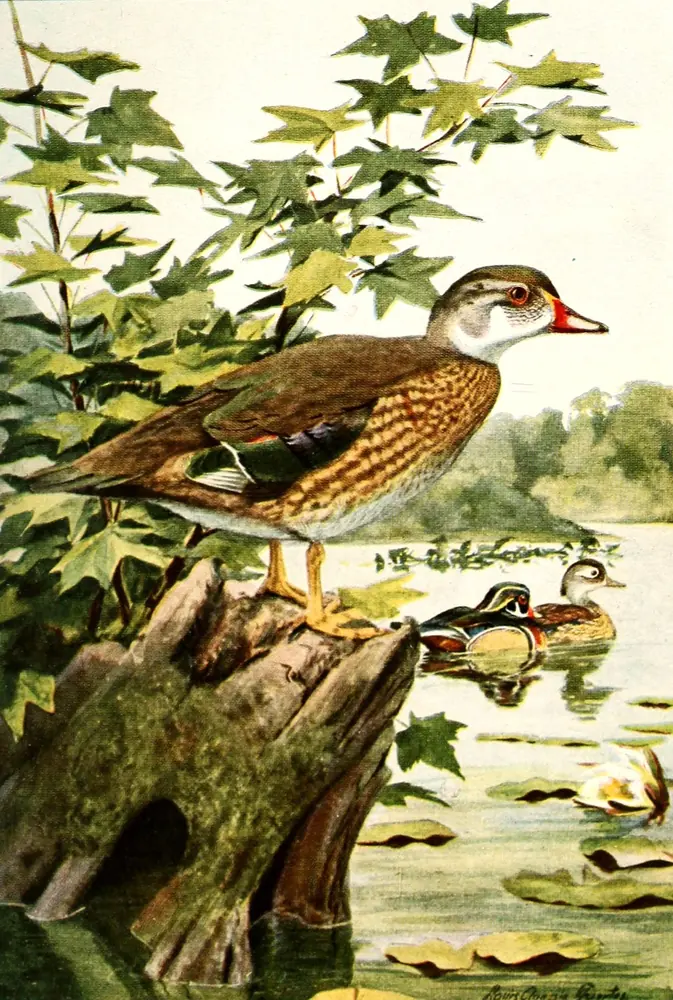
Most of these scans came to the Internet Archive from libraries such as Cornell University Library, the Library of Congress and Smithsonian Libraries. The Picture Credits pages at the back of your book list each Fuertes plate with its book and page numbers.
Questions people ask about Fuertes
Was Fuertes a better painter than Audubon?
Many critics have said so. Fuertes is known for soft feathers and lively, staring eyes; Audubon for life-size birds in bold, dramatic poses. They are different styles, and your book has both.
How did Fuertes die?
In a car accident on August 22, 1927, when a train hit his car at a railroad crossing, soon after his return from Ethiopia. He was 53.
More painters
Fuertes is one of several artists you'll meet in a Birdfolio. Our guide to famous bird painters introduces the others. Compare his portraits with John James Audubon's paintings and John Gould's hummingbirds. Looking for a present? See our gift ideas for birders.
See these plates in a Birdfolio → /sample