Reference
How many bird species are in Wisconsin?
Wisconsin has 457 bird species on its official list (Wisconsin Society for Ornithology Records Committee, March 23, 2025), the 25th highest count of the 49 states with a verified count. Nine hypothetical species are listed separately and not counted, and a few recent additions are marked as awaiting the records committee's review.
Wisconsin’s state bird is the American Robin: our Wisconsin state bird page tells how it was chosen.
Updated
What are the most common birds in Wisconsin?
In summer, the 25 most common birds in Wisconsin are led by the Red-winged Blackbird, at about 157 birds per survey route, then the Cliff Swallow and the Canada Goose, by the USGS Breeding Bird Survey’s counts for 2021–2025. Together these 25 made up 72% of all the birds counted on Wisconsin’s 91 survey routes.
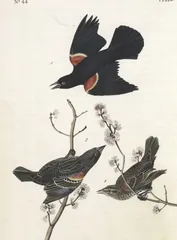
John James Audubon, The Birds of America (1840–44) about 157 per routeon 100% of routesfalling since 2015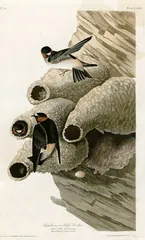
John James Audubon, The Birds of America (1827–38) 2 Cliff Swallowabout 120 per routeon 73% of routesno clear trend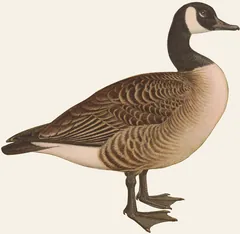
Marinus Adrianus Koekkoek, E. D. van Oort's Ornithologia Neerlandica (1922) about 118 per routeon 88% of routesno clear trend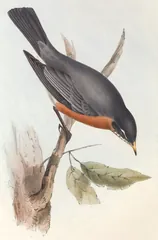
John and Elizabeth Gould, The Birds of Europe (1832–37) about 65 per routeon 100% of routesno clear trend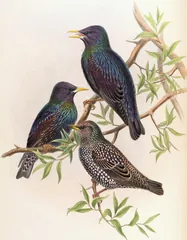
John Gould and Henry Constantine Richter, The Birds of Asia, vol. 5 (1850–83) 5 European Starlingabout 57 per routeon 91% of routesno clear trendintroduced species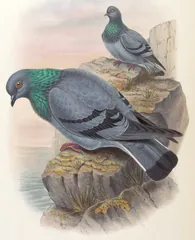
John Gould and William Matthew Hart, The Birds of Asia (1850–83) 6 Rock Pigeonabout 55 per routeon 88% of routesno clear trendintroduced species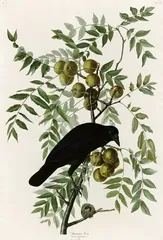
John James Audubon, The Birds of America (1827–38) about 48 per routeon 100% of routesfalling since 2015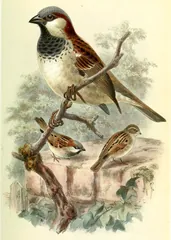
John Gerrard Keulemans, Lord Lilford’s Coloured Figures of the Birds of the British Islands (1885–97) 8 House Sparrowabout 47 per routeon 79% of routesfalling since 2015introduced species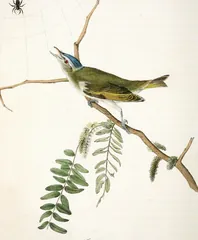
John James Audubon, The Birds of America (1840–44) 9 Red-eyed Vireoabout 41 per routeon 100% of routesno clear trend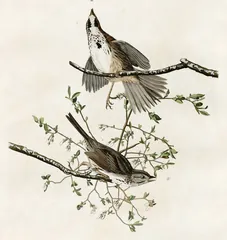
John James Audubon, The Birds of America (1827–38) 10 Song Sparrowabout 31 per routeon 100% of routesfalling since 2015
Show all 25
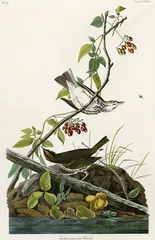
John James Audubon, The Birds of America (1827–38) 11 Ovenbirdabout 29 per routeon 76% of routesno clear trend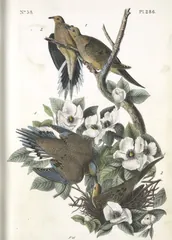
John James Audubon, The Birds of America (1840–44) about 29 per routeon 99% of routesno clear trend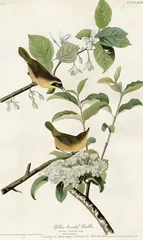
John James Audubon, The Birds of America (1827–38) 13 Common Yellowthroatabout 26 per routeon 100% of routesno clear trend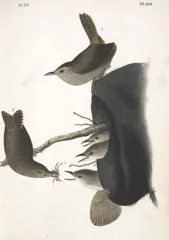
John James Audubon, The Birds of America (1840–44) 14 Northern House Wrenabout 23 per routeon 96% of routesno clear trend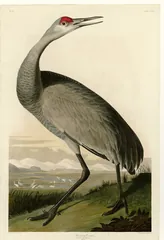
John James Audubon, The Birds of America (1827–38) about 21 per routeon 91% of routesno clear trend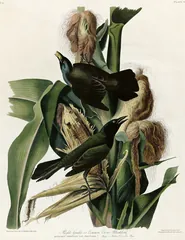
John James Audubon, The Birds of America (1827–38) 16 Common Grackleabout 21 per routeon 99% of routesfalling since 2015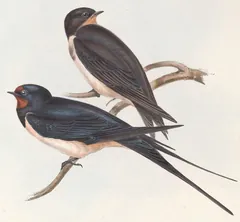
John and Elizabeth Gould, The Birds of Europe (1832–37) 17 Barn Swallowabout 19 per routeon 87% of routesno clear trend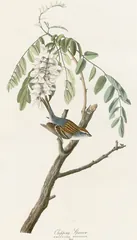
John James Audubon, The Birds of America (1827–38) 18 Chipping Sparrowabout 19 per routeon 100% of routesfalling since 2015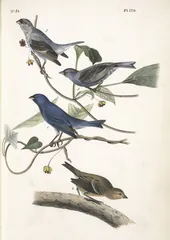
John James Audubon, The Birds of America (1840–44) 19 Indigo Buntingabout 15 per routeon 100% of routesno clear trend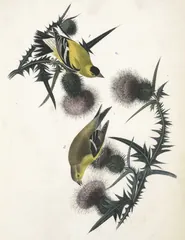
John James Audubon, The Birds of America (1840–44) about 15 per routeon 100% of routesfalling since 2015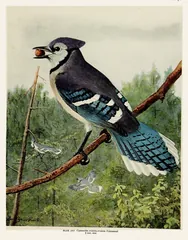
Louis Agassiz Fuertes, Elon H. Eaton's Birds of New York (1910–14) 21 Blue Jayabout 13 per routeon 100% of routesno clear trend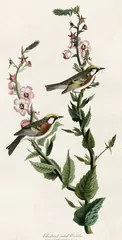
John James Audubon, The Birds of America (1827–38) 22 Chestnut-sided Warblerabout 12 per routeon 63% of routesrising since 2015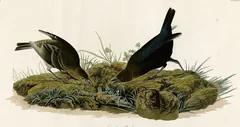
John James Audubon, The Birds of America (1827–38) 23 Brown-headed Cowbirdabout 12 per routeon 96% of routesno clear trend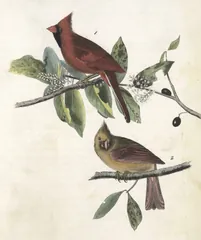
John James Audubon, The Birds of America (1840–44) about 11 per routeon 90% of routesno clear trend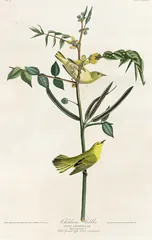
John James Audubon, The Birds of America (1827–38) 25 Northern Yellow Warblerabout 11 per routeon 95% of routesrising since 2015
A field guide to North America covers the Cliff Swallow, the Canada Goose and most of the 457 species on Wisconsin’s list; we compared the best bird books of 2026 to find the one that suits a beginner.
What is the most common bird in Wisconsin?
The Red-winged Blackbird leads Wisconsin’s summer survey: about 157 a route on average in 2021–2025, ahead of the Cliff Swallow at about 120, seen on every one of the 91 routes. USGS’s estimate has its Wisconsin numbers falling since 2015.
In winter, the European Starling topped the newest statewide ranking we could find, Audubon's summary of the 117th Christmas Bird Count, in the winter of 2016-17: 76,381 starlings on 105 Wisconsin counts, then the Dark-eyed Junco (64,641, the most juncos ever counted in the state), Canada Goose (42,428), American Crow (33,794) and Rock Pigeon (32,001). No newer statewide winter ranking is online.
Source: The 117th CBC in Wisconsin, 2016-17 (National Audubon Society, November 10, 2017), read October 10, 2026.
How was this list made?
Each of Wisconsin’s 91 routes is a roadside count, 50 stops along about 25 miles, run once a year in early summer by a volunteer. We took USGS’s yearly estimate for each species in Wisconsin, the number of birds a typical route records, averaged it over the five latest survey years (there was no survey in 2020) and ranked the birds by it. To keep the list to birds you’re likely to meet across Wisconsin, we left out species recorded on fewer than one in five of its routes, and those USGS can only estimate very roughly, which usually means big flocks or colonies on a few routes.
For Wisconsin that left out the American White Pelican.
The share of routes is our own count from USGS’s route data for Wisconsin, using only counts that met the survey’s standards; “rising” and “falling” are USGS’s trends for the state since 2015, named only where it finds a clear change. Roadside counts on early-summer mornings miss most of Wisconsin’s owls and waterbirds, and its winter visitors aren’t here at all.
Wisconsin’s counts come from two USGS data releases, the North American Breeding Bird Survey Analysis Results 1966–2025 (Hostetler et al., 2026) and its Dataset 1966–2025 (Ziolkowski et al., 2026), gathered by volunteer observers and free for anyone to use; Birdfolio isn’t connected with the USGS.
How many bird species are in Wisconsin?
| Official count | 457 species |
|---|---|
| List’s date | March 23, 2025 |
| Kept by | Wisconsin Society for Ornithology Records Committee |
| Awaiting review | 6 of the 457, among them the American Flamingo and the Fieldfare |
| Review species | 129, plus the 6 awaiting review (March 2025, our count) |
| Records committee since | 1978 |
| Society's journal | The Passenger Pigeon, since January 1939 |
| Among US states | 25th highest of the 49 states with a verified count |
| Official list | Checklist of the Birds of Wisconsin (PDF, updated 23 March 2025) |
What does Wisconsin’s count include?
- Valid species, as of the checklist update of March 23, 2025.
- Not counted: 9 hypothetical species, listed after the main checklist.
- A few recent additions are marked as still awaiting the records committee's review.
- Two extinct birds, the Passenger Pigeon and the Carolina Parakeet, and introduced species such as the Mute Swan and the European Goldfinch, added in 2025 as now established in the state.
Why do other sources give a different number?
Wisconsin's total differs even between pages of its ornithological society's own website, and the state's natural resources department has long counted another way:
- 441. An older total still printed on the society's Records page in late 2025, while the checklist itself gave 457. Source: Records (Wisconsin Society for Ornithology), the Internet Archive's copy of December 25, 2025.
- 435. The society's August 2012 checklist, by our count of its rows: 434 species and one combined entry for two look-alike kingbirds. Four birds then on its hypothetical list, Cassin's Kingbird, Sprague's Pipit, Painted Redstart (now Painted Whitestart) and Lesser Goldfinch, have since made the main list. Source: Checklist of the Birds of Wisconsin, August 2012 (Wisconsin Society for Ornithology).
- 408. The Wisconsin Department of Natural Resources' Checklists of Wisconsin Vertebrates (2001): 400 native species and 8 introduced ones. It left out 15 hypothetical species and both extinct birds, the Carolina Parakeet and the Passenger Pigeon. Source: Checklists of Wisconsin Vertebrates, 2001 (Wisconsin Department of Natural Resources).
- Over 300. The round figure on the department's birding page today, which doesn't say what it counts. Source: Birding and Bird Conservation (Wisconsin Department of Natural Resources).
- 357. The total in Kumlien and Hollister's The Birds of Wisconsin (1903), subspecies included. It cut a list of 365 from 1899 by throwing out birds with no authentic record. Source: The Birds of Wisconsin, by L. Kumlien and N. Hollister (Wisconsin Natural History Society, 1903), full text at the Internet Archive.
Wisconsin’s list follows its own committee’s rules, and so does every other state’s: see why the counts differ from state to state.
Wisconsin rarities, from an 1846 ptarmigan to a 2024 shearwater
- The society's file of rare-bird records reaches back to the 1840s: two Willow Ptarmigan trapped at Racine in December 1846 by the naturalist Philo R. Hoy, and a Masked Duck collected in Rock County in November 1870, now at the Milwaukee Public Museum. Each is still Wisconsin's only record of its species. Sources: Wisconsin Rare Bird Records, updated through winter 2023-24 (Wisconsin Society for Ornithology); Checklist of the Birds of Wisconsin, updated March 23, 2025 (Wisconsin Society for Ornithology), read October 5, 2026.
- Kirtland's Warbler first appears in the file at Racine on May 20, 1853. In 2007 three nests were found on timber company land in Adams County, the first nesting outside Michigan since Ontario in the 1940s; they raised no young, but in 2008, with more than 300 cowbirds trapped at two nesting sites, at least 10 young left their nests. Sources: Wisconsin Rare Bird Records, updated through winter 2023-24 (Wisconsin Society for Ornithology); Partnership Proves Key to Kirtland's Warbler Nesting Success in Wisconsin, July 2008 (U.S. Fish and Wildlife Service), the Internet Archive's copy of July 20, 2026, read October 5, 2026.
- A Streak-backed Oriole spent early January 1998 in Iron County, until January 15, and is backed by a specimen and photos; a Green-breasted Mango stayed in Rock County from September 18 to November 6, 2007. Both remain one-time visitors on the official list. Sources: Wisconsin Rare Bird Records, updated through winter 2023-24 (Wisconsin Society for Ornithology); Checklist of the Birds of Wisconsin, updated March 23, 2025 (Wisconsin Society for Ornithology), read October 5, 2026.
- Wisconsin's first Short-tailed Shearwater was found in Ashland County on November 14, 2024, and joined the list in the March 2025 update. Sources: Wisconsin Rare Bird Records, updated through winter 2023-24 (Wisconsin Society for Ornithology); Checklist of Wisconsin Birds (Wisconsin Society for Ornithology), the Internet Archive's copy of May 19, 2026, read October 5, 2026.
Questions people ask about Wisconsin’s birds
Which US state has the most bird species?
California, with 696 species as of its September 8, 2026 update, then Texas with 682 as of October 24, 2026 (our table). Wisconsin's checklist stood at 457 in its March 2025 update, with 9 hypothetical species listed after it but not counted.
Sources: Official California Checklist, updated 8 September 2026 (California Bird Records Committee, Western Field Ornithologists); Checklist of the Birds of Wisconsin, updated March 23, 2025 (Wisconsin Society for Ornithology), read October 5, 2026.
What is the rarest bird in Wisconsin?
By our count, 31 species on the March 2025 checklist have just one Wisconsin record each, among them the Smew, Thick-billed Murre, Brown Booby, Phainopepla and Flame-colored Tanager. The checklist grades every species, and its rarest grade, accidental, means fewer than one record every five years.
Source: Checklist of the Birds of Wisconsin, updated March 23, 2025 (Wisconsin Society for Ornithology), read October 5, 2026.
What are common birds in Wisconsin?
Woodpeckers, jays, chickadees, nuthatches and goldfinches: on the 117th Christmas Bird Count, six species turned up on all 105 Wisconsin counts, the Downy Woodpecker, Blue Jay, American Crow, Black-capped Chickadee, White-breasted Nuthatch and American Goldfinch, with the Hairy Woodpecker, Mourning Dove, Bald Eagle and Wild Turkey close behind. The Northern Cardinal was everywhere except seven north-woods counts.
Source: The 117th CBC in Wisconsin, 2016-17 (National Audubon Society, November 10, 2017), read October 10, 2026.
Where can I find a list of Wisconsin birds?
On the Wisconsin Society for Ornithology's website: the Checklist of Wisconsin Birds, with 457 valid species and 9 hypothetical ones as of March 23, 2025, as a PDF or an Excel spreadsheet, kept by the society's Records Committee. For the stories behind the names, the society's beginner page points to Samuel D. Robbins's book Wisconsin Birdlife and to the state's breeding bird atlas.
Sources: Checklist of Wisconsin Birds, last updated March 23, 2025 (Wisconsin Society for Ornithology); Learn About Birds (Wisconsin Society for Ornithology), read October 10, 2026.
Which birds are considered invasive in Wisconsin?
By law, just one: the Monk Parakeet is the only bird on Wisconsin's invasive species list, rule NR 40, where it is prohibited. The state's Department of Natural Resources also calls the Mute Swan a non-native invasive species, as the U.S. Fish and Wildlife Service does, and works to reduce the several hundred in the state with active control.
The House Sparrow, the Eurasian Collared-Dove and the European Starling are listed as unprotected wild animals, with no closed season or limit, and the department counts pigeons as domestic animals. It began revising the invasive species rule in July 2025, so the list may change.
Sources: Chapter NR 40, Invasive Species Identification, Classification and Control (Wisconsin Administrative Code, Register November 2024), the Internet Archive's copy of September 22, 2026; Swans in Wisconsin (Wisconsin Department of Natural Resources); Chapter NR 10, Game and Hunting (Wisconsin Administrative Code, Register May 2026), the Internet Archive's copy of June 30, 2026; Invasive species rule, NR 40 (Wisconsin Department of Natural Resources), read October 11, 2026.
What is the smallest bird in Wisconsin?
The Ruby-throated Hummingbird, the only common hummingbird in the Midwest: just 3 to 3.5 inches long, University of Wisconsin-Madison Extension says. Ohio's Division of Wildlife, which names it that state's smallest bird, puts its weight at about 3 grams, the weight of a nickel. In late summer it can gain as much as its own body weight in order to fly nonstop across the Gulf of Mexico, and the males leave first, sometimes in early August.
Sources: Hummingbirds in the Garden (University of Wisconsin-Madison Division of Extension, revised May 2026); Common Birds of Ohio, a field guide, Publication 5414 (Ohio Department of Natural Resources, Division of Wildlife), read October 11, 2026.
What bird chirps at night in Wisconsin?
Owls, mostly. Late April brings an early peak in owl calling, the Wisconsin Society for Ornithology says, a good time to hear Barred, Great Horned, Eastern Screech- and Northern Saw-whet Owls, along with the American Woodcock at dusk. A screech-owl close by can bark, chuckle, rattle, hiss, snap its bill and screech, as a volunteer for the state's breeding bird atlas found, and a state park's spring night walks listen for whip-poor-wills.
Sources: Nocturnal Atlasing Week 2017 (Wisconsin Society for Ornithology); Breeding Bird Atlas II needs you (Wisconsin Natural Resources magazine, Summer 2018); Sounds of the Night, Hartman Creek State Park (Wisconsin Department of Natural Resources, May 9, 2026), read October 11, 2026.
Which birds live in Wisconsin?
Birds of the Lake Superior shore and islands, the northern forests and barrens, the big rivers, the marshes and the central grasslands. Its specialties are two grouse of open country: the Greater Prairie-Chicken, whose largest concentration in the state is at Buena Vista Wildlife Area in Portage County, and the Sharp-tailed Grouse of the Namekagon Barrens; the state natural resources department points visitors to blinds for watching both.
Lake Superior: the Apostle Islands lie on one of the busiest migration routes in the Great Lakes region, and Gull and Eagle Islands hold 80 percent of the American Herring Gulls nesting on Wisconsin's Lake Superior shore. Long Island was the state's only successful Piping Plover nesting site until 2016, and Bald Eagles, absent from the islands in the 1970s, had 46 active nests on 21 of the 22 islands by 2018.
Rivers: along the St. Croix and Namekagon, northern conifer forest, eastern hardwoods and pockets of prairie meet, so many birds reach the edge of their range there; the Prothonotary Warbler rarely goes north of the St. Croix Falls dam. In winter, Bald Eagles from as far away as Canada gather at open water on the Wisconsin, Mississippi and Fox rivers, and the state's eagles had 1,684 occupied nests in 2019, up from 108 in the 1970s.
Grasslands and marshes: Buena Vista's 12,700 acres, one of the most extensive grasslands east of the Mississippi, also hold Henslow's Sparrows, Upland Sandpipers, Short-eared Owls and Bobolinks. Trumpeter Swans, the largest waterfowl native to North America, were wiped out in Wisconsin by the late 1880s, came back from 1989 and left the state's endangered list in 2009.
Sources: Buena Vista Wildlife Area (Wisconsin Department of Natural Resources); Birding and Bird Conservation (Wisconsin Department of Natural Resources); Birds, Apostle Islands National Lakeshore (National Park Service); Birds, Saint Croix National Scenic Riverway (National Park Service); Eagles in Wisconsin (Wisconsin Department of Natural Resources); Swans in Wisconsin (Wisconsin Department of Natural Resources), read October 10, 2026.
Why is there a Passenger Pigeon monument at Wyalusing State Park?
Wisconsin's ornithologists put it there, for the last wild pigeon shot in the state. The Wisconsin Society for Ornithology, founded in 1939, adopted the Passenger Pigeon early on as its emblem and as the name of its journal. That journal calls the 1871 nesting in central Wisconsin the largest community of birds known: some 850 square miles from Black River Falls to Kilbourn, today's Wisconsin Dells, which the naturalist A. W. Schorger estimated may have held as many as 136 million nesting pigeons. Schorger also traced the state's last one, shot near Babcock between September 9 and 15, 1899.
The society proposed a monument at its convention in April 1941 and considered Babcock, but decided too few people would see it there. The monument was dedicated at Wyalusing on the afternoon of May 11, 1947, and presented to the state. Its bronze plaque carries Schorger's words: the species became extinct “through the avarice and thoughtlessness of man.” Aldo Leopold, shown the final sketch, changed one word, the “of” in the society's name to “for.” His essay On a Monument to the Pigeon is about it, but contrary to a common story he didn't speak at the dedication; his speech came a year earlier. The Aldo Leopold Foundation calls it the first monument ever raised to an extinct species, and it was restored in 2013.
Sources: A Monument for a Lost Bird (Aldo Leopold Foundation); The Passenger Pigeon 44:4, Winter 1982 (Wisconsin Society for Ornithology, University of Wisconsin-Madison Libraries); Monument Recollections (The Passenger Pigeon 39:3, Fall 1977; Wisconsin Society for Ornithology, University of Wisconsin-Madison Libraries), read October 5, 2026.
Where can you see Whooping Cranes in Wisconsin?
In central Wisconsin, where a reintroduced flock nests. Whooping Cranes once passed through the south and west of the state among the Sandhill Crane flocks, but the last taken in Wisconsin was shot in Green County in October 1878, and the society's records show a single wild bird after that, in Waukesha County in 1959. From 2001, young cranes raised at Necedah National Wildlife Refuge were led south to Florida behind ultralight aircraft, and on June 22, 2006, two chicks hatched in the wild at Necedah, the first wild-hatched Whooping Cranes in the Midwest in over 100 years.
The International Crane Foundation put the eastern flock at about 64 birds on September 1, 2026, 18 of them hatched in the wild, with at least 60 in Wisconsin; pairs with this year's chicks were in Green Lake, Portage and Juneau counties. Guides from the foundation, based in Baraboo since 1973, lead Whooping Crane walks at Horicon National Wildlife Refuge in the fall.
Sources: The Birds of Wisconsin, by L. Kumlien and N. Hollister (Wisconsin Natural History Society, 1903), full text at the Internet Archive; Wisconsin Rare Bird Records, updated through winter 2023-24 (Wisconsin Society for Ornithology); First Wild Whooping Crane Chicks Hatch in the Midwest in Over 100 Years, June 2006 (U.S. Fish and Wildlife Service), the Internet Archive's copy of January 11, 2026; Whooping Crane Eastern Population Update, September 2026 (International Crane Foundation); About Us (International Crane Foundation); Horicon National Wildlife Refuge (U.S. Fish and Wildlife Service), the Internet Archive's copy of September 5, 2026, read October 5, 2026.
Why does Horicon Marsh matter so much to Wisconsin's birds?
Size, mostly. At more than 33,000 acres, Horicon Marsh is the largest freshwater marsh in the United States by the US Fish and Wildlife Service's reckoning, with habitat for more than 300 bird species. Its northern two-thirds is Horicon National Wildlife Refuge, set up in 1941 partly as a sanctuary for Redhead ducks; the southern 11,000 acres is a state wildlife area, set up in 1927. Settlers had dammed and dredged the marsh and later drained it for farming, and in the 1990s it was named a Wetland of International Importance.
Each spring and fall, hundreds of thousands of ducks and tens of thousands of Canada Geese and Sandhill Cranes pass through, says the Wisconsin Department of Natural Resources. In August 2019 a pair of Glossy Ibis with young at Horicon became the first proof of that Atlantic Coast bird nesting in Wisconsin, and the society's review list asks for reports of Glossy Ibis everywhere except at Horicon Marsh.
Sources: Horicon National Wildlife Refuge (U.S. Fish and Wildlife Service), the Internet Archive's copy of September 5, 2026; Horicon Marsh State Wildlife Area (Wisconsin Department of Natural Resources); 5 Years of Atlas Data Yields 226 Species, October 14, 2019 (Wisconsin Society for Ornithology), the Internet Archive's copy of March 5, 2026; WSO Review List, updated July 2022 (Wisconsin Society for Ornithology), the Internet Archive's copy of April 16, 2026, read October 5, 2026.
Where is the official Wisconsin bird list, and how often is it updated?
On the Wisconsin Society for Ornithology's website, as a PDF and an Excel spreadsheet: the Checklist of the Birds of Wisconsin, updated March 23, 2025, with 457 valid species and the 9 hypothetical ones, such as Roseate Tern and Virginia's Warbler, at the end. That update merged the Common and Hoary Redpolls into one species and marked 6 new additions as pending the records committee's review. A Review column flags the species whose sightings must be documented, 129 by our count.
The Records Committee, set up in 1978, is a standing committee of the society with five members on five-year terms; the chair it appoints manages submissions and voting and publishes the results. Every season's records are reviewed and voted on, with the results in the society's quarterly journal, The Passenger Pigeon, which first appeared in January 1939, before the society's founding meeting that May. Rare sightings go to the committee through the society's online Rare Bird Documentation Form.
Sources: Checklist of the Birds of Wisconsin, updated March 23, 2025 (Wisconsin Society for Ornithology); Checklist of Wisconsin Birds (Wisconsin Society for Ornithology), the Internet Archive's copy of May 19, 2026; Records Committee Members (Wisconsin Society for Ornithology), the Internet Archive's copy of April 16, 2026; Records (Wisconsin Society for Ornithology), the Internet Archive's copy of December 25, 2025; Looking Back 80 Years to When WSO Was Born, May 5, 2019 (Wisconsin Society for Ornithology), the Internet Archive's copy of February 9, 2026, read October 5, 2026.
How do you count your own Wisconsin list?
Your Wisconsin list is every species you’ve seen in Wisconsin. eBird can filter your life list to Wisconsin, and your eBird data download gives the state of every sighting. On paper, count the species you’ve seen in Wisconsin; what is a life list? explains how birders keep their lists.
To print your whole list, Wisconsin birds and all, see how to print your bird life list, or let Birdfolio make it a hardcover book.
Wisconsin’s state bird
Wisconsin’s state bird is the American Robin (officially, the “robin (Turdus migratorius)”), the state bird since 1949. Its story, the state flower and animal, and a free picture card for a report are on our Wisconsin state bird page.
Birding festivals in Wisconsin
Our birding festivals calendar lists 7 in Wisconsin, with dates from each festival’s own website:
- Madison Bird and Nature Festival, Madison: dates not announced yet; expected in April 2027 (2026 festival: April 26, 2026)
- Northwoods Bird & Wildlife Festival, Manitowish Waters: May 8, 2027
- Door County Festival of Nature, Baileys Harbor: May 27–29, 2027
- Chequamegon Bay Birding and Nature Festival, Ashland: dates not announced yet; expected in May 2027 (2026 festival: May 21–23, 2026)
- Horicon Marsh Bird Festival, Horicon Marsh: dates not announced yet; expected in May 2027 (2026 festival: May 8–10, 2026)
- Crex Meadows Fall Festival, Grantsburg: dates not announced yet; expected in October 2027 (2026 festival: October 10, 2026)
- Great Midwest Crane Fest, Baraboo: dates not announced yet; expected in November 2027 (2026 festival: November 14–15, 2026)
Christmas Bird Count in Wisconsin
Wisconsin had 116 Christmas Bird Count circles on Audubon’s map last winter, each counted on a single day between December 14 and January 5. Our guide shows where to find Wisconsin’s counts and lists 8 Wisconsin count dates already announced for this winter; it’s free, and beginners are welcome.
More about bird counts
- How many bird species are in each state: Wisconsin beside all 50 states, DC and Canada.
- Bird lists of nearby states: Illinois, Iowa, Michigan and Minnesota.
- State birds of all 50 states, Wisconsin’s American Robin among them
- How many bird species are in the US and Canada
- Bird splits and lumps
If you’re shopping for a birder in Wisconsin, our gift guide for birders and our pick of coffee table bird books are good places to start.