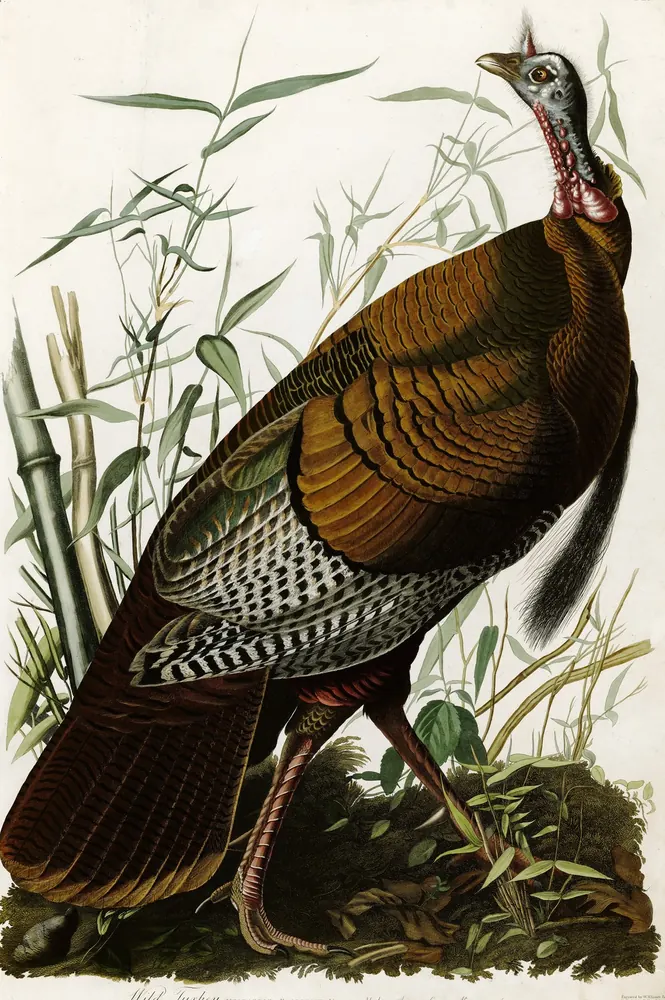
John James Audubon (1785–1851) painted the birds of The Birds of America: 435 life-size, hand-colored plates printed in Britain between 1827 and 1838. A plate is a full-page printed picture in a book. You can see every one of them free online.
If you open a Birdfolio at random, the painting beside your bird is most likely one of his. His plates cover about 300 of the 1,188 birds on our US and Canada list, and more than half of the 400 most commonly recorded ones. The National Audubon Society says his book is still a standard against which bird artists such as Roger Tory Peterson and David Sibley are measured. Here is the man, the book and what makes his birds look the way they do.
Key facts
- Audubon was born in 1785 in Saint-Domingue, now Haiti, and died in New York City in 1851, at 65.
- The Birds of America was issued from 1827 to 1838 in 87 parts of five plates each: 435 plates in all.
- Of about 200 copies made, 119 are known to survive, according to London's Natural History Museum.
- The smaller octavo edition (1840–44) has 500 hand-colored lithographs by John T. Bowen of Philadelphia.
- Audubon.org's own scans are free to view, but its terms allow them for non-commercial, educational use only.
Facts checked: September 30, 2026.
A short life
Audubon was born in 1785 in Saint-Domingue, today's Haiti. At 18 he was sent to the United States to avoid being drafted into Napoleon's army. He settled on his father's farm in Pennsylvania, where he met Lucy Bakewell. They married in 1808.
He was a close observer of birds. He is credited with the first known bird-banding experiment in North America, using Eastern Phoebes. For years, though, he earned his living in business. Only in the early 1820s did he commit himself fully to painting America's birds.
He died in New York City on January 27, 1851, at the age of 65. The National Audubon Society was later named after him by its founder, George Bird Grinnell.
How The Birds of America plates were made
In May 1826 Audubon sailed to Britain with his unfinished collection of bird paintings, looking for a publisher.
- The printers. An Edinburgh engraver, William Home Lizars, started the work and made the first ten plates. Audubon was unhappy with the pace and quality, so he moved the job to Robert Havell Jr. in London, who made the rest.
- The method. Workers copied each painting onto a copper plate, printed it, and then colored every sheet by hand.
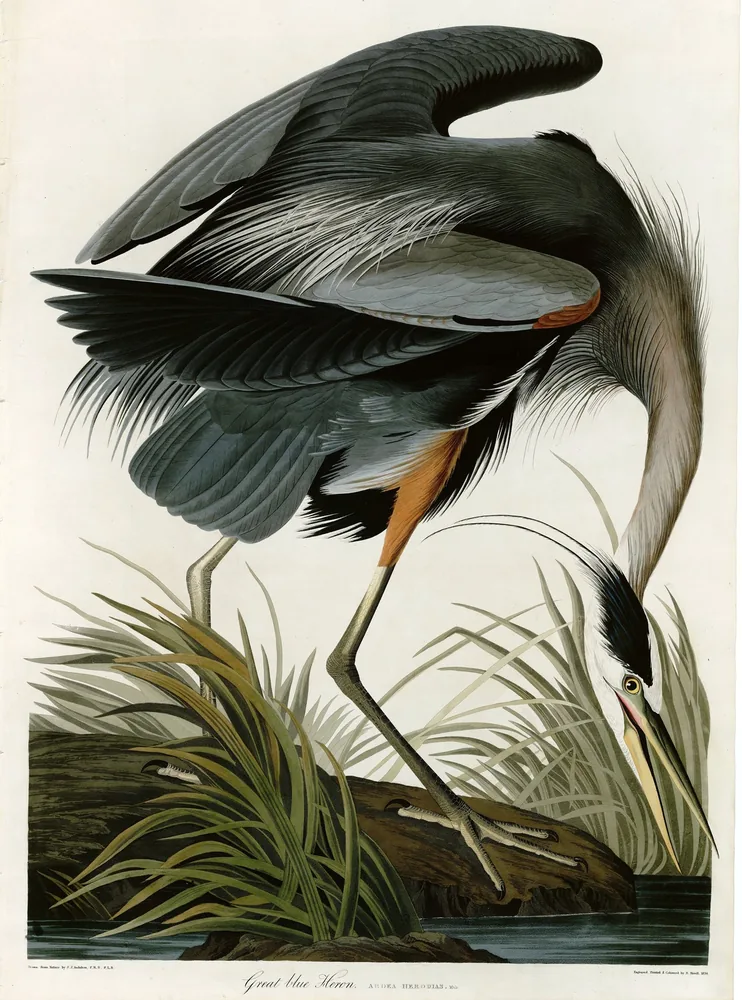
- The size. Audubon insisted on the largest paper of the day, called double elephant, about 26 by 38 inches. That let him show every bird at life size.
- The result. Between 1827 and 1838, subscribers received 435 plates. No more than 120 complete sets are thought to survive.
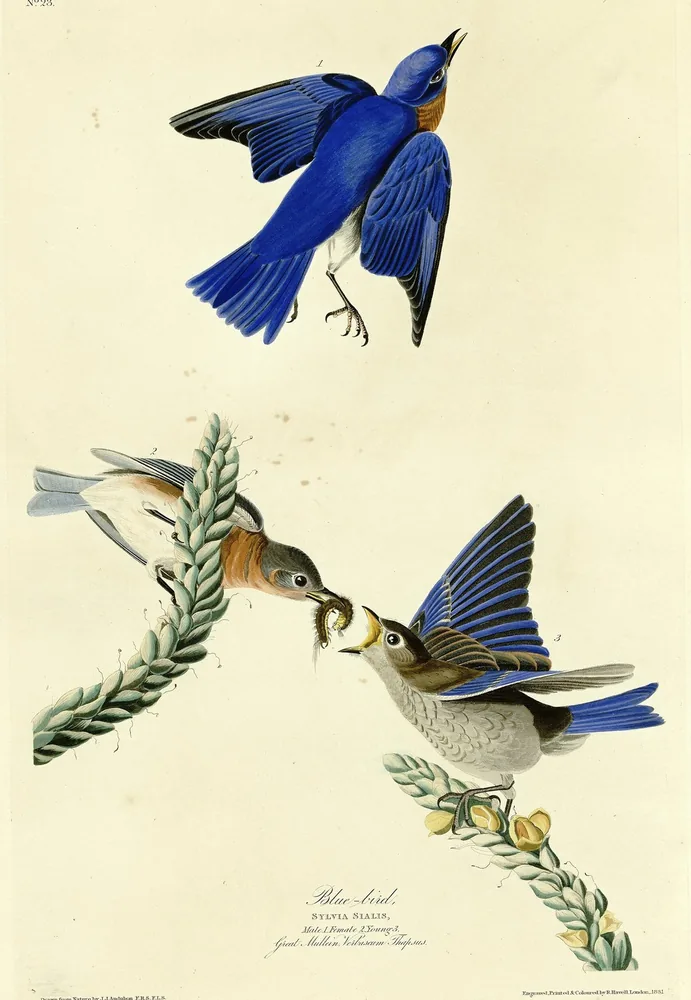
To make his birds look alive, Audubon shot birds and then arranged the bodies with wire before drawing. It is an uncomfortable detail today, but it is part of how he worked. London's Natural History Museum says his plates "broke the mould of bird illustration".
The smaller octavo edition
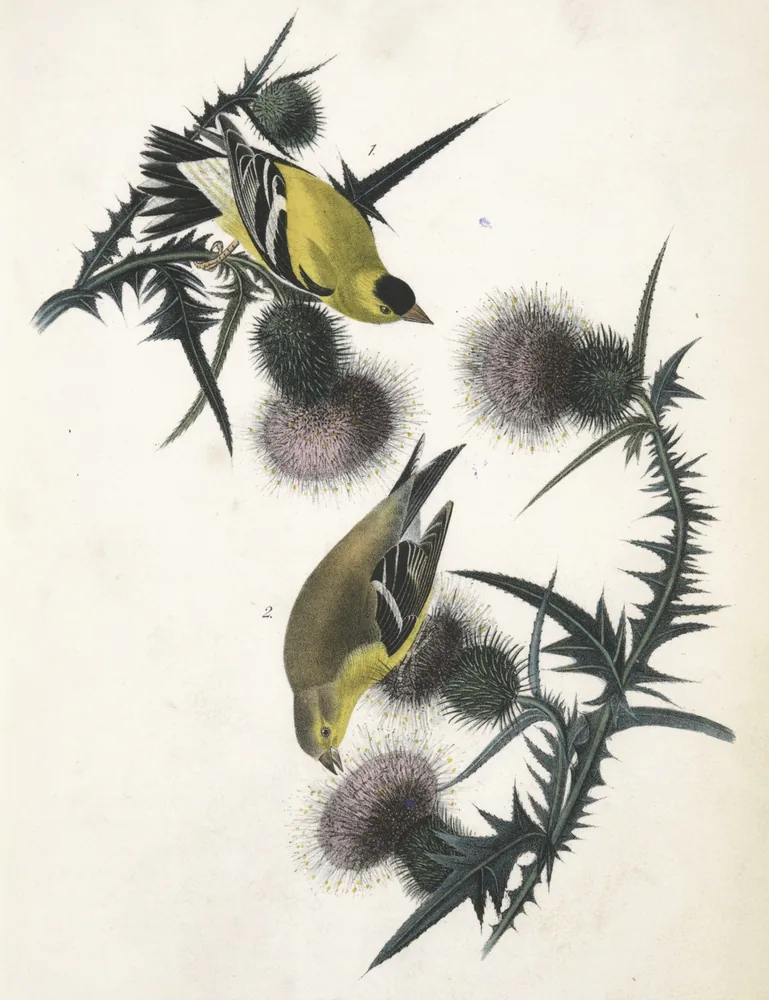
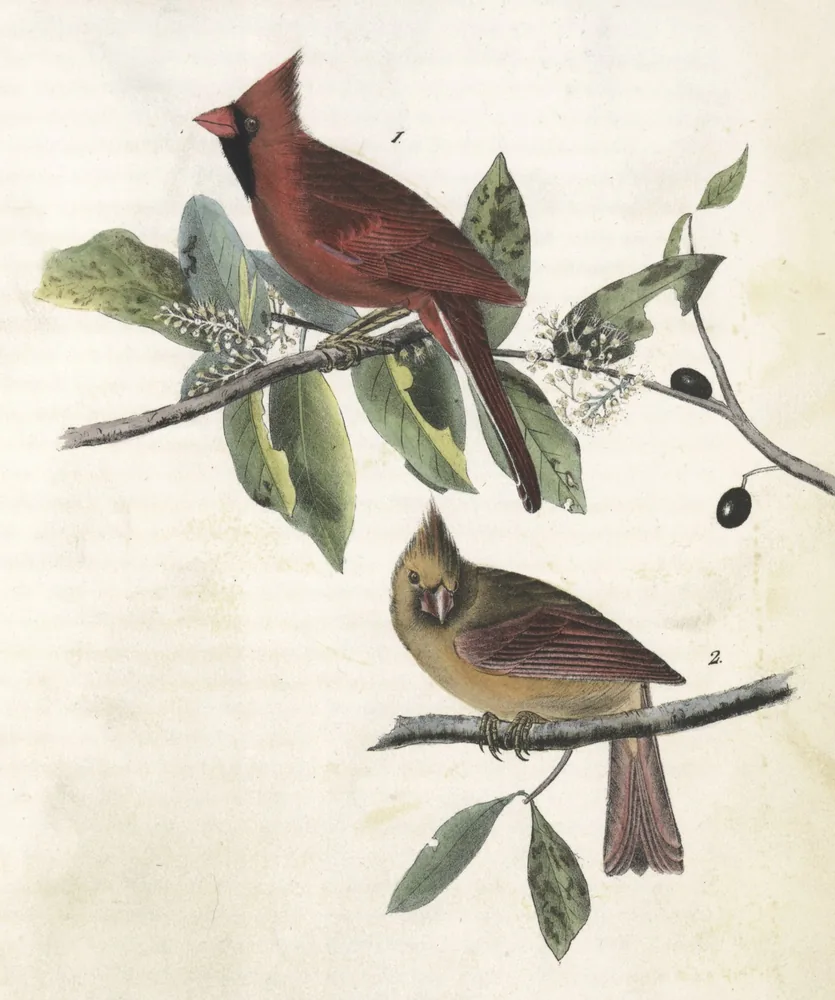
From 1840 to 1844 Audubon issued a much smaller version, known as the octavo edition (a book-size format). It had 500 hand-colored lithographs, prints made from drawings on stone, by the firm of John T. Bowen in Philadelphia.
Subscribers bought it in 100 parts, which were later bound into seven volumes. After a trip up the Missouri River in 1843, Audubon added birds that were not in the big book. The octavo edition sold well and made his work known to a far wider American audience.
What makes Audubon's paintings distinctive
- Life size. Every bird in the big edition is shown at its real size. Small birds sit in open space, while big ones like the Great Blue Heron fill the whole sheet, often with a bent neck or lowered head.
- Action. Many of his birds hunt, feed their young, squabble or fly.
- Plants and places. Many plates include flowers, berries or a scrap of landscape. They show a bird where it lives and what it eats.
- Drama. Audubon worked in the Romantic era, and his bold, theatrical poses made him famous.
He also contributed to science. He named at least 25 bird species that were new to Western science, and several of the birds he painted are now extinct.
A complicated legacy
Audubon's art is admired, but his life has troubling parts. He enslaved people, did not regard Black people as his equals, and was dismissive of the campaign to abolish slavery. Museums such as London's Natural History Museum now say this openly. We think readers should know it too.
Where to see Audubon's plates free online
- University of Pittsburgh. Pitt owns one of the rare complete sets of the big Havell edition. The whole set is digitized and online, with a zoom to study the detail. In person, prints hang in Pitt's Hillman Library, and there is a special display each fall on Audubon Day.
- New York Public Library. NYPL's Digital Collections hold scans of the octavo edition. In 2016 the library made these images free to download in high resolution.
- National Audubon Society. Audubon.org lets you explore and download all 435 Havell plates. Its terms of use, checked on 30 September 2026, allow those files for non-commercial, educational use only. For anything else, the Society says to source the images elsewhere.
- Wikimedia Commons. The free media library behind Wikipedia hosts many of Pitt's and NYPL's scans, with the source on each file page.
Our guide to where to find vintage bird illustrations covers these archives and more.
Audubon in your book
Here is how Audubon shows up in our library, counted in September 2026:
- About 300 birds on our US and Canada list are illustrated with his plates.
- About 225 come from the big Havell edition. Almost all of these were scanned by the University of Pittsburgh from its complete set.
- About 75 come from the smaller octavo edition. Most of these were scanned by the New York Public Library.
Common birds you may see with his plates include the Wild Turkey, Eastern Bluebird, Carolina Wren, Black-capped Chickadee, Downy Woodpecker and Painted Bunting. From the octavo edition come birds like the Northern Cardinal and American Goldfinch.
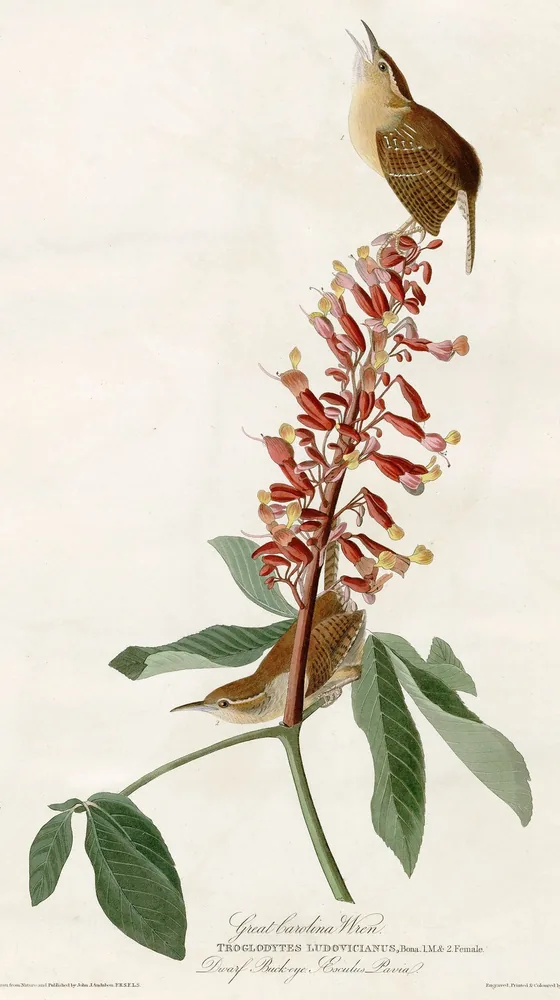
Old books use old names. Audubon's "Painted Finch" is our Painted Bunting, and his "Blue-bird" is the Eastern Bluebird. Your book uses today's names, and the Picture Credits pages at the back list each Audubon plate with its book and page numbers.
Questions people ask about Audubon's paintings
How many plates are in The Birds of America?
435 in the big Havell edition of 1827–38. The smaller octavo edition of 1840–44 has 500, including birds Audubon added after his 1843 trip up the Missouri River.
How big are the original Audubon prints?
The Havell plates were printed on double elephant paper, about 26 by 38 inches. The octavo edition is book size.
How many complete sets survive?
No more than 120 complete sets of the Havell edition are thought to survive. The University of Pittsburgh owns one of them.
Did Audubon paint from life?
He watched living birds closely. But to paint them, he shot birds and posed the bodies with wire, so that he could draw them in lifelike positions.
More painters
Audubon is only one of the artists you'll meet. Our guide to famous bird painters introduces the others. Compare his style with John Gould's hummingbirds and the living portraits of Louis Agassiz Fuertes. If you're shopping for someone who keeps a life list, our gift ideas for birders may help.
See these plates in a Birdfolio → /sample