Reference
How many bird species are in Alaska?
Alaska has 551 bird species on its official list (University of Alaska Museum with the Alaska Bird Records Committee, January 1, 2026), the 6th highest count of the 49 states with a verified count. Every species on it is backed by a specimen or a photo; 15 more species reported without that proof are listed separately.
Alaska’s state bird is the Willow Ptarmigan: our Alaska state bird page tells how it was chosen.
Updated
What are the most common birds in Alaska?
In summer, the 25 most common birds in Alaska are led by the White-crowned Sparrow, at about 111 birds per survey route, then the Swainson's Thrush and the Dark-eyed Junco, by the USGS Breeding Bird Survey’s counts for 2021–2025. Together these 25 made up 71% of all the birds counted on Alaska’s 80 survey routes.
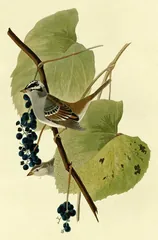
John James Audubon, The Birds of America (1827–38) 1 White-crowned Sparrowabout 111 per routeon 76% of routesno clear trend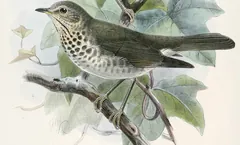
John Gerrard Keulemans, H. E. Dresser’s A History of the Birds of Europe (1871–96) 2 Swainson's Thrushabout 87 per routeon 81% of routesno clear trend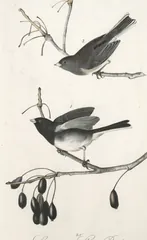
John James Audubon, The Birds of America (1840–44) 3 Dark-eyed Juncoabout 53 per routeon 85% of routesno clear trend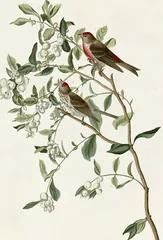
John James Audubon, The Birds of America (1827–38) 4 Redpollabout 44 per routeon 81% of routesno clear trend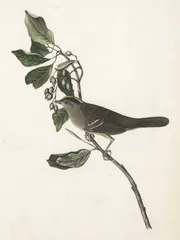
John James Audubon, The Birds of America (1840–44) 5 Golden-crowned Sparrowabout 40 per routeon 34% of routesno clear trend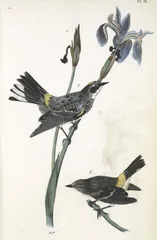
John James Audubon, The Birds of America (1840–44) about 35 per routeon 84% of routesrising since 2015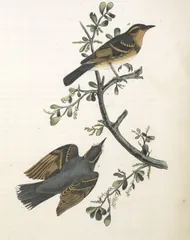
John James Audubon, The Birds of America (1840–44) 7 Varied Thrushabout 30 per routeon 86% of routesfalling since 2015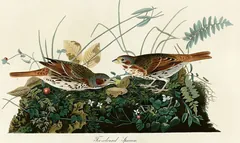
John James Audubon, The Birds of America (1827–38) 8 Fox Sparrowabout 27 per routeon 91% of routesfalling since 2015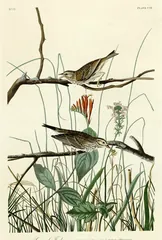
John James Audubon, The Birds of America (1827–38) 9 Savannah Sparrowabout 26 per routeon 69% of routesno clear trend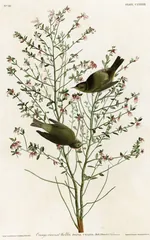
John James Audubon, The Birds of America (1827–38) 10 Orange-crowned Warblerabout 22 per routeon 96% of routesfalling since 2015
Show all 25
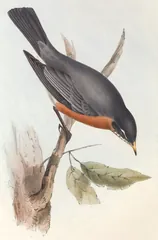
John and Elizabeth Gould, The Birds of Europe (1832–37) about 20 per routeon 98% of routesno clear trend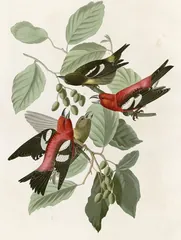
John James Audubon, The Birds of America (1827–38) 12 White-winged Crossbillabout 19 per routeon 59% of routesno clear trend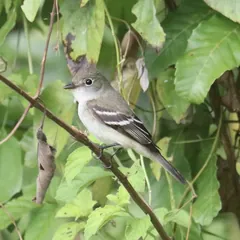
Photo: Aitor, CC BY 4.0 13 Alder Flycatcherabout 16 per routeon 76% of routesno clear trend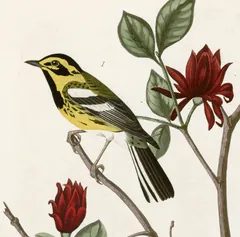
John James Audubon, The Birds of America (1827–38) 14 Townsend's Warblerabout 15 per routeon 44% of routesno clear trend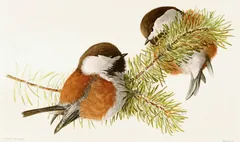
Louis Agassiz Fuertes, Alaska (1901) 15 Chestnut-backed Chickadeeabout 13 per routeon 20% of routesfalling since 2015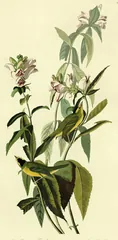
John James Audubon, The Birds of America (1827–38) 16 Wilson's Warblerabout 13 per routeon 91% of routesfalling since 2015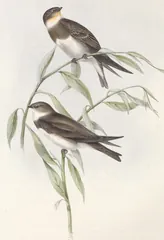
John and Elizabeth Gould, The Birds of Europe (1832–37) 17 Bank Swallowabout 12 per routeon 31% of routesno clear trend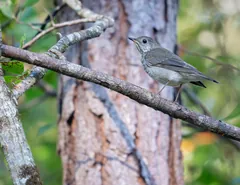
Photo: Karen Szafrajda, CC BY 4.0 18 Gray-cheeked Thrushabout 12 per routeon 52% of routesfalling since 2015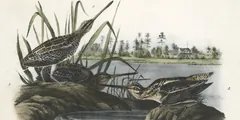
John James Audubon, The Birds of America (1840–44) 19 Wilson's Snipeabout 11 per routeon 82% of routesno clear trend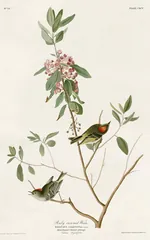
John James Audubon, The Birds of America (1827–38) 20 Ruby-crowned Kingletabout 9.2 per routeon 81% of routesno clear trend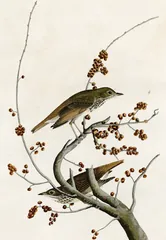
John James Audubon, The Birds of America (1827–38) 21 Hermit Thrushabout 9.1 per routeon 69% of routesfalling since 2015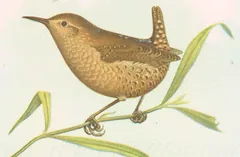
Robert Ridgway, L. M. Turner’s Contributions to the Natural History of Alaska (1886) 22 Pacific Wrenabout 8.1 per routeon 22% of routesno clear trend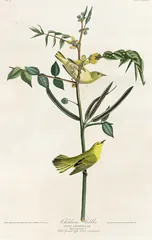
John James Audubon, The Birds of America (1827–38) 23 Northern Yellow Warblerabout 7.5 per routeon 85% of routesno clear trend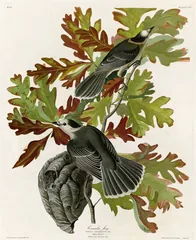
John James Audubon, The Birds of America (1827–38) 24 Canada Jayabout 7.5 per routeon 61% of routesno clear trend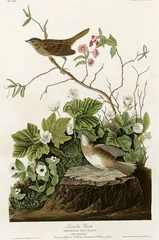
John James Audubon, The Birds of America (1827–38) 25 Lincoln's Sparrowabout 6.6 per routeon 85% of routesno clear trend
These 25, led by the White-crowned Sparrow and the Swainson's Thrush, are a small part of the 551 species on Alaska’s official list; to name the rest, our comparison of the best bird books of 2026 shows which field guide suits a beginner.
What is the most common bird in Alaska?
The White-crowned Sparrow leads Alaska’s summer survey: about 111 a route on average in 2021–2025, ahead of the Swainson's Thrush at about 87, seen on 76% of the 80 routes. USGS finds no clear rise or fall in its Alaska numbers since 2015.
In winter the Common Raven comes closest to being everywhere: it was the only species found on all 33 of the state's Christmas Bird Counts in the winter of 2020-21. That winter nine species made up more than half of the 134,433 birds counted, from the Mallard and the Rock Sandpiper to the Black-capped Chickadee and the Pine Siskin.
The biggest crowds are seabirds. The Alaska Maritime National Wildlife Refuge alone counts some 40 million of them.
Sources: The 121st Christmas Bird Count in Alaska (National Audubon Society, December 2, 2021); Species, Alaska Maritime National Wildlife Refuge (U.S. Fish and Wildlife Service), the Internet Archive's copy of July 19, 2026, read October 10, 2026.
How was this list made?
Each of Alaska’s 80 routes is a roadside count, 50 stops along about 25 miles, run once a year in early summer by a volunteer. We took USGS’s yearly estimate for each species in Alaska, the number of birds a typical route records, averaged it over the five latest survey years (there was no survey in 2020) and ranked the birds by it. To keep the list to birds you’re likely to meet across Alaska, we left out species recorded on fewer than one in five of its routes, and those USGS can only estimate very roughly, which usually means big flocks or colonies on a few routes.
For Alaska that left out the Greater White-fronted Goose, the Surf Scoter, the Black-legged Kittiwake and 9 more.
The share of routes is our own count from USGS’s route data for Alaska, using only counts that met the survey’s standards; “rising” and “falling” are USGS’s trends for the state since 2015, named only where it finds a clear change. Roadside counts on early-summer mornings miss most of Alaska’s owls and waterbirds, and its winter visitors aren’t here at all.
Alaska’s counts come from two USGS data releases, the North American Breeding Bird Survey Analysis Results 1966–2025 (Hostetler et al., 2026) and its Dataset 1966–2025 (Ziolkowski et al., 2026), gathered by volunteer observers and free for anyone to use; Birdfolio isn’t connected with the USGS.
How many bird species are in Alaska?
| Official count | 551 species |
|---|---|
| List’s date | January 1, 2026 |
| Kept by | University of Alaska Museum with the Alaska Bird Records Committee |
| Edition | The 32nd edition of the Checklist of Alaska Birds |
| Not counted | 15 species without a specimen or photo |
| Rare, casual, accidental | 55 rare, 166 casual and 82 accidental species (2026) |
| Area covered | Alaska and its waters out to 200 nautical miles: over 2,000,000 square miles |
| Among US states | 6th highest of the 49 states with a verified count |
| Official list | Checklist of Alaska Birds, 32nd edition (2026) |
What does Alaska’s count include?
- Only species backed by a specimen or a photo from Alaska.
- Introduced species that live wild, such as the Rock Pigeon.
- Species only: subspecies are not counted separately.
- Not counted: 15 species reported in Alaska without a specimen or photo, listed separately.
Why do other sources give a different number?
The museum's curators say Alaska's list has grown by a steady 3.5 species a year on average since the mid-1900s, so any older figure is simply an older edition:
- Nearly 500. The round number on the Alaska Department of Fish and Game's bird-viewing page, for the species that live in or pass through the state. The page is undated. Source: Bird Viewing in Alaska (Alaska Department of Fish and Game).
- 381 to 541. Earlier published Alaska checklists: 381 species in 1978, 436 in 1992, 448 in 1997, 468 in 2003, 485 in 2008, 499 in 2013, 521 in 2018 and 541 in 2023. Source: Checklist of the avian diversity of Alaska (University of Alaska Museum curators, Bulletin of the American Ornithologists' Union 1:1, 2026).
- 311. The species discussed by Gabrielson and Lincoln in 1959, the starting point of the museum's growth figures. Source: Checklist of the avian diversity of Alaska (University of Alaska Museum curators, Bulletin of the American Ornithologists' Union 1:1, 2026).
Alaska’s list follows its own committee’s rules, and so does every other state’s: see why the counts differ from state to state.
Recent additions to the Alaska list
- 2026 edition: a Hawaiian Petrel photographed on July 12, 2025, in the Bering Sea about 130 km north-northwest of Dutch Harbor, and a Broad-winged Hawk photographed at Valdez on November 15-17, 2025. Both are listed as accidental. Source: Comments on the 2026 Checklist of Alaska Birds (University of Alaska Museum, April 14, 2026), read October 4, 2026.
- 2024 edition: a Kentish Plover at Shemya Island in the Aleutians on May 29, 2023. Source: Comments on the 2024 Checklist of Alaska Birds (University of Alaska Museum), read October 4, 2026.
- 2023 edition: seven additions, among them an Icterine Warbler at Gambell on St. Lawrence Island on September 22, 2022, a Citrine Wagtail at Seward a week earlier, and a Lucy's Warbler at Chena Hot Springs that July. Source: Comments on the 2023 Checklist of Alaska Birds (University of Alaska Museum), read October 4, 2026.
- 2021 edition: a Pallas's Grasshopper-Warbler at Gambell on September 9-12, 2019, and a Hooded Crane collected at Delta Junction in September 2020, now a museum specimen. Source: Comments on the 2021 Checklist of Alaska Birds (University of Alaska Museum), read October 4, 2026.
- 2020 edition: a Pallas's Gull, an adult seen at Shemya Island on May 2-4, 2019, and found dead there on May 14; its specimen is in the museum. Source: The 2020 Checklist of Alaska Birds (University of Alaska Museum), read October 4, 2026.
- The Eskimo Curlew stays on the list, marked not seen in Alaska since 1886. Source: Checklist of Alaska Birds, 32nd edition, 2026 (University of Alaska Museum with the Alaska Bird Records Committee), read October 4, 2026.
Questions people ask about Alaska’s birds
What is the rarest bird in Alaska?
Among the birds that nest here, McKay's Bunting is one of the rarest songbirds in North America. It breeds only on St. Matthew and Hall islands in the Bering Sea, where surveys found about 31,560 birds in 2003 and 19,481 in 2018, a fall of 38 percent. The University of Alaska Museum's curators, who compile the state checklist, count it as a form of the Snow Bunting rather than a species of its own.
The Bristle-thighed Curlew, with about 7,000 adults nesting at just two places in western Alaska, is the rarest of the curlews and godwits of the Americas, says the U.S. Geological Survey. Even fewer Steller's Eiders nest in the state: almost all of the world's Steller's Eiders nest in northeastern Siberia, and as of 2010 no more than 600 arrived on Alaska's breeding grounds each year, most of them near Barrow.
Sources: Rapid population decline in McKay's Bunting, an Alaskan endemic (Ornithological Applications 126:2, 2024; U.S. Geological Survey Publications Warehouse); Checklist of the avian diversity of Alaska: subspecies, breeding status, and taxonomy (University of Alaska Museum curators, Bulletin of the American Ornithologists' Union 1:1, 2026); Shorebird Research (U.S. Geological Survey, Alaska Science Center); Steller's Eider Species Profile (Alaska Department of Fish and Game), read October 10, 2026.
What birds are common in Alaska?
Around homes, the ones on the Alaska Department of Fish and Game's list of backyard birds: the American Robin, chickadees, crossbills, the Dark-eyed Junco, the Fox Sparrow, jays, the Pine Siskin, the Red-breasted Nuthatch, redpolls and the Rufous Hummingbird. The Black-capped Chickadee, a common but fleeting visitor to feeders, stays all winter even in Fairbanks, through 18-hour nights. Redpolls are abundant all year in the open subarctic and the northern forests, and on long Arctic nights they often sleep in tunnels in the snow.
Sources: Alaska's Backyard Birds (Alaska Department of Fish and Game); Alaska's Backyard Birds: Chickadees (Alaska Department of Fish and Game); Alaska's Backyard Birds: Redpolls (Alaska Department of Fish and Game), read October 10, 2026.
What U.S. state has the most bird species?
California, with 696 species on its official checklist of September 8, 2026; Texas follows with 682 (our table), and Alaska's checklist, at 551 species as of January 1, 2026, is shorter only than those two and the lists of Arizona, New Mexico and Oregon.
Sources: Official California Checklist, updated 8 September 2026 (California Bird Records Committee); Checklist of Alaska Birds, 32nd edition, 2026 (University of Alaska Museum with the Alaska Bird Records Committee), read October 10, 2026.
What is Alaska's official state bird?
The Willow Ptarmigan. In 1955, as the territory's leaders drafted a constitution for statehood, Alaska's schoolchildren chose it as a symbol of the Great Land, the Department of Fish and Game says, and the Territorial Legislature named it the territory's official bird that year; it became the state bird when Alaska became the 49th state. At about 1.3 pounds, it is the largest of Alaska's three ptarmigan.
Its feet are feathered to the toenails, it spends most of a cold winter day in a snow burrow, and it changes from white, with black tail feathers, in winter to brown in summer; in spring the males grow a chestnut-red cape. No upland game bird ranges more widely in Alaska.
How Alaska chose the Willow Ptarmigan, and how it gets through the winter
Sources: Willow Ptarmigan Species Profile, printer-friendly version (Alaska Department of Fish and Game); 22nd Territorial Legislature, 1955, 100 Years of Alaska's Legislature (Alaska State Legislature); Willow Ptarmigan, Bering Land Bridge National Preserve (National Park Service); Willow Ptarmigan, Gates of the Arctic National Park and Preserve (National Park Service, April 29, 2021), read October 11, 2026.
Which birds live in Alaska?
Seabirds, ducks, geese and shorebirds above all, with strays from Asia on the western islands and a few birds that nest almost nowhere else. Among Alaska's specialties are the Emperor Goose, which lives almost entirely in Alaska, Kittlitz's Murrelet, perhaps 95 percent of which nest in the state, and the Red-legged Kittiwake.
Seabird islands: an estimated 2.8 million seabirds nest on the Pribilof Islands in the Bering Sea, among them the Pacific's largest colony of Thick-billed Murres, about a million birds, and 80 percent of the world's Red-legged Kittiwakes.
Tundra and sea ice: Spectacled Eiders nest on wet tundra along the Arctic coast and on the Yukon-Kuskokwim Delta, and every one in the world spends the winter in openings in the Bering Sea ice between St. Lawrence and St. Matthew islands, a wintering place nobody knew of until the 1990s. Emperor Geese nest on the delta's coastal fringe and winter only a few hundred miles away, in the Aleutians, along the Alaska Peninsula and on Kodiak Island.
Shorebirds: 37 species regularly nest in Alaska, and most of them migrate a long way. A four-month-old Bar-tailed Godwit known as B6 flew nonstop from Alaska to Tasmania, 8,425 miles in 11 days, the longest nonstop flight documented for any animal.
Glaciers and fjords: Glacier Bay National Park hosts as much as 20 percent of the world's Kittlitz's Murrelets, which, unlike the Marbled Murrelet, nest on the ground, often in mountains the glaciers have only recently uncovered.
Sources: A Thousand Miles of Islands: Building Relationships Between Young People of the Commander and Pribilof Islands (Alaska Park Science, National Park Service); Spectacled Eider Species Profile (Alaska Department of Fish and Game); Emperor Goose Species Profile (Alaska Department of Fish and Game); Juvenile Bar-tailed Godwit "B6" Sets World Record (U.S. Geological Survey, Alaska Science Center); Birds, Glacier Bay National Park and Preserve (National Park Service), read October 10, 2026.
Why do so many Asian birds turn up in Alaska?
Because Alaska is the eastern half of Beringia, where the birds of the Old and New Worlds meet. The University of Alaska Museum's curators note that Alaska hosts breeding migrants from all seven continents, including tens of millions of birds from Asia, and that long-distance migration makes strays more likely.
Storms do the rest. The Alaska Maritime National Wildlife Refuge lists birds from Asia that blow in with storms or with spring and fall migration among its attractions, and on Adak, in the central Aleutians, 44 of the 182 species on the island's checklist are typical of Asia, according to the Alaska Department of Fish and Game.
Sources: Checklist of the avian diversity of Alaska (University of Alaska Museum curators, Bulletin of the American Ornithologists' Union 1:1, 2026); Birding, Alaska Maritime National Wildlife Refuge (U.S. Fish and Wildlife Service); Top 10 Birding Hotspots in Alaska (Alaska Department of Fish and Game), read October 4, 2026.
Can birders still go to Attu Island for Asian rarities?
Hardly. The Alaska Department of Fish and Game says Attu, at the very tip of the Aleutian chain, was once considered the place to go for Asian vagrants, but has become quite inaccessible since its U.S. Coast Guard base closed. The department points birders to Adak instead, and to Gambell, at the northwest corner of St. Lawrence Island, more than 230 miles west of Nome, known for rarities such as Common Cuckoo, Brambling, Bluethroat and Red-throated Pipit.
Attu still adds to the list. A partial Hen Harrier specimen salvaged there in June 1999 waited years for a DNA test; in 2018 the museum wrote that a match would make it the only Alaska and North American record of the species, and the 2024 checklist added it.
Sources: Top 10 Birding Hotspots in Alaska (Alaska Department of Fish and Game); The 2018 Checklist of Alaska Birds (University of Alaska Museum); Comments on the 2024 Checklist of Alaska Birds (University of Alaska Museum), read October 4, 2026.
What do rare, casual and accidental mean on the Alaska checklist?
They sort the 551 species by how often they appear. Rare means annual or probably annual in small numbers, mostly at the edges of the state; casual means not annual but recurring at irregular intervals; accidental means one or two Alaska records, or none in the last 30 years. The 2026 list has 55 rare, 166 casual and 82 accidental species.
A third record moves a bird from accidental to casual: in 2026 that happened to the American White Pelican, Nazca Booby, Asian Rosy-Finch, Lesser Whitethroat and Dickcissel.
Sources: Checklist of Alaska Birds, 32nd edition, 2026 (University of Alaska Museum with the Alaska Bird Records Committee); Comments on the 2026 Checklist of Alaska Birds (University of Alaska Museum, April 14, 2026), read October 4, 2026.
Where is the official Alaska bird list, and how often is it updated?
At the University of Alaska Museum's ornithology website, as the Checklist of Alaska Birds: a PDF, also offered as an Excel file. It comes out once a year in numbered editions (the 32nd gives the list as of January 1, 2026), and the museum posts a note on each edition's changes. The museum compiles it; the Alaska Bird Records Committee recommends additions and status changes after weighing reports of birds in Alaska.
Behind the list stands the state bird collection at the museum: over 50,000 birds, with Alaska specimens of more than 85% of the species and subspecies known in the state. Its curators expect the list to keep growing.
Sources: Comments on the 2026 Checklist of Alaska Birds (University of Alaska Museum, April 14, 2026); Checklist of Alaska Birds, 32nd edition, 2026 (University of Alaska Museum with the Alaska Bird Records Committee); Bird Collection (University of Alaska Museum); Checklist of the avian diversity of Alaska (University of Alaska Museum curators, Bulletin of the American Ornithologists' Union 1:1, 2026), read October 4, 2026.
How do you count your own Alaska list?
Your Alaska list is every species you’ve seen in Alaska. eBird can filter your life list to Alaska, and your eBird data download gives the state of every sighting. On paper, count the species you’ve seen in Alaska; what is a life list? explains how birders keep their lists.
To print your whole list, Alaska birds and all, see how to print your bird life list, or let Birdfolio make it a hardcover book.
Alaska’s state bird
Alaska’s state bird is the Willow Ptarmigan, the state bird since 1955. Its story, the state flower and animal, and a free picture card for a report are on our Alaska state bird page.
Birding festivals in Alaska
Our birding festivals calendar lists 6 in Alaska, with dates from each festival’s own website:
- Stikine River Birding Festival, Wrangell: April 21–25, 2027
- Copper River Delta Shorebird Festival, Cordova: May 6–9, 2027
- Kachemak Bay Shorebird Festival, Homer: dates not announced yet; expected in May 2027 (2026 festival: May 6–10, 2026)
- Yakutat Tern Festival, Yakutat: June 3–6, 2027
- Tanana Valley Sandhill Crane Festival, Fairbanks: August 27–29, 2027
- Alaska Bald Eagle Festival, Haines: dates not announced yet; expected in November 2027 (2026 festival: November 6–8, 2026)
Christmas Bird Count in Alaska
Alaska had 41 Christmas Bird Count circles on Audubon’s map last winter, each counted on a single day between December 14 and January 5. Our guide shows where to find Alaska’s counts and how to join one; it’s free, and beginners are welcome.
More about bird counts
- How many bird species are in each state: Alaska beside all 50 states, DC and Canada.
- State birds of all 50 states, Alaska’s Willow Ptarmigan among them
- How many bird species are in the US and Canada
- Bird splits and lumps
If you’re shopping for a birder in Alaska, our gift guide for birders and our pick of coffee table bird books are good places to start.