Reference
How many bird species are in South Carolina?
South Carolina has 456 bird species on its official list (South Carolina Bird Records Committee, 2024 annual report), tied for the 26th highest count of the 49 states with a verified count. It combines 448 definitive species and 8 provisional ones, and it is kept by the same club as North Carolina's list.
South Carolina’s state bird is the Carolina Wren: our South Carolina state bird page tells how it was chosen.
Updated
What are the most common birds in South Carolina?
In summer, the 25 most common birds in South Carolina are led by the American Crow, at about 55 birds per survey route, then the Northern Cardinal and the Mourning Dove, by the USGS Breeding Bird Survey’s counts for 2021–2025. Together these 25 made up 73% of all the birds counted on South Carolina’s 30 survey routes.
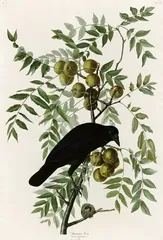
John James Audubon, The Birds of America (1827–38) about 55 per routeon 100% of routesno clear trend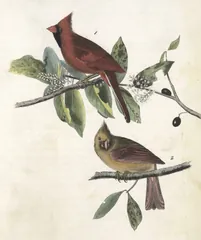
John James Audubon, The Birds of America (1840–44) about 53 per routeon 100% of routesno clear trend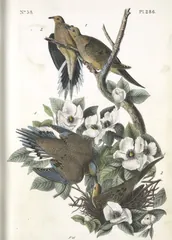
John James Audubon, The Birds of America (1840–44) about 40 per routeon 100% of routesno clear trend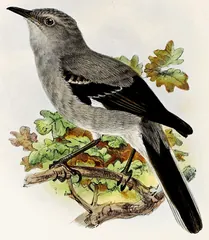
John Gerrard Keulemans, Onze Vogels in Huis en Tuin (1869–76) about 39 per routeon 100% of routesfalling since 2015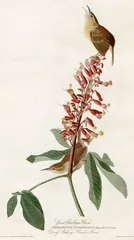
John James Audubon, The Birds of America (1827–38) about 36 per routeon 100% of routesno clear trend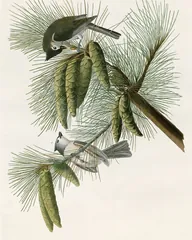
John James Audubon, The Birds of America (1827–38) about 25 per routeon 100% of routesno clear trend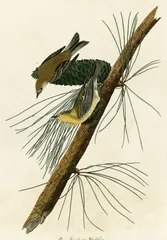
John James Audubon, The Birds of America (1827–38) 7 Pine Warblerabout 23 per routeon 97% of routesno clear trend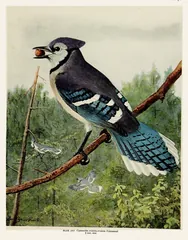
Louis Agassiz Fuertes, Elon H. Eaton's Birds of New York (1910–14) 8 Blue Jayabout 19 per routeon 100% of routesno clear trend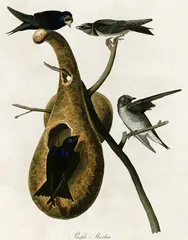
John James Audubon, The Birds of America (1827–38) 9 Purple Martinabout 19 per routeon 80% of routesno clear trend
John James Audubon, The Birds of America (1840–44) about 16 per routeon 100% of routesno clear trend
Show all 25
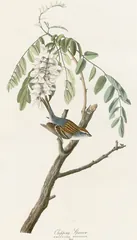
John James Audubon, The Birds of America (1827–38) 11 Chipping Sparrowabout 16 per routeon 90% of routesno clear trend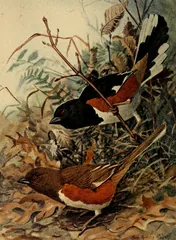
Louis Agassiz Fuertes, True Bird Stories from My Note-Books (1903) 12 Eastern Towheeabout 15 per routeon 97% of routesfalling since 2015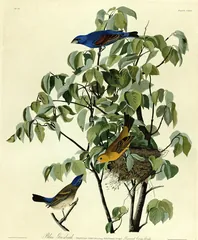
John James Audubon, The Birds of America (1827–38) 13 Blue Grosbeakabout 14 per routeon 100% of routesfalling since 2015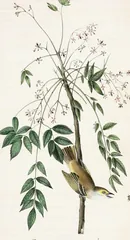
John James Audubon, The Birds of America (1840–44) 14 White-eyed Vireoabout 13 per routeon 100% of routesno clear trend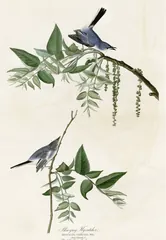
John James Audubon, The Birds of America (1827–38) 15 Blue-gray Gnatcatcherabout 13 per routeon 100% of routesno clear trend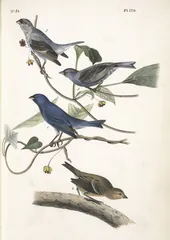
John James Audubon, The Birds of America (1840–44) 16 Indigo Buntingabout 12 per routeon 100% of routesfalling since 2015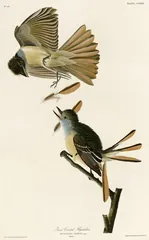
John James Audubon, The Birds of America (1827–38) 17 Great Crested Flycatcherabout 12 per routeon 100% of routesno clear trend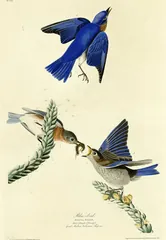
John James Audubon, The Birds of America (1827–38) about 12 per routeon 100% of routesno clear trend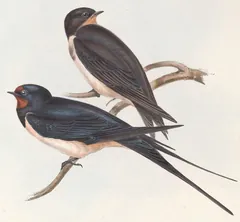
John and Elizabeth Gould, The Birds of Europe (1832–37) 19 Barn Swallowabout 12 per routeon 97% of routesno clear trend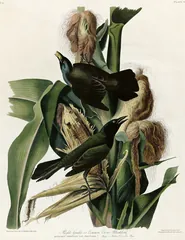
John James Audubon, The Birds of America (1827–38) 20 Common Grackleabout 11 per routeon 93% of routesno clear trend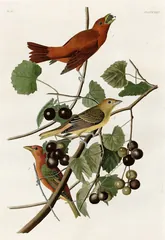
John James Audubon, The Birds of America (1827–38) 21 Summer Tanagerabout 11 per routeon 97% of routesno clear trend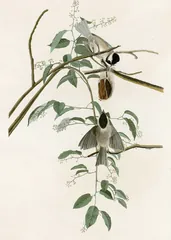
John James Audubon, The Birds of America (1827–38) 22 Carolina Chickadeeabout 11 per routeon 97% of routesno clear trend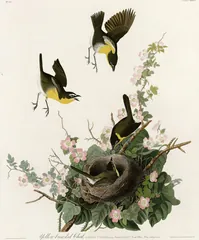
John James Audubon, The Birds of America (1827–38) 23 Yellow-breasted Chatabout 9.0 per routeon 97% of routesno clear trend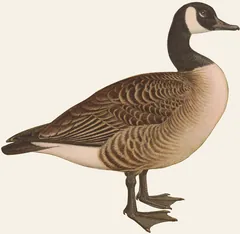
Marinus Adrianus Koekkoek, E. D. van Oort's Ornithologia Neerlandica (1922) 24 Canada Gooseabout 8.9 per routeon 43% of routesno clear trend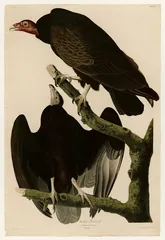
John James Audubon, The Birds of America (1827–38) about 8.8 per routeon 97% of routesno clear trend
If the American Crow, first on this list, or the Turkey Vulture, last on it, has you curious about the rest of South Carolina’s 456 species, see our comparison of the best bird books of 2026, from the friendliest for beginners to the newest.
What is the most common bird in South Carolina?
The American Crow leads South Carolina’s summer survey: about 55 a route on average in 2021–2025, ahead of the Northern Cardinal at about 53, seen on every one of the 30 routes. USGS finds no clear rise or fall in its South Carolina numbers since 2015.
The Northern Cardinal, Carolina Wren and Mourning Dove are among the common backyard birds the state Department of Natural Resources names. Its list of 17 also has the Northern Mockingbird, Eastern Bluebird and Painted Bunting.
Source: Viewing Landbirds of South Carolina (South Carolina Department of Natural Resources), read October 8, 2026.
How was this list made?
Each of South Carolina’s 30 routes is a roadside count, 50 stops along about 25 miles, run once a year in early summer by a volunteer. We took USGS’s yearly estimate for each species in South Carolina, the number of birds a typical route records, averaged it over the five latest survey years (there was no survey in 2020) and ranked the birds by it. To keep the list to birds you’re likely to meet across South Carolina, we left out species recorded on fewer than one in five of its routes, and those USGS can only estimate very roughly, which usually means big flocks or colonies on a few routes.
For South Carolina that left out the White Ibis.
The share of routes is our own count from USGS’s route data for South Carolina, using only counts that met the survey’s standards; “rising” and “falling” are USGS’s trends for the state since 2015, named only where it finds a clear change. Roadside counts on early-summer mornings miss most of South Carolina’s owls and waterbirds, and its winter visitors aren’t here at all.
South Carolina’s counts come from two USGS data releases, the North American Breeding Bird Survey Analysis Results 1966–2025 (Hostetler et al., 2026) and its Dataset 1966–2025 (Ziolkowski et al., 2026), gathered by volunteer observers and free for anyone to use; Birdfolio isn’t connected with the USGS.
How many bird species are in South Carolina?
| Official count | 456 species |
|---|---|
| List’s date | 2024 annual report |
| Kept by | South Carolina Bird Records Committee (Carolina Bird Club) |
| Definitive | 448 species, each backed by evidence such as a specimen, photo or recording |
| Provisional | 8 species, known in the state only from written descriptions |
| Extinct | 4 species, counted in the 456 |
| Review species | 123 anywhere in the state, 31 more only inland (our count) |
| Among US states | Tied for 26th highest of the 49 states with a verified count, alongside Ohio |
| Official list | Official list of the birds of South Carolina |
What does South Carolina’s count include?
- Every species the committee had accepted by its 2024 annual report, named as in the American Ornithological Society's checklist through its 67th supplement (October 2026).
- The extinct Carolina Parakeet, Passenger Pigeon, Bachman's Warbler and Ivory-billed Woodpecker, each marked Extinct and still counted.
- Introduced birds now established in the wild, such as the Mute Swan, Eurasian Collared-Dove and European Starling.
- Seabirds up to 200 nautical miles offshore, wherever South Carolina is the nearest land.
- Not counted: a Supplemental List of 25 species, such as the Budgerigar and Monk Parakeet (questionable origin), the Ring-necked Pheasant (never established) and unproven reports.
Why do other sources give a different number?
South Carolina's committee has printed a running total every year since it was reconstituted in 1991, and the way it counts has changed along the way:
- 448. The definitive species alone, without the 8 provisional ones that rest on written descriptions. Source: Official list of the birds of South Carolina, as of the 2024 annual report (South Carolina Bird Records Committee, Carolina Bird Club).
- 455. The state list in 2010, which still counted 16 Provisional II and 14 Hypothetical species, groups merged into today's Supplemental List in 2021. Source: South Carolina Bird Records Committee Annual Reports (Carolina Bird Club).
- 367. The definitive list in 1991. It passed 400 in 1995 and reached 453 with the 2023 report, which added Cassin's Kingbird and Hermit Warbler among others. Source: South Carolina Bird Records Committee Annual Reports (Carolina Bird Club).
South Carolina’s list follows its own committee’s rules, and so does every other state’s: see why the counts differ from state to state.
South Carolina records, from a Siberian murrelet to a nighthawk accepted 21 years later
- On November 19, 1994, a murrelet, a small diving seabird, was photographed at the jetties of Huntington Beach State Park. It went on the list as a Marbled Murrelet, though the photos showed the eye crescents of the Siberian form, the committee's 1995 report noted. Today's list has no Marbled Murrelet; it carries the Long-billed Murrelet, the Asian species. Sources: Report of the South Carolina Bird Records Committee, 1995 (The Chat 60:4, Fall 1996); Official list of the birds of South Carolina (Carolina Bird Club), read October 8, 2026.
- In 2014 the committee struck the Barolo Shearwater, listed as the Little Shearwater, when the specimen behind the record proved to be a misidentified Audubon's Shearwater. In 2017 Thayer's Gull came off too, after the American Ornithological Society made it a form of the Iceland Gull. Source: South Carolina Bird Records Committee Annual Reports (Carolina Bird Club), read October 8, 2026.
- In 2023 the committee accepted a Lesser Nighthawk seen at Mount Pleasant on December 30, 2002, after a second review; with a 2022 bird from Kiawah Island, the species joined the list. Sources: Recent and current reports to the South Carolina Bird Records Committee (Carolina Bird Club); South Carolina Bird Records Committee Annual Reports (Carolina Bird Club), read October 8, 2026.
- Two birds found in 2024 reached the list with the committee's 2024 report: a Dusky Flycatcher on Kiawah Island in November and a Gray-headed Swamphen at Savannah National Wildlife Refuge that December; the list, which still calls the species Purple Swamphen, has moved it from its Supplemental List to the main one. With the Willet now counted as two species, Prairie and Saltmarsh, after the American Ornithological Society's split of October 20, 2026, the total went from 453 to 456 (our comparison). Sources: Recent and current reports to the South Carolina Bird Records Committee (Carolina Bird Club); Official list of the birds of South Carolina, as of the 2024 annual report (South Carolina Bird Records Committee, Carolina Bird Club); Official list of the birds of South Carolina, as of the 2023 annual report (Carolina Bird Club), the Internet Archive's copy of August 11, 2026, read November 19, 2026.
Questions people ask about South Carolina’s birds
What is the rarest bird to be found in South Carolina?
The rarest are the four extinct species the list still carries: the Carolina Parakeet, Passenger Pigeon, Ivory-billed Woodpecker and Bachman's Warbler. Among living birds, 8 provisional species, such as the Eskimo Curlew, Northern Lapwing and Red-necked Stint, are known in the state only from written descriptions. In all, 123 species are rare enough that the records committee wants every sighting documented (our count).
Source: Official list of the birds of South Carolina, as of the 2024 annual report (South Carolina Bird Records Committee, Carolina Bird Club), read November 19, 2026.
What is the largest bird in South Carolina?
Of the big birds the state Department of Natural Resources describes, the Wild Turkey is the heaviest: North America's largest gamebird, at 12 to 25 pounds, with males up to four feet long. The Eastern Brown Pelican has the widest wings, almost 78 inches across, and is the only pelican in the world that isn't white. Wood Storks stand more than three feet tall.
Sources: Eastern Wild Turkey, ACE Basin species gallery (South Carolina Department of Natural Resources); Eastern Brown Pelican, ACE Basin species gallery (South Carolina Department of Natural Resources); Wood Stork, ACE Basin species gallery (South Carolina Department of Natural Resources), read October 8, 2026.
What is the filthiest bird?
No scientist ranks birds by dirtiness, but vultures have the dirtiest job, and South Carolina's list has two, the Black Vulture and the Turkey Vulture. By clearing away dead animals they help stop the spread of diseases such as rabies, the National Park Service says, and acids in their gut can dissolve anthrax and botulism bacteria. The reputation comes from habits such as this: an overheated vulture cools off by excreting down its own legs.
Sources: NETN Species Spotlight: Turkey and Black Vultures (National Park Service, last updated August 15, 2021); Official list of the birds of South Carolina (Carolina Bird Club), read October 8, 2026.
Which birds live in South Carolina?
Birds of the mountains, the pine woods, the wetlands and the coast. The state Department of Natural Resources counts 127 landbirds known to nest here, and 14 kinds of wading birds, from herons and egrets to the White Ibis, Roseate Spoonbill and Wood Stork.
On the coast, Huntington Beach State Park has recorded more than 300 species, and Hunting Island has Painted Buntings, skimmers and pelicans. In the mountains, Table Rock and Caesars Head are the places to watch hawks pass in fall. Cheraw State Park protects Red-cockaded Woodpeckers in mature longleaf pine; they are the only woodpeckers that dig their nest holes in living trees.
Winter brings a surprise: Baltimore Orioles, which normally winter in Central and South America, have taken to spending it at Southeastern feeders. In the 2016 winter survey South Carolina counted 463, more than any other state for the second year running. Their favorite feeder food, the department says, is grape jelly.
Sources: Landbirds of South Carolina (South Carolina Department of Natural Resources); Wading Birds: Species and Statuses (South Carolina Department of Natural Resources); Birding (South Carolina State Parks); Red-cockaded Woodpecker, ACE Basin species gallery (South Carolina Department of Natural Resources); Baltimore Oriole Winter Survey finds S.C. with largest number of orioles wintering second year in a row (South Carolina Department of Natural Resources, April 29, 2016), read October 8, 2026.
Why do Purple Martins gather by the hundreds of thousands on Lake Murray?
To roost together before migrating to South America. Each late July and August, Purple Martins stream across Lake Murray, near Columbia, at sunset and settle for the night on Bomb Island. For 25 years it was the largest Purple Martin roost in the United States, about 500,000 birds, NPR reported in 2014. The Department of Natural Resources and South Carolina Electric & Gas keep a martin sanctuary on a small island in the lake.
There are so many that they show up on weather radar: when they leave together at dawn, Doppler radar records an expanding ring. In 2014, when the flock failed to arrive, radar suggested most of the birds had moved to nearby Lake Monticello. By 2016, South Carolina Public Radio was again describing great clouds of martins over Bomb Island at dusk.
The lake has a wartime past as well. During World War II, B-25 bombers from the Army Air Base outside Columbia practiced on Lake Murray's island targets; one ditched in the lake on April 4, 1943, and was lifted out in 2005, Smithsonian's Air & Space magazine reported.
Sources: How Do You Lose A Half-Million Birds? (NPR, July 27, 2014); Purple Martins' Visits Are a Natural Wonder at Lake Murray (South Carolina Public Radio, August 29, 2016); Wild Birds of South Carolina (South Carolina Department of Natural Resources); Lake Murray's Mitchell (Air & Space/Smithsonian, January 2007), read October 8, 2026.
How did Wood Storks go from endangered to record numbers in South Carolina?
With help from the people who manage its wetlands. South Carolina listed the Wood Stork, the only stork that lives in the United States, as endangered in 1974, and in 1997 the state had over 950 nesting pairs.
In 2022 biologists counted 3,928 nests, nearly twice the count of a decade before; the federal listing had eased from endangered to threatened in 2014. Much of the storks' recent growth in the US has been in South Carolina, especially the ACE Basin in the Lowcountry. Some storks may be moving up from Florida when the Everglades are poor for nesting, but management matters too: when landowners draw down ponds kept for ducks, storks feast on shallow pools full of small fish. One long-term threat is an invasive plant, Cuban bulrush, whose floating mats give raccoons a path to the nests.
Sources: Wood Stork, ACE Basin species gallery (South Carolina Department of Natural Resources); SCDNR notes record number of wood stork nests in 2022 (South Carolina Department of Natural Resources, December 5, 2022), read October 8, 2026.
Where is the official South Carolina bird list, and how often is it updated?
On the Carolina Bird Club's website, under Bird Records: the Official list of the birds of South Carolina, a web page with spreadsheet downloads. It is current as of the committee's 2024 annual report and gives no update schedule; later decisions appear ballot by ballot on the club's page of recent reports, most recently from June 2026.
The committee, reconstituted in 1991, has 7 or 9 voting members and meets at least once a year; a record passes with no more than one vote against. Its annual reports run in The Chat, the club's quarterly journal.
Sources: Official list of the birds of South Carolina, as of the 2024 annual report (South Carolina Bird Records Committee, Carolina Bird Club); Recent and current reports to the South Carolina Bird Records Committee (Carolina Bird Club); Bylaws of the South Carolina Bird Records Committee (Carolina Bird Club), read October 8, 2026.
How do you count your own South Carolina list?
Your South Carolina list is every species you’ve seen in South Carolina. eBird can filter your life list to South Carolina, and your eBird data download gives the state of every sighting. On paper, count the species you’ve seen in South Carolina; what is a life list? explains how birders keep their lists.
To print your whole list, South Carolina birds and all, see how to print your bird life list, or let Birdfolio make it a hardcover book.
South Carolina’s state bird
South Carolina’s state bird is the Carolina Wren, the state bird since 1948. Its story, the state flower and animal, and a free picture card for a report are on our South Carolina state bird page.
Birding festivals in South Carolina
Our birding festivals calendar lists one festival in South Carolina, with dates from its own website:
- Hammock Coast Birding Festival, Pawleys Island / Georgetown County: February 4–7, 2027
Christmas Bird Count in South Carolina
South Carolina had 31 Christmas Bird Count circles on Audubon’s map last winter, each counted on a single day between December 14 and January 5. Our guide shows where to find South Carolina’s counts and lists 5 South Carolina count dates already announced for this winter; it’s free, and beginners are welcome.
More about bird counts
- How many bird species are in each state: South Carolina beside all 50 states, DC and Canada.
- Bird lists of nearby states: Georgia and North Carolina.
- State birds of all 50 states, South Carolina’s Carolina Wren among them
- How many bird species are in the US and Canada
- Bird splits and lumps
If you’re shopping for a birder in South Carolina, our gift guide for birders and our pick of coffee table bird books are good places to start.