Reference
How many bird species are in Texas?
Texas has 682 bird species on its official list (Texas Bird Records Committee, October 24, 2026), the second most of any US state after California. Each species was accepted for Texas on a specimen, a clear photo or a sound recording, and the total includes 8 introduced species and 2 extinct ones.
Texas’s state bird is the Northern Mockingbird: our Texas state bird page tells how it was chosen.
Updated
What are the most common birds in Texas?
In summer, the 25 most common birds in Texas are led by the Cliff Swallow, at about 225 birds per survey route, then the Great-tailed Grackle and the Mourning Dove, by the USGS Breeding Bird Survey’s counts for 2021–2025. Together these 25 made up 64% of all the birds counted on Texas’s 187 survey routes.
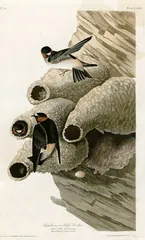
John James Audubon, The Birds of America (1827–38) 1 Cliff Swallowabout 225 per routeon 72% of routesno clear trend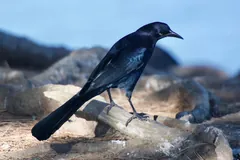
Photo: an iNaturalist contributor, CC0 1.0 2 Great-tailed Grackleabout 59 per routeon 68% of routesno clear trend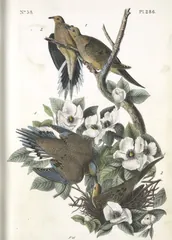
John James Audubon, The Birds of America (1840–44) about 53 per routeon 100% of routesfalling since 2015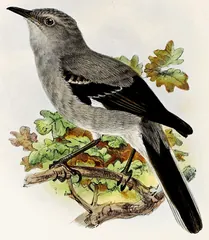
John Gerrard Keulemans, Onze Vogels in Huis en Tuin (1869–76) about 46 per routeon 99% of routesfalling since 2015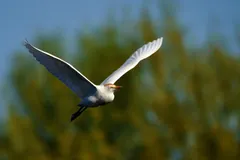
Photo: Bill Levine, CC BY 4.0 5 Western Cattle-Egretabout 41 per routeon 49% of routesno clear trend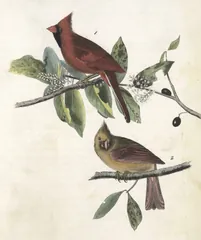
John James Audubon, The Birds of America (1840–44) about 37 per routeon 88% of routesno clear trend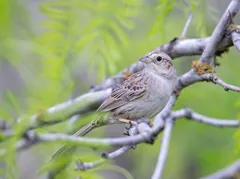
Photo: Karen Szafrajda, CC BY 4.0 7 Cassin's Sparrowabout 28 per routeon 58% of routesfalling since 2015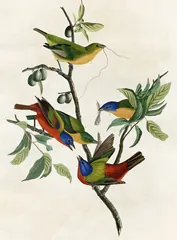
John James Audubon, The Birds of America (1827–38) 8 Painted Buntingabout 26 per routeon 88% of routesrising since 2015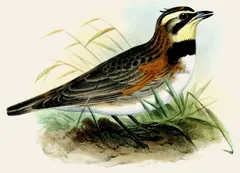
Joseph Wolf, Proceedings of the Zoological Society of London (1855) 9 Horned Larkabout 26 per routeon 28% of routesno clear trend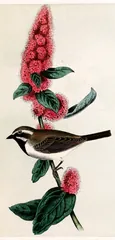
William E. Hitchcock, John Cassin’s Illustrations of the Birds of California, Texas, Oregon, British and Russian America (1853–56) 10 Black-throated Sparrowabout 23 per routeon 33% of routesfalling since 2015
Show all 25
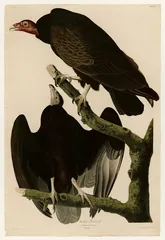
John James Audubon, The Birds of America (1827–38) about 22 per routeon 94% of routesfalling since 2015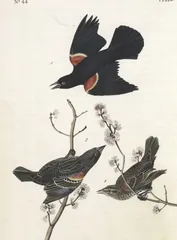
John James Audubon, The Birds of America (1840–44) about 21 per routeon 82% of routesno clear trend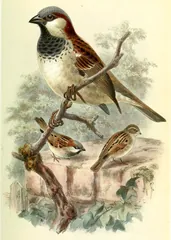
John Gerrard Keulemans, Lord Lilford’s Coloured Figures of the Birds of the British Islands (1885–97) 13 House Sparrowabout 20 per routeon 87% of routesfalling since 2015introduced species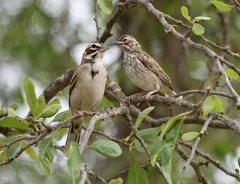
Photo: Cody Stricker, CC BY 4.0 14 Lark Sparrowabout 20 per routeon 86% of routesfalling since 2015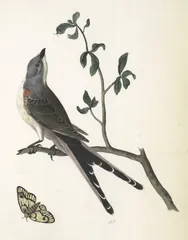
John James Audubon, The Birds of America (1840–44) 15 Scissor-tailed Flycatcherabout 16 per routeon 89% of routesfalling since 2015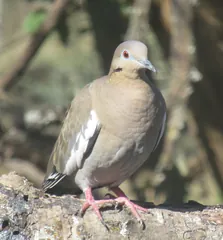
Photo: Linda Jo Conn, CC BY 4.0 16 White-winged Doveabout 16 per routeon 75% of routesno clear trend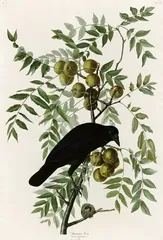
John James Audubon, The Birds of America (1827–38) about 16 per routeon 53% of routesno clear trend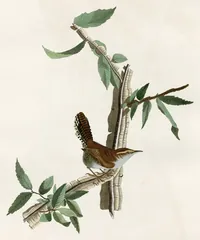
John James Audubon, The Birds of America (1827–38) 18 Bewick's Wrenabout 16 per routeon 59% of routesrising since 2015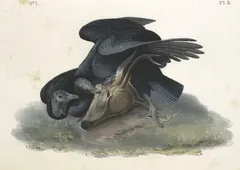
John James Audubon, The Birds of America (1840–44) about 15 per routeon 68% of routesrising since 2015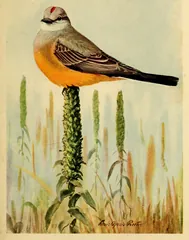
Louis Agassiz Fuertes, Food of Our More Important Flycatchers (1912) 20 Western Kingbirdabout 13 per routeon 75% of routesfalling since 2015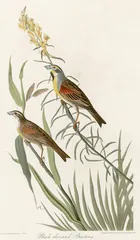
John James Audubon, The Birds of America (1827–38) 21 Dickcisselabout 12 per routeon 66% of routesfalling since 2015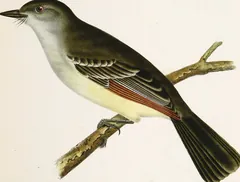
Artist unrecorded, Reports of Explorations and Surveys for a Railroad from the Mississippi River to the Pacific Ocean, vol. 10 (1859) 22 Ash-throated Flycatcherabout 12 per routeon 53% of routesno clear trend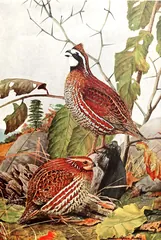
Louis Agassiz Fuertes, Elon H. Eaton’s Birds of New York (1910–14) 23 Northern Bobwhiteabout 11 per routeon 68% of routesfalling since 2015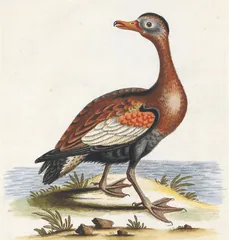
George Edwards (engraved by Johann Sebastian Leitner), Seligmann, Sammlung verschiedener ausländischer und seltener Vögel, part VI, pl. 89 (1749–76) 24 Black-bellied Whistling-Duckabout 10 per routeon 37% of routesno clear trend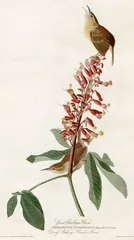
John James Audubon, The Birds of America (1827–38) about 10 per routeon 54% of routesrising since 2015
A field guide to North America covers the Great-tailed Grackle, the Mourning Dove and most of the 682 species on Texas’s list; we compared the best bird books of 2026 to find the one that suits a beginner.
What is the most common bird in Texas?
The Cliff Swallow leads Texas’s summer survey: about 225 a route on average in 2021–2025, more than twice the Great-tailed Grackle’s 59, seen on 72% of the 187 routes. USGS finds no clear rise or fall in its Texas numbers since 2015.
In winter it's the Northern Mockingbird, at least by how widespread it is: in the 2024-25 Christmas Bird Count it turned up on 99 percent of Texas's 123 counts, just ahead of the Mourning Dove, Red-tailed Hawk and Ruby-crowned Kinglet at 98 percent. The order shifts, though: in 2021-22 the Red-tailed Hawk was the one found on all 103 counts.
Sources: The 125th Christmas Bird Count in Texas (National Audubon Society); The 121st Christmas Bird Count in Texas (National Audubon Society), read October 10, 2026.
How was this list made?
Each of Texas’s 187 routes is a roadside count, 50 stops along about 25 miles, run once a year in early summer by a volunteer. We took USGS’s yearly estimate for each species in Texas, the number of birds a typical route records, averaged it over the five latest survey years (there was no survey in 2020) and ranked the birds by it. To keep the list to birds you’re likely to meet across Texas, we left out species recorded on fewer than one in five of its routes, and those USGS can only estimate very roughly, which usually means big flocks or colonies on a few routes.
For Texas that left out the Laughing Gull, the Cave Swallow, the White-faced Ibis and 3 more. The survey counts Western, Eastern and Chihuahuan Meadowlarks together in Texas, so none is listed on its own, though as a group they would rank 15th, at about 17 a route.
The share of routes is our own count from USGS’s route data for Texas, using only counts that met the survey’s standards; “rising” and “falling” are USGS’s trends for the state since 2015, named only where it finds a clear change. Roadside counts on early-summer mornings miss most of Texas’s owls and waterbirds, and its winter visitors aren’t here at all.
Texas’s counts come from two USGS data releases, the North American Breeding Bird Survey Analysis Results 1966–2025 (Hostetler et al., 2026) and its Dataset 1966–2025 (Ziolkowski et al., 2026), gathered by volunteer observers and free for anyone to use; Birdfolio isn’t connected with the USGS.
How many bird species are in Texas?
| Official count | 682 species |
|---|---|
| List’s date | October 24, 2026 |
| Kept by | Texas Bird Records Committee (Texas Ornithological Society) |
| Introduced species | 8, now living wild in Texas |
| Extinct or gone | 2 extinct species, and 1 no longer found in Texas |
| Review species | 181, rare enough that the committee reviews every sighting |
| Among US states | 2nd highest of the 49 states with a verified count |
| Official list | Texas State List |
What does Texas’s count include?
- Only species proven in Texas: each was accepted by the committee on a specimen, a clear photo or a sound recording made in the state.
- 8 introduced species that now live wild in Texas.
- 2 extinct species, and 1 that no longer occurs in Texas (the list calls it extirpated).
- 181 Review Species: birds rare enough that the committee asks for documentation of every sighting.
- Not counted: 2 birds accepted on written descriptions alone. They wait on a separate Presumptive List until a specimen, photo or recording proves them.
- Today's species and names: the list follows the American Ornithological Society's checklist through its 67th supplement (October 2026).
Why do other sources give a different number?
Texas’s count is every species ever accepted on its official list, so a figure from another year, or one that counts something else, won’t match:
- 664. A January 2024 count that is still repeated online, for example on Wikipedia. The committee updates its list as it accepts new records and follows changes to species and names; it reached 682 on October 24, 2026.
- 677. From a Texas Parks and Wildlife news release of March 19, 2026, about the Great Texas Birding Classic. The committee's list has been updated since, on October 24, 2026. Source: Great Texas Birding Classic, Great Texas Wildlife Trails Celebrate 30th Anniversary (Texas Parks and Wildlife news release, March 19, 2026).
- About 629. From an older Texas Parks and Wildlife booklet, The Birds of Texas: Occurrence and Seasonal Movements, which used a 2004 count and called it more species than any other state. California's official list (696) is now the longer one. Source: The Birds of Texas: Occurrence and Seasonal Movements (Texas Parks and Wildlife booklet).
- 559. The list at the end of 1986, where the committee's State Additions Tracker starts. Since then its yearly rows add 135 species and drop 17, splits and lumps included, passing 629 at the end of 2005 on the way to 677 at the end of 2025. Source: State List Additions Tracker (Texas Bird Records Committee).
- 678. The list of June 7, 2026. On October 24, 2026, the committee brought it into line with the American Ornithological Society's 67th Supplement, and four splits took it to 682: the Whimbrel, Willet, Marsh Wren and Yellow Warbler each became two species, and both of each pair are on the Texas list. Source: Official Texas List in taxonomic order, 682 species as of October 24, 2026, following the AOS's 67th Supplement (Texas Bird Records Committee spreadsheet).
- 639. The species documented in Texas when Texas Parks & Wildlife magazine ran 12 Birds Every Texan Should Know, in August/September 2014. Figures from that time still circulate: in October 2026 Google's AI summary for “birds of texas” opened with “more than 630.” The committee's list is 43 species longer today (our arithmetic). Source: 12 Birds Every Texan Should Know (Texas Parks & Wildlife magazine, August/September 2014).
- 683. Texas Parks and Wildlife's own Checklist of Texas Birds (eighth edition, 2025), which counts more: the committee's 677 species of that time, two more accepted on written descriptions alone, one species the American Ornithological Society recognizes, one the committee once accepted and two recently added to AviList, a world list. Source: A Checklist of Texas Birds, eighth edition, 2025 (Texas Parks and Wildlife Department, Technical Series 32).
Texas’s list follows its own committee’s rules, and so does every other state’s: see why the counts differ from state to state.
Texas records, from a tern that waited 96 years to a sea-eagle at Coleto Creek
- Texas's first Roseate Tern was collected at Corpus Christi on April 10, 1901, but the ornithologist who later examined the specimen never noted which collection held it. Only when it was traced to the Royal Ontario Museum did the committee accept it, in its 1997 report: 96 years after it was collected. Source: Texas Bird Records Committee Report for 1997 (Texas Bird Records Committee), read October 6, 2026.
- An adult female Collared Plover at the Uvalde National Fish Hatchery from May 9 to 12, 1992, was the first for the United States. A Green-breasted Mango in Corpus Christi that January was another, accepted after the committee consulted half a dozen authorities on neotropical hummingbirds. Source: TBRC annual report for 1993 (Texas Bird Records Committee), read October 6, 2026.
- Some firsts hide in photos. A bird at Rollover Pass in Galveston County on April 27, 1986, was submitted as a Sooty Shearwater; the pictures turned out to show a White-chinned Petrel, the first for the United States and, the committee's 1990 report added, possibly for the northern hemisphere. The species joined the state list in 1991. Sources: TBRC annual report for 1990 (Texas Bird Records Committee); State List Additions Tracker (Texas Bird Records Committee), read October 6, 2026.
- On December 26, 1996, a Stygian Owl at Bentsen-Rio Grande Valley State Park became what the committee's report called a “most unexpected first U. S. record.” A letter the committee published with it put the nearest known Stygian Owls in the mountain forests of southwestern Chihuahua. Sources: Texas Bird Records Committee Report for 1997 (Texas Bird Records Committee); Stygian Owl range and biology, a letter of January 5, 1997, published by the Texas Bird Records Committee, read October 6, 2026. All 17 owls on the Texas list, and where to hear them
- In November 2014 a Common Crane turned up among the Sandhill Cranes at Goose Lake on Muleshoe National Wildlife Refuge and stayed in the area until March 2015. Nobody doubted the identification, so the 9-0 vote turned on origin: Common and Lesser Sandhill Cranes share breeding grounds in parts of Siberia, and Common Cranes in the US most likely travel south with the Sandhills. Source: Common Crane, a statement (Texas Bird Records Committee, March 2016), read October 6, 2026.
- Texas's first Steller's Sea-Eagle was seen at Coleto Creek Reservoir in Victoria County on March 7, 2021. That year's only other first state record arrived in force: seven Limpkin records at once, among them up to five birds at Brazos Bend State Park from May 6. Source: Texas Bird Records Committee Report for 2021 (Texas Bird Records Committee), read October 6, 2026. The eagles, hawks, kites and falcons of Texas, and when each is here
Our guide to rare bird alerts shows where Texas rare birds are reported, from TEXBIRDS to the Rio Grande Valley, and how to report a sighting to the committee.
Questions people ask about Texas’s birds
Which US state has the most bird species?
California, with 696 species on the checklist its committee updated October 27, 2026, 14 more than Texas's 682 (our arithmetic). Leave out the introduced species, 19 on California's list and 8 on Texas's, and the gap shrinks to 3.
Sources: Texas State List, 682 species, last updated October 24, 2026 (Texas Bird Records Committee, Texas Ornithological Society); Official California Checklist, 696 species, updated 27 October 2026 (California Bird Records Committee, Western Field Ornithologists), read November 19, 2026.
What are the rarest birds in Texas?
One of the rarest birds living wild in Texas is Attwater's Prairie-Chicken, found only on the state's coastal prairies: in spring 2021 the US Fish and Wildlife Service estimated at least 178 in the wild, at just two sites, three years after a count found only 13 males. The Whooping Crane is scarce too, though recovering: about 540 wintered around Aransas National Wildlife Refuge in 2025-26, up from about 50 when it was listed as endangered in 1967.
Among strays, the committee's 181 review species are the rarest; even the Black-capped Chickadee, a very common bird elsewhere, is known in Texas from a single old specimen. The list also keeps the Passenger Pigeon and Carolina Parakeet as extinct and the Ivory-billed Woodpecker as gone from Texas.
Sources: Attwater's Prairie Chicken (Texas Parks and Wildlife Department); Texas' Attwater's Prairie-Chicken Wild Population Reaches 28 Year High (US Fish and Wildlife Service, April 29, 2021), the Internet Archive's copy of July 20, 2026; Service Estimates 540 Whooping Cranes Wintered on Texas Coast in 2025-2026 (US Fish and Wildlife Service, June 17, 2026), the Internet Archive's copy of July 20, 2026; Texas State List, 682 species, last updated October 24, 2026 (Texas Bird Records Committee, Texas Ornithological Society); Species Not Yet Documented (Texas Bird Records Committee); Official Texas List in taxonomic order, 682 species as of October 24, 2026, following the AOS's 67th Supplement (Texas Bird Records Committee spreadsheet), read November 19, 2026.
What are the common birds in Texas?
Fifteen species turned up on at least 91 percent of Texas's Christmas Bird Counts in winter 2024-25, Audubon's regional summary shows. Besides the Northern Mockingbird, Mourning Dove, Red-tailed Hawk and Ruby-crowned Kinglet, they were the American Kestrel and House Sparrow, the Great Blue Heron and Northern Cardinal, the Belted Kingfisher, Orange-crowned Warbler and Savannah Sparrow, the American Goldfinch, and the White-winged Dove, Eastern Phoebe and European Starling.
On the coastal prairie, Audubon's regional editor sums up a Texas winter with three birds: the Savannah Sparrow, the most abundant sparrow of 2022-23, the Sandhill Crane and the Eastern Meadowlark.
Texas's yellow-breasted birds, meadowlarks among them, and when each is here
Sources: The 125th Christmas Bird Count in Texas (National Audubon Society); The 122nd Christmas Bird Count in Texas (National Audubon Society), read October 10, 2026.
What bird is only found in Texas?
The Golden-cheeked Warbler comes closest, though it leaves for the winter. Of the nearly 360 bird species that breed in Texas, it's the only one that nests exclusively in the state, Texas Parks and Wildlife says. It arrives in March, raises its young in Ashe juniper and oak woodland in the ravines and canyons of the Edwards Plateau, and leaves in July for Mexico and Central America.
Only 4.5 inches long, it has been listed as endangered, in Texas and nationally, since May 1990.
Source: Golden-cheeked Warbler (Texas Parks and Wildlife Department), read October 11, 2026.
What is the main bird in Texas?
The Northern Mockingbird, the state bird, officially recognized by the Legislature in 1927. Texas Parks & Wildlife magazine began its 2014 list of 12 birds every Texan should know with it, and for good reason: a seasoned male can sing the songs of dozens of other species found nearby, along with sounds from frogs to car alarms.
How the mockingbird became the Texas state bird, and where to see one
Sources: Texas State Symbols, a leaflet (Texas Parks and Wildlife Department); 12 Birds Every Texan Should Know (Texas Parks & Wildlife magazine, August/September 2014), read October 11, 2026.
What are the pink birds in Texas?
Almost always Roseate Spoonbills, which Texas Parks & Wildlife magazine calls the state's pinkest water bird and a common sight on the coast. From March through October they feed in the bays, marshes and estuaries of the Gulf Coast. Young birds start out white tinged with pink and grow pinker as they eat shrimp and other prey rich in carotenoids, red and yellow pigments made by algae.
Spoonbills stand 32 inches tall, and their feathers nearly cost them everything: in the 1800s they were hunted almost to extinction for women's hats, and only in the early 1900s did they begin to return to the Gulf Coast. Flamingos are rare strays. The American Flamingo is a review species on the official list, and one that stayed on the coast from October 2005 to April 2006 had been banded that August at the Ría Lagartos reserve in Yucatán, Mexico.
Sources: Wild Thing: Tickled Pink (Texas Parks & Wildlife magazine, June 2018); Roseate Spoonbill (Texas Parks and Wildlife Department); Official Texas List in taxonomic order, 678 species as of June 7, 2026 (Texas Bird Records Committee spreadsheet); 2006 Annual Report (Texas Bird Records Committee), read October 11, 2026.
Which birds live in Texas?
Birds of the Gulf Coast, the Mexican brushland along the Rio Grande, the Hill Country, the desert mountains of the far west, the pine forests of the east and the Panhandle plains. The specialties start with the Golden-cheeked Warbler, the only one of the nearly 360 species breeding in Texas that nests nowhere else, Texas Parks and Wildlife says, and the Colima Warbler: ornithologists have looked for it in other mountain ranges of the Southwest, but so far the only place to see it is Big Bend National Park.
Lower Rio Grande Valley: birds of eastern Mexico, many found regularly nowhere else in the United States, such as the Plain Chachalaca, Hook-billed Kite and Altamira Oriole. Others, among them the Green Jay and Great Kiskadee, have spread north out of the Valley over the past half century.
Gulf Coast: heron rookeries crowded with egrets and Roseate Spoonbills on the upper coast; Brown Pelicans, White Ibises and Long-billed Curlews all year at Padre Island National Seashore; and in winter the Whooping Cranes, which nest in northern Canada, at Aransas National Wildlife Refuge near Rockport.
Hill Country: the Golden-cheeked Warbler in juniper and oak woodland on the Edwards Plateau, and the Black-capped Vireo in rangeland with scattered clumps of shrubs. Both are endangered.
Far West: the Lucifer Hummingbird, another Big Bend specialty, in the foothills in spring and summer; in the Guadalupe Mountains, desert birds such as the Scaled Quail and Black-throated Sparrow, with Mountain Chickadees and Dark-eyed Juncos in the forests on top.
Piney Woods and plains: Bachman's Sparrows and Brown-headed Nuthatches in the longleaf pines of Big Thicket National Preserve, and the Red-cockaded Woodpecker, the agency's own example of a bird found only in one region. On the Panhandle's native prairie, Sandhill Cranes and Burrowing Owls, with the harder-to-see Lesser Prairie-Chicken and Mountain Plover.
Which of the 16 Texas woodpeckers live in your part of the state
Sources: Golden-cheeked Warbler (Texas Parks and Wildlife Department); Bird stories: the Colima Warbler, Big Bend National Park (National Park Service); Birds of the South Texas Brushlands, a field checklist, second edition, June 2007 (Texas Parks and Wildlife Department); Upper Texas Coast, Great Texas Coastal Birding Trail (Texas Parks and Wildlife Department); Birding, Padre Island National Seashore (National Park Service); Whooping Crane (Texas Parks and Wildlife Department); Black-capped Vireo (Texas Parks and Wildlife Department); Bird Watching, Big Bend National Park (National Park Service); Birds, Guadalupe Mountains National Park (National Park Service); Birds, Big Thicket National Preserve (National Park Service); The Birds of Texas: Occurrence and Seasonal Movements, revised December 2005 (Texas Parks and Wildlife booklet); Panhandle Plains Wildlife Trail (Texas Parks and Wildlife Department); Endangered Species Management, High Plains and Rolling Plains (Texas Parks and Wildlife Department), read October 10, 2026.
Why does Texas have so many bird species?
Location, by Texas Parks and Wildlife's account. Its 2005 booklet on migration puts the state in the center of the Central Flyway, and the other three flyways can deliver birds to it too: in fall, Atlantic Flyway birds may reach the Florida Panhandle and turn west along the Gulf Coast, Mississippi Flyway birds follow the river to the Gulf and then cross it or turn west, and the Pacific Flyway can funnel birds to Big Bend, where the Rockies end. Most of the state's species, it says, are migrants that came in along those routes.
The same booklet counts 333 of the 338 Nearctic-Neotropical migrants of North America north of Mexico, birds that nest in the US and Canada and winter in Central and South America, as recorded in Texas: 98.5 percent. Strays add more. The department's checklist booklet rated about 21 percent of the state's species as vagrants, and two of the committee's recent firsts wintered in the far south: a Bat Falcon at Santa Ana National Wildlife Refuge in 2021-22 and a Gray-collared Becard at Resaca de la Palma State Park in 2023-24.
Sources: Migration and the Migratory Birds of Texas, fourth edition (Texas Parks and Wildlife booklet, 2005); The Birds of Texas: Occurrence and Seasonal Movements, July 2000, revised December 2005 (Texas Parks and Wildlife booklet); Texas Bird Records Committee Report for 2022 (Texas Bird Records Committee); Texas Bird Records Committee Report for 2024 (Texas Bird Records Committee), read October 6, 2026.
Do the Rio Grande Valley's wild parrots count on the Texas list?
The two the committee judged established do. In 1995 it added the Green Parakeet and the Red-crowned Parrot, now named the Red-crowned Amazon, after agreeing that their populations in the Lower Rio Grande Valley met its strict test for well-established species, whether they began naturally, from introduced birds or both. The list still flags the pair as of uncertain origin, and the committee says they were in effect “grandfathered in,” admitted before it had criteria as formal as today's.
Its eight written criteria for exotics, posted in January 2020 and close to the American Birding Association's, ask for a connected population (ideally well over a hundred birds) that raises enough young without help from people, has lasted at least 15 years and is described in print. The Red-vented Bulbul and Scaly-breasted Munia, established around Houston, were added in 2022, joining the Monk Parakeet from 1991, and in August 2026 the committee arranged the write-up the Egyptian Goose still needs. Whether you count an exotic on your own list, it adds, is your call.
Sources: Texas State List, last updated June 7, 2026 (Texas Bird Records Committee, Texas Ornithological Society); TBRC Reports, a summary of every annual report since 1987 (Texas Bird Records Committee); Criteria for Determining Establishment of Exotics (Texas Bird Records Committee); TBRC Change Log (Texas Bird Records Committee); Texas Bird Records Committee Report for 2022 (Texas Bird Records Committee); 2026 TBRC Annual Meeting minutes, August 8, 2026 (Texas Bird Records Committee), read October 6, 2026.
Which birds have been seen in Texas but still don't count?
Two are on the committee's Presumptive List, accepted on written descriptions alone: a Razorbill, whose description was accepted in July 2013, and a murre seen at Lake O' the Pines on March 19 and 20, 1994. That bird was reported as a Common Murre, but given the distance and the lack of inland Common Murre records in North America, the committee would accept it only as a murre of some kind.
Others have never been documented at all. The committee lists species regular in neighboring New Mexico, or on the East Coast and in the Arctic, that Texas still has no accepted record of, among them Great Cormorant, Gila and Arizona Woodpeckers, Bridled Titmouse, Bendire's Thrasher, Abert's Towhee and any alcid, the family of the Razorbill and the murres. Votes can be close, too. In August 2026 a Vaux's Swift at El Paso failed although six of nine members voted for it, since in a final round two votes against sink a record; a Manx Shearwater at High Island Beach failed 7 to 2, after one comment said the vote came down to how much the committee trusted 4 pixels in the photos.
Sources: Texas State List, last updated June 7, 2026 (Texas Bird Records Committee, Texas Ornithological Society); TBRC Change Log (Texas Bird Records Committee); Texas Bird Records Committee Report for 1997 (Texas Bird Records Committee); Species Not Yet Documented (Texas Bird Records Committee); 2026 TBRC Annual Meeting minutes, August 8, 2026 (Texas Bird Records Committee), read October 6, 2026.
Where is the official Texas bird list, and how often is it updated?
On the Texas Bird Records Committee's website: the Texas State List page, last updated October 24, 2026, gives the total and the rules for acceptance, and an embedded spreadsheet lists every species in taxonomic order with its status and whether it is a review species. A change log dates the updates through 2025. The list changes whenever the committee accepts a new species and when the American Ornithological Society's yearly checklist supplement splits or lumps species; in 2025 it went from 671 to 677, with four new species and two splits.
It is a standing committee of the Texas Ornithological Society, formed at the society's annual meeting in April 1972. Its bylaws, in the version of October 5, 2024, give it nine voting members on three-year terms, at most two in a row, and cover Texas and the adjacent ocean out to 200 nautical miles from land. A record circulates up to three times: it is accepted with no more than one vote against and rejected with five or more, and one still undecided goes to the annual meeting for a final vote. In general, the Review List holds species recorded four or fewer times a year in each of the previous ten years. Each year's decisions appear in an annual report in the Bulletin of the Texas Ornithological Society, as they have since 1984.
Sources: Texas State List, 682 species, last updated October 24, 2026 (Texas Bird Records Committee, Texas Ornithological Society); TBRC Change Log (Texas Bird Records Committee); TBRC Members, past and present (Texas Bird Records Committee); TBRC Bylaws, version of October 5, 2024 (Texas Bird Records Committee); Texas Bird Records Committee Report for 2024 (Texas Bird Records Committee), read October 6, 2026.
How do you count your own Texas list?
Your Texas list is every species you’ve seen in Texas. eBird can filter your life list to Texas, and your eBird data download gives the state of every sighting. On paper, count the species you’ve seen in Texas; what is a life list? explains how birders keep their lists.
To print your whole list, Texas birds and all, see how to print your bird life list, or let Birdfolio make it a hardcover book.
Texas’s state bird
Texas’s state bird is the Northern Mockingbird (officially, the “Mockingbird”), the state bird since 1927. Its story, the state flower and animal, and a free picture card for a report are on our Texas state bird page.
Birding festivals in Texas
Our birding festivals calendar lists 11 in Texas, with dates from each festival’s own website:
- Laredo Birding Festival, Laredo: February 3–6, 2027
- Whooping Crane Festival, Port Aransas: February 25–28, 2027
- Spring Chirp Birding Festival, Weslaco: April 7–10, 2027
- Matagorda Bay Birdfest, Palacios: April 14–17, 2027
- Galveston FeatherFest, Galveston: April 15–18, 2027
- Birdiest Festival in America, Corpus Christi: April 21–25, 2027
- Texas Mid-Coast Birding Festival, Port Lavaca: April 29 – May 2, 2027
- Brownsville Birding Festival, Brownsville: dates not announced yet; expected in April 2027 (2026 festival: April 11–12, 2026)
- Sherman-Hagerman Bird Festival, Sherman: dates not announced yet; expected in May 2027 (2026 festival: May 16, 2026)
- HummerBird Celebration, Rockport / Fulton: dates not announced yet; expected in September 2027 (2026 festival: September 17–20, 2026)
- Rio Grande Valley Birding Festival, Harlingen: dates not announced yet; expected in November 2027 (2026 festival: November 11–15, 2026)
Christmas Bird Count in Texas
Texas had 126 Christmas Bird Count circles on Audubon’s map last winter, each counted on a single day between December 14 and January 5. Our guide shows where to find Texas’s counts and lists 81 Texas count dates already announced for this winter; it’s free, and beginners are welcome.
More about bird counts
- How many bird species are in each state: Texas beside all 50 states, DC and Canada.
- How many bird species are in California?
- How many bird species are in Florida?
- How many bird species are in the US and Canada
- Bird splits and lumps
If you’re shopping for a birder in Texas, our gift guide for birders and our pick of coffee table bird books are good places to start.