Reference
How many bird species are in Connecticut?
Connecticut has 454 bird species on its official list (Avian Records Committee of Connecticut, September 17, 2026), tied for the 29th highest count of the 49 states with a verified count. It marks the species known only from sight records, the introduced ones, and those now extinct or gone from the state.
Connecticut’s state bird is the American Robin: our Connecticut state bird page tells how it was chosen.
Updated
What are the most common birds in Connecticut?
In summer, the 25 most common birds in Connecticut are led by the American Robin, at about 66 birds per survey route, then the Gray Catbird and the European Starling, by the USGS Breeding Bird Survey’s counts for 2021–2025. Together these 25 made up 76% of all the birds counted on Connecticut’s 12 survey routes.
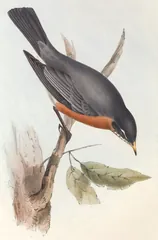
John and Elizabeth Gould, The Birds of Europe (1832–37) about 66 per routeon 100% of routesno clear trend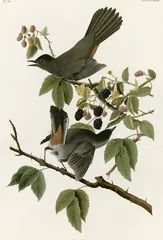
John James Audubon, The Birds of America (1827–38) 2 Gray Catbirdabout 56 per routeon 100% of routesno clear trend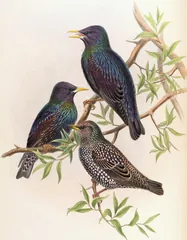
John Gould and Henry Constantine Richter, The Birds of Asia, vol. 5 (1850–83) 3 European Starlingabout 52 per routeon 100% of routesno clear trendintroduced species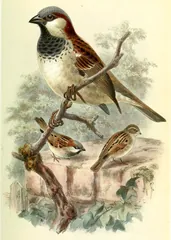
John Gerrard Keulemans, Lord Lilford’s Coloured Figures of the Birds of the British Islands (1885–97) 4 House Sparrowabout 50 per routeon 100% of routesno clear trendintroduced species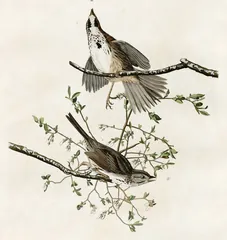
John James Audubon, The Birds of America (1827–38) about 49 per routeon 100% of routesrising since 2015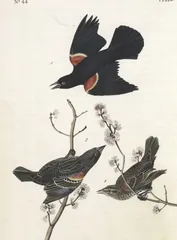
John James Audubon, The Birds of America (1840–44) about 46 per routeon 100% of routesno clear trend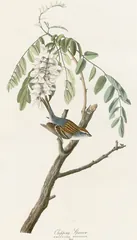
John James Audubon, The Birds of America (1827–38) 7 Chipping Sparrowabout 41 per routeon 100% of routesno clear trend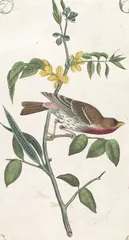
John James Audubon, The Birds of America (1840–44) about 40 per routeon 100% of routesrising since 2015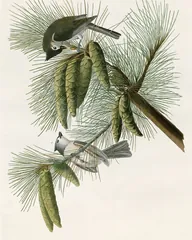
John James Audubon, The Birds of America (1827–38) about 37 per routeon 100% of routesno clear trend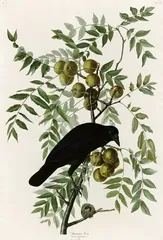
John James Audubon, The Birds of America (1827–38) about 33 per routeon 100% of routesfalling since 2015
Show all 25
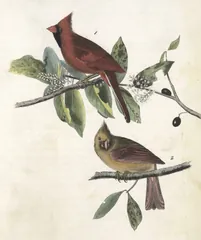
John James Audubon, The Birds of America (1840–44) about 31 per routeon 100% of routesno clear trend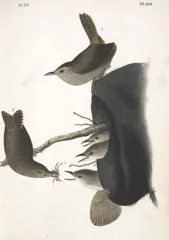
John James Audubon, The Birds of America (1840–44) 12 Northern House Wrenabout 29 per routeon 100% of routesno clear trend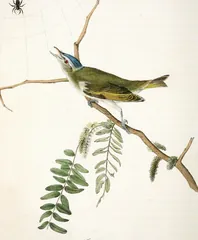
John James Audubon, The Birds of America (1840–44) 13 Red-eyed Vireoabout 27 per routeon 100% of routesno clear trend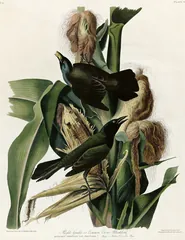
John James Audubon, The Birds of America (1827–38) 14 Common Grackleabout 24 per routeon 100% of routesno clear trend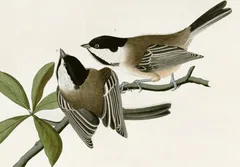
John James Audubon, The Birds of America (1827–38) about 23 per routeon 100% of routesno clear trend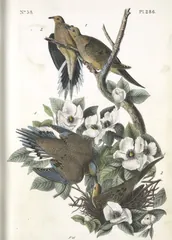
John James Audubon, The Birds of America (1840–44) about 23 per routeon 100% of routesno clear trend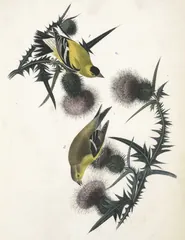
John James Audubon, The Birds of America (1840–44) about 19 per routeon 100% of routesno clear trend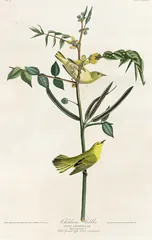
John James Audubon, The Birds of America (1827–38) 18 Northern Yellow Warblerabout 16 per routeon 100% of routesno clear trend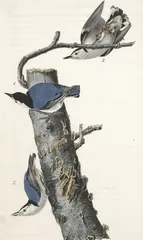
John James Audubon, The Birds of America (1840–44) about 16 per routeon 100% of routesno clear trend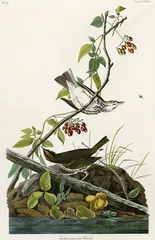
John James Audubon, The Birds of America (1827–38) 20 Ovenbirdabout 15 per routeon 92% of routesrising since 2015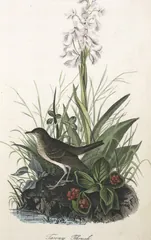
John James Audubon, The Birds of America (1840–44) 21 Veeryabout 15 per routeon 100% of routesno clear trend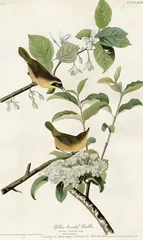
John James Audubon, The Birds of America (1827–38) 22 Common Yellowthroatabout 13 per routeon 100% of routesno clear trend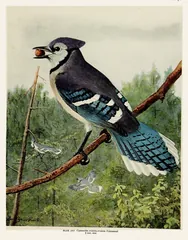
Louis Agassiz Fuertes, Elon H. Eaton's Birds of New York (1910–14) 23 Blue Jayabout 12 per routeon 100% of routesno clear trend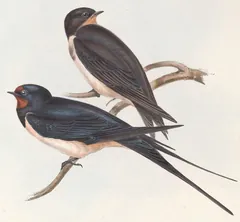
John and Elizabeth Gould, The Birds of Europe (1832–37) 24 Barn Swallowabout 11 per routeon 100% of routesno clear trend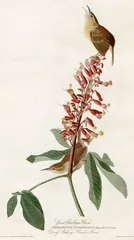
John James Audubon, The Birds of America (1827–38) about 9.9 per routeon 100% of routesrising since 2015
These 25, led by the American Robin and the Gray Catbird, are a small part of the 454 species on Connecticut’s official list; to name the rest, our comparison of the best bird books of 2026 shows which field guide suits a beginner.
What is the most common bird in Connecticut?
The American Robin leads Connecticut’s summer survey: about 66 a route on average in 2021–2025, ahead of the Gray Catbird at about 56, seen on every one of the 12 routes. USGS finds no clear rise or fall in its Connecticut numbers since 2015.
The Canada Goose, at least on winter counts: Connecticut's 21 Christmas Bird Counts of 2023-24 tallied 43,285, ahead of the European Starling (39,277), American Crow (27,482), American Robin (24,313) and Common Grackle (18,014), by our ranking of the count's statewide table. One crow roost on the Hartford count held 20,000 birds.
The newest counts, of 2025-26, found 278,672 birds of 167 species but published only the season's highs and lows, not a ranking.
Sources: Connecticut Christmas Bird Count 2023-2024, Table 1 (Connecticut Ornithological Association); The 2025-2026 Connecticut Christmas Bird Count: Supplemental Materials (Connecticut Ornithological Association), read October 10, 2026.
How was this list made?
Each of Connecticut’s 12 routes is a roadside count, 50 stops along about 25 miles, run once a year in early summer by a volunteer. We took USGS’s yearly estimate for each species in Connecticut, the number of birds a typical route records, averaged it over the five latest survey years (there was no survey in 2020) and ranked the birds by it. To keep the list to birds you’re likely to meet across Connecticut, we left out species recorded on fewer than one in five of its routes, and those USGS can only estimate very roughly, which usually means big flocks or colonies on a few routes.
For Connecticut that left out the Canada Goose.
The share of routes is our own count from USGS’s route data for Connecticut, using only counts that met the survey’s standards; “rising” and “falling” are USGS’s trends for the state since 2015, named only where it finds a clear change. Roadside counts on early-summer mornings miss most of Connecticut’s owls and waterbirds, and its winter visitors aren’t here at all.
Connecticut’s counts come from two USGS data releases, the North American Breeding Bird Survey Analysis Results 1966–2025 (Hostetler et al., 2026) and its Dataset 1966–2025 (Ziolkowski et al., 2026), gathered by volunteer observers and free for anyone to use; Birdfolio isn’t connected with the USGS.
How many bird species are in Connecticut?
| Official count | 454 species |
|---|---|
| List’s date | September 17, 2026 |
| Kept by | Avian Records Committee of Connecticut (Connecticut Ornithological Association) |
| Review list | 146 species (updated September 17, 2026) |
| Extinct or extirpated | 7 entries, counting the native Northern Bobwhite and the breeding Ring-necked Pheasant |
| Records committee since | 1985 |
| Among US states | Tied for 29th highest of the 49 states with a verified count, alongside Minnesota |
| Official list | Checklist of the Birds of Connecticut |
What does Connecticut’s count include?
- Every species recorded in Connecticut and accepted by the Avian Records Committee of Connecticut.
- It marks species known only from sight records, introduced species, and species that are extinct or no longer found in Connecticut.
- Rare species are marked with an asterisk.
Why do other sources give a different number?
People have been counting Connecticut's birds since 1843, so older totals are everywhere, and the state's wildlife agency counts differently again:
- 301. The bird species known to occur in Connecticut in the 2025 Wildlife Action Plan of the state's Department of Energy and Environmental Protection, 107 of them flagged as conservation priorities. The plan doesn't say what it leaves out; the committee's list counts every species ever accepted. Source: Species of Greatest Conservation Need: Summary, 2025 Wildlife Action Plan (Connecticut Department of Energy and Environmental Protection).
- 302, 239 and 291. The first definite list of the state's birds, published in 1843, recorded 302 species, but a later review found only 239 reported on satisfactory evidence. C. Hart Merriam's annotated list of 1877 noticed 291. Source: The Birds of Connecticut, Bulletin No. 20 (State Geological and Natural History Survey of Connecticut, 1913), full text at the Internet Archive.
- 334. The total in the state's 1913 book, The Birds of Connecticut, including 5 introduced species. It counts names, and in 1913 some subspecies had names of their own. Source: The Birds of Connecticut, Bulletin No. 20 (State Geological and Natural History Survey of Connecticut, 1913), full text at the Internet Archive.
- More than 350. What the records committee found at its first meeting in 1985, when it accepted only species proven by a specimen or a photograph. Source: First ARCC Report (The Connecticut Warbler 6:1, January 1986).
- 381. The committee's total in its fourth report, in 1990, five years after that first meeting. Source: Fourth ARCC Report (The Connecticut Warbler 10, 1990).
- 399 and 401. The state list the committee published in October 1997 had 399 species; its eighth report, in 1998, put the total at 401. Source: Eighth ARCC Report (The Connecticut Warbler 18, 1998).
Connecticut’s list follows its own committee’s rules, and so does every other state’s: see why the counts differ from state to state.
Connecticut firsts, two of them firsts for the whole country
- A Graylag Goose found with Canada Geese in a corn-stubble field in Wallingford on February 22, 2009, which then wintered there, was accepted as the state's first and the first accepted record for the United States. Source: Seventeenth ARCC Report (Connecticut Ornithological Association), read October 4, 2026.
- A plover at Sandy Point, West Haven, from October 1 to November 7, 2004, was accepted in 2006 as Connecticut's first Snowy Plover. After the Old World Kentish Plover was split off as its own species, the committee re-examined the bird and in 2025 accepted it unanimously as a Kentish Plover, the first for the US; the only other accepted North American record is from Shemya Island, Alaska, in May 2023. Sources: Thirtieth ARCC Report (Connecticut Ornithological Association, 2025); ARCC Reports Index of Species (Connecticut Ornithological Association), read October 4, 2026.
- A hatch-year Yellow-green Vireo caught at a banding demonstration at Flanders Nature Center in Woodbury on October 2, 1988, was finally accepted 37 years later, in 2025, on the strength of its wing and bill measurements. Source: Thirtieth ARCC Report (Connecticut Ornithological Association, 2025), read October 4, 2026.
- An adult Cassin's Kingbird at the same Woodbury nature center on November 25, 2025, became the state's newest first record, taking the list to 453. Source: The 31st Report of the Avian Records Committee of Connecticut (The Connecticut Warbler 46:2, April 2026), read October 4, 2026.
- New nesters count too: the committee records the first confirmed Sandhill Crane nest in Connecticut in 2022, in Norfolk, and the Merlin's first nesting in 2025. Source: ARCC Review List (Connecticut Ornithological Association), read October 4, 2026.
Questions people ask about Connecticut’s birds
Which US state has the most bird species?
California, with 696 species as of September 8, 2026; Texas has 682 (our table). Connecticut's checklist, last updated on September 17, 2026, counts 454, and the records committee's review list names 146 species rare enough that it wants every sighting written up.
Sources: Official California Checklist, updated 8 September 2026 (California Bird Records Committee, Western Field Ornithologists); Checklist of the Birds of Connecticut (Connecticut Ornithological Association); ARCC Review List (Connecticut Ornithological Association), read October 4, 2026.
What is the rarest bird in Connecticut?
Nobody can name just one, since Connecticut's list doesn't count records per species. Among the rarest are the Black-capped Petrel found dead on a Fairfield beach after the 1938 hurricane, still the state's only documented record, and a Fieldfare from Stamford in 1878, accepted as the first state record under a 2013 record number. Seven entries are extinct or gone from the state, from the Labrador Duck to the wild Northern Bobwhite.
Sources: Second ARCC Historical Report (Connecticut Ornithological Association); ARCC Reports Index of Species, updated January 28, 2025 (Connecticut Ornithological Association), the Internet Archive's copy of July 24, 2026; Checklist of the Birds of Connecticut (Connecticut Ornithological Association), read October 4, 2026.
What are common birds in Connecticut?
Chickadees, cardinals, juncos and woodpeckers are common Connecticut birds in winter, says UConn's home and garden education office, and Tufted Titmice, Northern Flickers, Downy Woodpeckers and Blue Jays gobble up peanuts at feeders. On the 2023-24 Christmas Bird Counts the Dark-eyed Junco was the sixth most numerous bird, with 12,942 (our ranking).
Sources: This is For the Birds!, December 13, 2024 (UConn Home & Garden Education Office); Connecticut Christmas Bird Count 2023-2024, Table 1 (Connecticut Ornithological Association), read October 10, 2026.
Where can I find a list of Connecticut birds?
On the Connecticut Ornithological Association's website: the Checklist of the Birds of Connecticut, kept by the Avian Records Committee of Connecticut; a printable version is for members only. The association also prints a COA Field Checklist (March 2023 edition), and the state's forestry division publishes checklists for some state forests, such as Naugatuck State Forest, with each bird's season and how common it is.
Sources: Checklist of the Birds of Connecticut (Connecticut Ornithological Association); ARCC Review List, updated March 10, 2026 (Connecticut Ornithological Association), the Internet Archive's copy of July 24, 2026; Naugatuck State Forest Bird Checklist (Connecticut Department of Energy and Environmental Protection, Forestry), read October 10, 2026.
Which birds live in Connecticut?
Birds of the Long Island Sound shore and its salt marshes, big unbroken forests, young woods and shrubland, and the grasslands of the Connecticut River valley. The shore's specialties are three beach nesters, the Piping Plover, Least Tern and American Oystercatcher, all listed as threatened under the state's endangered species law, the state wildlife agency says.
Shore: three sites are closed to the public each summer for nesting birds: the Niering Preserve at Harkness Memorial State Park, Charles Island and Duck Island, which shelter plovers and terns and colonies of Snowy and Great Egrets, Glossy Ibis and Little Blue Herons. Barn Island Wildlife Management Area in Stonington has the largest salt marsh in New England that borders undeveloped coastal forest, where restoring the tides helps more than 20 species of conservation concern, from the Clapper Rail and Saltmarsh Sparrow to the Least Bittern.
Forests: the Macedonia Forest Block, 22,580 acres of largely unbroken woods in Kent and Sharon, is one of the largest left in the state, and Cerulean Warblers and Scarlet Tanagers nest in its deep woods, Connecticut Audubon says; Audubon Connecticut counts the same two birds among the indicator species that guide its work.
Young woods and grasslands: the state's Wildlife Action Plan names more than 50 species of conservation need that depend on young, regrowing forest, among them the American Woodcock, Prairie Warbler, Brown Thrasher and Field Sparrow, and the state cuts and mows patches of its land to keep that habitat. In 2006 the state counted about 80 species that nest in grasslands, the Upland Sandpiper and Grasshopper Sparrow among them, and said most of the best grassland lies in the Connecticut River Valley, from Hartford north to the Massachusetts line.
Sources: Share the Shore with Nesting Birds, updated April 2025 (Connecticut Department of Energy and Environmental Protection, Wildlife Division); Habitat Management at WMAs and State Forests (Connecticut Department of Energy and Environmental Protection, Wildlife Division); Connecticut State of the Birds 2025: Conservation Works (Connecticut Audubon Society); Birds of Connecticut (Audubon Connecticut, National Audubon Society); Grassland Habitat Conservation Initiative, October 2006 (Connecticut Department of Environmental Protection), read October 10, 2026.
Why are there wild parrots in Connecticut?
They are Monk Parakeets, introduced birds established in Fairfield County since the early 1970s. By 1996 the records committee counted about 400 of them, nesting along the coast from Darien to West Haven and inland to Danbury, and that year it formally added the species to the state list.
The official checklist still marks the Monk Parakeet I, for introduced. The same sixth report that added it brought the state list to 392.
Sources: Sixth ARCC Report (The Connecticut Warbler 16, 1996); Checklist of the Birds of Connecticut (Connecticut Ornithological Association), read October 4, 2026.
Which rare birds have storms brought to Connecticut?
Hurricanes have added some of the strangest birds on the list. After the 1938 Hurricane a Black-capped Petrel was found dead on the beach in Fairfield on October 7, 1938. It was first labeled a Great Shearwater, its identity was corrected in 1952, and it remains Connecticut's first and only documented record of the species.
Tropical Storm Irene reached Connecticut on the evening of August 27, 2011, and left two new state records: a Band-rumped Storm-Petrel on the coast at Milford, and a White-tailed Tropicbird picked up from the middle of a road in Colebrook, in northern Litchfield County, on August 29, and later flown to a seabird rehabilitation center in Florida.
Sources: Second ARCC Historical Report (Connecticut Ornithological Association); Seventeenth ARCC Report (Connecticut Ornithological Association), read October 4, 2026.
When was the last Passenger Pigeon seen in Connecticut?
In October 1901, according to the state's 1913 book The Birds of Connecticut: its latest definite record was an adult male and three young near Willimantic early that month. The book calls the species formerly very abundant on migration and now virtually extinct.
The pigeon stays on the official list among 7 extinct or extirpated entries, with the Labrador Duck, Eskimo Curlew and Heath Hen. In its eighteenth report the committee declared the wild Northern Bobwhite extirpated from Connecticut, the first native species to get that label since the Passenger Pigeon.
Sources: The Birds of Connecticut, Bulletin No. 20 (State Geological and Natural History Survey of Connecticut, 1913), full text at the Internet Archive; Checklist of the Birds of Connecticut (Connecticut Ornithological Association); Eighteenth ARCC Report (Connecticut Ornithological Association), read October 4, 2026.
Where is the official Connecticut bird list, and how often is it updated?
Online, on the Connecticut Ornithological Association's website: the Checklist of the Birds of Connecticut, updated March 10 and September 17, 2026. It marks rare species with an asterisk and flags birds known from sight records only, introduced species and those extinct or extirpated. A printable version is in the association's members-only section.
The Avian Records Committee of Connecticut first met in 1985, as the association's Rare Records Committee, and publishes its decisions as numbered reports. Up to twelve members serve three-year terms; a report is accepted only if it convinces all of them, or all but one, and it can go to a vote up to three times. The review list names 146 species whose sightings the committee wants written up, with photos or recordings if possible, plus any species new to the state. The association itself was announced by Roger Tory Peterson in the January 1984 issue of The Connecticut Warbler.
Sources: Checklist of the Birds of Connecticut (Connecticut Ornithological Association); ARCC Published Reports (Connecticut Ornithological Association); About ARCC (Connecticut Ornithological Association); ARCC Review List (Connecticut Ornithological Association); Reporting Rare Sightings (Connecticut Ornithological Association); COA History (Connecticut Ornithological Association), read October 4, 2026.
How do you count your own Connecticut list?
Your Connecticut list is every species you’ve seen in Connecticut. eBird can filter your life list to Connecticut, and your eBird data download gives the state of every sighting. On paper, count the species you’ve seen in Connecticut; what is a life list? explains how birders keep their lists.
To print your whole list, Connecticut birds and all, see how to print your bird life list, or let Birdfolio make it a hardcover book.
Connecticut’s state bird
Connecticut’s state bird is the American Robin, the state bird since 1943. Its story, the state flower and animal, and a free picture card for a report are on our Connecticut state bird page.
Christmas Bird Count in Connecticut
Connecticut had 19 Christmas Bird Count circles on Audubon’s map last winter, each counted on a single day between December 14 and January 5. Our guide shows where to find Connecticut’s counts and lists 14 Connecticut count dates already announced for this winter; it’s free, and beginners are welcome.
More about bird counts
- How many bird species are in each state: Connecticut beside all 50 states, DC and Canada.
- Bird lists of nearby states: Massachusetts, New York and Rhode Island.
- State birds of all 50 states, Connecticut’s American Robin among them
- How many bird species are in the US and Canada
- Bird splits and lumps
If you’re shopping for a birder in Connecticut, our gift guide for birders and our pick of coffee table bird books are good places to start.