Reference
How many bird species are in Vermont?
Vermont has 398 bird species on its official list (Vermont Bird Records Committee, August 26, 2025), the 47th highest count of the 49 states with a verified count. It includes the extinct Passenger Pigeon and 2 birds no longer found in Vermont, the Loggerhead Shrike and Henslow's Sparrow.
Vermont’s state bird is the Hermit Thrush: our Vermont state bird page tells how it was chosen.
Updated
What are the most common birds in Vermont?
In summer, the 25 most common birds in Vermont are led by the Red-eyed Vireo, at about 78 birds per survey route, then the Red-winged Blackbird and the American Robin, by the USGS Breeding Bird Survey’s counts for 2021–2025. Together these 25 made up 73% of all the birds counted on Vermont’s 23 survey routes.
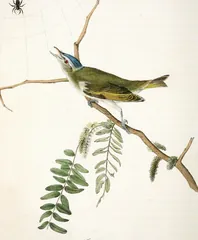
John James Audubon, The Birds of America (1840–44) 1 Red-eyed Vireoabout 78 per routeon 100% of routesno clear trend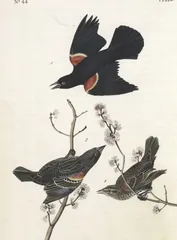
John James Audubon, The Birds of America (1840–44) about 57 per routeon 100% of routesno clear trend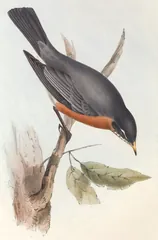
John and Elizabeth Gould, The Birds of Europe (1832–37) about 55 per routeon 100% of routesno clear trend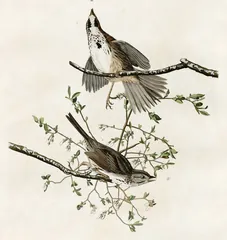
John James Audubon, The Birds of America (1827–38) about 47 per routeon 100% of routesno clear trend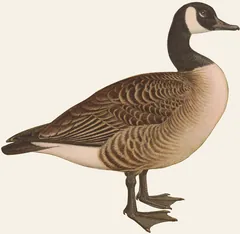
Marinus Adrianus Koekkoek, E. D. van Oort's Ornithologia Neerlandica (1922) about 44 per routeon 83% of routesno clear trend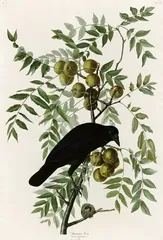
John James Audubon, The Birds of America (1827–38) about 44 per routeon 100% of routesno clear trend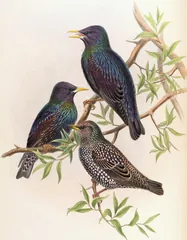
John Gould and Henry Constantine Richter, The Birds of Asia, vol. 5 (1850–83) 7 European Starlingabout 41 per routeon 100% of routesfalling since 2015introduced species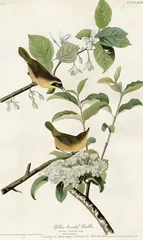
John James Audubon, The Birds of America (1827–38) 8 Common Yellowthroatabout 32 per routeon 100% of routesfalling since 2015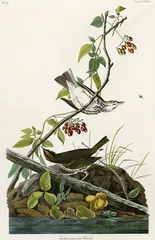
John James Audubon, The Birds of America (1827–38) 9 Ovenbirdabout 32 per routeon 100% of routesno clear trend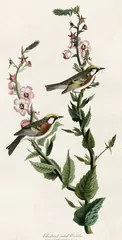
John James Audubon, The Birds of America (1827–38) 10 Chestnut-sided Warblerabout 26 per routeon 96% of routesrising since 2015
Show all 25
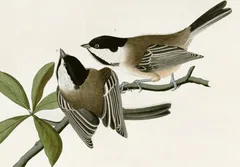
John James Audubon, The Birds of America (1827–38) about 24 per routeon 100% of routesno clear trend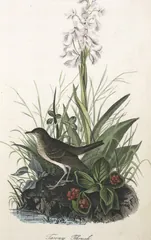
John James Audubon, The Birds of America (1840–44) 12 Veeryabout 22 per routeon 100% of routesno clear trend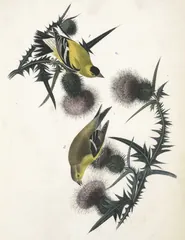
John James Audubon, The Birds of America (1840–44) about 16 per routeon 100% of routesno clear trend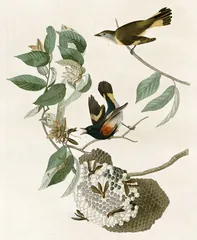
John James Audubon, The Birds of America (1827–38) 14 American Redstartabout 14 per routeon 96% of routesno clear trend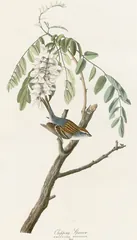
John James Audubon, The Birds of America (1827–38) 15 Chipping Sparrowabout 14 per routeon 100% of routesno clear trend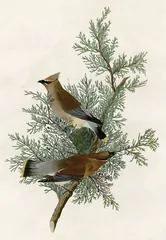
John James Audubon, The Birds of America (1827–38) about 14 per routeon 87% of routesfalling since 2015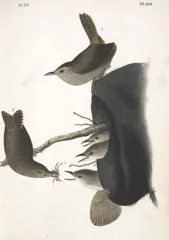
John James Audubon, The Birds of America (1840–44) 17 Northern House Wrenabout 13 per routeon 100% of routesrising since 2015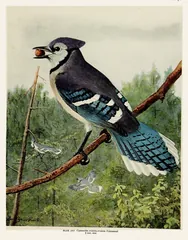
Louis Agassiz Fuertes, Elon H. Eaton's Birds of New York (1910–14) 18 Blue Jayabout 13 per routeon 100% of routesno clear trend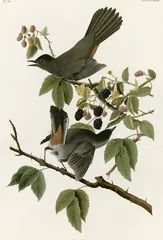
John James Audubon, The Birds of America (1827–38) 19 Gray Catbirdabout 12 per routeon 100% of routesno clear trend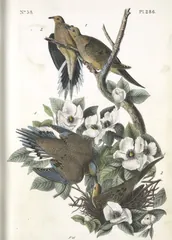
John James Audubon, The Birds of America (1840–44) about 11 per routeon 100% of routesfalling since 2015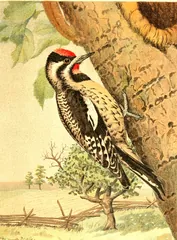
Louis Agassiz Fuertes, Bulletin, Biological Survey (1908) 21 Yellow-bellied Sapsuckerabout 11 per routeon 96% of routesrising since 2015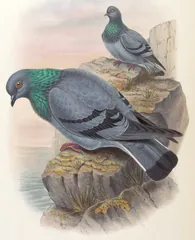
John Gould and William Matthew Hart, The Birds of Asia (1850–83) 22 Rock Pigeonabout 9.0 per routeon 83% of routesno clear trendintroduced species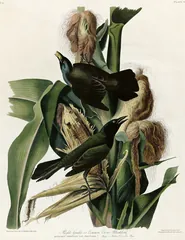
John James Audubon, The Birds of America (1827–38) 23 Common Grackleabout 8.6 per routeon 100% of routesno clear trend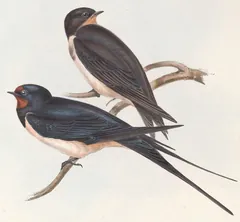
John and Elizabeth Gould, The Birds of Europe (1832–37) 24 Barn Swallowabout 8.6 per routeon 100% of routesno clear trend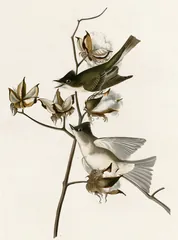
John James Audubon, The Birds of America (1827–38) 25 Eastern Phoebeabout 8.4 per routeon 100% of routesno clear trend
Once you know the Red-eyed Vireo, the American Robin and the rest of these 25, a field guide takes you further into Vermont’s list of 398 species; our comparison of the best bird books of 2026 shows which one to start with.
What is the most common bird in Vermont?
The Red-eyed Vireo leads Vermont’s summer survey: about 78 a route on average in 2021–2025, ahead of the Red-winged Blackbird at about 57, seen on every one of the 23 routes. USGS finds no clear rise or fall in its Vermont numbers since 2015.
How was this list made?
Each of Vermont’s 23 routes is a roadside count, 50 stops along about 25 miles, run once a year in early summer by a volunteer. We took USGS’s yearly estimate for each species in Vermont, the number of birds a typical route records, averaged it over the five latest survey years (there was no survey in 2020) and ranked the birds by it. To keep the list to birds you’re likely to meet across Vermont, we left out species recorded on fewer than one in five of its routes, and those USGS can only estimate very roughly, which usually means big flocks or colonies on a few routes.
The share of routes is our own count from USGS’s route data for Vermont, using only counts that met the survey’s standards; “rising” and “falling” are USGS’s trends for the state since 2015, named only where it finds a clear change. Roadside counts on early-summer mornings miss most of Vermont’s owls and waterbirds, and its winter visitors aren’t here at all.
Vermont’s counts come from two USGS data releases, the North American Breeding Bird Survey Analysis Results 1966–2025 (Hostetler et al., 2026) and its Dataset 1966–2025 (Ziolkowski et al., 2026), gathered by volunteer observers and free for anyone to use; Birdfolio isn’t connected with the USGS.
How many bird species are in Vermont?
| Official count | 398 species |
|---|---|
| List’s date | August 26, 2025 |
| Kept by | Vermont Bird Records Committee (Vermont Center for Ecostudies) |
| Breeding species | 205 have nested in Vermont, the committee says |
| Hypothetical | 6 single records, counted in the 398 (our count) |
| Report wanted anywhere | 112 species (our count of the list's codes) |
| Records committee | Founded 1980; 12 members (our count) |
| Among US states | 47th highest of the 49 states with a verified count |
| Official list | Vermont Bird Checklist (last updated 26 August 2025) |
What does Vermont’s count include?
- Every species with an accepted specimen, photo or written description from Vermont: 398 in 22 orders and 63 families.
- The Passenger Pigeon, now extinct, and 2 species no longer found in Vermont: the Loggerhead Shrike and Henslow's Sparrow.
- 9 introduced species, from the Mute Swan, Gray Partridge and Ring-necked Pheasant to the House Finch, House Sparrow and European Starling (our count).
- 6 hypothetical species, single records without a photo or a second observer's confirmation (the list marks them H), such as the Arctic Loon and Steller's Jay (our count).
- Species names follow the American Ornithological Society's 66th supplement (July 2025). Not counted: hybrids, which the committee generally doesn't review, and forms such as Audubon's Yellow-rumped Warbler, which it wants reported but doesn't count as species.
Why do other sources give a different number?
Older Vermont checklists are still online, and the committee and the state give smaller totals too:
- 388. The checklist of December 30, 2015, which the committee's home page still links. The current list of 398 sits on its separate Bird Checklist page. Source: Vermont Bird Records Committee, home page (Vermont Center for Ecostudies).
- 382. The checklist of June 20, 2014: Vermont has added 16 species since (our arithmetic). Source: Vermont Bird Checklist, last updated June 20, 2014 (Vermont Bird Records Committee).
- 205. The species found breeding in Vermont, according to the committee's 44th annual report: about half the list. Source: Forty-fourth Annual Report of the Vermont Bird Records Committee (Vermont Center for Ecostudies, April 15, 2025).
- About 260. The state Fish & Wildlife Department's bird page, which doesn't say what it counts; the department's own list covers only birds that occur regularly. Source: Birds (Vermont Fish & Wildlife Department).
Vermont’s list follows its own committee’s rules, and so does every other state’s: see why the counts differ from state to state.
Vermont records, from a gannet in a back yard to vultures in a barn
- On December 20, 1984, after a snowstorm, a Northern Gannet was picked up in a back yard in Woodstock. The Vermont Institute of Natural Science looked after it until it could be released on the coast, and the season's report called it "far more astonishing" than a cormorant that lingered into January. Source: Records of Vermont Birds, Winter 1984-85 (Vermont Institute of Natural Science), read October 8, 2026.
- Vermont's first Ross's Goose, an immature bird at Dead Creek Wildlife Management Area in Addison on October 27 and November 25, 1990, was also the first for New England. Source: Vermont Bird Records Committee report for 1991 (Records of Vermont Birds), read October 8, 2026.
- A Ruff spent July 6 to 14, 1991, by the Panton-Vergennes road in Panton: the state's first accepted record, after two earlier reports were judged hypothetical. The second accepted Ruff didn't come until 2024, 33 years later (our arithmetic). Sources: Vermont Bird Records Committee report for 1991 (Records of Vermont Birds); Forty-fourth Annual Report of the Vermont Bird Records Committee (Vermont Center for Ecostudies, April 15, 2025), read October 8, 2026.
- An adult Black-tailed Gull was found on Charlotte Town Beach on Lake Champlain on October 18, 2005, Vermont's first, and many birders saw and photographed it through the end of the month. A report of the species anywhere in the state still needs documenting. Sources: Vermont Bird Records Committee, 2006 Decisions (Vermont Center for Ecostudies); Vermont Bird Checklist, last updated August 26, 2025 (Vermont Bird Records Committee), read October 8, 2026.
- Vermont's first nesting Black Vultures used a run-down barn in Burlington. The nest would likely have failed if local birders hadn't stepped in to get the demolition postponed, and one chick fledged. Source: Highlights from the 40th Vermont Bird Records Committee Report (Vermont Center for Ecostudies, November 18, 2021), read October 8, 2026.
Questions people ask about Vermont’s birds
Which state has the most species of birds?
California, with 696 species as of September 8, 2026, followed by Texas with 682 (our table). Vermont has 398 on its checklist of August 26, 2025, about 57 percent of California's total (our arithmetic).
Sources: Official California Checklist, updated 8 September 2026 (California Bird Records Committee); Vermont Bird Checklist, last updated August 26, 2025 (Vermont Bird Records Committee), read October 8, 2026.
What birds are common in Vermont?
The Black-capped Chickadee, Tufted Titmouse, Northern Cardinal and American Robin are among 66 species the state Fish & Wildlife Department rates common, widespread and abundant in Vermont, all year or as nesting birds (our count of its September 10, 2026, list). Others include the Downy, Hairy and Pileated Woodpeckers all year, and the Red-eyed Vireo, Ovenbird and the state bird, the Hermit Thrush, in the nesting season.
Source: Birds of Vermont, September 10, 2026 (Vermont Fish & Wildlife Department), read October 8, 2026.
What is the rarest bird in Vermont?
The rarest are the birds the list keeps but nobody can see in Vermont today: the extinct Passenger Pigeon and the Loggerhead Shrike and Henslow's Sparrow, both gone from the state. Among living strays, the 6 hypothetical species are each known from a single record, and 112 species are rare enough that the committee wants a report of any sighting anywhere in Vermont (our counts), such as the Black-tailed Gull.
Sources: Vermont Bird Checklist, last updated August 26, 2025 (Vermont Bird Records Committee); Forty-fourth Annual Report of the Vermont Bird Records Committee (Vermont Center for Ecostudies, April 15, 2025), read October 8, 2026.
What are some rare birds found in Vermont?
Recent ones include Vermont's first Hammond's Flycatcher and first Black-throated Gray Warbler, the highlights of 2024 in the committee's 44th report, which also accepted the state's second Mexican Violetear. A year earlier the first Ash-throated Flycatcher was found and photographed in Middlebury on December 17, 2023.
Sources: Forty-fourth Annual Report of the Vermont Bird Records Committee (Vermont Center for Ecostudies, April 15, 2025); The committee's 43rd annual report, VBRC News (Vermont Center for Ecostudies), read October 8, 2026.
What bird is blue but not a bluebird?
In Vermont, usually the Blue Jay, one of the state's most common birds: the second breeding bird atlas found it in every one of its priority survey blocks. The Indigo Bunting and the Black-throated Blue Warbler, both named for their blue, are common nesting birds too, by the state Fish & Wildlife Department's ratings.
Sources: Blue Jay, The Second Atlas of Breeding Birds of Vermont (2013; Vermont Center for Ecostudies); Birds of Vermont, September 10, 2026 (Vermont Fish & Wildlife Department), read October 8, 2026.
Are there 10,000 species of birds?
Yes, about 11,000: the 2025 edition of AviList, the world checklist, lists 11,131 species in 46 orders (our sum). Vermont's 398 come to about 3.6 percent, roughly one in 28.
Sources: AviList: The Global Avian Checklist, v2025, first released June 11, 2025 (AviList Core Team, CC BY 4.0); Vermont Bird Checklist, last updated August 26, 2025 (Vermont Bird Records Committee), read October 8, 2026.
Which birds live in Vermont?
Birds of mountain fir forest, lakes, farms and woods. Bicknell's Thrush, one of the rarest and most vulnerable songbirds in North America, nests in balsam fir above about 2,950 feet in the Green and Taconic Mountains; its world population is estimated at 126,000 or fewer. On Mount Mansfield the Vermont Center for Ecostudies has studied it every year since 1992, and tiny GPS tags fitted to 13 males in Vermont and Quebec in 2021 showed 12 of them wintering in the Dominican Republic.
Common Terns nest only on a handful of tiny islands in Lake Champlain, such as Popasquash Island near Swanton and Rock Island in St. Albans Bay; listed as endangered in 1988 with 50 pairs, they grew to 170 pairs by 2007 with decoys, recorded tern calls and control of gulls and cormorants. In the woods and fields of Marsh-Billings-Rockefeller National Historical Park in Woodstock, 28 kinds of warblers and 17 birds of prey have been documented, and Bobolink nests are checked so the young can fly before the hay is cut.
Sources: Bicknell's Thrush, The Second Atlas of Breeding Birds of Vermont (2013; Vermont Center for Ecostudies); Blackpolls Abound as VCE Launches Year #30 on Mansfield (Vermont Center for Ecostudies, June 4, 2021); Tags Keep Coming on Mansfield, and from Quebec (Vermont Center for Ecostudies, June 18, 2022); Common Tern, The Second Atlas of Breeding Birds of Vermont (2013; Vermont Center for Ecostudies); Birds, Marsh-Billings-Rockefeller National Historical Park (National Park Service), read October 8, 2026.
How did a bird nicknamed Elvis become Vermont's first Crested Caracara?
By being mistaken for an eagle. In March 2018 a strange bird turned up in the Champlain Islands, and an observer posted a photo of it to the Vermont Atlas of Life on iNaturalist as a Bald Eagle, nicknamed Elvis for its striking hairdo. It was in fact a Crested Caracara, the national bird of Mexico.
Once the identification was corrected, the record went to the committee, just as a second caracara appeared in Woodstock on March 4, 2020. The committee accepted both as the state's first and second at its November 2020 meeting, which also added two other new birds: a Common Ringed Plover on the mudflats of the Missisquoi River Delta in Highgate and a King Rail where the Waits River meets the Connecticut at Bradford.
Sources: Highlights from the 40th Vermont Bird Records Committee Report (Vermont Center for Ecostudies, November 18, 2021); Rare Crested Caracara Visits Vermont (Vermont Center for Ecostudies, April 17, 2020), read October 8, 2026.
How did loons come back to Vermont's lakes?
Slowly, and with a lot of help. Vermont's loons have been monitored since 1978; nesting pairs reached 19 in 1982, then fell to 7 the next year for reasons nobody knows. The Common Loon was listed as endangered in the state in 1987 and taken off the list in 2005.
In 2025 more than 350 volunteers and the state found 115 nesting pairs and more than 400 adult loons, from those 7 pairs about 40 years ago. Floating nest rafts help: 88 percent of the 43 pairs that nested on them succeeded that year. Lead fishing tackle remains a danger; two adults died of lead poisoning in 2025.
Sources: Common Loon, The Second Atlas of Breeding Birds of Vermont (2013; Vermont Center for Ecostudies); Loon Conservation Project Results, 2025 season (Vermont Center for Ecostudies), read October 8, 2026.
Where is the official Vermont bird list, and how often is it updated?
On the Vermont Atlas of Life website of the Vermont Center for Ecostudies, val.vtecostudies.org: the Vermont Bird Checklist, last updated August 26, 2025, on the committee's Bird Checklist page (updated September 4, 2025). The committee's home page still links an older 2015 file, so use the checklist page. Vermont has no separate review list: codes on the checklist say which birds need a report anywhere in the state, which only if they nest, and which only outside the Lake Champlain Basin or the Northeast Kingdom.
The committee was founded in 1980, meets once a year in late fall, and publishes a yearly report on every species it reviewed; reports from 1988 on are posted, the 44th in April 2025. It has at least 8 members and no term limits. A first state record needs two independent written reports, or one with a photo, recording or video, and a unanimous vote of the members present; other records need 75 percent, with no abstentions. In its 44th report it reviewed 47 records of 34 species and accepted 38.
Sources: Vermont Bird Checklist page, updated September 4, 2025 (Vermont Bird Records Committee, Vermont Center for Ecostudies); Vermont Bird Records Committee, home page (Vermont Center for Ecostudies); Vermont Bird Checklist, last updated August 26, 2025 (Vermont Bird Records Committee); Committee Procedures (Vermont Bird Records Committee, Vermont Center for Ecostudies); Annual Reports (Vermont Bird Records Committee, Vermont Center for Ecostudies); Forty-fourth Annual Report of the Vermont Bird Records Committee (Vermont Center for Ecostudies, April 15, 2025), read October 8, 2026.
How do you count your own Vermont list?
Your Vermont list is every species you’ve seen in Vermont. eBird can filter your life list to Vermont, and your eBird data download gives the state of every sighting. On paper, count the species you’ve seen in Vermont; what is a life list? explains how birders keep their lists.
To print your whole list, Vermont birds and all, see how to print your bird life list, or let Birdfolio make it a hardcover book.
Vermont’s state bird
Vermont’s state bird is the Hermit Thrush, the state bird since 1941. Its story, the state flower and animal, and a free picture card for a report are on our Vermont state bird page.
Birding festivals in Vermont
Our birding festivals calendar lists 2 in Vermont, with dates from each festival’s own website:
- Herricks Cove Wildlife Festival, Herricks Cove: dates not announced yet; expected in May 2027 (2026 festival: May 3, 2026)
- Dead Creek Wildlife Day, Addison: dates not announced yet; expected in October 2027 (2026 festival: October 3, 2026)
Christmas Bird Count in Vermont
Vermont had 22 Christmas Bird Count circles on Audubon’s map last winter, each counted on a single day between December 14 and January 5. Our guide shows where to find Vermont’s counts and lists 1 Vermont count date already announced for this winter; it’s free, and beginners are welcome.
More about bird counts
- How many bird species are in each state: Vermont beside all 50 states, DC and Canada.
- Bird lists of nearby states: Massachusetts, New Hampshire and New York.
- State birds of all 50 states, Vermont’s Hermit Thrush among them
- How many bird species are in the US and Canada
- Bird splits and lumps
If you’re shopping for a birder in Vermont, our gift guide for birders and our pick of coffee table bird books are good places to start.