Reference
How many bird species are in New Hampshire?
New Hampshire has 428 bird species on its official list (New Hampshire Rare Birds Committee, February 28, 2023), tied for the 41st highest count of the 49 states with a verified count. It counts the committee's main list only, which still carries five birds long gone from the state, the Great Auk among them; 4 hypothetical species are left out.
New Hampshire’s state bird is the Purple Finch: our New Hampshire state bird page tells how it was chosen.
Updated
What are the most common birds in New Hampshire?
In summer, the 25 most common birds in New Hampshire are led by the Red-eyed Vireo, at about 74 birds per survey route, then the American Robin and the Ovenbird, by the USGS Breeding Bird Survey’s counts for 2021–2025. Together these 25 made up 70% of all the birds counted on New Hampshire’s 23 survey routes.
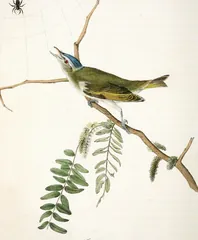
John James Audubon, The Birds of America (1840–44) 1 Red-eyed Vireoabout 74 per routeon 100% of routesno clear trend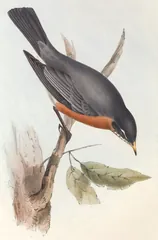
John and Elizabeth Gould, The Birds of Europe (1832–37) about 37 per routeon 100% of routesfalling since 2015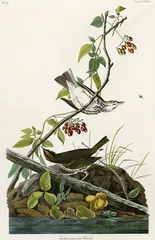
John James Audubon, The Birds of America (1827–38) 3 Ovenbirdabout 31 per routeon 100% of routesfalling since 2015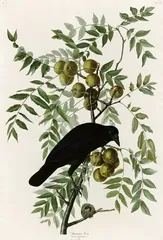
John James Audubon, The Birds of America (1827–38) about 29 per routeon 100% of routesfalling since 2015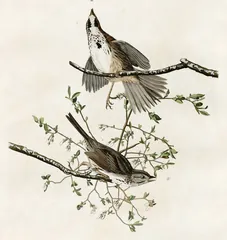
John James Audubon, The Birds of America (1827–38) about 27 per routeon 100% of routesrising since 2015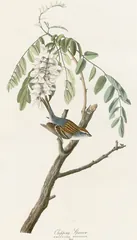
John James Audubon, The Birds of America (1827–38) 6 Chipping Sparrowabout 27 per routeon 100% of routesfalling since 2015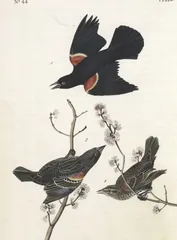
John James Audubon, The Birds of America (1840–44) about 27 per routeon 100% of routesno clear trend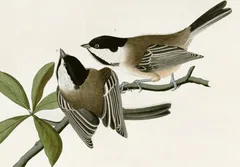
John James Audubon, The Birds of America (1827–38) about 26 per routeon 100% of routesno clear trend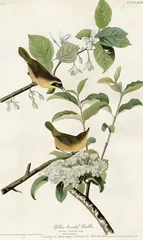
John James Audubon, The Birds of America (1827–38) 9 Common Yellowthroatabout 21 per routeon 100% of routesfalling since 2015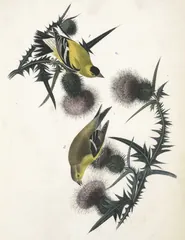
John James Audubon, The Birds of America (1840–44) about 21 per routeon 100% of routesno clear trend
Show all 25
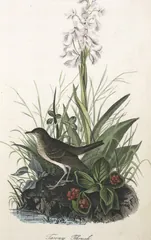
John James Audubon, The Birds of America (1840–44) 11 Veeryabout 21 per routeon 100% of routesno clear trend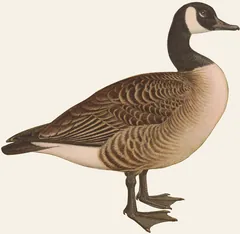
Marinus Adrianus Koekkoek, E. D. van Oort's Ornithologia Neerlandica (1922) 12 Canada Gooseabout 21 per routeon 78% of routesno clear trend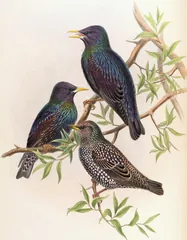
John Gould and Henry Constantine Richter, The Birds of Asia, vol. 5 (1850–83) 13 European Starlingabout 19 per routeon 96% of routesno clear trendintroduced species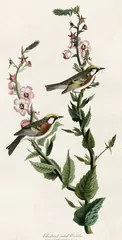
John James Audubon, The Birds of America (1827–38) 14 Chestnut-sided Warblerabout 18 per routeon 100% of routesno clear trend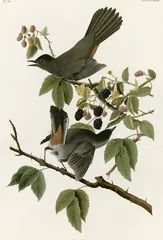
John James Audubon, The Birds of America (1827–38) 15 Gray Catbirdabout 13 per routeon 100% of routesno clear trend
John James Audubon, The Birds of America (1840–44) about 12 per routeon 100% of routesno clear trend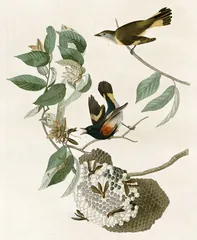
John James Audubon, The Birds of America (1827–38) 17 American Redstartabout 12 per routeon 100% of routesno clear trend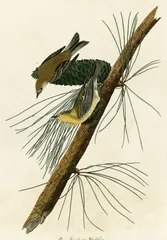
John James Audubon, The Birds of America (1827–38) 18 Pine Warblerabout 11 per routeon 87% of routesrising since 2015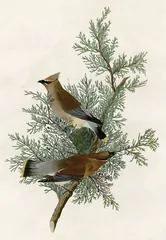
John James Audubon, The Birds of America (1827–38) about 11 per routeon 100% of routesfalling since 2015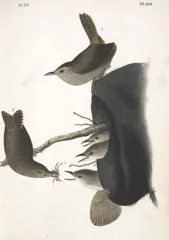
John James Audubon, The Birds of America (1840–44) 20 Northern House Wrenabout 10 per routeon 96% of routesrising since 2015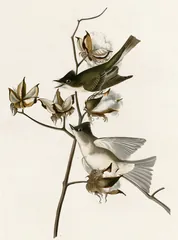
John James Audubon, The Birds of America (1827–38) 21 Eastern Phoebeabout 10 per routeon 100% of routesno clear trend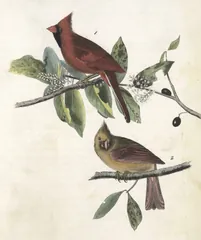
John James Audubon, The Birds of America (1840–44) about 10 per routeon 91% of routesno clear trend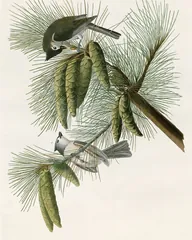
John James Audubon, The Birds of America (1827–38) about 10 per routeon 87% of routesno clear trend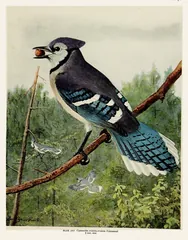
Louis Agassiz Fuertes, Elon H. Eaton's Birds of New York (1910–14) 24 Blue Jayabout 9.5 per routeon 100% of routesfalling since 2015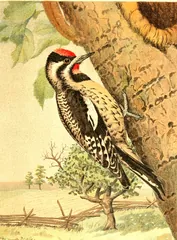
Louis Agassiz Fuertes, Bulletin, Biological Survey (1908) 25 Yellow-bellied Sapsuckerabout 8.2 per routeon 96% of routesno clear trend
A field guide to North America covers the American Robin, the Ovenbird and most of the 428 species on New Hampshire’s list; we compared the best bird books of 2026 to find the one that suits a beginner.
What is the most common bird in New Hampshire?
The Red-eyed Vireo leads New Hampshire’s summer survey: about 74 a route on average in 2021–2025, more than twice the American Robin’s 37, seen on every one of the 23 routes. USGS finds no clear rise or fall in its New Hampshire numbers since 2015.
In winter backyards it is the Dark-eyed Junco. On the Backyard Winter Bird Survey of February 8 and 9, 2025, a record 1,953 people counted 10,490 juncos, ahead of 9,160 American Goldfinches, 8,490 Black-capped Chickadees and 7,633 Mourning Doves (our ranking of the survey's totals). It is a snapshot of feeders on one weekend, not of the whole state.
Source: The Backyard Winter Bird Survey Report: 2025 (New Hampshire Audubon; Internet Archive copy, June 18, 2026), read October 8, 2026.
How was this list made?
Each of New Hampshire’s 23 routes is a roadside count, 50 stops along about 25 miles, run once a year in early summer by a volunteer. We took USGS’s yearly estimate for each species in New Hampshire, the number of birds a typical route records, averaged it over the five latest survey years (there was no survey in 2020) and ranked the birds by it. To keep the list to birds you’re likely to meet across New Hampshire, we left out species recorded on fewer than one in five of its routes, and those USGS can only estimate very roughly, which usually means big flocks or colonies on a few routes.
The share of routes is our own count from USGS’s route data for New Hampshire, using only counts that met the survey’s standards; “rising” and “falling” are USGS’s trends for the state since 2015, named only where it finds a clear change. Roadside counts on early-summer mornings miss most of New Hampshire’s owls and waterbirds, and its winter visitors aren’t here at all.
New Hampshire’s counts come from two USGS data releases, the North American Breeding Bird Survey Analysis Results 1966–2025 (Hostetler et al., 2026) and its Dataset 1966–2025 (Ziolkowski et al., 2026), gathered by volunteer observers and free for anyone to use; Birdfolio isn’t connected with the USGS.
How many bird species are in New Hampshire?
| Official count | 428 species |
|---|---|
| List’s date | February 28, 2023 |
| Kept by | New Hampshire Rare Birds Committee |
| Hypothetical list | 4 species, not counted |
| Gone from the state | 5 species: 3 extinct, 2 no longer found here |
| Newest species | Bridled Tern, July 9, 2024 (the 429th, in the committee's 2024 report) |
| Records committee | Formed in 1994; 6 to 9 voting members |
| Among US states | Tied for 41st highest of the 49 states with a verified count, alongside Arkansas |
| Official list | New Hampshire RBC State and Review List |
What does New Hampshire’s count include?
- Every species on the New Hampshire Rare Birds Committee's main list as of February 28, 2023, each with at least one credible, documented record, in the order of the ABA Checklist (version 8.0.8).
- Introduced birds, marked as such: the Mute Swan, Rock Pigeon, European Starling and House Sparrow, and the Ring-necked Pheasant, which the state stocks each year for hunting and which is listed because it bred better in the 1960s and 1970s.
- 5 historic species marked with an asterisk: the Northern Bobwhite and Long-billed Curlew, no longer found here, and the extinct Passenger Pigeon, Eskimo Curlew and Great Auk.
- Birds of the ocean off the coast, between boundary lines the committee draws due east from the Massachusetts border and through the Isles of Shoals.
- Not counted: 4 hypothetical species, accepted on sight records that fall short of the proof a first state record needs: the Black-browed Albatross, Anhinga, Violet-green Swallow and Smith's Longspur.
Why do other sources give a different number?
New Hampshire's official file lags behind the committee's own reports, so three totals are in circulation:
- 429. The committee's count as of October 2025, in its 2024 report (posted April 15, 2026), after a Bridled Tern became the state's first on July 9, 2024. The list file on its website still says 428. Source: New Hampshire Rare Birds Committee Report: 2024, posted April 15, 2026 (The Joy of Birding, New Hampshire Bird Records; Internet Archive copy, May 21, 2026).
- 425. The list of February 28, 2021, which one New Hampshire Bird Records page still links as the current one. Source: Official New Hampshire State and Review Lists, 425 species as of February 28, 2021 (New Hampshire Rare Birds Committee).
- 122. The species in the first printed list of New Hampshire birds, in Jeremy Belknap's History of New Hampshire (1792), as Glover Allen counted them in 1903. Source: A List of the Birds of New Hampshire, by Glover M. Allen (Manchester Institute of Arts and Sciences, 1903; Internet Archive text).
New Hampshire’s list follows its own committee’s rules, and so does every other state’s: see why the counts differ from state to state.
New Hampshire records, from a petrel blown inland in 1895 to a wagtail from Europe
- On August 31, 1895, a Black-capped Petrel was found exhausted in Chichester, a mile south of Pittsfield, "evidently brought by a cyclone" a day or two before, a naturalist of the time wrote. Hurricane Irene did the same in 2011, dropping a White-tailed Tropicbird in Charlestown and a Sooty Tern in Stoddard. Source: Official New Hampshire State and Review Lists, 428 species as of February 28, 2023 (New Hampshire Rare Birds Committee), read October 8, 2026.
- The last Passenger Pigeon specimen from New Hampshire was taken in Acworth on October 10, 1881, and mounted in the town's public library. The species had been a locally abundant summer bird; the last one seen in the state was shot in Concord in the summer of 1885. Source: Official New Hampshire State and Review Lists, 428 species as of February 28, 2023 (New Hampshire Rare Birds Committee), read October 8, 2026.
- Boreal Owls raising young on Mount Clinton, with a juvenile photographed on August 4, 2001, gave what the committee calls apparently the first confirmed nesting record for the eastern United States. Source: Official New Hampshire State and Review Lists, 428 species as of February 28, 2023 (New Hampshire Rare Birds Committee), read October 8, 2026.
- Rochester has produced two record gulls: a Slaty-backed Gull photographed on December 23, 2003, likely the first for New England, and a Glaucous-winged Gull at the wastewater treatment plant on January 10, 2009, which may be the first for the eastern United States. Source: Official New Hampshire State and Review Lists, 428 species as of February 28, 2023 (New Hampshire Rare Birds Committee), read October 8, 2026.
- A White Wagtail at Rye Harbor State Park and Great Boar's Head in Hampton, November 2 to 4, 2016, was the first in North America of the race Europeans know as the Pied Wagtail. Source: Official New Hampshire State and Review Lists, 428 species as of February 28, 2023 (New Hampshire Rare Birds Committee), read October 8, 2026.
Questions people ask about New Hampshire’s birds
Which state has the most species of birds?
California, with 696 species on its official checklist of September 8, 2026, and then Texas with 682 (our table). New Hampshire's main list has 428, with 4 more hypothetical species that it doesn't count.
Sources: Official California Checklist, updated 8 September 2026 (California Bird Records Committee); New Hampshire RBC State and Review List, as of February 28, 2023 (New Hampshire Rare Birds Committee), read October 8, 2026.
What is the rarest bird in New Hampshire?
Many species tie with one record each. A Common Chaffinch stayed a single day at a home in Orford in May 1989; a Western Reef-Heron was seen by many around New Castle, Portsmouth and Rye in August and September 2006; and the Eurasian Collared-Dove has a single New Hampshire record, from East Kingston in 2016. Three birds on the list are extinct: the Great Auk, Passenger Pigeon and Eskimo Curlew.
Source: Official New Hampshire State and Review Lists, 428 species as of February 28, 2023 (New Hampshire Rare Birds Committee), read October 8, 2026.
Are there 10,000 species of birds?
Yes: the 2025 edition of AviList, the global checklist, has 11,131 species in 46 orders (our sum). New Hampshire's 428 make up just under 4 percent of the world's birds.
Sources: AviList: The Global Avian Checklist, v2025, first released June 11, 2025 (AviList Core Team, CC BY 4.0); New Hampshire RBC State and Review List, as of February 28, 2023 (New Hampshire Rare Birds Committee), read October 8, 2026.
Which birds live in New Hampshire?
Northern forest birds and migrating hawks, among many others. In spruce and fir, Canada Jays, Boreal Chickadees, Black-backed Woodpeckers and Spruce Grouse live around Lake Umbagog, Pittsburg and the White Mountains above about 3,000 feet, and Bicknell's Thrush can be heard from the Mount Washington Auto Road or the top of Cannon Mountain, which a tram reaches.
Each fall, counters at Pack Monadnock in Miller State Park, Peterborough, tally migrating hawks: 8,581 in 2025, their 21st season in a row, 5,821 of them Broad-winged Hawks. Five New Hampshire hawk watches together counted 11,308. Some birds are new arrivals: the Mississippi Kite, known from a single accepted sighting in 1982, has nested or tried to nest every year since two nests were found in Newmarket in 2008.
Sources: Finding Bicknell's Thrush and Boreal Specialties in New Hampshire (New Hampshire Bird Records); Fall 2025: NH Raptor Migration Report (The Joy of Birding, New Hampshire Bird Records; Internet Archive copy, October 1, 2026); Official New Hampshire State and Review Lists, 428 species as of February 28, 2023 (New Hampshire Rare Birds Committee), read October 8, 2026.
Why is a penguin on New Hampshire's bird list?
Because of a word in a 1792 history book. Jeremy Belknap's History of New Hampshire, which printed the state's first list of birds, includes a "Penguin," and the committee says that is believed to mean the Great Auk, a bird now extinct. Bones of Great Auks were also reported from Seabrook, according to a note on the official list.
So the Great Auk sits on the main list with an asterisk, one of five historic species, and it counts toward the 428. The ornithologist Glover Allen reached the same view in 1903: the bird, he wrote, had doubtless once come to New Hampshire's shores, and he pointed to Belknap's penguin.
Sources: Official New Hampshire State and Review Lists, 428 species as of February 28, 2023 (New Hampshire Rare Birds Committee); A List of the Birds of New Hampshire, by Glover M. Allen (Manchester Institute of Arts and Sciences, 1903; Internet Archive text), read October 8, 2026.
How did terns come back to the Isles of Shoals?
People lured them. From 1928 to 1938 Lunging Island held the most important tern colony on record in the Gulf of Maine, with 1,500 to 2,000 pairs of Common Terns. As people left the islands, Herring and Great Black-backed Gulls moved in and preyed on tern eggs and chicks, and by 1955 the colony was gone.
In 1997 biologists moved onto Seavey Island, scared off the gulls with pyrotechnics and dawn and dusk patrols, set out dozens of wooden tern decoys and played recorded colony sounds from loudspeakers. In 1998 six pairs of Common Terns nested, the first at the Shoals since the 1950s, and the colony is again one of the Gulf of Maine's most important. Workers there wear rain jackets against falling droppings and hats padded with old socks, because the terns dive at their heads. The colony keeps drawing strays, from a Red-billed Tropicbird in 2009 to the Bridled Tern its own tern program staff found in 2024, New Hampshire's newest species.
Sources: Tern Restoration Project (New Hampshire Fish and Game Department; Internet Archive copy, June 7, 2025); Official New Hampshire State and Review Lists, 428 species as of February 28, 2023 (New Hampshire Rare Birds Committee); New Hampshire Rare Birds Committee Report: 2024, posted April 15, 2026 (The Joy of Birding, New Hampshire Bird Records; Internet Archive copy, May 21, 2026), read October 8, 2026.
Where is the official New Hampshire bird list, and how often is it updated?
On New Hampshire Bird Records' website, nhbirdrecords.org, where the New Hampshire Rare Birds Committee posts the official state list and its review list together; the current file is dated February 28, 2023. Newer decisions appear in the committee's yearly reports. Those through 2015 were printed in New Hampshire Bird Records, later ones are posted as drafts, and the 2024 report appeared in April 2026 on The Joy of Birding, the journal's new online home, with the total at 429.
The committee formed late in 1994. Its bylaws, first approved in December 1997 and revised in August 2020, call for 6 to 9 voting members on three-year terms. Records of review species are gathered once a year, in early spring. A record is accepted with no more than one vote against it, but a first state record needs every vote, plus a photo, specimen, video, sound recording or separate reports from at least three observers; otherwise the species goes on the hypothetical list.
Sources: New Hampshire RBC State and Review List, as of February 28, 2023 (New Hampshire Rare Birds Committee); NHRBC Reports (New Hampshire Rare Birds Committee); New Hampshire Rare Birds Committee Report: 2024, posted April 15, 2026 (The Joy of Birding, New Hampshire Bird Records; Internet Archive copy, May 21, 2026); An Introduction to the New Hampshire Rare Birds Committee (New Hampshire Bird Records 13:4, 1994); New Hampshire Rare Birds Committee Bylaws, first approved December 1997, revised August 2020; Record Evaluation Process (New Hampshire Rare Birds Committee), read October 8, 2026.
How do you count your own New Hampshire list?
Your New Hampshire list is every species you’ve seen in New Hampshire. eBird can filter your life list to New Hampshire, and your eBird data download gives the state of every sighting. On paper, count the species you’ve seen in New Hampshire; what is a life list? explains how birders keep their lists.
To print your whole list, New Hampshire birds and all, see how to print your bird life list, or let Birdfolio make it a hardcover book.
New Hampshire’s state bird
New Hampshire’s state bird is the Purple Finch, the state bird since 1957. Its story, the state flower and animal, and a free picture card for a report are on our New Hampshire state bird page.
Christmas Bird Count in New Hampshire
New Hampshire had 20 Christmas Bird Count circles on Audubon’s map last winter, each counted on a single day between December 14 and January 5. Our guide shows where to find New Hampshire’s counts and how to join one; it’s free, and beginners are welcome.
More about bird counts
- How many bird species are in each state: New Hampshire beside all 50 states, DC and Canada.
- Bird lists of nearby states: Maine, Massachusetts and Vermont.
- State birds of all 50 states, New Hampshire’s Purple Finch among them
- How many bird species are in the US and Canada
- Bird splits and lumps
If you’re shopping for a birder in New Hampshire, our gift guide for birders and our pick of coffee table bird books are good places to start.