Reference
How many bird species are in South Dakota?
South Dakota has 440 bird species on its official list (South Dakota Ornithologists' Union, no date on the list), tied for the 35th highest count of the 49 states with a verified count. Its status codes mark 327 species regular, 34 casual and 75 accidental, and 4 more are counted as hypothetical, among them the Black Vulture.
South Dakota’s state bird is the Ring-necked Pheasant: our South Dakota state bird page tells how it was chosen.
Updated
What are the most common birds in South Dakota?
In summer, the 25 most common birds in South Dakota are led by the Cliff Swallow, at about 533 birds per survey route, then the Red-winged Blackbird and the Western Meadowlark, by the USGS Breeding Bird Survey’s counts for 2021–2025. Together these 25 made up 81% of all the birds counted on South Dakota’s 33 survey routes. USGS rates most of these South Dakota estimates as less precise, so read the order as a rough guide.
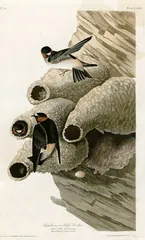
John James Audubon, The Birds of America (1827–38) 1 Cliff Swallowabout 533 per routeon 85% of routesno clear trend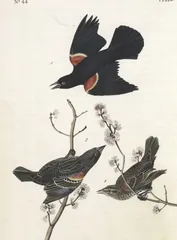
John James Audubon, The Birds of America (1840–44) about 206 per routeon 100% of routesno clear trend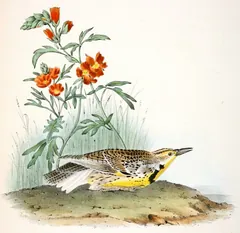
John James Audubon, The Birds of America (1840–44) 3 Western Meadowlarkabout 165 per routeon 94% of routesno clear trend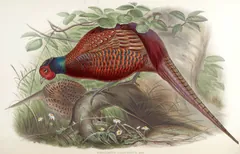
Joseph Wolf and Henry Constantine Richter, in John Gould's The Birds of Asia, part XXI (1869) about 142 per routeon 79% of routesno clear trendintroduced species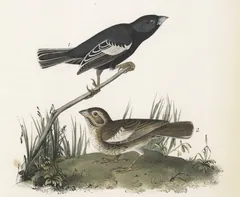
John James Audubon, The Birds of America (1840–44) 5 Lark Buntingabout 75 per routeon 39% of routesno clear trend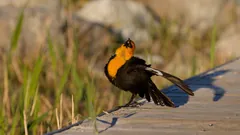
Photo: Daughter Dad, CC BY 4.0 6 Yellow-headed Blackbirdabout 71 per routeon 61% of routesno clear trend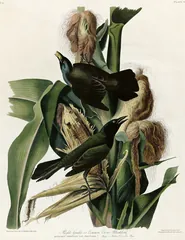
John James Audubon, The Birds of America (1827–38) 7 Common Grackleabout 71 per routeon 97% of routesfalling since 2015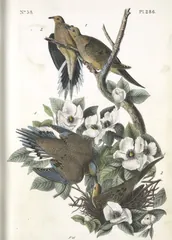
John James Audubon, The Birds of America (1840–44) about 62 per routeon 97% of routesno clear trend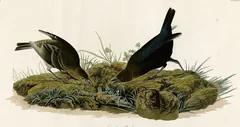
John James Audubon, The Birds of America (1827–38) 9 Brown-headed Cowbirdabout 60 per routeon 97% of routesno clear trend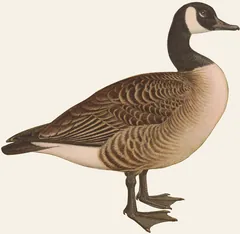
Marinus Adrianus Koekkoek, E. D. van Oort's Ornithologia Neerlandica (1922) 10 Canada Gooseabout 53 per routeon 61% of routesno clear trend
Show all 25
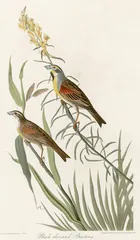
John James Audubon, The Birds of America (1827–38) 11 Dickcisselabout 30 per routeon 82% of routesno clear trend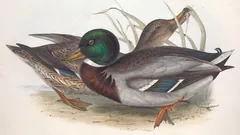
John and Elizabeth Gould, The Birds of Europe (1832–37) 12 Mallardabout 29 per routeon 88% of routesno clear trend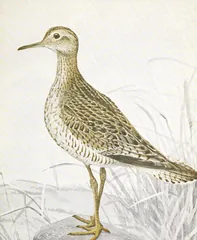
Louis Agassiz Fuertes, Portraits and Habits of Our Birds (1925) 13 Upland Sandpiperabout 28 per routeon 85% of routesno clear trend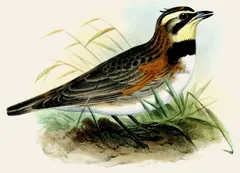
Joseph Wolf, Proceedings of the Zoological Society of London (1855) 14 Horned Larkabout 26 per routeon 79% of routesno clear trend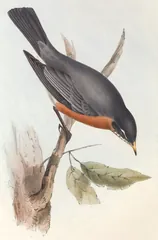
John and Elizabeth Gould, The Birds of Europe (1832–37) about 23 per routeon 100% of routesno clear trend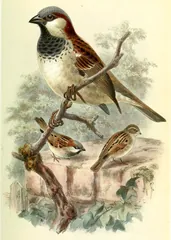
John Gerrard Keulemans, Lord Lilford’s Coloured Figures of the Birds of the British Islands (1885–97) 16 House Sparrowabout 23 per routeon 76% of routesno clear trendintroduced species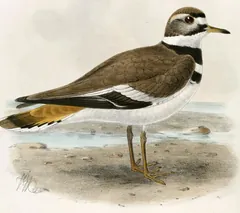
John Gerrard Keulemans, H. E. Dresser's A History of the Birds of Europe, Supplement (1895–96) 17 Killdeerabout 18 per routeon 85% of routesno clear trend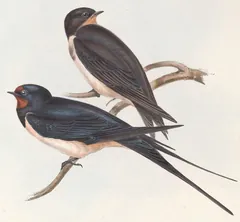
John and Elizabeth Gould, The Birds of Europe (1832–37) 18 Barn Swallowabout 18 per routeon 94% of routesfalling since 2015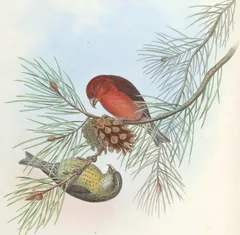
John Gould and Henry Constantine Richter, The Birds of Asia (1850–83) 19 Red Crossbillabout 15 per routeon 21% of routesno clear trend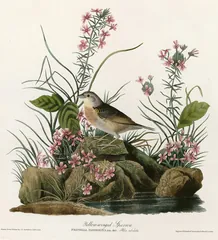
John James Audubon, The Birds of America (1827–38) 20 Grasshopper Sparrowabout 15 per routeon 76% of routesno clear trend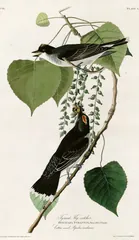
John James Audubon, The Birds of America (1827–38) 21 Eastern Kingbirdabout 11 per routeon 91% of routesno clear trend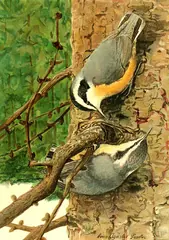
Louis Agassiz Fuertes, Annual Reports of the New York Forest, Fish and Game Commission (1901–12) 22 Red-breasted Nuthatchabout 11 per routeon 21% of routesno clear trend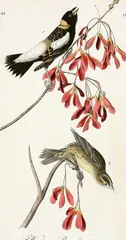
John James Audubon, The Birds of America (1840–44) 23 Bobolinkabout 10 per routeon 79% of routesno clear trend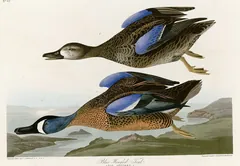
John James Audubon, The Birds of America (1827–38) 24 Blue-winged Tealabout 8.8 per routeon 67% of routesno clear trend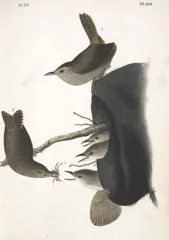
John James Audubon, The Birds of America (1840–44) 25 Northern House Wrenabout 8.2 per routeon 85% of routesrising since 2015
These 25, led by the Cliff Swallow and the Red-winged Blackbird, are a small part of the 440 species on South Dakota’s official list; to name the rest, our comparison of the best bird books of 2026 shows which field guide suits a beginner.
What is the most common bird in South Dakota?
The Cliff Swallow leads South Dakota’s summer survey: about 533 a route on average in 2021–2025, more than twice the Red-winged Blackbird’s 206, seen on 85% of the 33 routes. USGS finds no clear rise or fall in its South Dakota numbers since 2015.
The union's checklist records how many of the last ten years each bird was reported in each part of the state, and 165 species turned up every year in all three, the east, the Missouri River region and the west (our count), from the Ring-necked Pheasant and Western Meadowlark to the American Robin and Red-winged Blackbird.
Source: South Dakota State Distributional Checklist (South Dakota Ornithologists' Union), read October 8, 2026.
How was this list made?
Each of South Dakota’s 33 routes is a roadside count, 50 stops along about 25 miles, run once a year in early summer by a volunteer. We took USGS’s yearly estimate for each species in South Dakota, the number of birds a typical route records, averaged it over the five latest survey years (there was no survey in 2020) and ranked the birds by it. To keep the list to birds you’re likely to meet across South Dakota, we left out species recorded on fewer than one in five of its routes, and those USGS can only estimate very roughly, which usually means big flocks or colonies on a few routes.
For South Dakota that left out the Franklin's Gull and the American White Pelican.
The share of routes is our own count from USGS’s route data for South Dakota, using only counts that met the survey’s standards; “rising” and “falling” are USGS’s trends for the state since 2015, named only where it finds a clear change. Roadside counts on early-summer mornings miss most of South Dakota’s owls and waterbirds, and its winter visitors aren’t here at all.
South Dakota’s counts come from two USGS data releases, the North American Breeding Bird Survey Analysis Results 1966–2025 (Hostetler et al., 2026) and its Dataset 1966–2025 (Ziolkowski et al., 2026), gathered by volunteer observers and free for anyone to use; Birdfolio isn’t connected with the USGS.
How many bird species are in South Dakota?
| Official count | 440 species |
|---|---|
| List’s date | Not given on the South Dakota list (we read it on October 2, 2026) |
| Kept by | South Dakota Ornithologists' Union |
| Regular | 327 species, reported in 8 to 10 of the last 10 years |
| Rare visitors | 34 casual, 75 accidental |
| Hypothetical | 4 species, counted in the 440 |
| Status period | December 2014 to November 2024 |
| Among US states | Tied for 35th highest of the 49 states with a verified count, alongside Mississippi |
| Official list | South Dakota State Distributional Checklist |
What does South Dakota’s count include?
- Every species the South Dakota Ornithologists' Union counts for the state, each with a status from the ten years of reports between December 1, 2014, and November 30, 2024: regular if seen in 8 to 10 of those years, casual in 4 to 6, accidental in 2 or fewer.
- 4 hypothetical species, counted in the 440: the Purple Sandpiper, Magnificent Frigatebird, Black Vulture and Northern Wheatear. The label covers a first state record seen by only one observer without other evidence, a bird that might have escaped from captivity, and a failed introduction.
- A breeding status for 253 species, regular for 127 of them (our count).
- For every bird, how many of the ten years it was reported in the east, the Missouri River region and the west, and its earlier status where that has changed.
Why do other sources give a different number?
South Dakota's checklist is redone from the latest ten years of reports, and its total creeps up:
- 439. The checklist as the Internet Archive saved it in January 2025. Source: South Dakota State Distributional Checklist, the Internet Archive's copy of January 17, 2025.
- 438. The checklist as saved in February 2023. Source: South Dakota State Distributional Checklist, the Internet Archive's copy of February 8, 2023.
South Dakota’s list follows its own committee’s rules, and so does every other state’s: see why the counts differ from state to state.
South Dakota records, from a thrush in Spearfish Canyon to ravens back in the Black Hills
- In the summer of 2010 an Orange-billed Nightingale-Thrush turned up in Spearfish Canyon, photographed in Lawrence County on July 20. The union's journal noted it would be only the third record for the United States and the only one north of Texas; the species is on today's checklist as accidental. Sources: South Dakota Bird Notes 62:3, September 2010 (South Dakota Ornithologists' Union); South Dakota State Distributional Checklist (South Dakota Ornithologists' Union), read October 8, 2026.
- A King Eider, an ocean-going duck, was shot by a hunter in north-central South Dakota. If the committee accepted it, the journal noted in 2024, it would be the state's first, and the King Eider is on today's checklist. Sources: South Dakota Bird Notes 76:3, Fall 2024, with Significant Summer 2024 Breeding Records in South Dakota (South Dakota Ornithologists' Union); South Dakota Bird Notes 76:4, Winter 2024, with the 2024 Report of the Rare Bird Records Committee (South Dakota Ornithologists' Union); South Dakota State Distributional Checklist (South Dakota Ornithologists' Union), read October 8, 2026.
- In 2024 alone the committee accepted five Eurasian Tree Sparrows, from Roscoe in January to Rapid City in May, as the state's 6th to 10th records. Source: South Dakota Bird Notes 76:4, Winter 2024, with the 2024 Report of the Rare Bird Records Committee (South Dakota Ornithologists' Union), read October 8, 2026.
- On August 9, 2024, a pair of Sandhill Cranes with a dependent colt was photographed near Chambers Corner in Tripp County, a nesting the committee rated accidental for the state. Source: South Dakota Bird Notes 76:4, Winter 2024, with the 2024 Report of the Rare Bird Records Committee (South Dakota Ornithologists' Union), read October 8, 2026.
Questions people ask about South Dakota’s birds
Which US state has the most bird species?
California, with 696 species on its checklist of September 8, 2026, followed by Texas with 682 (our table). South Dakota's checklist counts 440, its 4 hypothetical species included.
Sources: Official California Checklist, updated 8 September 2026 (California Bird Records Committee); South Dakota State Distributional Checklist (South Dakota Ornithologists' Union), read October 8, 2026.
What bird species can be found in South Dakota?
All 440 on the South Dakota Ornithologists' Union's checklist have been recorded here, but 327 of them are regular, reported in at least 8 of the last 10 years; the rest are rarer visitors, plus 4 hypothetical species. Fewer nest: the state's first breeding bird atlas, from 1988 to 1992, documented 219 species, and a second atlas surveyed them again from 2008 to 2012.
Sources: South Dakota State Distributional Checklist (South Dakota Ornithologists' Union); Breeding Bird Atlas II (South Dakota Department of Game, Fish and Parks), read October 8, 2026.
What is the rarest bird in South Dakota?
The four hypothetical species are the least certain of all; the label covers lone sightings without other evidence, birds that may have escaped, and failed introductions. Among confirmed birds, 75 are accidental, reported in two or fewer of the last ten years, such as the Ivory Gull, Ross's Gull and King Eider. One is the Orange-billed Nightingale-Thrush of 2010, which the union's journal said would be only the third record for the United States.
Sources: South Dakota State Distributional Checklist (South Dakota Ornithologists' Union); South Dakota Bird Notes 62:3, September 2010 (South Dakota Ornithologists' Union), read October 8, 2026.
What is the official bird of South Dakota?
The Ring-necked Pheasant, a bird that isn't native to the state. Since the first successful releases in 1908 it has made itself at home in South Dakota's mix of grassland and farmland, the Department of Game, Fish and Parks says, and the department estimated more than 7.1 million pheasants in 2018. The union's checklist has it nesting regularly and reported in every part of the state in each of the last ten years.
Sources: Ring-necked Pheasant Action Plan, 2024-2028, draft (South Dakota Department of Game, Fish and Parks); South Dakota State Distributional Checklist (South Dakota Ornithologists' Union), read October 8, 2026.
What bird is blue but not a bluebird?
In South Dakota, most likely a Blue Jay or a Blue Grosbeak: both nest here regularly, and the union's checklist has each reported in the east, along the Missouri River and in the west in every one of the last ten years. Two buntings add more blue: the Indigo Bunting, reported every year in the east, and the Lazuli Bunting, every year in the west, both of them along the Missouri River each year too.
Source: South Dakota State Distributional Checklist (South Dakota Ornithologists' Union), read October 8, 2026.
Are there 10,000 species of birds?
Comfortably: AviList, the global checklist first released on June 11, 2025, holds 11,131 species (our sum of its 46 orders). South Dakota's 440 make up about 4 percent.
Sources: AviList: The Global Avian Checklist, v2025, first released June 11, 2025 (AviList Core Team, CC BY 4.0); South Dakota State Distributional Checklist (South Dakota Ornithologists' Union), read October 8, 2026.
Which birds live in South Dakota?
It depends on where you stand. The birds change from the tallgrass prairie and farmland of the east to the shortgrass prairie and buttes of the west, the South Dakota Ornithologists' Union says; the Black Hills give a taste of western mountain birding, and the big Missouri River reservoirs feel almost like the open sea. The checklist bears it out: the American Dipper, Black-backed Woodpecker, Lewis's Woodpecker and Greater Sage-Grouse are reported only in the west.
Badlands National Park sits at a crossroads of eastern and western birds, with 206 species documented and 67 known to nest, and birds of prey such as the Golden Eagle, Northern Harrier and Short-eared Owl live there, the National Park Service says. The prairie grouse are regular across the state: the Sharp-tailed Grouse and Greater Prairie-Chicken are reported in all three regions in most years.
Sources: Finding Birds in South Dakota (South Dakota Ornithologists' Union); South Dakota State Distributional Checklist (South Dakota Ornithologists' Union); Birds, Badlands National Park (National Park Service), read October 8, 2026.
How did Common Ravens come back to South Dakota?
On their own, after more than a century away. Ravens were probably common in South Dakota before European settlement, at least in the Black Hills and along the Missouri River, and members of the Custer Expedition noted their nests on lofty buttes. By 1900 they were gone from the western Dakotas, most likely shot, poisoned and deprived of the bison they fed on, the union's journal says.
In the spring of 2024 birders began seeing ravens along the Hell Canyon trail in Custer County, and on June 14 a visiting birder found the nest, a large pile of sticks on a cliff ledge. It was the first raven nest on record in the state since the early 1900s, the records committee confirmed, and ravens were still there in September.
Sources: South Dakota Bird Notes 76:3, Fall 2024, with Significant Summer 2024 Breeding Records in South Dakota (South Dakota Ornithologists' Union); South Dakota Bird Notes 76:4, Winter 2024, with the 2024 Report of the Rare Bird Records Committee (South Dakota Ornithologists' Union), read October 8, 2026.
Where is the official South Dakota bird list, and how often is it updated?
On the South Dakota Ornithologists' Union's website, sdou.org, under Birds of South Dakota: the State Distributional Checklist as a web page, headed with its total but no date, showing each species' status, any change from the last version, breeding status and how many of the last ten years it was reported in each part of the state, with a seasonal version and printable checklists beside it. Today's statuses rest on reports from December 1, 2014, to November 30, 2024; a bird seen in 3 or 7 of those years keeps its old status.
The union's Rare Bird Records Committee, seven members in 2024, wants a report for every casual, accidental or hypothetical species and for any bird new to the state. It met twice in 2024, in Custer in June and in Spearfish in September, and publishes its decisions each year in the union's journal, South Dakota Bird Notes, whose issues from 1949 to 2024 are on the website. The union itself was founded in 1949.
Sources: South Dakota State Distributional Checklist (South Dakota Ornithologists' Union); South Dakota Rare Bird Records (South Dakota Ornithologists' Union); South Dakota Bird Notes 76:4, Winter 2024, with the 2024 Report of the Rare Bird Records Committee (South Dakota Ornithologists' Union); South Dakota Bird Notes, the journal's archive (South Dakota Ornithologists' Union); About SDOU (South Dakota Ornithologists' Union), read October 8, 2026.
How do you count your own South Dakota list?
Your South Dakota list is every species you’ve seen in South Dakota. eBird can filter your life list to South Dakota, and your eBird data download gives the state of every sighting. On paper, count the species you’ve seen in South Dakota; what is a life list? explains how birders keep their lists.
To print your whole list, South Dakota birds and all, see how to print your bird life list, or let Birdfolio make it a hardcover book.
South Dakota’s state bird
South Dakota’s state bird is the Ring-necked Pheasant (officially, the “ring-neck pheasant”), the state bird since 1943. Its story, the state flower and animal, and a free picture card for a report are on our South Dakota state bird page.
Christmas Bird Count in South Dakota
South Dakota had 21 Christmas Bird Count circles on Audubon’s map last winter, each counted on a single day between December 14 and January 5. Our guide shows where to find South Dakota’s counts and lists 2 South Dakota count dates already announced for this winter; it’s free, and beginners are welcome.
More about bird counts
- How many bird species are in each state: South Dakota beside all 50 states, DC and Canada.
- Bird lists of nearby states: Iowa, Minnesota, Montana, Nebraska and North Dakota.
- State birds of all 50 states, South Dakota’s Ring-necked Pheasant among them
- How many bird species are in the US and Canada
- Bird splits and lumps
If you’re shopping for a birder in South Dakota, our gift guide for birders and our pick of coffee table bird books are good places to start.