Reference
How many bird species are in North Dakota?
North Dakota has 417 bird species on its official list (North Dakota Birding Society, no date on the list), the 44th highest count of the 48 states with a verified count. It flags 115 rare species for review and 59 more only in some cases (our count), such as a Least Tern away from the Missouri River.
North Dakota’s state bird is the Western Meadowlark: our North Dakota state bird page tells how it was chosen.
Updated
What are the most common birds in North Dakota?
In summer, the 25 most common birds in North Dakota are led by the Canada Goose, at about 790 birds per survey route, then the Cliff Swallow and the Red-winged Blackbird, by the USGS Breeding Bird Survey’s counts for 2021–2025. Together these 25 made up 74% of all the birds counted on North Dakota’s 36 survey routes. USGS rates most of these North Dakota estimates as less precise, so read the order as a rough guide.
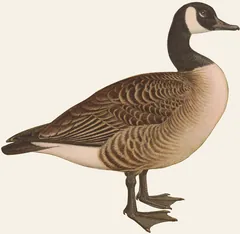
Marinus Adrianus Koekkoek, E. D. van Oort's Ornithologia Neerlandica (1922) about 790 per routeon 89% of routesno clear trend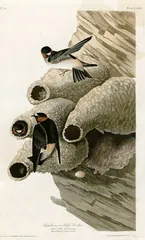
John James Audubon, The Birds of America (1827–38) 2 Cliff Swallowabout 639 per routeon 97% of routesno clear trend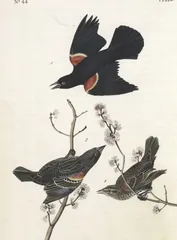
John James Audubon, The Birds of America (1840–44) about 359 per routeon 100% of routesno clear trend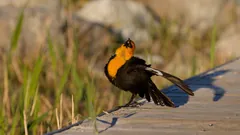
Photo: Daughter Dad, CC BY 4.0 4 Yellow-headed Blackbirdabout 279 per routeon 100% of routesfalling since 2015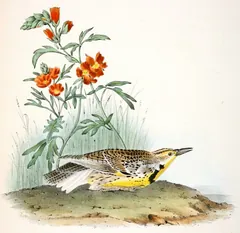
John James Audubon, The Birds of America (1840–44) about 145 per routeon 100% of routesrising since 2015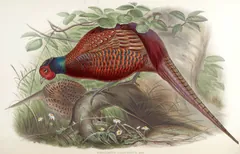
Joseph Wolf and Henry Constantine Richter, in John Gould's The Birds of Asia, part XXI (1869) 6 Ring-necked Pheasantabout 123 per routeon 100% of routesrising since 2015introduced species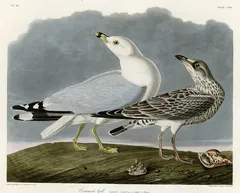
John James Audubon, The Birds of America (1827–38) 7 Ring-billed Gullabout 123 per routeon 69% of routesno clear trend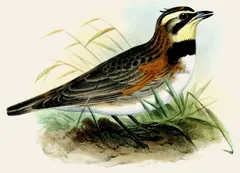
Joseph Wolf, Proceedings of the Zoological Society of London (1855) 8 Horned Larkabout 122 per routeon 100% of routesno clear trend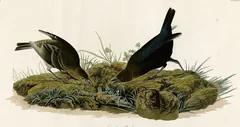
John James Audubon, The Birds of America (1827–38) 9 Brown-headed Cowbirdabout 88 per routeon 100% of routesno clear trend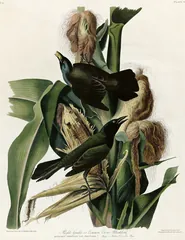
John James Audubon, The Birds of America (1827–38) 10 Common Grackleabout 86 per routeon 100% of routesno clear trend
Show all 25
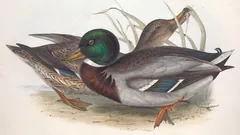
John and Elizabeth Gould, The Birds of Europe (1832–37) 11 Mallardabout 78 per routeon 100% of routesfalling since 2015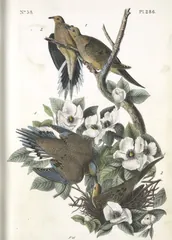
John James Audubon, The Birds of America (1840–44) about 73 per routeon 100% of routesrising since 2015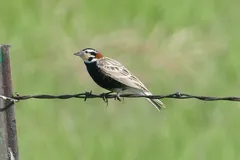
Photo: InAweofGod'sCreation, CC BY 4.0 13 Chestnut-collared Longspurabout 56 per routeon 61% of routesno clear trend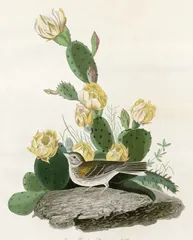
John James Audubon, The Birds of America (1827–38) 14 Vesper Sparrowabout 54 per routeon 100% of routesrising since 2015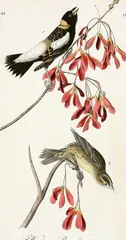
John James Audubon, The Birds of America (1840–44) 15 Bobolinkabout 44 per routeon 100% of routesfalling since 2015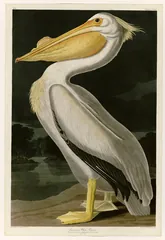
John James Audubon, The Birds of America (1827–38) about 43 per routeon 61% of routesno clear trend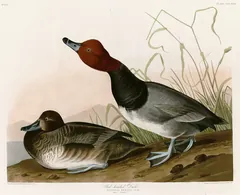
John James Audubon, The Birds of America (1827–38) 17 Redheadabout 30 per routeon 67% of routesno clear trend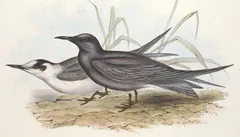
John and Elizabeth Gould, The Birds of Europe (1832–37) 18 Black Ternabout 26 per routeon 67% of routesno clear trend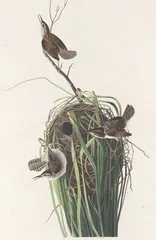
John James Audubon, The Birds of America (1827–38) 19 Marsh Wrenabout 26 per routeon 78% of routesno clear trend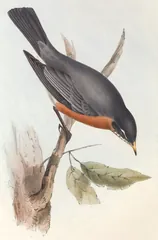
John and Elizabeth Gould, The Birds of Europe (1832–37) about 26 per routeon 100% of routesno clear trend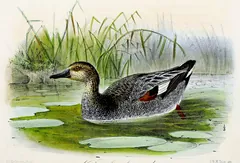
John Gerrard Keulemans, Onze Vogels in Huis en Tuin (1869–76) 21 Gadwallabout 25 per routeon 97% of routesno clear trend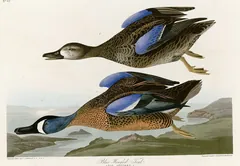
John James Audubon, The Birds of America (1827–38) 22 Blue-winged Tealabout 24 per routeon 97% of routesfalling since 2015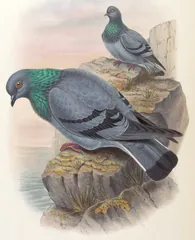
John Gould, The Birds of Asia (1850–83) 23 Rock Pigeonabout 23 per routeon 97% of routesno clear trendintroduced species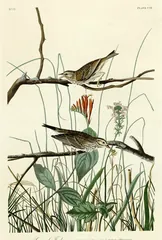
John James Audubon, The Birds of America (1827–38) 24 Savannah Sparrowabout 23 per routeon 100% of routesfalling since 2015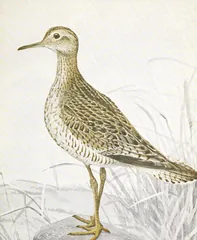
Louis Agassiz Fuertes, Portraits and Habits of Our Birds (1925) 25 Upland Sandpiperabout 22 per routeon 97% of routesno clear trend
A field guide to North America covers the Cliff Swallow, the Red-winged Blackbird and most of the 417 species on North Dakota’s list; we compared the best bird guide books to find the one that suits a beginner.
What is the most common bird in North Dakota?
The Canada Goose leads North Dakota’s summer survey: about 790 a route on average in 2021–2025, ahead of the Cliff Swallow at about 639, seen on 89% of the 36 routes. USGS finds no clear rise or fall in its North Dakota numbers since 2015.
Some thirty years ago, the Horned Lark: in statewide surveys of 1967 and 1992-93, USGS scientists found it the most widespread nesting bird, ahead of the Brown-headed Cowbird, Western Meadowlark, Red-winged Blackbird and Eastern Kingbird. The five most abundant birds, the Horned Lark and Chestnut-collared Longspur among them, made up 31 to 41 percent of the state's estimated breeding birds.
Source: Changes in breeding bird populations in North Dakota: 1967 to 1992-93 (Igl and Johnson, The Auk, 1997; U.S. Geological Survey), read October 22, 2026.
How was this list made?
Each of North Dakota’s 36 routes is a roadside count, 50 stops along about 25 miles, run once a year in early summer by a volunteer. We took USGS’s yearly estimate for each species in North Dakota, the number of birds a typical route records, averaged it over the five latest survey years (there was no survey in 2020) and ranked the birds by it. To keep the list to birds you’re likely to meet across North Dakota, we left out species recorded on fewer than one in five of its routes, and those USGS can only estimate very roughly, which usually means big flocks or colonies on a few routes.
For North Dakota that left out the Franklin's Gull and the White-faced Ibis.
The share of routes is our own count from USGS’s route data for North Dakota, using only counts that met the survey’s standards; “rising” and “falling” are USGS’s trends for the state since 2015, named only where it finds a clear change. Roadside counts on early-summer mornings miss most of North Dakota’s owls and waterbirds, and its winter visitors aren’t here at all.
North Dakota’s counts come from two USGS data releases, the North American Breeding Bird Survey Analysis Results 1966–2025 (Hostetler et al., 2026) and its Dataset 1966–2025 (Ziolkowski et al., 2026), gathered by volunteer observers and free for anyone to use; Birdfolio isn’t connected with the USGS.
How many bird species are in North Dakota?
| Official count | 417 species |
|---|---|
| List’s date | Not given on the North Dakota list (we read it on October 22, 2026) |
| Kept by | North Dakota Birding Society |
| Review list | 115 rare species, each sighting needing a report (our count) |
| Marked as nesting | 222 species (our count) |
| Extinct | 2, the Passenger Pigeon and Eskimo Curlew, counted in the 417 |
| Total since | 417 in every Internet Archive copy from July 2024 on |
| Among US states | 44th highest of the 49 US lists (50 states and DC) with a verified count |
| Official list | North Dakota Official Checklist (Internet Archive copy of 13 July 2026) |
What does North Dakota’s count include?
- Every species the North Dakota Birding Society's records committee accepts for the state, 417 in all, each with its scientific name and a four-letter code.
- A review tick on 115 rare species (our count): anyone who sees one is asked for a written report, which the committee checks before the sighting counts.
- Notes on 59 more species saying which of their sightings still need a report (our count), most often a nest: a nesting Trumpeter Swan, a Common Loon nesting outside the Turtle Mountains, a Rock Wren nesting east of US Highway 83.
- A nesting mark on 222 species (our count), the Piping Plover, Sprague's Pipit and Baird's Sparrow among them.
- Two extinct birds, counted in the total: the Passenger Pigeon, and the Eskimo Curlew, which the list still names as a review species.
Why do other sources give a different number?
North Dakota's total has grown as the committee accepts new species, and older lists counted fewer:
- 413. The checklist as the Internet Archive saved it in December 2022. The Neotropic Cormorant took it to 414 by September 2023, and three more species to 417 by July 2024. Source: North Dakota Official Checklist (North Dakota Birding Society), the Internet Archive's copy of December 9, 2022.
- 376. The Game and Fish Department's printable checklist of April 2016, which counted the species possible to see in the state and listed hypothetical and extinct birds apart. It gave 231 breeding birds, 15 of them only inferred nesters. Source: North Dakota bird checklist, April 2016 (North Dakota Game and Fish Department).
- 365. The Revised Checklist of North Dakota Birds of 1982, by two Northern Prairie Wildlife Research Center scientists: 353 valid species and 12 hypothetical ones, with at least 223 counted as breeding birds. Source: Revised Checklist of North Dakota Birds (Faanes and Stewart, The Prairie Naturalist 14:3, 1982; Northern Prairie Wildlife Research Center), on the University of Nebraska-Lincoln's DigitalCommons.
North Dakota’s list follows its own committee’s rules, and so does every other state’s: see why the counts differ from state to state.
North Dakota records, from six new species in 2004-2005 to a Ruff north of Steele
- In 2004 and 2005 alone the committee settled 189 rare bird records and added six species to the state list: the Mottled Duck, Yellow-billed Loon, White-tailed Kite, Little Stint, Glaucous-winged Gull and Great Black-backed Gull. Four birds joined the nesting list, among them the Tricolored Heron and Violet-green Swallow. Source: Third Report of the North Dakota Bird Records Committee: 2004-2005 (The Prairie Naturalist 41, 2009), on the University of Nebraska-Lincoln's DigitalCommons, read October 22, 2026.
- The Neotropic Cormorant joined the list between the archive's copies of December 2022 and September 2023, and the Gray Flycatcher, Western Flycatcher and Painted Redstart by July 2024, all four as review species. Sources: North Dakota Official Checklist (North Dakota Birding Society), the Internet Archive's copy of December 9, 2022; North Dakota Official Checklist (North Dakota Birding Society), the Internet Archive's copy of September 23, 2023; North Dakota Official Checklist (North Dakota Birding Society), the Internet Archive's copy of July 14, 2024, read October 21, 2026.
- In December 2024 photos of a Great Gray Owl from Pembina County reached North Dakota Outdoors. A Game and Fish biologist called it the rarest owl you can see in the state, with maybe one sighting reported a year. Source: Back Cast, North Dakota Outdoors, January 2025 (North Dakota Game and Fish Department), read October 22, 2026.
- On May 6 a Game and Fish biologist, driving a test run of a waterfowl survey, spotted a male Ruff, a shorebird that nests across northern Eurasia, in a wetland along Highway 3 north of Steele. Birders came from Williston and Jamestown to look, the June 2026 issue of North Dakota Outdoors reported. Source: Back Cast, North Dakota Outdoors, June 2026 (North Dakota Game and Fish Department), read October 22, 2026.
Questions people ask about North Dakota’s birds
Which US state has the most bird species?
California, with 696 species on its official checklist as of October 20, 2026, ahead of Texas at 678. North Dakota's 417, its two extinct birds included, rank 44th of the 48 states with a verified count in our table, ahead of only Kentucky, Vermont, West Virginia and Hawaii.
Sources: Official California Checklist, updated October 20, 2026 (California Bird Records Committee, Western Field Ornithologists); Texas State List, last updated June 7, 2026 (Texas Bird Records Committee, Texas Ornithological Society); North Dakota Official Checklist (North Dakota Birding Society), the Internet Archive's copy of July 13, 2026, read October 22, 2026.
What is the rarest bird in North Dakota?
The Great Gray Owl is the rarest owl you can see here, a Game and Fish biologist says, with maybe one sighting reported a year. It is one of 115 review species on the official checklist (our count). As a rule, a review species has turned up fewer than 15 times in the state, or four times a year or less over ten years, and the extinct Eskimo Curlew is still among them.
Sources: Back Cast, North Dakota Outdoors, January 2025 (North Dakota Game and Fish Department); North Dakota Official Checklist (North Dakota Birding Society), the Internet Archive's copy of July 13, 2026; Bylaws of the North Dakota Bird Records Committee, last revised May 21, 2010 (North Dakota Birding Society), the Internet Archive's copy of May 15, 2026, read October 22, 2026.
What is the state bird of North Dakota?
The Western Meadowlark, a songbird with a bright yellow belly and a black V that likes to sing from fence posts. Game and Fish's fact sheet calls it still fairly common in the western two-thirds of the state but much scarcer in the eastern third than it once was, and declining. The Eastern Meadowlark, by contrast, is a review species on the official checklist, so every sighting of one needs a report.
How the Western Meadowlark became North Dakota's bird, with the elm, in 1947
Sources: Western Meadowlark, fact sheet (North Dakota Game and Fish Department), the Internet Archive's copy of September 19, 2025; North Dakota Official Checklist (North Dakota Birding Society), the Internet Archive's copy of July 13, 2026, read October 22, 2026.
What hawks and owls live in North Dakota?
The official checklist holds 22 daytime birds of prey, from the Turkey Vulture and Osprey to eagles, hawks and falcons, and 12 owls (our count). The Ferruginous Hawk is one of the society's North Dakota specialties, and nine are rare enough to be review species, the Gyrfalcon, Crested Caracara and Great Gray Owl among them. In Theodore Roosevelt National Park, golden eagles and great horned owls stay all year, the National Park Service says.
Sources: North Dakota Official Checklist (North Dakota Birding Society), the Internet Archive's copy of July 13, 2026; Finding ND Specialties (North Dakota Birding Society), the Internet Archive's copy of June 14, 2026; Birds, Theodore Roosevelt National Park (National Park Service), read October 22, 2026.
Are there hummingbirds in North Dakota?
Yes, but mostly one kind: the Ruby-throated Hummingbird is the only one the official checklist marks as nesting, and the only one not on its review list. The other five, the Black-chinned, Anna's, Calliope, Rufous and Broad-tailed Hummingbirds, are review species, so each sighting needs a report to the records committee.
Source: North Dakota Official Checklist (North Dakota Birding Society), the Internet Archive's copy of July 13, 2026, read October 22, 2026.
Which birds live in North Dakota?
Grassland birds above all. Most visiting birders come for them, the North Dakota Birding Society says, and its specialties run from the Sharp-tailed Grouse, Yellow Rail and Ferruginous Hawk to Sprague's Pipit, the Chestnut-collared Longspur and Baird's Sparrow. Their prairie changes from year to year, so a pasture with Baird's Sparrows one year may not suit them the next. Lostwood National Wildlife Refuge, a Globally Important Bird Area, keeps prairie for the pipit and the sparrow, and for bigger birds such as the Marbled Godwit, Upland Sandpiper and Willet.
Water is the other half. North Dakota lies in the Prairie Pothole Region, where glaciers left hollows about 10,000 years ago that now fill with water, and the region raises more than half of North America's ducks. The state has 63 national wildlife refuges, more than any other, the Fish and Wildlife Service says. One of them, J. Clark Salyer, lies in the bed of an ancient glacial lake, and over 250 bird species are found there. The Missouri River below Garrison Dam has a list of more than 170, 14 kinds of gulls among them, and Theodore Roosevelt National Park in western North Dakota more than 185, with golden eagles and wild turkeys there all year.
Sources: Finding ND Specialties (North Dakota Birding Society), the Internet Archive's copy of June 14, 2026; Birding, Lostwood National Wildlife Refuge (U.S. Fish and Wildlife Service), the Internet Archive's copy of July 20, 2026; North Dakota Wildlife Refuges and Wetland Resources, a lesson plan (U.S. Fish and Wildlife Service), the Internet Archive's copy of May 16, 2026; J. Clark Salyer National Wildlife Refuge (U.S. Fish and Wildlife Service), the Internet Archive's copy of October 17, 2026; Birding in North Dakota (Audubon magazine, National Audubon Society, April 28, 2016); Birds, Theodore Roosevelt National Park (National Park Service), read October 22, 2026.
Why did 30,000 pelicans leave Chase Lake in 2004?
No one could say for sure. Chase Lake National Wildlife Refuge, set up by Theodore Roosevelt in 1908, held the largest American White Pelican colony in North America: 35,466 birds at its peak in 2000, up from as few as 50 in the early 1900s. In late May and early June 2004 about 30,000 pelicans disappeared. Within eight days two of the three nesting sites were deserted, with thousands of eggs left behind, and by late June the island site was empty too; none of the chicks survived, the Fish and Wildlife Service reported at the time.
Investigators weighed coyotes, people, disease, weather and food. Coyotes had destroyed eggs on the mainland, and a cold, wet, windy storm struck from May 29 to June 1, but there was no sign of disease, and West Nile virus usually arrives about six weeks later in the season, Game and Fish's study found. Its verdict: the definitive causes may never be determined. A Service spokesman suggested it might simply have been “a quirk of nature.”
Sources: Pelican Deaths, Dispersal at Chase Lake National Wildlife Refuge (U.S. Fish and Wildlife Service, July 2005), the Internet Archive's copy of July 19, 2026; U.S. Fish and Wildlife Service, Partners Prepare for Return of White Pelicans to Chase Lake National Wildlife Refuge (March 2005), the Internet Archive's copy of July 20, 2026; Exploration of Factors That May Lead to Colony Abandonment or Reduced Productivity of American White Pelicans in the Northern Plains, final report, September 2007 (North Dakota Game and Fish Department), read October 22, 2026.
How did the Bakken oil boom change life for prairie birds?
It shrank their usable prairie far beyond the drill sites. From 2012 to 2014, USGS and Fish and Wildlife Service scientists studied grassland in northern North Dakota where wells had been drilled sideways and fracked. The birds kept about 150 meters, or 492 feet, from gravel roads and 267 meters from pads with a single well. Sprague's Pipit kept 350 meters away, and Baird's Sparrows, Chestnut-collared Longspurs and Grasshopper Sparrows were scarcer as far out as 550 meters, the farthest the survey reached. Clay-colored Sparrows and Brown-headed Cowbirds didn't seem to mind.
So each well's footprint is “greatly multiplied” for the sensitive species, the study concludes, and it suggests fewer new roads and many wells sharing one pad. Game and Fish's fact sheet on the Western Meadowlark repeats the lesson: grassland birds avoid habitat within 150 meters of roads and 350 meters of oilfield equipment.
Sources: Avoidance of unconventional oil wells and roads exacerbates habitat loss for grassland birds in the North American great plains (U.S. Geological Survey, 2015); Birds in the Bakken: Oil Development Can Affect Critical Habitat (U.S. Geological Survey); Western Meadowlark, fact sheet (North Dakota Game and Fish Department), the Internet Archive's copy of September 19, 2025, read October 22, 2026.
Where is the official North Dakota bird list, and how often is it updated?
On the North Dakota Birding Society's website, ndbirdingsociety.org, under North Dakota Birds: the official checklist, a web page that gives its total at the top but no date, with columns for nesting, the review list and review specifics, a filter by bird family and a printable field checklist. The site didn't answer on October 21 or 22, 2026, so the link here is the Internet Archive's copy of July 13, 2026. The committee's bylaws have each round of decisions bring the state list up to date, and the archive's copies show it at 417 since July 2024.
The society's Bird Records Committee keeps the list: five voting members, a chair, a secretary and three more, with two alternates standing by, under bylaws last revised on May 21, 2010. Rare sightings are peer-reviewed before publication. A record is accepted with four or more votes in favor, members may not abstain, and the review list itself is checked at least every five years. The committee began in 1979 under the North Dakota Natural Science Society, and its reports go to The Prairie Naturalist, where the third, covering 2004-2005, appeared in 2009.
Sources: North Dakota Official Checklist (North Dakota Birding Society), the Internet Archive's copy of July 13, 2026; North Dakota Official Checklist (North Dakota Birding Society), the Internet Archive's copy of July 14, 2024; North Dakota Records Committee (North Dakota Birding Society), the Internet Archive's copy of June 14, 2026; Rare Bird Review List (North Dakota Birding Society), the Internet Archive's copy of May 15, 2026; Bylaws of the North Dakota Bird Records Committee, last revised May 21, 2010 (North Dakota Birding Society), the Internet Archive's copy of May 15, 2026; First Report of the North Dakota Rare Bird Committee (The Prairie Naturalist 35:4, December 2003), on the University of Nebraska-Lincoln's DigitalCommons; Third Report of the North Dakota Bird Records Committee: 2004-2005 (The Prairie Naturalist 41, 2009), on the University of Nebraska-Lincoln's DigitalCommons, read October 22, 2026.
How do you count your own North Dakota list?
Your North Dakota list is every species you’ve seen in North Dakota. If you log your sightings in eBird, it lets you filter your life list by place, North Dakota included (eBird’s My eBird help page, updated March 28, 2025), and the data download you can ask for gives the state of every sighting: our guide shows how to download your own eBird data. On paper, count the species you’ve seen in North Dakota; what is a life list? explains how birders keep their lists.
If you’d like your whole life list in print, North Dakota birds and all, our guide shows how to print your bird life list, free ways included, and Birdfolio turns it into a hardcover book, each species beside a classic painting.
North Dakota’s state bird
North Dakota’s state bird is the Western Meadowlark (officially, the “meadowlark”), the state bird since 1947. Its story, the state flower and animal, and a free picture card for a report are on our North Dakota state bird page.
Birding festivals in North Dakota
Our birding festivals calendar lists one festival in North Dakota, with dates from its own website:
- Fargo Birding Festival, Fargo: dates not announced yet; expected in May 2027 (2026 festival: May 9, 2026)
Christmas Bird Count in North Dakota
North Dakota had 21 Christmas Bird Count circles on Audubon’s map last winter, each counted on a single day between December 14 and January 5. Our guide shows where to find North Dakota’s counts and how to join one; it’s free, and beginners are welcome.
More about bird counts
- How many bird species are in each state: North Dakota beside all 50 states, DC and Canada.
- Bird lists of nearby states: Minnesota, Montana and South Dakota.
- State birds of all 50 states, North Dakota’s Western Meadowlark among them
- How many bird species are in the US and Canada
- Bird splits and lumps
If you’re shopping for a birder in North Dakota, our gift guide for birders and our pick of coffee table bird books are good places to start.