Texas has at least 13 birds bigger than a goldfinch with yellow breasts, and the most widespread is the Western Kingbird, which nests in every part of the state but the Pineywoods. South Texas adds the Great Kiskadee, and grassland the meadowlarks. For small yellow birds, mostly warblers and goldfinches, see the small yellow birds of Texas.
What birds in Texas have yellow breasts?
Mostly kingbirds and other big flycatchers, the Great Kiskadee, the meadowlarks and the Dickcissel; also the Yellow-breasted Chat, the Green Jay and the Yellow-headed Blackbird. Where and when are from the Texas Breeding Bird Atlas of Texas A&M AgriLife Research, the yellow from National Audubon's guide. Texas Parks and Wildlife's website gave us no response on October 22, 2026, so its pages aren't used here. These birds are a small slice of Texas's 678 species.
| Bird | The yellow | Where in Texas | When |
|---|---|---|---|
| Western Kingbird | Belly, under a gray head and chest | Everywhere but the Pineywoods | Mid-April to mid-August |
| Couch's Kingbird | Belly, reaching higher up the chest | South Texas, mostly the lower Rio Grande Valley | All year; commonest in summer |
| Tropical Kingbird | Belly; nearly identical to Couch's | Brownsville, Hidalgo County, Big Bend | All year |
| Cassin's Kingbird | Belly, under a darker gray chest and white chin | Davis and Guadalupe mountains | Early April to early October |
| Great Kiskadee | Belly, under a black-and-white striped head | Lower Rio Grande Valley north to the Nueces River | All year |
| Great Crested Flycatcher | Belly, under a gray throat and chest | East Texas woods | Late March to September |
| Eastern Meadowlark | Breast, with a black V | Grassland and pasture across Texas outside the Trans-Pecos | All year |
| Chihuahuan Meadowlark | Breast, with a black V | Trans-Pecos and southern High Plains | All year |
| Western Meadowlark | Breast, with a black V | Nests in the Panhandle and far west; winters across the western two-thirds | All year; most in winter |
| Dickcissel | Male's chest, under a black bib; a wash on the female | Fields east of the 100th meridian, northern Panhandle | Mid-March to November |
| Yellow-breasted Chat | Throat and breast, bright yellow | Eastern two-thirds, most in East Texas | Early April to mid-October |
| Green Jay | Underparts and outer tail, under a green back | Far South Texas | All year |
| Yellow-headed Blackbird | Male's head and breast | Migrant in the western half; a few nest in the Panhandle | March to May, July to November |
Which yellow-breasted bird did I see?
| If it… | It's probably a… | Check |
|---|---|---|
| Perches on a fence or wire in open country, gray head, black tail | Western Kingbird | Narrow white edges on the tail |
| Has a black-and-white striped head and rusty wings, calls kis-ka-dee | Great Kiskadee | South Texas, often near water |
| Looks like a Western Kingbird but has a notched, dusky tail | Couch's or Tropical Kingbird | South Texas; told apart by voice |
| Has a black V on its yellow breast and walks in grass | Meadowlark | White outer tail feathers in flight |
| Looks like a sparrow with a yellow chest | Dickcissel | Rusty shoulder |
| Whistles, hoots and clucks from a thicket, white spectacles | Yellow-breasted Chat | Olive back |
| Is green above and yellow below, with a purple and black head | Green Jay | Lower Rio Grande Valley, at feeders |
| Is mostly black with a yellow head | Yellow-headed Blackbird | Flocks in fields during migration |
Which yellow-breasted birds live in my part of Texas?
| Part of the state | Yellow-breasted birds |
|---|---|
| East Texas | Great Crested Flycatcher, Yellow-breasted Chat, Eastern Meadowlark; no Western Kingbirds in the Pineywoods |
| Dallas-Fort Worth and north-central Texas | Western Kingbird, Eastern Meadowlark, Dickcissel; Baltimore Orioles nest here and pass in spring and fall |
| Austin, San Antonio and the Hill Country | Western Kingbird, Eastern Meadowlark, Dickcissel, Yellow-breasted Chat; Scott's Oriole on the Edwards Plateau |
| South Texas and the Rio Grande Valley | Great Kiskadee, Couch's and Tropical Kingbirds, Green Jay, Western Kingbird; Audubon's, Altamira and Hooded Orioles |
| Panhandle and the plains | Western Kingbird, Western Meadowlark, Dickcissel; a few nesting Yellow-headed Blackbirds |
| West Texas and the Trans-Pecos | Cassin's Kingbird, Chihuahuan Meadowlark, Western Kingbird; Scott's and Bullock's Orioles |
Each row is built from the birds' atlas accounts. Western Kingbirds are densest along the New Mexico border, thinning toward the east and south.
Why do you see more yellow-bellied birds in summer?
Because most of them are migrants: the Western Kingbird, the Great Crested Flycatcher, the Dickcissel and the Yellow-breasted Chat all leave Texas for the winter. Western Kingbirds winter in southern Mexico and Central America and Dickcissels in the tropics, often traveling in flocks. The Great Kiskadee, the Green Jay and the meadowlarks stay all year, and the Western Meadowlark is commoner in winter than in summer.
So a yellow bird at a winter feeder is usually something else: an American Goldfinch in its olive-brown winter feathers, or a warbler. Our goldfinch page explains why the Texas goldfinch looks olive-brown.
What is the yellow-bellied bird on the fence in summer?
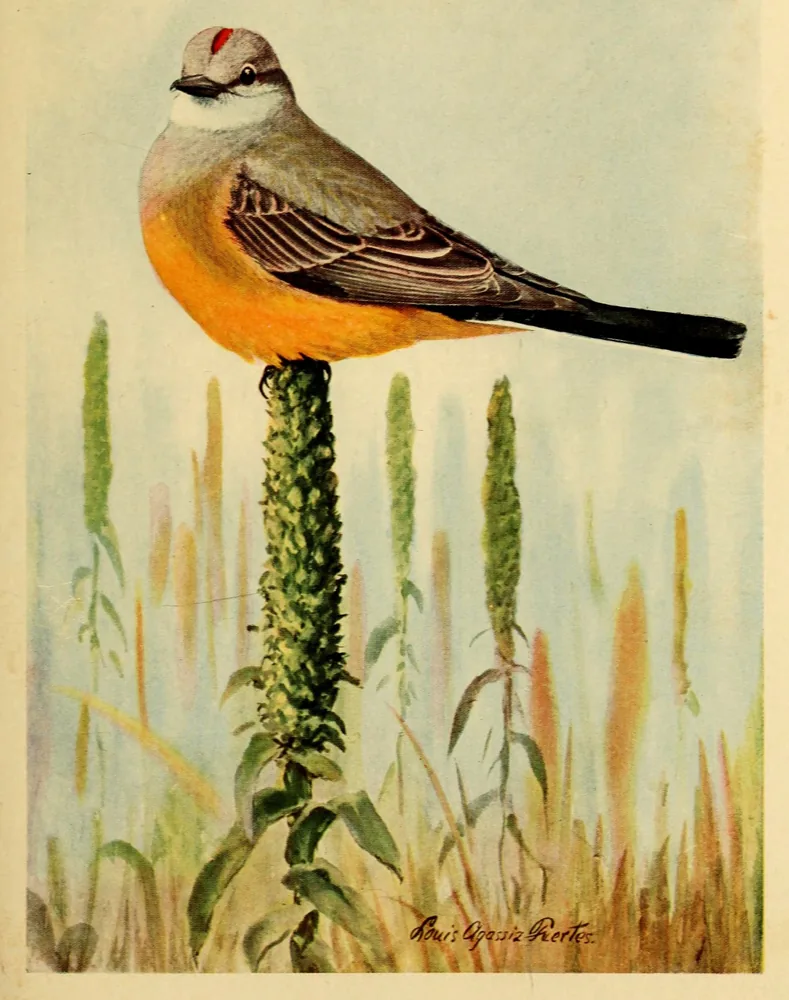
In most of Texas, a Western Kingbird: robin-sized, with a gray head and chest, a yellow belly and a black tail edged in white, perched on roadside fences and wires. It flies out to snatch insects and chases ravens and hawks away from its nest, says National Audubon's guide.
It is a newcomer to much of Texas. In the early 1900s it nested only in the west: the Panhandle, the southern plains and the mountains beyond the Pecos. As settlers cleared woodland, planted trees on the plains and strung power and telephone lines, it moved east, the atlas says. It nested at Austin by the 1950s, reached the Rio Grande delta and the upper Texas coast by the late 1960s, and was nesting east of Dallas by the early 1970s.
What is the yellow-bellied bird in South Texas?
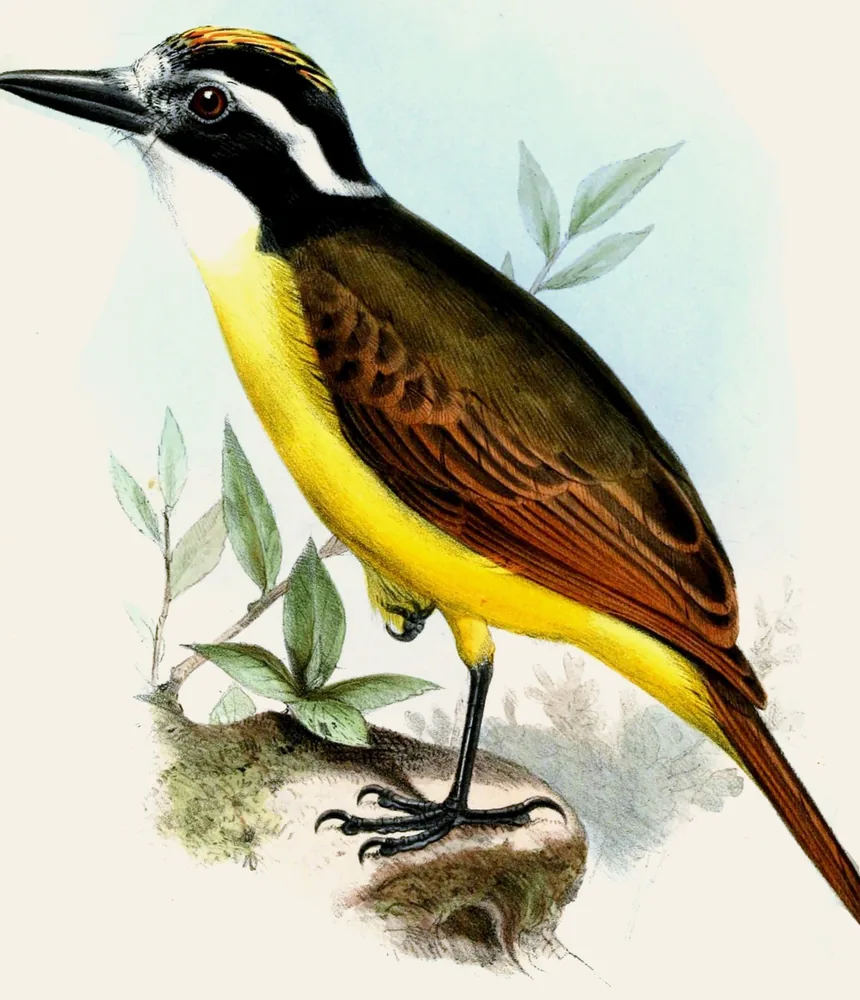
Often a Great Kiskadee: a robin-sized flycatcher with a black-and-white striped head, rusty wings and tail and a bright yellow belly, shouting kis-ka-dee. In the United States it nests only in South Texas. Besides insects it eats lizards, mice, frogs and small fish, plunging into water for them, National Audubon's guide says.
It has spread north within living memory. Early in the 20th century it nested in only the two or three southernmost Texas counties. The atlas now calls it a common nester in the lower Rio Grande Valley and in Kenedy, Brooks, Kleberg and Jim Wells counties, and an occasional one in Nueces, Live Oak and San Patricio. When excited, it raises its yellow crown feathers into a short-lived crest.
Two kingbirds share its range. Couch's Kingbird has a dusky, notched tail and yellow reaching farther up its chest than a Western Kingbird's, and gives a short kip. The Tropical Kingbird looks almost identical; the two are best told apart by voice, the atlas says. And in far South Texas, the Green Jay, called the Rio Grande Jay locally, shows yellow below a green back.
What bird looks like a sparrow but has a yellow belly?
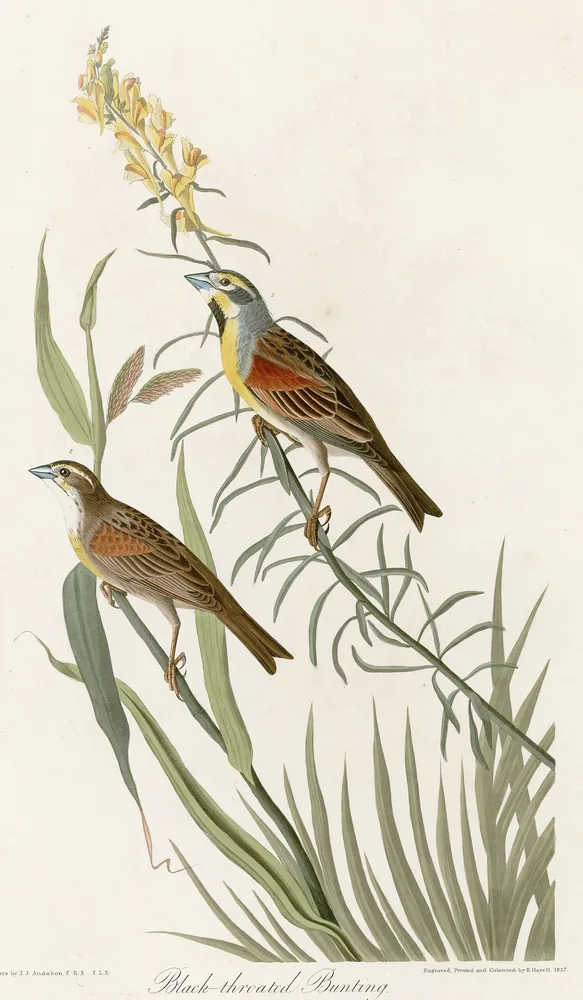
In Texas, usually a Dickcissel: the female "looks like a House Sparrow but with hint of yellow on chest," National Audubon's guide says. The male is easier: a black bib on a yellow chest and a rusty shoulder. Oberholser, writing the 1974 Bird Life of Texas, called the Dickcissel a "sparrow-sized meadowlark," the atlas notes.
Dickcissels come north through Texas from mid-March to mid-June and nest in fields and prairies east of the 100th meridian and in the northern Panhandle. They head south from July to November, often in flocks of many hundreds. Their numbers swing from year to year with winter and spring rain.
What is a meadowlark?
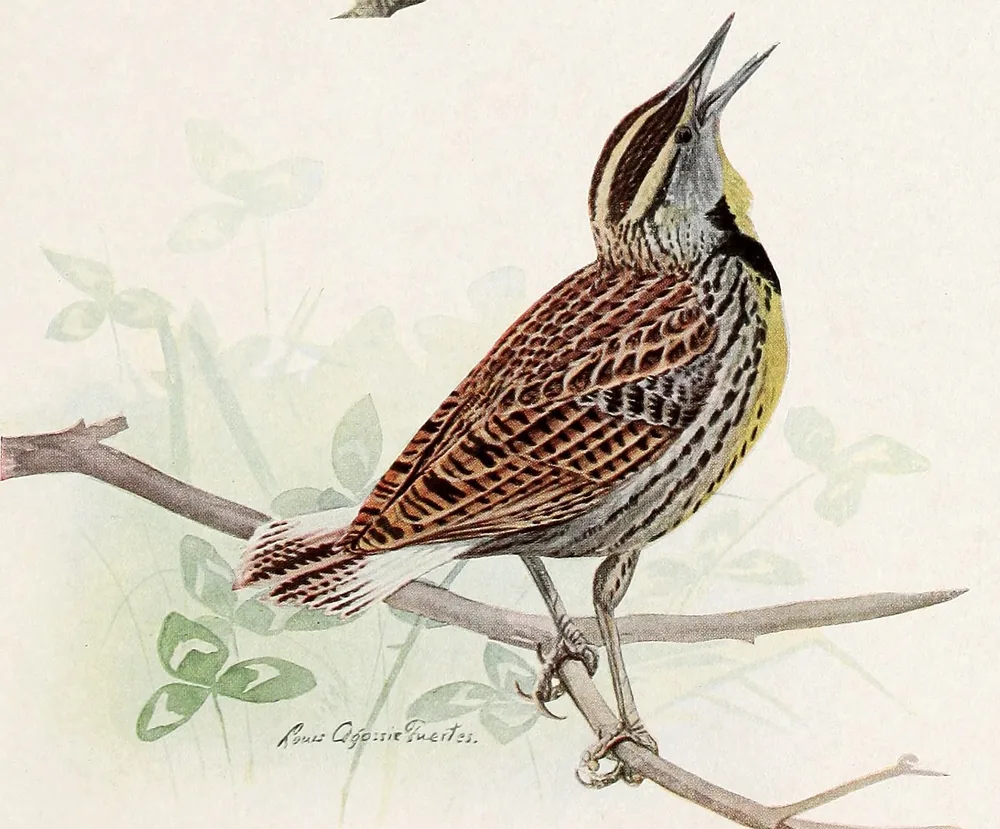
A chunky, short-tailed grassland bird with a yellow breast crossed by a black V, and, despite the name, a blackbird rather than a lark. Texas has three, and you tell them apart mostly by song and range. The Western Meadowlark sings a rich, flute-like jumble of gurgling notes; the Eastern and the Chihuahuan give simple, plaintive whistles, National Audubon's guide says.
The Eastern Meadowlark lives all year across most of Texas outside the Trans-Pecos, and Texas holds some of its highest numbers anywhere: one survey route near Henrietta, in Clay County, averaged 207 meadowlarks, the second-highest count in the North American Breeding Bird Survey. The Chihuahuan Meadowlark of the Trans-Pecos and the southern High Plains was treated as a form of the Eastern until 2022, when it was recognized as a species of its own. The Western Meadowlark nests in the Panhandle and the far west, and in winter becomes common to abundant across the western two-thirds of the state.
What is a bird with a yellow belly called?
In Texas it's usually a kingbird or a crested flycatcher, the big flycatchers with gray or brown backs and yellow bellies. The atlas calls the Western Kingbird the most widespread of the yellow-bellied kingbirds. In East Texas woods, the Great Crested Flycatcher has a gray throat and chest over a bright yellow belly, rusty flashes in its wings and tail, and a loud, whistled wheep. It nests in tree holes, often lining the nest with a piece of shed snakeskin.
Two birds on the official Texas list carry the name: the Yellow-bellied Sapsucker, a woodpecker, and the Yellow-bellied Flycatcher.
Which yellow bird sings at night?
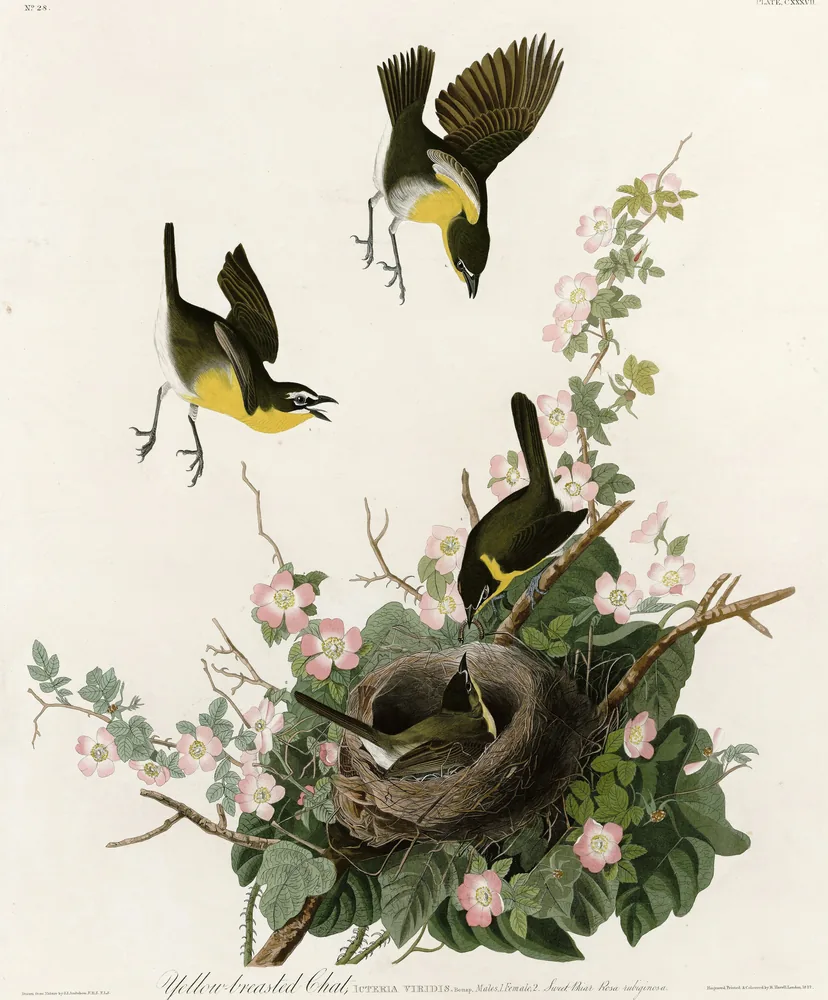
The Yellow-breasted Chat: it "often sings at night," says National Audubon's guide, a bizarre series of hoots, whistles and clucks from deep in a thicket. It has a bright yellow throat and breast, an olive back and sharp white spectacles. It arrives in Texas from early April to early May and is uncommon to common across the eastern two-thirds, with most nesting sites in East Texas. Long counted among the warblers, it's now the only member of its own family, as the official Texas list shows.
Which orioles live in Texas?
Seven orioles are regular in Texas: Audubon's, Altamira, Hooded, Scott's, Bullock's, Orchard and Baltimore; two more are rare strays. Most are orange or yellow with black.
| Oriole | Where and when in Texas |
|---|---|
| Audubon's Oriole | South Texas brush, all year |
| Altamira Oriole | Far South Texas, all year |
| Hooded Oriole | Lower Rio Grande Valley and the coast to Corpus Christi, mid-March to September |
| Scott's Oriole | Trans-Pecos and Edwards Plateau, spring to fall |
| Bullock's Oriole | Western Texas, late March to September |
| Orchard Oriole | Most of the state, April to September; most in East Texas and on the Edwards Plateau |
| Baltimore Oriole | Migrant in the eastern half, mid-April to early May and late August to early October |
Audubon's and Scott's are the black-and-yellow ones; see the black and yellow bird in Texas. Audubon's Oriole, found only in Mexico and southern Texas, was first recorded in Texas in 1838 and is still poorly known, the atlas says. The Altamira Oriole, orange with an orange shoulder patch, hangs a pouch nest up to 2 feet long. It was first collected in the United States in 1939, in Cameron County, and first found nesting in 1951. The Hooded Oriole sews its nest to the underside of a palm or yucca leaf. Around 400 pairs once nested at Santa Ana National Wildlife Refuge; by 1971 there were none, and only a few pairs have come back. Bronzed Cowbirds, which often lay eggs in its nests, may be one cause. The Orchard Oriole is black and chestnut, not orange. The Baltimore Oriole nests in Texas only in a small area of the north; its painting is on our Baltimore Oriole page.
Are there yellow finches in Texas?
Yes, two goldfinches: the Lesser Goldfinch, glossy black above and bright yellow below in breeding males, is the only one that nests commonly in Texas; the American Goldfinch winters across the state. Both, and the House Finches that are sometimes yellow, are covered in which finches live in Texas.
The paintings
The Western Kingbird at the top was painted by Louis Agassiz Fuertes for a 1912 federal bulletin on what flycatchers eat; the bird was still called the Arkansas Kingbird then. Joseph Wolf painted the kiskadee in 1850, and John James Audubon drew the Dickcissel as the Black-throated Bunting and the chats at a nest in a wild rose.
Seen a kiskadee, a chat or a Scott's Oriole? In a Birdfolio, each bird you've seen gets a classic painting on the page beside it: look inside a Birdfolio.
Questions people ask
Is the yellow-breasted bird in my yard a goldfinch?
If it's robin-sized and perches out in the open, it's more likely a kingbird or a kiskadee. In a Texas winter, a goldfinch is olive-brown more than yellow.
Is the Green Jay yellow?
Partly: it's mostly green, paler and yellower below, with bright yellow outer tail feathers and a purple and black head.