Reference
How many bird species are in Colorado?
Colorado has 522 bird species on its official list (Colorado Bird Records Committee, kept up to date online), the 10th highest count of the 49 states with a verified count. The committee keeps the list current online, and its 89th report (winter 2026) gives the same total. Introduced species now established in Colorado count too.
Colorado’s state bird is the Lark Bunting: our Colorado state bird page tells how it was chosen.
Updated
What are the most common birds in Colorado?
In summer, the 25 most common birds in Colorado are led by the Horned Lark, at about 170 birds per survey route, then the Lark Bunting and the Western Meadowlark, by the USGS Breeding Bird Survey’s counts for 2021–2025. Together these 25 made up 62% of all the birds counted on Colorado’s 124 survey routes.
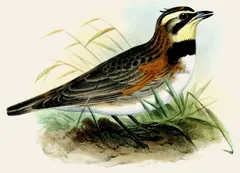
Joseph Wolf, Proceedings of the Zoological Society of London (1855) 1 Horned Larkabout 170 per routeon 62% of routesfalling since 2015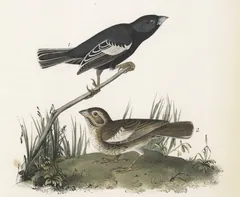
John James Audubon, The Birds of America (1840–44) about 122 per routeon 38% of routesno clear trend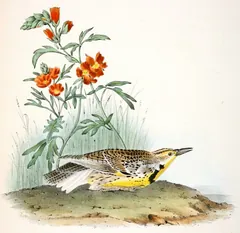
John James Audubon, The Birds of America (1840–44) 3 Western Meadowlarkabout 114 per routeon 90% of routesno clear trend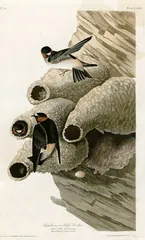
John James Audubon, The Birds of America (1827–38) 4 Cliff Swallowabout 57 per routeon 60% of routesfalling since 2015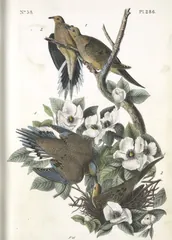
John James Audubon, The Birds of America (1840–44) about 35 per routeon 94% of routesno clear trend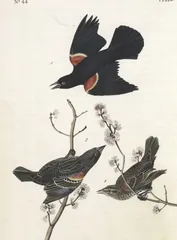
John James Audubon, The Birds of America (1840–44) about 20 per routeon 89% of routesno clear trend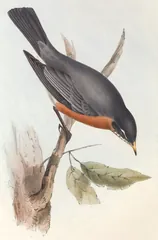
John and Elizabeth Gould, The Birds of Europe (1832–37) about 20 per routeon 90% of routesno clear trend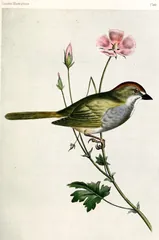
George G. White (on stone by William E. Hitchcock), John Cassin’s Illustrations of the Birds of California, Texas, Oregon, British and Russian America (1853–56) 8 Green-tailed Towheeabout 19 per routeon 63% of routesno clear trend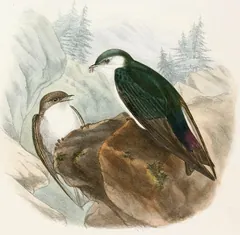
Claude Wilmott Wyatt, Sharpe and Wyatt’s A Monograph of the Hirundinidae (1885–94) 9 Violet-green Swallowabout 19 per routeon 60% of routesno clear trend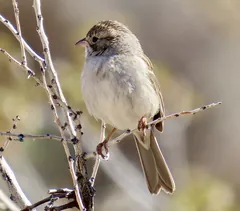
Photo: an iNaturalist contributor, CC0 1.0 10 Brewer's Sparrowabout 17 per routeon 48% of routesno clear trend
Show all 25
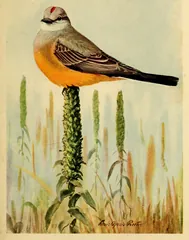
Louis Agassiz Fuertes, Food of Our More Important Flycatchers (1912) 11 Western Kingbirdabout 17 per routeon 67% of routesfalling since 2015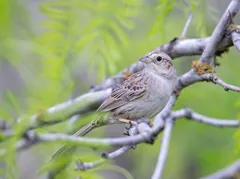
Photo: Karen Szafrajda, CC BY 4.0 12 Cassin's Sparrowabout 16 per routeon 30% of routesno clear trend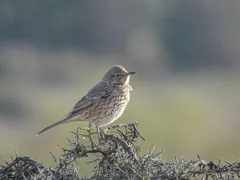
Photo: Pedro Guevara, CC BY 4.0 13 Sage Thrasherabout 13 per routeon 28% of routesrising since 2015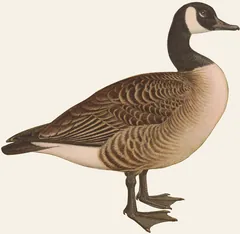
Marinus Adrianus Koekkoek, E. D. van Oort's Ornithologia Neerlandica (1922) 14 Canada Gooseabout 13 per routeon 40% of routesno clear trend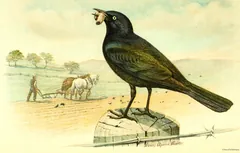
Louis Agassiz Fuertes, Bulletin, Biological Survey (1908) 15 Brewer's Blackbirdabout 13 per routeon 66% of routesfalling since 2015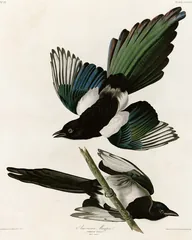
John James Audubon, The Birds of America (1827–38) 16 Black-billed Magpieabout 13 per routeon 73% of routesfalling since 2015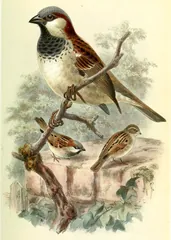
John Gerrard Keulemans, Lord Lilford’s Coloured Figures of the Birds of the British Islands (1885–97) 17 House Sparrowabout 11 per routeon 60% of routesno clear trendintroduced species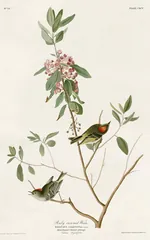
John James Audubon, The Birds of America (1827–38) 18 Ruby-crowned Kingletabout 11 per routeon 42% of routesfalling since 2015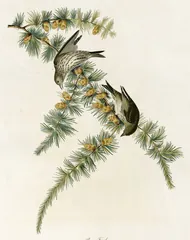
John James Audubon, The Birds of America (1827–38) 19 Pine Siskinabout 10 per routeon 45% of routesno clear trend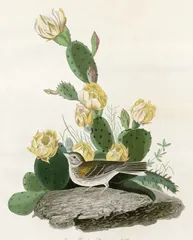
John James Audubon, The Birds of America (1827–38) 20 Vesper Sparrowabout 9.6 per routeon 68% of routesfalling since 2015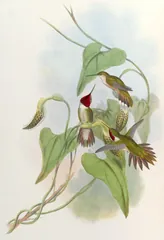
John Gould and Henry Constantine Richter, A Monograph of the Trochilidae (1849–61) 21 Broad-tailed Hummingbirdabout 8.3 per routeon 56% of routesfalling since 2015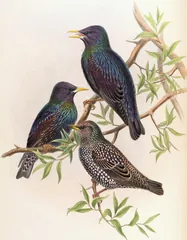
John Gould and Henry Constantine Richter, The Birds of Asia, vol. 5 (1850–83) 22 European Starlingabout 7.5 per routeon 71% of routesno clear trendintroduced species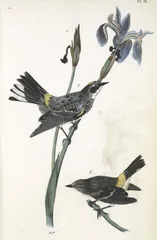
John James Audubon, The Birds of America (1840–44) about 6.7 per routeon 46% of routesfalling since 2015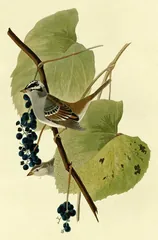
John James Audubon, The Birds of America (1827–38) 24 White-crowned Sparrowabout 6.6 per routeon 31% of routesno clear trend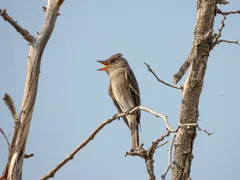
Photo: Jason Alexander, CC BY 4.0 25 Western Wood-Peweeabout 6.5 per routeon 73% of routesfalling since 2015
If the Horned Lark, first on this list, or the Western Wood-Pewee, last on it, has you curious about the rest of Colorado’s 522 species, see our comparison of the best bird books of 2026, from the friendliest for beginners to the newest.
What is the most common bird in Colorado?
The Horned Lark leads Colorado’s summer survey: about 170 a route on average in 2021–2025, ahead of the Lark Bunting at about 122, seen on 62% of the 124 routes. USGS’s estimate has its Colorado numbers falling since 2015.
The European Starling, descended from birds released in North America, is a common songbird across the state and among the most numerous on the continent, Colorado Parks and Wildlife says. Winter totals swing with the flocks of geese: in 2023-24 a single Christmas Bird Count at Crook, in the northeast, tallied 93,000 Snow Geese, out of 763,932 birds on all 51 of Colorado's counts.
Sources: European Starling (Colorado Parks and Wildlife); The 124th Christmas Bird Count in Colorado (National Audubon Society), read October 10, 2026.
How was this list made?
Each of Colorado’s 124 routes is a roadside count, 50 stops along about 25 miles, run once a year in early summer by a volunteer. We took USGS’s yearly estimate for each species in Colorado, the number of birds a typical route records, averaged it over the five latest survey years (there was no survey in 2020) and ranked the birds by it. To keep the list to birds you’re likely to meet across Colorado, we left out species recorded on fewer than one in five of its routes, and those USGS can only estimate very roughly, which usually means big flocks or colonies on a few routes.
For Colorado that left out the American White Pelican and the California Gull. The survey counts Western and Eastern Warbling Vireos together in Colorado, so neither is listed on its own, though as a group they would rank 21st, at about 9.5 a route.
The share of routes is our own count from USGS’s route data for Colorado, using only counts that met the survey’s standards; “rising” and “falling” are USGS’s trends for the state since 2015, named only where it finds a clear change. Roadside counts on early-summer mornings miss most of Colorado’s owls and waterbirds, and its winter visitors aren’t here at all.
Colorado’s counts come from two USGS data releases, the North American Breeding Bird Survey Analysis Results 1966–2025 (Hostetler et al., 2026) and its Dataset 1966–2025 (Ziolkowski et al., 2026), gathered by volunteer observers and free for anyone to use; Birdfolio isn’t connected with the USGS.
How many bird species are in Colorado?
| Official count | 522 species |
|---|---|
| List’s date | kept up to date online |
| Kept by | Colorado Bird Records Committee (Colorado Field Ornithologists) |
| Backed by a specimen | 405 species |
| Bird families | 63 |
| Records committee since | 1972 |
| Among US states | 10th highest of the 49 states with a verified count |
| Official list | CBRC State Checklist (live) |
What does Colorado’s count include?
- Every species for which the committee has accepted enough evidence: a specimen, a photo, a video, a sound recording or a written description.
- Introduced species now established in Colorado.
- The online list shows the day you open it as its date; we read it on October 3, 2026.
Why do other sources give a different number?
Colorado's committee prints the running total in report after report, so every few years brings a new figure:
- 521 and 520. The 88th report (summer 2025) added the Crissal Thrasher for 521. The 87th (winter 2025) added the Golden-fronted Woodpecker but lost the Hoary Redpoll to a merger, so it stayed at 520. The 89th reached 522 by a split: the Warbling Vireo is now Eastern and Western Warbling Vireos. Source: Published Reports and Articles (Colorado Bird Records Committee).
- 507. The total in the 73rd report (fall 2018 to winter 2019), which added nine species and lost Thayer's Gull to a merger. With it, the committee wrote, Colorado became the first non-coastal, non-border US state to pass 500. Source: The 73rd Report of the Colorado Bird Records Committee (Colorado Birds 52:4 and 53:1, 2018-2019).
- 445. The official list through December 31, 1991, from that year's report in the C.F.O. Journal. Source: The C.F.O. Records Committee Report for 1991 (C.F.O. Journal 27:2, April 1993).
- Over 270. The species reported over the last century in and around Rocky Mountain National Park, by the National Park Service's count. A park figure, not the state list. Source: Birds, Rocky Mountain National Park (National Park Service).
Colorado’s list follows its own committee’s rules, and so does every other state’s: see why the counts differ from state to state.
Colorado records, from a Southern Hemisphere gull to an experimental crane flock
- On September 17, 2003, birders at Jackson Reservoir in Morgan County found a dark-backed gull that turned out to be a Kelp Gull, a mostly Southern Hemisphere species. It later moved to Fossil Creek Reservoir in Larimer County, about 54 miles away, and stayed until November 20. Two members first held out over possible hybrid parentage, so it took a second round of votes, 7-0, to make it species number 481; the committee published its reasoning in 2007. Source: The 43rd Report of the Colorado Bird Records Committee: Acceptance of Kelp Gull (Colorado Birds 41:2, April 2007), read October 5, 2026.
- Two Fork-tailed Flycatchers, a common bird of Middle and South America, reached Colorado in fall 2018: one on a private ranch in Larimer County on September 14, and another, with a full-length tail, at a lake in Boulder County on October 21-23. Source: The 73rd Report of the Colorado Bird Records Committee (Colorado Birds 52:4 and 53:1, 2018-2019), read October 5, 2026.
- In its 1991 report the committee struck from the list the Whooping Cranes of the Grays Lake flock, a foster-chick experiment the US Fish and Wildlife Service had declared a failure, and kept only records from 1973 and earlier. Two banded birds from that flock had been seen at Hudson and Severance in 1985; the last accepted bird thought to come from the wild Canadian flock passed near Greeley on November 3, 1973. Source: The C.F.O. Records Committee Report for 1991 (C.F.O. Journal 27:2, April 1993), read October 5, 2026.
- The two newest reports are full of rarities with few earlier Colorado records: the 89th has Colorado's second Lawrence's Goldfinch and third Cactus Wren, and the 90th (summer 2026) its second Crissal Thrasher, third Mottled Duck and Wood Stork, and tenth Crested Caracara. Source: Published Reports and Articles (Colorado Bird Records Committee), read October 5, 2026.
Questions people ask about Colorado’s birds
What are common birds in Colorado?
Around homes and towns, the Colorado State Forest Service's beginner's guide picks the Black-billed Magpie, American Robin, American Goldfinch, Great Horned Owl, Bald Eagle and Red-tailed Hawk. Black-capped Chickadees live throughout the state, most of them between 5,000 and 9,000 feet, and in fall the mountain birds move down to city parks and backyard feeders, Colorado Parks and Wildlife says.
Sources: Forests and Feathered Friends Right Outside Your Colorado Home (Colorado State Forest Service, June 28, 2024); Black-capped Chickadee (Colorado Parks and Wildlife), read October 10, 2026.
What is the rarest bird in Colorado?
The rarest include the four birds Colorado lists as endangered: the Least Tern, Plains Sharp-tailed Grouse, Southwestern Willow Flycatcher and Whooping Crane. The sharp-tailed grouse now lives mainly in northern and central Weld County, almost only on grassland enrolled in the federal Conservation Reserve Program. The Gunnison Sage-Grouse, federally threatened, numbers about 3,500 breeding birds in seven separate populations.
Among strays, some species have only one or two state records, such as the Crissal Thrasher, added to the list in 2025 and found a second time in the committee's 90th report.
Sources: Threatened and Endangered Wildlife (Colorado Parks and Wildlife); Plains Sharp-Tailed Grouse (Colorado Parks and Wildlife); Bird Research (Colorado Parks and Wildlife); Published Reports and Articles (Colorado Bird Records Committee), read October 10, 2026.
Which US state has the most bird species?
California, with 696 species on the list it updated September 8, 2026; Texas is second with 682. Colorado's 522, on the committee's online list as of October 10, 2026, rank tenth among the 49 states with a verified count, and among states without a seacoast only Arizona and New Mexico have more (our table).
Sources: Official California Checklist, updated 8 September 2026 (California Bird Records Committee); Official Colorado State List, 522 species as of October 10, 2026 (Colorado Bird Records Committee), read October 10, 2026.
Which birds live in Colorado?
Prairie birds on the eastern plains, sagebrush grouse in the west, forest birds in the Rockies, and canyon and pinyon-juniper birds on the plateaus, besides the alpine birds above treeline. Its greatest specialty is the Gunnison Sage-Grouse, recognized as a species of its own in 2000: almost all of them live in Colorado, with one small population near Monticello, Utah.
Eastern plains: the Lark Bunting, the state bird since 1931, from April to September; Greater Prairie-Chickens in the sandhills of the northeast, back from a low of 600 birds in 1973; and the threatened Lesser Prairie-Chicken in the southeast. The Mountain Plover, despite its name, nests on the shortgrass prairie.
Sagebrush: Greater Sage-Grouse in the northwest, at more than 500 known leks, the open spots where the males display each spring; about a fifth of Colorado's population lives in North Park.
San Luis Valley: more than 20,000 cranes, mostly Greater Sandhill Cranes, stop each spring and fall, and around Great Sand Dunes National Park Burrowing Owls nest on the grasslands and American Avocets feed in the wetlands.
Mountain forests: Dusky Grouse, Mountain Chickadees, Clark's Nutcrackers and American Dippers in Rocky Mountain National Park, where many species belong to the mountain habitats of the Southern Rockies, from aspen and ponderosa pine to spruce, fir and tundra.
Canyons and pinyon-juniper: Pinyon Jays in noisy flocks, Juniper Titmice and Woodhouse's Scrub-Jays at Colorado National Monument, with Canyon Wrens and White-throated Swifts on its cliffs. At Mesa Verde, the Golden Eagle is the park's largest bird.
Sources: Gunnison Sage-Grouse (Colorado Parks and Wildlife); Colorado's State Symbols: The State Bird (Colorado State Publications Blog, Colorado State Library); Greater Prairie-Chicken (Colorado Parks and Wildlife); Lesser Prairie-Chicken (Colorado Parks and Wildlife); Mountain Plover (Colorado Parks and Wildlife); Greater Sage-Grouse (Colorado Parks and Wildlife); Sandhill Crane Migration, Great Sand Dunes National Park and Preserve (National Park Service); Birds, Great Sand Dunes National Park and Preserve (National Park Service); Birds, Rocky Mountain National Park (National Park Service); Birds, Colorado National Monument (National Park Service); Birds, Mesa Verde National Park (National Park Service), read October 10, 2026.
What was the Variable Hawk near Gunnison?
A South American hawk that spent seven summers in Colorado. It was first reported just north of Gunnison on August 31, 1987, as an odd White-tailed Hawk; within days, visiting experts named it a Red-backed Hawk, a form since lumped into the Variable Hawk. It paired with a male Swainson's Hawk, the two were seen in the same place over the next seven summers, and they raised young in 1988.
The identification was never in doubt; the bird's origin was. In 1989 the committee turned the record down, since the species was thought to stay put and the bird was more than 32 degrees of latitude north of its known range. In 2017 the record was resubmitted with new evidence, by then backed by published reports that some Variable Hawks migrate within South America, and the 80th report (spring 2022) accepted the bird as probably wild, taking the state list to 515.
Sources: The 80th Report of the Colorado Bird Records Committee (Colorado Birds 56:2, Spring 2022); Published Reports and Articles (Colorado Bird Records Committee), read October 5, 2026.
Which birds live above treeline in Colorado?
The White-tailed Ptarmigan, a grouse and the only ptarmigan in Colorado, lives on the alpine tundra all year, according to the Second Colorado Breeding Bird Atlas as cited by the Colorado State Library. Mottled brown in summer and white in winter, with feathered feet that work like snowshoes, it is likeliest in the high parts of Rocky Mountain National Park, above Loveland Pass, on peaks such as Pikes Peak or high in the San Juans. Colorado Parks and Wildlife says the state holds the largest population in the lower 48 states.
The Brown-capped Rosy-Finch also stays at high elevation all year, and it is almost entirely a Colorado bird: its range, the smallest of the three rosy-finches, reaches only into northern New Mexico and southern Wyoming. The committee's report for 1992 records the split of the rosy-finches into three species. Rocky Mountain National Park, where more than 270 species have been reported, was named a Global Important Bird Area in 2000.
Sources: Colorado's White-tailed Ptarmigan: Changing with the Seasons (Colorado State Publications Blog, Colorado State Library); White-tailed ptarmigan occupancy report (Colorado Parks and Wildlife, CPW Digital Collections); Brown-capped rosy-finch population assessment pilot study (Colorado Parks and Wildlife, CPW Digital Collections); Published Reports and Articles (Colorado Bird Records Committee); Birds, Rocky Mountain National Park (National Park Service), read October 5, 2026.
How did Colorado's records committee start?
With an argument about a flicker. In December 1970 a Colorado Springs birder photographed what he took for a Gilded Flicker, a bird of the deserts of Arizona, California and Mexico, coming to his yard, and it went into that year's Christmas Bird Count results without any details. Other birders objected: the black-and-white photos showed a flicker but little else, and an associate of the Denver Museum of Natural History judged it probably a hybrid. "I think the bird is best forgotten," one correspondent wrote in June 1972. The letters in the Colorado Field Ornithologist kept coming back to the need for an official state list and a records committee; the Colorado Field Ornithologists' board approved a plan, and on May 30, 1972, its Official Records Committee came into being.
In its first three and a half years the committee reviewed 465 reports of rare and unusual species and accepted 384, or 83 percent; by its 25th year it had received 2,211 records of 349 species. Today it has seven members, a record needs six or seven votes to pass and four against to fail, and its files are kept at the Denver Museum of Nature and Science.
Sources: The Colorado Field Ornithologists' Colorado Bird Records Committee: Twenty-five Years (1972-1996); Published Reports and Articles (Colorado Bird Records Committee); Bylaws of the Colorado Bird Records Committee, revised November 3, 2010 (Colorado Field Ornithologists), read October 5, 2026.
Where is the official Colorado bird list, and how often is it updated?
Online only, on the Colorado Bird Records Committee's website: the State Checklist page lists every species with an evidence code (specimen, photo, video, recording or written documentation), shows the day you open it as its date and offers a printable copy. The committee updates it as its decisions come in and publishes its reports in Colorado Birds, the Colorado Field Ornithologists' journal; the 89th report (winter 2026) gave the current 522.
Under its bylaws, revised in 2010, the society's president appoints seven members for three-year terms. Six or seven votes to accept settle a record, as do four to reject; a 5-2 or 4-3 vote sends it round again. The review list names the species whose every sighting needs documenting, along with any bird not yet on the state list, and some species need it only in certain counties.
Sources: Official Colorado State List, as of October 5, 2026 (Colorado Bird Records Committee); The 89th Report of the Colorado Bird Records Committee (Colorado Birds 60:1, Winter 2026); Bylaws of the Colorado Bird Records Committee, revised November 3, 2010 (Colorado Field Ornithologists); Review List (Colorado Bird Records Committee), read October 5, 2026.
How do you count your own Colorado list?
Your Colorado list is every species you’ve seen in Colorado. eBird can filter your life list to Colorado, and your eBird data download gives the state of every sighting. On paper, count the species you’ve seen in Colorado; what is a life list? explains how birders keep their lists.
To print your whole list, Colorado birds and all, see how to print your bird life list, or let Birdfolio make it a hardcover book.
Colorado’s state bird
Colorado’s state bird is the Lark Bunting, the state bird since 1931. Its story, the state flower and animal, and a free picture card for a report are on our Colorado state bird page.
Birding festivals in Colorado
Our birding festivals calendar lists 4 in Colorado, with dates from each festival’s own website:
- Monte Vista Crane Festival, Monte Vista: March 5–7, 2027
- Pikes Peak Birding & Nature Festival, Colorado Springs: May 13–16, 2027
- Ute Mountain Mesa Verde Birding Festival, Cortez: dates not announced yet; expected in May 2027 (2026 festival: May 6–10, 2026)
- Yampa Valley Crane Festival, Steamboat Springs: September 2–5, 2027
Christmas Bird Count in Colorado
Colorado had 53 Christmas Bird Count circles on Audubon’s map last winter, each counted on a single day between December 14 and January 5. Our guide shows where to find Colorado’s counts and lists 1 Colorado count date already announced for this winter; it’s free, and beginners are welcome.
More about bird counts
- How many bird species are in each state: Colorado beside all 50 states, DC and Canada.
- Bird lists of nearby states: Kansas, Nebraska, New Mexico, Oklahoma and Utah.
- State birds of all 50 states, Colorado’s Lark Bunting among them
- How many bird species are in the US and Canada
- Bird splits and lumps
If you’re shopping for a birder in Colorado, our gift guide for birders and our pick of coffee table bird books are good places to start.