Reference
How many bird species are in Oregon?
Oregon has 554 bird species on its official list (Oregon Bird Records Committee, September 2026), the 5th highest count of the 49 states with a verified count. It includes 11 species known only from sight records and 8 introduced ones. Oregon's one-page checklist also counts a ninth introduced bird, the Northern Bobwhite, for 555.
Oregon’s state bird is the Western Meadowlark: our Oregon state bird page tells how it was chosen.
Updated
What are the most common birds in Oregon?
In summer, the 25 most common birds in Oregon are led by the Cliff Swallow, at about 98 birds per survey route, then the Western Meadowlark and the Brewer's Blackbird, by the USGS Breeding Bird Survey’s counts for 2021–2025. Together these 25 made up 51% of all the birds counted on Oregon’s 110 survey routes.
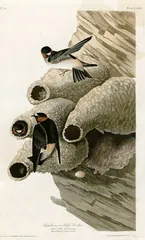
John James Audubon, The Birds of America (1827–38) 1 Cliff Swallowabout 98 per routeon 56% of routesno clear trend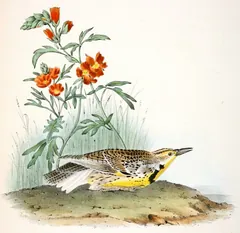
John James Audubon, The Birds of America (1840–44) about 27 per routeon 69% of routesno clear trend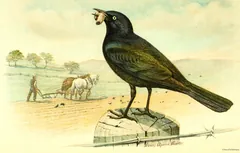
Louis Agassiz Fuertes, Bulletin, Biological Survey (1908) 3 Brewer's Blackbirdabout 25 per routeon 80% of routesno clear trend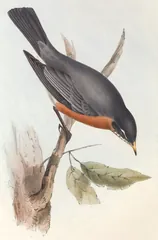
John and Elizabeth Gould, The Birds of Europe (1832–37) about 22 per routeon 94% of routesno clear trend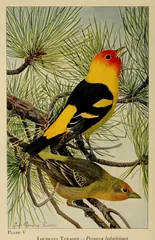
Louis Agassiz Fuertes, Birds of the Rockies (1902) 5 Western Tanagerabout 20 per routeon 75% of routesno clear trend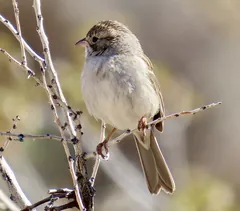
Photo: an iNaturalist contributor, CC0 1.0 6 Brewer's Sparrowabout 19 per routeon 45% of routesno clear trend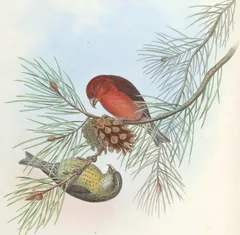
John Gould and Henry Constantine Richter, The Birds of Asia (1850–83) 7 Red Crossbillabout 19 per routeon 52% of routesno clear trend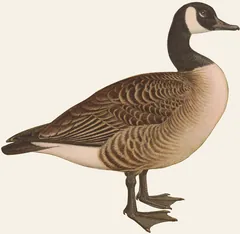
Marinus Adrianus Koekkoek, E. D. van Oort's Ornithologia Neerlandica (1922) about 18 per routeon 38% of routesno clear trend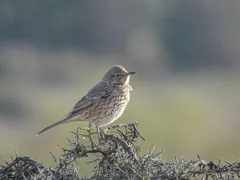
Photo: Pedro Guevara, CC BY 4.0 9 Sage Thrasherabout 17 per routeon 29% of routesfalling since 2015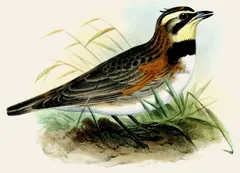
Joseph Wolf, Proceedings of the Zoological Society of London (1855) 10 Horned Larkabout 15 per routeon 36% of routesrising since 2015
Show all 25
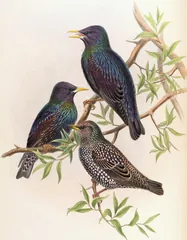
John Gould and Henry Constantine Richter, The Birds of Asia, vol. 5 (1850–83) 11 European Starlingabout 14 per routeon 70% of routesno clear trendintroduced species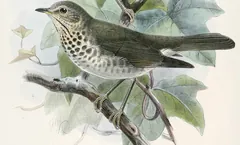
John Gerrard Keulemans, H. E. Dresser’s A History of the Birds of Europe (1871–96) 12 Swainson's Thrushabout 13 per routeon 46% of routesno clear trend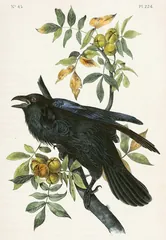
John James Audubon, The Birds of America (1840–44) 13 Common Ravenabout 11 per routeon 99% of routesno clear trend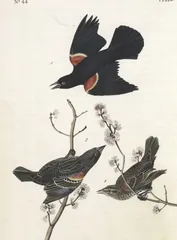
John James Audubon, The Birds of America (1840–44) about 11 per routeon 80% of routesno clear trend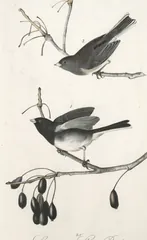
John James Audubon, The Birds of America (1840–44) 15 Dark-eyed Juncoabout 11 per routeon 70% of routesno clear trend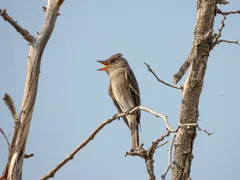
Photo: Jason Alexander, CC BY 4.0 16 Western Wood-Peweeabout 9.9 per routeon 77% of routesno clear trend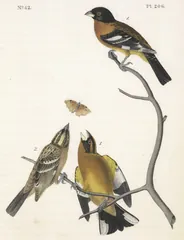
John James Audubon, The Birds of America (1840–44) 17 Black-headed Grosbeakabout 9.8 per routeon 70% of routesno clear trend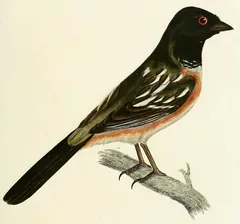
Artist unrecorded, Illustrations of Ornithology (1826) 18 Spotted Towheeabout 9.4 per routeon 58% of routesno clear trend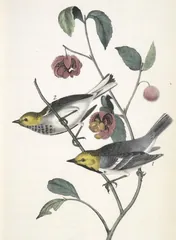
John James Audubon, The Birds of America (1840–44) 19 Hermit Warblerabout 9.2 per routeon 29% of routesfalling since 2015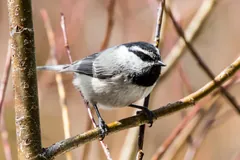
Photo: Ron Knight, CC BY 4.0 20 Mountain Chickadeeabout 8.8 per routeon 43% of routesno clear trend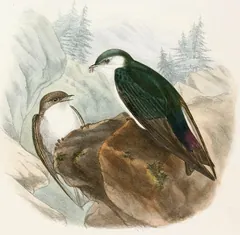
Claude Wilmott Wyatt, Sharpe and Wyatt’s A Monograph of the Hirundinidae (1885–94) 21 Violet-green Swallowabout 7.9 per routeon 58% of routesno clear trend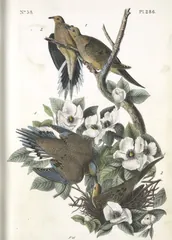
John James Audubon, The Birds of America (1840–44) about 7.8 per routeon 87% of routesno clear trend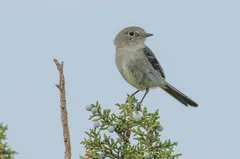
Photo: Rolf Lawrenz, CC BY 4.0 23 Gray Flycatcherabout 7.3 per routeon 39% of routesno clear trend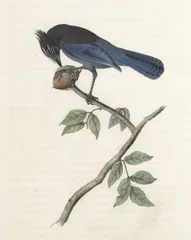
John James Audubon, The Birds of America (1840–44) about 7.1 per routeon 65% of routesno clear trend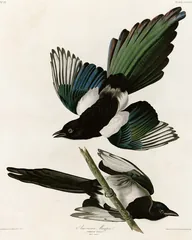
John James Audubon, The Birds of America (1827–38) 25 Black-billed Magpieabout 6.5 per routeon 43% of routesno clear trend
If the Cliff Swallow, first on this list, or the Black-billed Magpie, last on it, has you curious about the rest of Oregon’s 554 species, see our comparison of the best bird books of 2026, from the friendliest for beginners to the newest.
What is the most common bird in Oregon?
The Cliff Swallow leads Oregon’s summer survey: about 98 a route on average in 2021–2025, more than twice the Western Meadowlark’s 27, seen on 56% of the 110 routes. USGS finds no clear rise or fall in its Oregon numbers since 2015.
On the coast it's the Common Murre, the most common seabird nesting in the state, the Oregon Department of Fish and Wildlife says. On land the department calls the Dark-eyed Junco one of the state's most abundant species, likely to turn up almost anywhere outside the nesting season, and the American Coot has the largest breeding population of any Oregon waterfowl.
Sources: Murres, Auklets and Puffins, Bird Watching in Oregon (Oregon Department of Fish and Wildlife); Towhees, Sparrows, Grosbeaks and Buntings, Bird Watching in Oregon (Oregon Department of Fish and Wildlife); Rails, Coots and Cranes, Bird Watching in Oregon (Oregon Department of Fish and Wildlife), read October 10, 2026.
How was this list made?
Each of Oregon’s 110 routes is a roadside count, 50 stops along about 25 miles, run once a year in early summer by a volunteer. We took USGS’s yearly estimate for each species in Oregon, the number of birds a typical route records, averaged it over the five latest survey years (there was no survey in 2020) and ranked the birds by it. To keep the list to birds you’re likely to meet across Oregon, we left out species recorded on fewer than one in five of its routes, and those USGS can only estimate very roughly, which usually means big flocks or colonies on a few routes.
For Oregon that left out the White-faced Ibis, the Franklin's Gull, the Western Gull and 2 more.
The share of routes is our own count from USGS’s route data for Oregon, using only counts that met the survey’s standards; “rising” and “falling” are USGS’s trends for the state since 2015, named only where it finds a clear change. Roadside counts on early-summer mornings miss most of Oregon’s owls and waterbirds, and its winter visitors aren’t here at all.
Oregon’s counts come from two USGS data releases, the North American Breeding Bird Survey Analysis Results 1966–2025 (Hostetler et al., 2026) and its Dataset 1966–2025 (Ziolkowski et al., 2026), gathered by volunteer observers and free for anyone to use; Birdfolio isn’t connected with the USGS.
How many bird species are in Oregon?
| Official count | 554 species |
|---|---|
| List’s date | September 2026 |
| Kept by | Oregon Bird Records Committee (Oregon Birding Association) |
| Sight records only | 11 species |
| Introduced species | 8, plus the Northern Bobwhite, which the 554 leaves out |
| Review species | 156 with a record verified by photo, specimen or recording |
| Records committee since | 1978 |
| Among US states | 5th highest of the 49 states with a verified count |
| Official list | Official Checklist of Oregon Birds, updated September 2026 |
What does Oregon’s count include?
- 11 species known only from sight records, which the list calls provisional.
- 8 introduced species, such as the Chukar, Gray Partridge and Eurasian Collared Dove.
- 2 species marked extirpated, with no modern records: the California Condor and Sharp-tailed Grouse.
- Not counted: the Northern Bobwhite, introduced but with no established population, which the committee's one-page checklist does count.
Why do other sources give a different number?
Oregon's committee states the total in each yearly report, and its two checklists differ by one bird:
- 555. The one-page checklist, also dated September 2026, which counts the Northern Bobwhite. Source: Checklist of Oregon Birds, one-page checklist, September 2026 (Oregon Bird Records Committee).
- 551. The total given in the committee's complete file of records, as of April 2026. Source: The Records of the Oregon Bird Records Committee, April 2026.
- 550. The state total at the end of 2025, in the committee's 2025 report (Oregon Birds, spring 2026), after it added the White-tailed Tropicbird and Grace's Warbler. Like the one-page checklist, the yearly totals count the bobwhite (our reading of the lists). Source: Oregon Bird Records Committee: 2025 Report (Oregon Birds 52:1, Spring 2026).
- 548. The total at the end of 2024: the Blue Rock-Thrush and Siberian Pipit came in that year, and the Hoary Redpoll went out when all the redpolls were merged into one species. Source: Oregon Bird Records Committee: 2024 Report (Oregon Birds 51:1, Spring 2025).
- 547. The total at the end of 2023, after the Field Sparrow was added and the Cordilleran Flycatcher dropped, merged with the Pacific-slope Flycatcher as the Western Flycatcher. It is still repeated online: Google's AI summary for “birds of oregon” gave 547 in October 2026, seven fewer than today's list. Source: Oregon Bird Records Committee: Report for 2023 (Oregon Birds 50:1, Spring 2024).
Oregon’s list follows its own committee’s rules, and so does every other state’s: see why the counts differ from state to state.
Oregon records, from a booby that hitched a ride to a heron collected in 1943
- Oregon's third Red-footed Booby, an immature, landed on a sailboat about 50 miles off Lane County and rode it south, leaving near the Oregon-California border off Curry County; it was photographed resting on the railing on September 20, 2025. Source: Oregon Bird Records Committee: 2025 Report (Oregon Birds 52:1, Spring 2026), read October 5, 2026.
- One of the records accepted in 2025 was 82 years old: a Tricolored Heron collected in 1943 and kept in the Puget Sound Museum of Natural History, which the committee had never reviewed. It became Oregon's third. Source: Oregon Bird Records Committee: 2025 Report (Oregon Birds 52:1, Spring 2026), read October 5, 2026.
- Five species have joined the list since the end of 2025, by our comparison of the November 2023 and September 2026 checklists with the committee's reports: the Vega Gull, now listed as a species of its own; the Neotropic Cormorant; the Yellow-crowned Night Heron; the Connecticut Warbler; and the Yellow-green Vireo, on a sight record from the North Spit of Coos Bay on October 11, 2025. That takes 550 to 555 with the bobwhite, or 554 without. Sources: Official Checklist of Oregon Birds, updated September 2026 (Oregon Bird Records Committee); Official Checklist of Oregon Birds, updated November 2023 (Oregon Bird Records Committee); Oregon Bird Records Committee: 2024 Report (Oregon Birds 51:1, Spring 2025); Oregon Bird Records Committee: 2025 Report (Oregon Birds 52:1, Spring 2026); The Records of the Oregon Bird Records Committee, April 2026, read October 5, 2026.
Questions people ask about Oregon’s birds
What are common birds in Oregon?
Some of the most widespread, by the state wildlife department's descriptions, are the Red-tailed Hawk, found throughout Oregon in every habitat and at every elevation; the House Finch, a fairly common resident of towns, farms and lowlands; and the Rufous Hummingbird, the most common and widespread of Oregon's hummingbirds. In the conifer forests of western Oregon, the Chestnut-backed Chickadee is one of the most common birds of all.
Sources: Raptors, Bird Watching in Oregon (Oregon Department of Fish and Wildlife); Finches, Grosbeaks and House Sparrows, Bird Watching in Oregon (Oregon Department of Fish and Wildlife); Hummingbirds, Bird Watching in Oregon (Oregon Department of Fish and Wildlife); Chickadees and Nuthatches, Bird Watching in Oregon (Oregon Department of Fish and Wildlife), read October 10, 2026.
What is the rarest bird in Oregon?
The rarest are the two species the official checklist marks as extirpated, with no modern records: the California Condor and the Sharp-tailed Grouse. Sharp-tails were abundant in the grasslands and foothills east of the Cascades before the late 1800s and were considered gone from Oregon by the 1970s, though reintroductions in northeast Oregon give some hope, the state wildlife department says.
Among strays, many species have a single accepted record in the committee's files, such as the Great Knot at Bandon in 1990, the Little Bunting at Joseph in 2013 and a Common Crane among Sandhill Cranes near Burns in April 2022.
Sources: Official Checklist of Oregon Birds, updated September 2026 (Oregon Bird Records Committee); Pheasants, Grouse, Quail and Turkey, Bird Watching in Oregon (Oregon Department of Fish and Wildlife); The Records of the Oregon Bird Records Committee, April 2026 (Oregon Birding Association), read October 10, 2026.
Which US state has the most bird species?
California, with 696 species as of September 8, 2026, leads Texas, with 682. Oregon's 554, as of September 2026, rank fifth among the 49 states with a verified count, behind Arizona and New Mexico too (our table).
Sources: Official California Checklist, updated 8 September 2026 (California Bird Records Committee); Official Checklist of Oregon Birds, updated September 2026 (Oregon Bird Records Committee), read October 10, 2026.
What is the official bird of Oregon?
The Western Meadowlark. Oregon's schoolchildren picked it in 1927 and Governor I. L. Patterson confirmed their choice; it won them over, a state wildlife department fact sheet says, with its bright colors, its cheerful song and how often it was seen in meadows, pastures and grasslands. It is still very common in eastern Oregon but has declined dramatically in the west, especially in the Willamette Valley.
How Oregon's schoolchildren chose the meadowlark, and where to hear one
Sources: Western Meadowlark, a fact sheet (Oregon Department of Fish and Wildlife, 2009); Western meadowlark, Bird Watching in Oregon (Oregon Department of Fish and Wildlife), read October 11, 2026.
What is the biggest bird in Oregon?
By wingspan, the American White Pelican, whose wings are the longest of any bird in Oregon, the state's Department of Fish and Wildlife says. The Trumpeter Swan, the largest native waterfowl, is one of the heaviest flying birds in the world, its males sometimes topping 30 pounds on 8-foot wings, and the Greater Sandhill Crane is the tallest.
Bald Eagles span six and a half to eight feet. Bigger still was the California Condor, with wings of about 2.8 meters, about 9 feet (our conversion). It vanished from Oregon more than 120 years ago, but the state's wildlife plan expects it back, and the Yurok Tribe released the first condors of its program in northern California in 2022.
Sources: American white pelican, Bird Watching in Oregon (Oregon Department of Fish and Wildlife); Trumpeter swan, Bird Watching in Oregon (Oregon Department of Fish and Wildlife); Greater sandhill crane, Bird Watching in Oregon (Oregon Department of Fish and Wildlife); Raptors, Bird Watching in Oregon (Oregon Department of Fish and Wildlife); California Condor, State Wildlife Action Plan (Oregon Department of Fish and Wildlife); California Condor in the Pacific Northwest (National Park Service, January 25, 2024), read October 11, 2026.
What birds are invasive in Oregon?
The European Starling, House Sparrow and Rock Pigeon, all brought from Europe, are the birds the Oregon Department of Fish and Wildlife calls invasive. The starling and the House Sparrow are the only introduced songbirds thriving in the state, it says: they can take over feeders and nest boxes meant for native birds, and starlings damage crops and harm native bird populations.
The Eurasian Collared-Dove, which spread from the Bahamas and Florida, reached Oregon in 1988; no federal or state rule protects it, feral pigeons, starlings or House Sparrows, a 2016 department manual says. The Ring-necked Pheasant, a game bird from China, is introduced too; its first successful release in North America was in Oregon.
Sources: European starling, Bird Watching in Oregon (Oregon Department of Fish and Wildlife); House sparrow, Bird Watching in Oregon (Oregon Department of Fish and Wildlife); Rock pigeon, Bird Watching in Oregon (Oregon Department of Fish and Wildlife); Eurasian collared-dove, Bird Watching in Oregon (Oregon Department of Fish and Wildlife); Wildlife Control Operator Training Manual, revised March 31, 2016 (Oregon Department of Fish and Wildlife); Pheasants, Grouse, Quail and Turkey, Bird Watching in Oregon (Oregon Department of Fish and Wildlife), read October 11, 2026.
What birds sing at night in Oregon?
Owls, mostly. Oregon has 14 owl species, most of them nocturnal, and their hoots, screeches and calls can be heard after dark or early in the morning, the state wildlife department says. The American Barn Owl's loud, harsh call over a field or marsh is one of the most startling sounds of the night, and in the Coast Range the Northern Saw-whet Owl is the forest owl detected most often on night surveys.
East of the Cascades, listen on summer evenings for the Common Poorwill, a seldom-seen night bird often known only by its call.
Sources: Owls, Bird Watching in Oregon (Oregon Department of Fish and Wildlife); Common poorwill, Bird Watching in Oregon (Oregon Department of Fish and Wildlife), read October 11, 2026.
Which birds live in Oregon?
Seabirds on the coast, grassland and oak-woodland birds in the Willamette Valley, forest and mountain birds in the Cascades and Siskiyous, and sagebrush and marsh birds in the high desert east of the mountains. Its rarest specialty is the Streaked Horned Lark, a subspecies of the Horned Lark found only in the Pacific Northwest: fewer than 2,000 are left, most of them in the southern Willamette Valley.
Coast: most of Oregon's estimated 1.2 million nesting seabirds use the 1,853 rocks, reefs and islands of Oregon Islands National Wildlife Refuge. Common Murres number over 60,000 at Yaquina Head in peak years, and Tufted Puffins, now a rare sight where the public can see them, are spotted most often at Haystack Rock in Cannon Beach and Coquille Point in Bandon.
Willamette Valley and the southwest: the Western Meadowlark, the state bird, chosen by a vote of Oregon schoolchildren and made official by the Legislature in 1927, and oak-woodland birds such as the Acorn Woodpecker, Oak Titmouse, California Towhee and Wrentit.
Cascades and Siskiyous: Clark's Nutcrackers along the rim of Crater Lake, where whitebark pines grow, and Bald Eagles and Peregrine Falcons nesting on the caldera cliffs; Steller's Jays, Sooty Grouse and the threatened Northern Spotted Owl at Oregon Caves.
High desert: Greater Sage-Grouse and Brewer's and Sagebrush Sparrows in the sagebrush, and Greater Sandhill Cranes, Oregon's tallest bird, nesting at Malheur National Wildlife Refuge, Sycan Marsh and the Silvies River floodplain near Burns.
Sources: Streaked Horned Lark, State Wildlife Action Plan (Oregon Department of Fish and Wildlife); Restoring nesting habitat for Streaked Horned Lark (Oregon Conservation and Recreation Fund, Oregon Department of Fish and Wildlife), the Internet Archive's copy of June 19, 2026; Oregon Islands National Wildlife Refuge (US Fish and Wildlife Service), the Internet Archive's copy of July 20, 2026; Yaquina Head Seabird Colony, 2021 Season Summary (Oregon State University, Hatfield Marine Science Center); Murres, Auklets and Puffins, Bird Watching in Oregon (Oregon Department of Fish and Wildlife); Blackbirds, Grackles and Orioles, Bird Watching in Oregon (Oregon Department of Fish and Wildlife); Oak Habitats, State Wildlife Action Plan (Oregon Department of Fish and Wildlife); Animals, Crater Lake National Park (National Park Service); Birds, Crater Lake National Park (National Park Service); Birds, Oregon Caves National Monument and Preserve (National Park Service); Sagebrush Habitats, State Wildlife Action Plan (Oregon Department of Fish and Wildlife); Rails, Coots and Cranes, Bird Watching in Oregon (Oregon Department of Fish and Wildlife), read October 10, 2026.
Why was Malheur National Wildlife Refuge created?
To stop the killing of nesting birds for hats. In the late 1880s plume hunters were taking breeding feathers for the hat trade, at a time when an ounce of such feathers was worth more than an ounce of gold, the U.S. Fish and Wildlife Service says. When the wildlife photographers William L. Finley and Herman T. Bohlman went to Malheur Lake in 1908 to photograph nesting white herons, now called Great Egrets, they learned that plume hunters had killed most of them in 1898.
They took the story to the Oregon Audubon Society, and Finley, its president, put the case to Theodore Roosevelt. On August 18, 1908, Roosevelt set aside the land around Malheur, Mud and Harney Lakes as the Lake Malheur Reservation, "as a preserve and breeding ground for native birds," the 19th of the 51 wildlife refuges he created. The refuge now covers more than 187,000 acres, and its headquarters is where Oregon's first Grace's Warbler turned up, on May 30, 2025.
Sources: About Us, Malheur National Wildlife Refuge (U.S. Fish and Wildlife Service), the Internet Archive's copy of September 23, 2026; Oregon Bird Records Committee: 2025 Report (Oregon Birds 52:1, Spring 2026), read October 5, 2026.
Which Oregon records are among the rarest in North America?
The Blue Rock-Thrush found at Hug Point, on the Clatsop County coast, on April 21, 2024, is one of only three accepted records of the species in North America. The adult White-tailed Tropicbird at Yaquina Head, Newport, on July 19, 2025, is one of only two accepted on the West Coast. And in January 2025 two Baikal Teal turned up a week apart, one on Sauvie Island near Portland and one near Fern Ridge Reservoir west of Eugene: the state's fourth and fifth, and its first living ones, since all three earlier records were birds shot by hunters.
Others rest on descriptions alone. Eleven species are on the list as provisional, accepted on sight records without a photo, specimen or recording, among them the Greater Roadrunner, the Juan Fernandez Petrel and the Streaked Shearwater.
Sources: Oregon Bird Records Committee: 2024 Report (Oregon Birds 51:1, Spring 2025); The Records of the Oregon Bird Records Committee, April 2026; Oregon Bird Records Committee: 2025 Report (Oregon Birds 52:1, Spring 2026); Official Checklist of Oregon Birds, updated September 2026 (Oregon Bird Records Committee), read October 5, 2026.
How do splits and lumps change Oregon's total?
Directly, because the committee follows the American Ornithological Society's checklist. In 2023 Oregon lost a species when the Cordilleran Flycatcher was merged back with the Pacific-slope Flycatcher as the Western Flycatcher. In 2024 it lost the Hoary Redpoll, merged with the Common and Lesser Redpolls into one Redpoll, and gained the Siberian Pipit, split from the American Pipit; the committee had already accepted two records of it, from 2019 and 2022.
The Vega Gull, now on the list as a species, shows how hard such splits can be to apply. A second-cycle gull photographed on the beach north of Gearhart on February 2, 2023, was turned down at that year's meeting because the committee could not rule out an American Herring Gull, the name Oregon's Herring Gulls now go by; it was accepted on reconsideration in 2025, after the committee noticed that a published gull guide used a photo of the same bird as its example of a second-cycle Vega Gull. Other changes only rename: the old Brown Booby records now stand as Cocos Booby, and the Arctic Warbler is listed together with the Kamchatka Leaf Warbler.
Sources: Oregon Bird Records Committee: Report for 2023 (Oregon Birds 50:1, Spring 2024); Oregon Bird Records Committee: 2024 Report (Oregon Birds 51:1, Spring 2025); Oregon Bird Records Committee: 2025 Report (Oregon Birds 52:1, Spring 2026); Official Checklist of Oregon Birds, updated September 2026 (Oregon Bird Records Committee); The Records of the Oregon Bird Records Committee, April 2026, read October 5, 2026.
Where is the official Oregon bird list, and how often is it updated?
On the Oregon Birding Association's website, on the Oregon Bird Records Committee page: the Official Checklist of Oregon Birds, a 35-page Word document updated September 2026, with review species starred and provisional, introduced and extirpated species marked P, I and E; the one-page checklist of the same month; the review list, also updated September 2026; and the complete records, as of April 2026, each linked to its report, photos, video or recordings where the committee has them. A species goes on the checklist as soon as the committee accepts its first Oregon record, and each year's decisions are summed up in a report in Oregon Birds.
The committee was organized in 1978 and became part of the association when it was founded, as Oregon Field Ornithologists, in 1980. Nine members, three elected each year for three-year terms, vote on records together with the alternates and meet at least once a year. A record with no votes against on the first round is accepted; one to eight votes against send it to a second round, where it passes with no more than one vote against and fails with eight or nine, and anything in between goes to a meeting. For the committee, Oregon includes the ocean out to 200 nautical miles wherever Oregon is the nearest land.
Sources: Oregon Bird Records Committee (Oregon Birding Association); Official Checklist of Oregon Birds, updated September 2026 (Oregon Bird Records Committee); Checklist of Oregon Birds, one-page checklist, September 2026 (Oregon Bird Records Committee); OBRC Review List, updated September 2026 (Oregon Bird Records Committee); The Records of the Oregon Bird Records Committee, April 2026; Rules of Operation of the Oregon Bird Records Committee (Oregon Birding Association), read October 5, 2026.
How do you count your own Oregon list?
Your Oregon list is every species you’ve seen in Oregon. eBird can filter your life list to Oregon, and your eBird data download gives the state of every sighting. On paper, count the species you’ve seen in Oregon; what is a life list? explains how birders keep their lists.
To print your whole list, Oregon birds and all, see how to print your bird life list, or let Birdfolio make it a hardcover book.
Oregon’s state bird
Oregon’s state bird is the Western Meadowlark, the state bird since 1927. Its story, the state flower and animal, and a free picture card for a report are on our Oregon state bird page.
Birding festivals in Oregon
Our birding festivals calendar lists 3 in Oregon, with dates from each festival’s own website:
- Harney County Migratory Bird Festival, Burns: dates not announced yet; expected in April 2027 (2026 festival: April 16–19, 2026)
- Ladd Marsh Bird Festival, La Grande: May 14–16, 2027
- Dean Hale Woodpecker Weekend, Sisters / Bend: dates not announced yet; expected in June 2027 (2026 festival: June 4–7, 2026)
Christmas Bird Count in Oregon
Oregon had 52 Christmas Bird Count circles on Audubon’s map last winter, each counted on a single day between December 14 and January 5. Our guide shows where to find Oregon’s counts and lists 4 Oregon count dates already announced for this winter; it’s free, and beginners are welcome.
More about bird counts
- How many bird species are in each state: Oregon beside all 50 states, DC and Canada.
- Bird lists of nearby states: California, Idaho, Nevada and Washington.
- State birds of all 50 states, Oregon’s Western Meadowlark among them
- How many bird species are in the US and Canada
- Bird splits and lumps
If you’re shopping for a birder in Oregon, our gift guide for birders and our pick of coffee table bird books are good places to start.