Reference
How many bird species are in Arizona?
Arizona has 569 bird species on its official list (Arizona Bird Committee, January 2024), the 3rd highest count of the 49 states with a verified count. It counts the records the committee accepted through January 2024. An older booklet from January 2023 gave 570, so you may see both numbers.
Arizona’s state bird is the Cactus Wren: our Arizona state bird page tells how it was chosen.
Updated
What are the most common birds in Arizona?
In summer, the 25 most common birds in Arizona are led by the White-winged Dove, at about 88 birds per survey route, then the Gambel's Quail and the Ash-throated Flycatcher, by the USGS Breeding Bird Survey’s counts for 2021–2025. Together these 25 made up 54% of all the birds counted on Arizona’s 58 survey routes. USGS rates most of these Arizona estimates as less precise, so read the order as a rough guide.
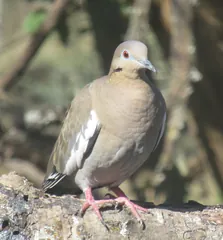
Photo: Linda Jo Conn, CC BY 4.0 1 White-winged Doveabout 88 per routeon 59% of routesno clear trend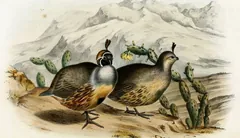
George G. White (on stone by William E. Hitchcock), John Cassin’s Illustrations of the Birds of California, Texas, Oregon, British and Russian America (1853–56) 2 Gambel's Quailabout 57 per routeon 74% of routesno clear trend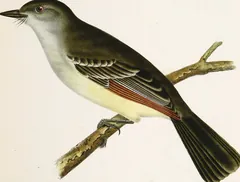
Artist unrecorded, Reports of Explorations and Surveys for a Railroad from the Mississippi River to the Pacific Ocean, vol. 10 (1859) 3 Ash-throated Flycatcherabout 39 per routeon 91% of routesno clear trend
William E. Hitchcock, John Cassin’s Illustrations of the Birds of California, Texas, Oregon, British and Russian America (1853–56) 4 Black-throated Sparrowabout 30 per routeon 72% of routesno clear trend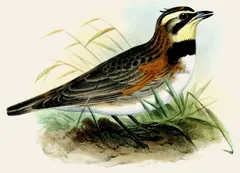
Joseph Wolf, Proceedings of the Zoological Society of London (1855) 5 Horned Larkabout 30 per routeon 60% of routesno clear trend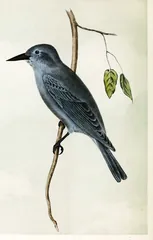
William E. Hitchcock, John Cassin’s Illustrations of the Birds of California, Texas, Oregon, British and Russian America (1853–56) 6 Pinyon Jayabout 27 per routeon 26% of routesno clear trend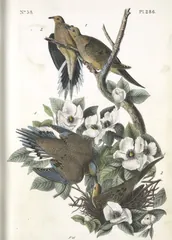
John James Audubon, The Birds of America (1840–44) about 27 per routeon 98% of routesno clear trend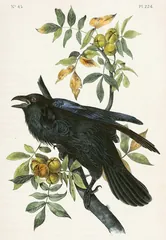
John James Audubon, The Birds of America (1840–44) 8 Common Ravenabout 18 per routeon 97% of routesno clear trend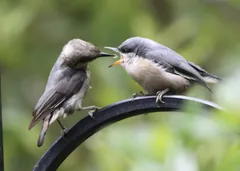
Photo: Cricket Raspet, CC BY 4.0 9 Pygmy Nuthatchabout 18 per routeon 26% of routesno clear trend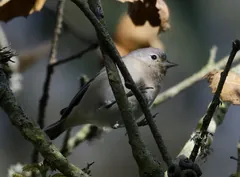
Photo: an iNaturalist contributor, CC0 1.0 10 Lucy's Warblerabout 17 per routeon 52% of routesno clear trend
Show all 25
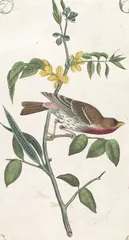
John James Audubon, The Birds of America (1840–44) 11 House Finchabout 16 per routeon 90% of routesno clear trend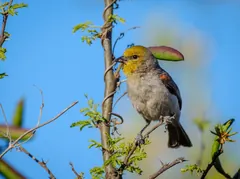
Photo: Jer Clarke, CC BY 4.0 12 Verdinabout 14 per routeon 59% of routesfalling since 2015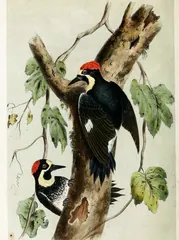
George G. White (on stone by William E. Hitchcock), John Cassin’s Illustrations of the Birds of California, Texas, Oregon, British and Russian America (1853–56) 13 Acorn Woodpeckerabout 13 per routeon 28% of routesrising since 2015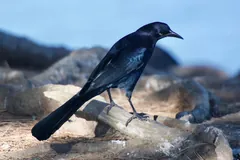
Photo: an iNaturalist contributor, CC0 1.0 14 Great-tailed Grackleabout 13 per routeon 40% of routesno clear trend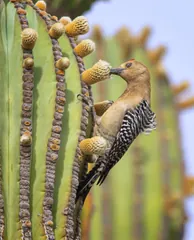
Photo: MarvalPhotography19, CC BY 4.0 15 Gila Woodpeckerabout 13 per routeon 48% of routesno clear trend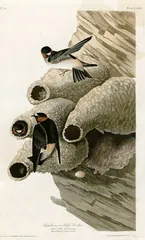
John James Audubon, The Birds of America (1827–38) 16 Cliff Swallowabout 12 per routeon 33% of routesno clear trend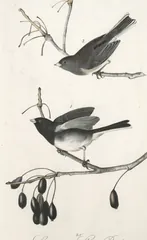
John James Audubon, The Birds of America (1840–44) 17 Dark-eyed Juncoabout 11 per routeon 26% of routesno clear trend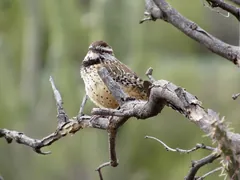
Photo: CK2AZ, CC BY 4.0 18 Cactus Wrenabout 10 per routeon 48% of routesfalling since 2015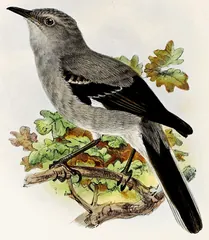
John Gerrard Keulemans, Onze Vogels in Huis en Tuin (1869–76) about 7.7 per routeon 90% of routesfalling since 2015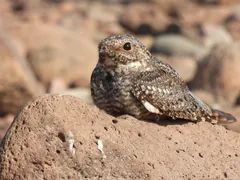
Photo: José Francisco Colorado-Dapa, CC BY 4.0 20 Lesser Nighthawkabout 7.6 per routeon 45% of routesno clear trend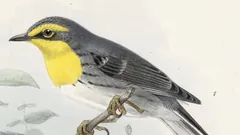
John Gerrard Keulemans, Biologia Centrali-Americana, Aves (1879–1904) 21 Grace's Warblerabout 7.1 per routeon 26% of routesno clear trend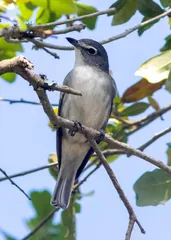
Photo: tcantrell52, CC BY 4.0 22 Plumbeous Vireoabout 6.9 per routeon 34% of routesno clear trend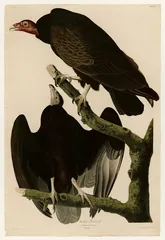
John James Audubon, The Birds of America (1827–38) about 6.8 per routeon 91% of routesno clear trend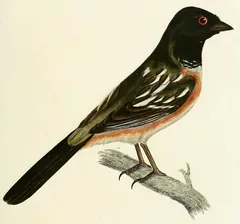
Artist unrecorded, Illustrations of Ornithology (1826) 24 Spotted Towheeabout 6.6 per routeon 43% of routesno clear trend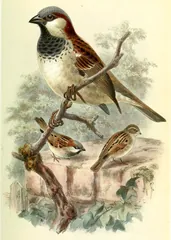
John Gerrard Keulemans, Lord Lilford’s Coloured Figures of the Birds of the British Islands (1885–97) 25 House Sparrowabout 6.5 per routeon 59% of routesno clear trendintroduced species
Once you know the White-winged Dove, the Ash-throated Flycatcher and the rest of these 25, a field guide takes you further into Arizona’s list of 569 species; our comparison of the best bird books of 2026 shows which one to start with.
What is the most common bird in Arizona?
The White-winged Dove leads Arizona’s summer survey: about 88 a route on average in 2021–2025, ahead of the Gambel's Quail at about 57, seen on 59% of the 58 routes. USGS finds no clear rise or fall in its Arizona numbers since 2015.
In winter three are found almost everywhere: in Audubon's 2020-21 Christmas Bird Count, the White-crowned Sparrow, Common Raven and Red-tailed Hawk turned up on all 38 Arizona counts, and the House Finch and Dark-eyed Junco were missed on only one each. Together the counts tallied 387,254 birds of 287 species.
Source: The 121st Christmas Bird Count in Arizona (National Audubon Society), read October 10, 2026.
How was this list made?
Each of Arizona’s 58 routes is a roadside count, 50 stops along about 25 miles, run once a year in early summer by a volunteer. We took USGS’s yearly estimate for each species in Arizona, the number of birds a typical route records, averaged it over the five latest survey years (there was no survey in 2020) and ranked the birds by it. To keep the list to birds you’re likely to meet across Arizona, we left out species recorded on fewer than one in five of its routes, and those USGS can only estimate very roughly, which usually means big flocks or colonies on a few routes.
For Arizona that left out the Sagebrush Sparrow.
The share of routes is our own count from USGS’s route data for Arizona, using only counts that met the survey’s standards; “rising” and “falling” are USGS’s trends for the state since 2015, named only where it finds a clear change. Roadside counts on early-summer mornings miss most of Arizona’s owls and waterbirds, and its winter visitors aren’t here at all.
Arizona’s counts come from two USGS data releases, the North American Breeding Bird Survey Analysis Results 1966–2025 (Hostetler et al., 2026) and its Dataset 1966–2025 (Ziolkowski et al., 2026), gathered by volunteer observers and free for anyone to use; Birdfolio isn’t connected with the USGS.
How many bird species are in Arizona?
| Official count | 569 species |
|---|---|
| List’s date | January 2024 |
| Kept by | Arizona Bird Committee |
| Hummingbirds | 18 species, 11 of which have nested in Arizona (our count) |
| Review list | 142 species, as of January 2025 |
| Committee since | 1972 |
| Among US states | 3rd highest of the 49 states with a verified count |
| Official list | ABC State Lists page |
What does Arizona’s count include?
- Records the Arizona Bird Committee accepted through January 2024.
- Species names as the committee updated them through July 2024.
- 7 introduced species, among them the Rosy-faced Lovebird, which has bred in the state.
- 4 species that bred, or are presumed to have bred, in Arizona but no longer occur there naturally: the Northern Bobwhite, California Condor, Aplomado Falcon and Thick-billed Parrot.
- 2 species not physically documented in Arizona, shown in brackets.
- Not counted as species: 8 identifiable forms of other species that the committee also reviews.
Why do other sources give a different number?
Arizona's committee gives a running total in each report it publishes in Western Birds, so the figure changes from report to report, and the round numbers other groups use count differently:
- 570. The total in the committee's report on 2021-2023 records (Western Birds, 2024), after it added five species, among them the American Woodcock and Blue-black Grassquit. The State Lists page has since given 569. Source: Arizona Bird Committee Report, 2021-2023 Records (Western Birds 55:193-215, 2024).
- 567. The total at the end of 2020, after the White-throated and Clay-colored Thrushes were added. Source: Arizona Bird Committee Report, 2018-2020 Records (Western Birds 52:2, 2021).
- 563. The total at the end of 2017, after eight additions, among them the Common Crane, the Little Bunting and three seabirds displaced by the remnants of Hurricane Newton in September 2016. Source: Arizona Bird Committee Report, 2015-2017 Records (Western Birds 50:3, 2019).
- 485. The species on the committee's first checklist, produced in 1972, the year the committee was organized. Source: History of the ABC (Arizona Bird Committee).
- Nearly 600. Audubon Southwest's figure for Arizona and New Mexico together, about 200 rarities and strays included. In October 2026 Google's AI summary for “birds of arizona” gave it as Arizona's alone. Source: Birds of Arizona and New Mexico (Audubon Southwest, National Audubon Society).
- More than 530. Audubon Southwest's round figure for Arizona by itself, in a July 2025 article. The committee's 569 count every species ever accepted, strays included. Source: Birds are Being Pushed Beyond Their Limits (Audubon Southwest, National Audubon Society, July 17, 2025).
Arizona’s list follows its own committee’s rules, and so does every other state’s: see why the counts differ from state to state.
Arizona records, from a grassquit new to the United States to a crane that spent the summer
- A Blue-black Grassquit at Cluff Ranch Wildlife Area near Safford, July 15-17, 2023, was the first for Arizona and for the United States. Source: Arizona Bird Committee Report, 2021-2023 Records (Western Birds 55:193-215, 2024), read October 5, 2026.
- Arizona's first White-tipped Dove stayed in Garden Canyon on Fort Huachuca, in the Huachuca Mountains, from April 29 to June 8, 2022; possibly the same bird was back on the fort the next year. The first American Woodcock turned up in Cave Creek Canyon near Portal on November 6, 2021, and stayed until November 15. Source: Arizona Bird Committee Report, 2021-2023 Records (Western Birds 55:193-215, 2024), read October 5, 2026.
- An Orange-billed Nightingale-Thrush visited a home near Bisbee on June 15, 2022, the state's first. The committee knew of only four earlier United States records: two in Texas, one in New Mexico and one near Spearfish, South Dakota. Source: Arizona Bird Committee Report, 2021-2023 Records (Western Birds 55:193-215, 2024), read October 5, 2026.
- The state's first Common Crane summered at Mormon Lake in Coconino County from May 4 to September 6, 2017. Nobody doubted what it was, only where it came from, since no Common Crane had been recorded in the lower 48 states in summer; after much discussion at its 2018 meeting, the committee endorsed it unanimously. Source: Arizona Bird Committee Report, 2015-2017 Records (Western Birds 50:3, 2019), read October 5, 2026.
Questions people ask about Arizona’s birds
What are common birds in Arizona?
In the desert, the Cactus Wren and Gambel's Quail, both very common at Organ Pipe Cactus National Monument, where the wrens can often be seen in parking lots picking insects off the front of cars. Mexican Jays are among the most common birds at Chiricahua National Monument in the southeast, and Canyon Wrens among the most often seen in the Grand Canyon, the National Park Service says.
Sources: Birds, Organ Pipe Cactus National Monument (National Park Service); Birds, Chiricahua National Monument (National Park Service); Canyon Wren, Grand Canyon National Park (National Park Service), read October 10, 2026.
What is the rarest bird in Arizona?
Perhaps the Masked Bobwhite, a quail of the Sonoran Desert grasslands that was presumed gone from the United States by the 1920s. The world's only known wild Masked Bobwhites live at Buenos Aires National Wildlife Refuge, southwest of Tucson, where a count in early 2020 put them at about 200, and the state's checklist counts the bobwhite among the species that no longer occur naturally in Arizona.
It was scarce even then: about two decades after first writing about it in 1884, the pioneering ornithologist Herbert Brown called it "one of the rare, if not the rarest, native birds in Arizona."
Sources: The Decades-Long Effort to Save the Masked Bobwhite Is Finally Taking Off (Audubon magazine, Spring 2021); Quail, Arizona's Wildlife (Arizona Game and Fish Department), the Internet Archive's copy of February 16, 2026; Checklist of the Birds of Arizona, as of January 2024 (Arizona Bird Committee), read October 10, 2026.
Which US state has the most bird species?
California, with 696 species, and Texas, with 682, are the only states ahead of Arizona. Arizona's 569, on the committee's State Lists page, put it third among the 49 states with a verified count and first among those without a seacoast (our table).
Sources: Official California Checklist, updated 8 September 2026 (California Bird Records Committee); State Lists (Arizona Bird Committee), read October 10, 2026.
Which birds live in Arizona?
Desert birds in the Sonoran Desert, Mexican birds in the sky islands of the southeast, river birds along the San Pedro and the Colorado, and pine-forest birds on the plateau around the Grand Canyon. Many of the southeast's birds, such as the Elegant Trogon and Montezuma Quail, are found in no other region of the state, and several are not widespread anywhere else in the United States, the National Park Service says.
Sonoran Desert: the Cactus Wren, the state bird, with the Gila Woodpecker, Gilded Flicker, Costa's Hummingbird and Elf Owl, the world's smallest owl, which nests in old woodpecker holes in trees and saguaros. Greater Roadrunners and Gambel's Quail are common in Saguaro National Park.
Sky islands: in the oak woodland of the southeastern mountains, the Elegant Trogon, Mexican Jay, Arizona Woodpecker, Whiskered Screech-Owl and Montezuma Quail, with 13 kinds of hummingbirds in the Chiricahua Mountains alone.
Rivers: about 100 species nest along the San Pedro River, among them the Gray Hawk, Green Kingfisher and Vermilion Flycatcher. The cottonwood and willow forest along the lower Colorado and Gila rivers is vital to the Yuma Ridgway's Rail, a bird found only in parts of Arizona and California.
Canyon country and pine forest: Peregrine Falcons are a common sight on the Grand Canyon's cliffs, California Condors roost on the Vermilion Cliffs, where releases began in December 1996, and the ponderosa pines and firs of Walnut Canyon hold Steller's Jays, Pygmy Nuthatches and the threatened Mexican Spotted Owl.
Sources: Upland Sonoran Desertscrub, Arizona Wildlife Conservation Strategy (Arizona Game and Fish Department); Madrean Woodlands, Arizona Wildlife Conservation Strategy (Arizona Game and Fish Department); Birds, Coronado National Memorial (National Park Service); Birds, Saguaro National Park (National Park Service); Birds, Chiricahua National Monument (National Park Service); San Pedro Riparian National Conservation Area (Bureau of Land Management); Birding in Arizona (Audubon magazine, National Audubon Society); Lower Sonoran Desertscrub, Arizona Wildlife Conservation Strategy (Arizona Game and Fish Department); Bird Species of Concern, Grand Canyon National Park (National Park Service); Birds of Prey, Grand Canyon National Park (National Park Service); Condor Viewing Site, Arizona (Bureau of Land Management); Birds, Walnut Canyon National Monument (National Park Service), read October 10, 2026.
How many hummingbird species have been seen in Arizona?
Eighteen, on the committee's checklist, and 11 of them have nested in the state: the Rivoli's, Lucifer, Black-chinned, Anna's, Costa's, Broad-tailed, Broad-billed, White-eared, Violet-crowned and Berylline Hummingbirds and the Blue-throated Mountain-gem. Sightings of the Ruby-throated, Bumblebee and Cinnamon Hummingbirds still go to the committee for review, and the Bumblebee rests on an old specimen record, one of several species the committee says have not occurred since The Birds of Arizona published them in 1964. The Plain-capped Starthroat came off the review list in 2014.
Other counts differ slightly. Arizona State Parks puts the state's hummingbirds at "at least 17 species," adding that many are brief migrants or seen only now and then. At Coronado National Memorial, the National Park Service lists the Lucifer Hummingbird among the birds that occur there regularly but are not widespread in the United States.
Sources: Checklist of the Birds of Arizona, as of January 2024 (Arizona Bird Committee); Arizona Bird Committee Report, 2018-2020 Records (Western Birds 52:2, 2021); ABC Updates, news of the committee (Arizona Bird Committee); Arizona Hummingbirds (Arizona State Parks); Birds, Coronado National Memorial (National Park Service), read October 5, 2026.
How did storm-petrels end up on Lake Havasu?
Hurricanes brought them. When the remnants of Hurricane Hilary reached Arizona on August 21, 2023, birders on boats counted as many as 24 Wedge-rumped Storm-Petrels on Lake Havasu, between Parker Dam and Lake Havasu City, along with at least 35 Least and at least three Black Storm-Petrels. A Red-billed Tropicbird photographed above Parker Dam that day was the first in Arizona seen and photographed by many observers; every earlier one had been found dead or weakened.
It had happened before. After Tropical Storm Nora in September 1997, some 200 Least Storm-Petrels were on Lake Havasu, which the committee counts as a single record. The remnants of Hurricane Newton in September 2016 brought the state's first Wedge-rumped Storm-Petrels and Wedge-tailed Shearwater, and a Juan Fernandez Petrel that flew over a yard in Tucson, the first fully documented in the continental United States. Of all of them, the committee says, the Least Storm-Petrel seems the likeliest to be blown into the desert by hurricanes crossing the Gulf of California.
Sources: Arizona Bird Committee Report, 2021-2023 Records (Western Birds 55:193-215, 2024); Arizona Bird Committee Report, 2018-2020 Records (Western Birds 52:2, 2021); Arizona Bird Committee Report, 2015-2017 Records (Western Birds 50:3, 2019), read October 5, 2026.
Which birds has Arizona lost?
Four species on the checklist bred, or are presumed to have bred, in Arizona but no longer occur there naturally: the Northern Bobwhite, California Condor, Aplomado Falcon and Thick-billed Parrot. Some, the checklist notes, have been reintroduced without becoming established; the committee's 2018-2020 report names the California Condor and the masked form of the Northern Bobwhite.
The Aplomado Falcon and Thick-billed Parrot are on the list on old specimen records published in The Birds of Arizona (1964), species which, the committee says, have not occurred since and which it has grandfathered onto its list. Both are still review species, so any new sighting should be documented with photos or written details.
Sources: Checklist of the Birds of Arizona, as of January 2024 (Arizona Bird Committee); Arizona Bird Committee Report, 2018-2020 Records (Western Birds 52:2, 2021), read October 5, 2026.
Where is the official Arizona bird list, and how often is it updated?
On the Arizona Bird Committee's website, under State Lists: a summary page with the current total, 569 as of January 2024, and links to the full Checklist of the Birds of Arizona and the review list, 142 species as of January 2025. The full checklist still opens with 570, though its family totals add up to 569 and it lists the Wedge-rumped Storm-Petrel twice (our count); it shows one Western Flycatcher where the field booklet of January 2023, which also says 570, has separate Pacific-slope and Cordilleran Flycatchers. That booklet and a list in CSV form, last updated April 1, 2023, are on the Checklists page. New species are announced on the committee's News page after its annual meeting, and its reports in Western Birds have lately covered three years each, the newest 2021-2023.
The committee was organized in 1972 and grew from six members to eight in 1986. Since 1996 members serve four-year terms and must then sit out at least a year. A record passes with unanimous approval or a single dissent, unless a member asks to circulate it again; two or more dissents send it to a second round, where two or more negative votes reject it. Every species with fewer than 30 accepted Arizona records is on the review list, and at 30 the committee decides whether to keep reviewing it. Introduced birds are judged by the American Birding Association's guidelines for established exotics, which the committee adopted in 2007.
Sources: State Lists (Arizona Bird Committee); Checklist of the Birds of Arizona, as of January 2024 (Arizona Bird Committee); ABC Field Checklist booklet, updated April 1, 2023 (Arizona Bird Committee); Printable Checklists (Arizona Bird Committee); ABC Updates, news of the committee (Arizona Bird Committee); Review List of the Birds of Arizona, as of January 2025 (Arizona Bird Committee); Arizona Bird Committee Report, 2021-2023 Records (Western Birds 55:193-215, 2024); History of the ABC (Arizona Bird Committee); Bylaws (Arizona Bird Committee), read October 5, 2026.
How do you count your own Arizona list?
Your Arizona list is every species you’ve seen in Arizona. eBird can filter your life list to Arizona, and your eBird data download gives the state of every sighting. On paper, count the species you’ve seen in Arizona; what is a life list? explains how birders keep their lists.
To print your whole list, Arizona birds and all, see how to print your bird life list, or let Birdfolio make it a hardcover book.
Arizona’s state bird
Arizona’s state bird is the Cactus Wren, the state bird since 1931. Its story, the state flower and animal, and a free picture card for a report are on our Arizona state bird page.
Birding festivals in Arizona
Our birding festivals calendar lists 6 in Arizona, with dates from each festival’s own website:
- Wings Over Willcox Birding and Nature Festival, Willcox: January 14–17, 2027
- Verde Valley Birding and Nature Festival, Cottonwood: April 22–25, 2027
- Southwest Wings Birding and Nature Festival (Spring), Sierra Vista: May 5–8, 2027
- Sedona Hummingbird Festival, Sedona: July 23–25, 2027
- Southwest Wings Birding and Nature Festival (Summer), Sierra Vista: August 4–7, 2027
- Southeast Arizona Birding Festival, Tucson: dates not announced yet; expected in August 2027 (2026 festival: August 12–16, 2026)
Christmas Bird Count in Arizona
Arizona had 44 Christmas Bird Count circles on Audubon’s map last winter, each counted on a single day between December 14 and January 5. Our guide shows where to find Arizona’s counts and lists 39 Arizona count dates already announced for this winter; it’s free, and beginners are welcome.
More about bird counts
- How many bird species are in each state: Arizona beside all 50 states, DC and Canada.
- Bird lists of nearby states: California, Nevada, New Mexico and Utah.
- State birds of all 50 states, Arizona’s Cactus Wren among them
- How many bird species are in the US and Canada
- Bird splits and lumps
If you’re shopping for a birder in Arizona, our gift guide for birders and our pick of coffee table bird books are good places to start.