John Gould (1804–1881) was an English ornithologist and publisher whose bird books hold more than 3,000 hand-colored plates. He is best known for his hummingbirds, printed with gold leaf to make their throats shine. But Gould drew little himself: his wife Elizabeth Gould, Edward Lear and a team of artists turned his sketches into the finished pictures.
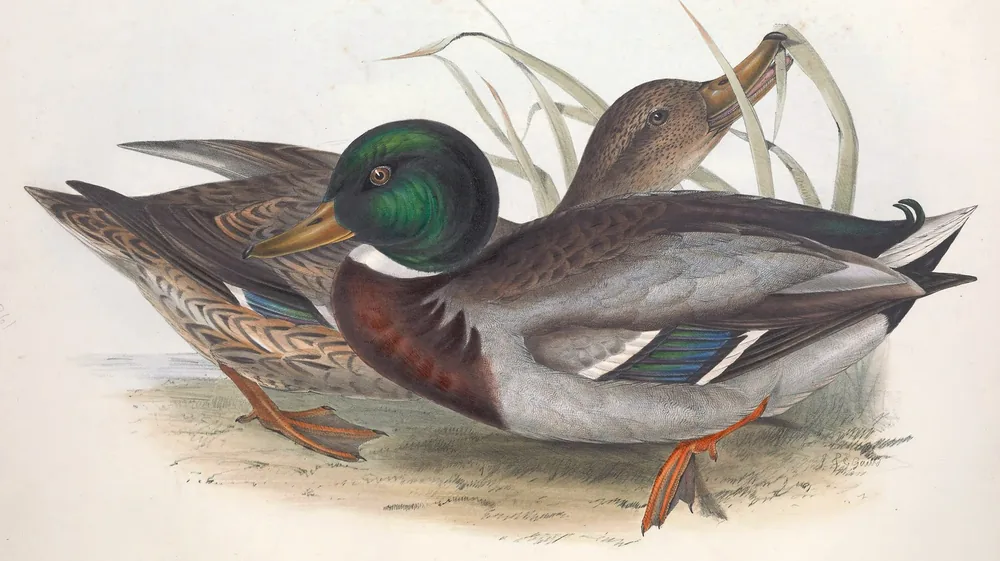
In a Birdfolio, plates from Gould's books show about 110 of the 1,188 birds on our US and Canada list, including two of the most familiar, the Mallard and the American Robin. That makes him our second most common painter after Audubon.
A plate is a full-page printed picture in a book. Gould's plates are lithographs: prints made from drawings on flat stone, then colored by hand. Here is the story of the man behind them, and of the team who helped him.
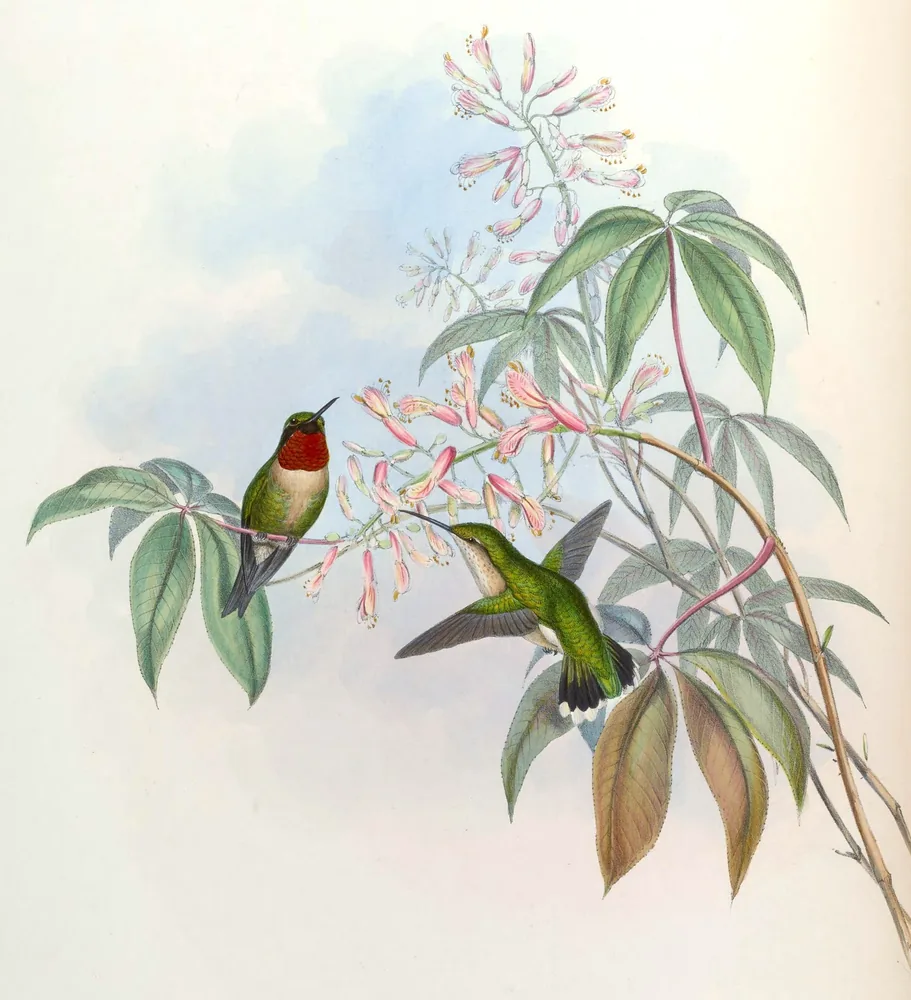
Key facts
- Over about 50 years, Gould and his artists issued 50 large volumes with over 3,000 hand-colored plates (Linda Hall Library).
- His hummingbird monograph came out in parts from 1849 to 1861. Its plates use pure gold leaf under see-through oil colors (Biodiversity Heritage Library).
- His finished plates were drawn by artists including Elizabeth Gould, Edward Lear, Henry Constantine Richter, William Hart and Joseph Wolf.
- The Biodiversity Heritage Library, which shares free scans of his books, says it holds no copyrights on its files.
Facts checked: September 30, 2026.
From gardener to bird man
John Gould was born on September 14, 1804, in Lyme Regis, Dorset, in the south of England. He trained as a gardener in his teens. At 21 he set up in London as a taxidermist, preparing and mounting animal specimens.
He was good at it. In 1828 the Zoological Society of London made him curator and preserver of its museum. A year later he was asked to preserve King George IV's pet giraffe.
Gould also described the finches that Charles Darwin brought back from the Galápagos Islands. His work on those birds became a building block for Darwin's ideas about evolution.
Gould died in 1881. He chose his own epitaph: "John Gould the Bird Man".
Who drew John Gould's birds?
Gould was a skilled taxidermist who could sketch well enough, but the more gifted artist in the family was his wife, Elizabeth Gould.
- The first book. A Century of Birds from the Himalaya Mountains came out in 20 parts between 1830 and 1832. Elizabeth drew the birds onto the stones herself. She had to learn lithography first, with help from the artist Edward Lear.
- The Birds of Europe. Next came five volumes with 448 plates, issued from 1832 to 1837. Elizabeth drew the plates with Lear's help, and Lear drew some himself.
- After Elizabeth. She died in 1841. Gould went on working with other artists, including Henry Constantine Richter, William Hart and Joseph Wolf.
Over about 50 years, Gould and his artists produced some 50 large volumes with more than 3,000 hand-colored plates. By the Australian Museum's account, Gould never finished a picture himself. He made the first sketches and ran the business, and his artists, lithographers and colorists turned those sketches into finished plates.
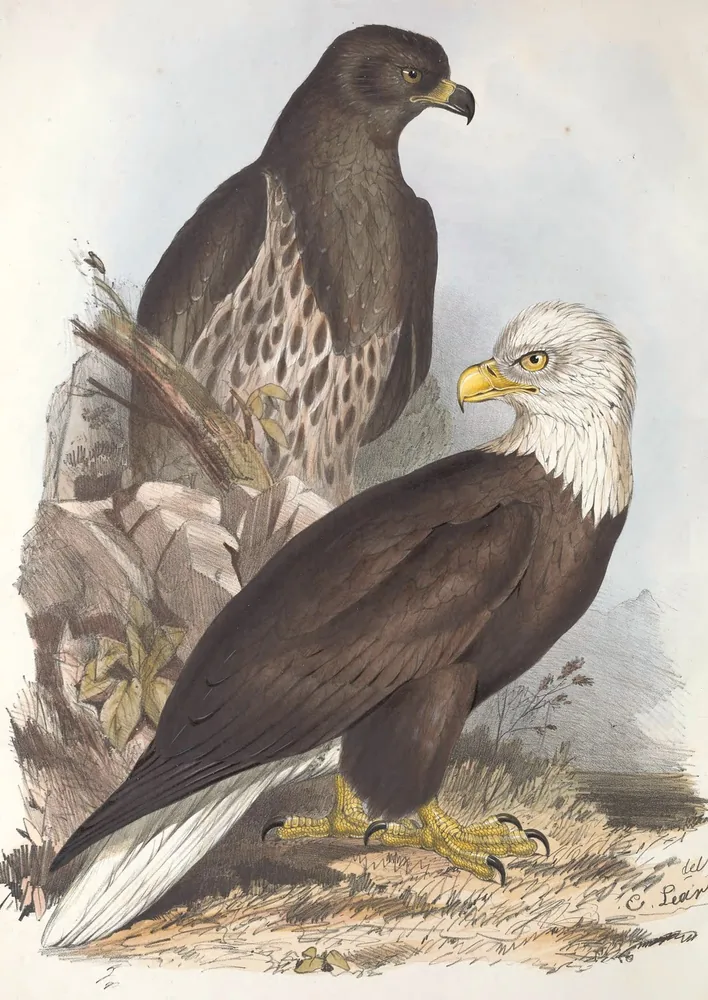
John Gould's hummingbirds
Gould is best known for his hummingbirds. His Monograph of the Trochilidae, or Family of Humming-Birds came out in parts from 1849 to 1861, in five volumes. It is now seen as his masterpiece.
- A private collection. Many of the birds in it came from his own collection of hummingbird specimens. In 1851 it went on show at the Zoological Gardens in Regent's Park, London.
- Real gold. To capture the way a hummingbird's throat flashes in the light, the plates used pure gold leaf under see-through oil colors. The University of Kansas, which holds many of his drawings, keeps sketches with trials of gold paint and gold leaf.
- North American birds. The monograph showed all 20 hummingbirds then known from North America.
- A late first sighting. Gould only saw a living hummingbird in May 1857, on a visit to Philadelphia. By then he had been studying birds for nearly 30 years.
Gould later added a supplement. The whole work ran to 30 parts, and the last three were finished after his death by the ornithologist Richard Bowdler Sharpe.
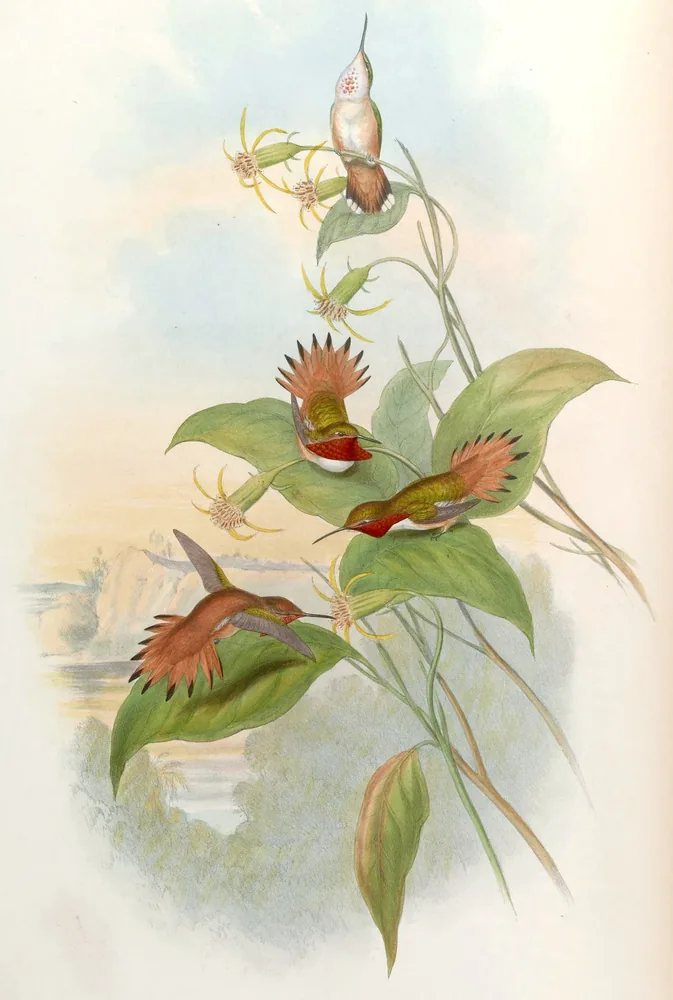
What makes Gould's birds distinctive
- Soft, even color. Lithographs have smooth, soft tones, so Gould's birds look gentle and finished.
- Pale, open backgrounds. Birds often sit against a light wash of sky, with a plant or branch below.
- Pairs and families. Males and females often appear together, which helps when the two look different.
- Science first. Gould was an ornithologist and taxidermist more than a fine artist. His plates aim to show clearly what each species looks like.
Where to see Gould's plates free online
- Biodiversity Heritage Library. This free online library of nature books has all five volumes of the hummingbird monograph, and shares many of the plates on its Flickr account too. It asks, but does not require, that you credit it when you reuse one of its images.
- Internet Archive. Smithsonian Libraries scanned The Birds of Europe and the hummingbird monograph, and the Internet Archive offers the whole books free.
- Wikimedia Commons. Many single plates are here, each with a page that names the book and the library that scanned it.
For more archives and the checks to make before reusing an image, see where to find vintage bird illustrations.
Gould in your book
Here is how Gould shows up in our library, counted in September 2026:
- About 50 birds come from The Birds of Europe. Many birds live on both sides of the Atlantic, from the Common Loon to the Common Eider. The book even includes a Bald Eagle, labeled "White-headed Eagle", and an American Robin, labeled "Migratory Ouzel".
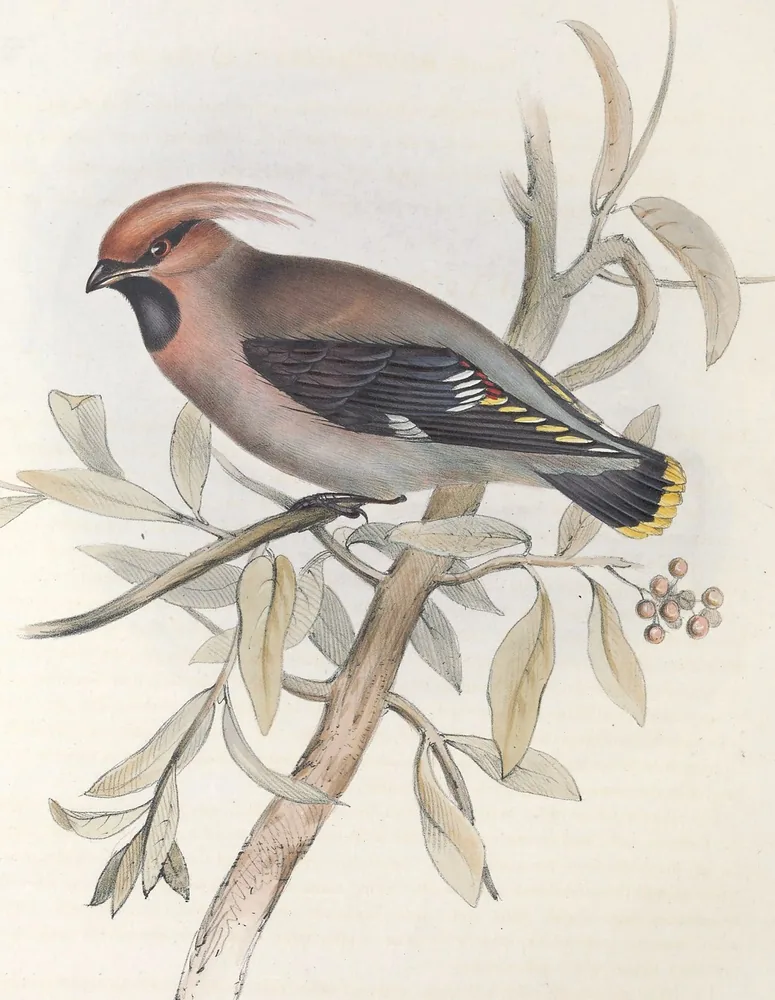
- About 20 birds come from The Birds of Asia, such as the Common Pheasant and the Rock Dove (Rock Pigeon).
- 19 hummingbirds come from the monograph, including the Ruby-throated, Anna's, Rufous, Calliope, Costa's and Black-chinned Hummingbirds.
- About a dozen come from The Birds of Great Britain, such as the Golden Eagle.
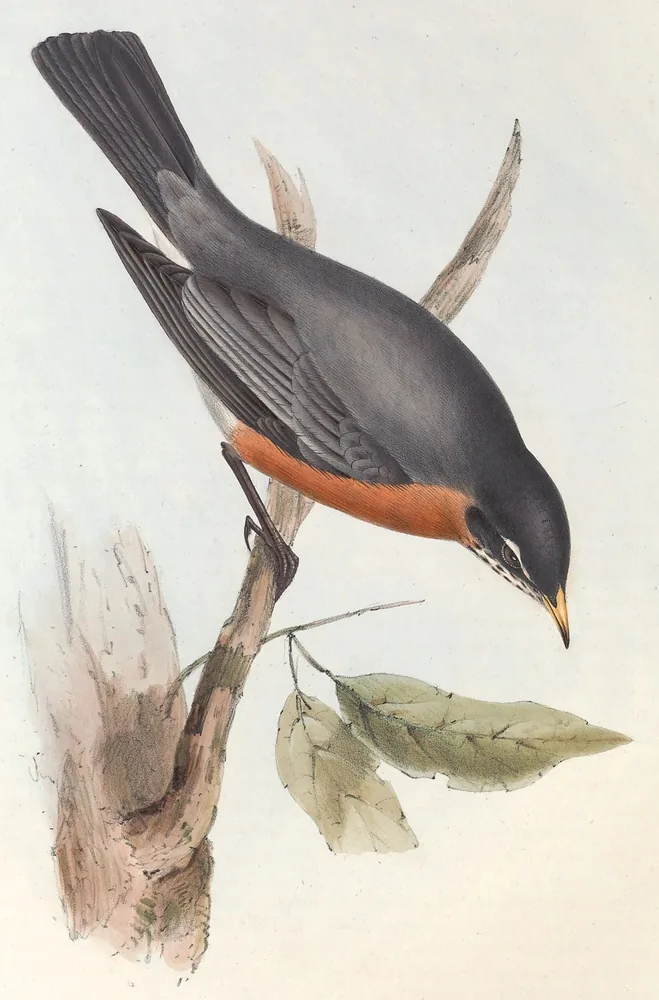
Most of these scans were made by Smithsonian Libraries and shared online through the Biodiversity Heritage Library and the Internet Archive. The Picture Credits pages at the back of your book list each Gould plate with its book and page numbers.
Questions people ask about John Gould
Did John Gould paint his own birds?
Mostly not. Gould made rough sketches and ran the business. Elizabeth Gould drew the plates for his first books, with help from Edward Lear. Later came Henry Constantine Richter, William Hart and Joseph Wolf.
What is John Gould's most famous work?
His Monograph of the Trochilidae, the hummingbird book of 1849–61. Its plates use gold leaf under see-through paint to copy the shine of the birds' feathers.
How many bird plates did Gould publish?
More than 3,000, in some 50 large volumes produced over about 50 years.
More painters
Gould is one of several artists you'll meet in your book. Our guide to famous bird painters introduces the others. See how Audubon's life-size plates and Louis Agassiz Fuertes' portraits compare. New to listing? Read what a life list is.
See these plates in a Birdfolio → /sample