In short: ask the framer for preservation framing. That means a mat of 100% cotton rag or purified, lignin-free board; hinges of Japanese tissue and wheat starch paste, or photo corners, never tape; UV-filtering glazing that doesn't touch the print; and an acid-free backing. Then hang it on an inside wall, out of direct sun and away from heat and damp. If the print is a valuable original, consider framing a good reproduction and keeping the original stored.
A good frame protects a print. A poor one slowly damages it: acid from a cheap board can seep into the paper, tape stains it, and light fades the colors. You just need to know what to ask for.
Key facts
- The Library of Congress says light exposure causes permanent damage: fading, yellowing, brittleness and other changes that can't be undone.
- Its framing guidelines call for a mat of 100% cotton rag or chemically purified, lignin-free board, at least 4-ply, and glazing that never touches the object.
- The Canadian Conservation Institute notes that visible light, not only ultraviolet, fades the colors often found on paper. UV-filtering glass helps, but doesn't make a sunny wall safe.
- Skinner, the auction house, warns that Audubon prints should never be mounted onto board, because acid can seep into the paper and affect the color.
Facts checked: October 2, 2026.
First: what are you framing?
The right care depends on what the print is.
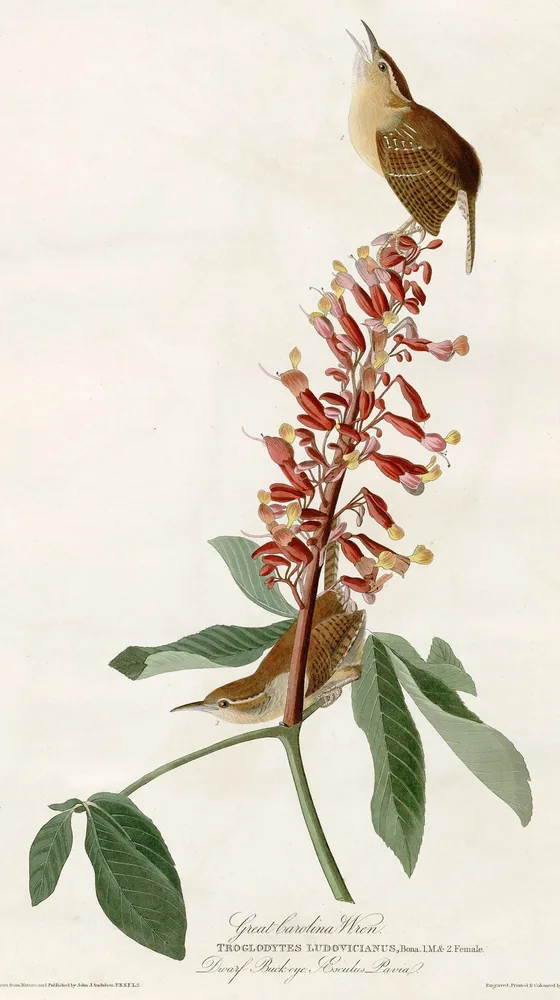
- An original antique print, such as a plate from Audubon's or John Gould's books: irreplaceable. Frame it to preservation standards and keep it out of strong light.
- A good modern reproduction: replaceable. The same materials will help it last longer, but a little fading isn't a disaster.
- A print you're not sure about: treat it as an original until you know. Our guide on telling an original Audubon print from a reproduction explains what to check.
The Library of Congress offers a clever middle way for valuable originals: keep the original in good storage, and frame a well-made reproduction for the wall.
What to ask the framer for
Take this list with you. It follows the Library of Congress's preservation framing guidelines.
| Part | Ask for | Avoid |
|---|---|---|
| Mat | 100% cotton rag, or chemically purified lignin-free board; pH-neutral or slightly alkaline; at least 4-ply | Ordinary wood-pulp mat board |
| Attaching the print | Photo or mounting corners, polyethylene straps or mounting strips, or Japanese tissue hinges with wheat starch paste | Self-adhesive tape, glue, mounting onto board |
| Spacing | A window mat thick enough, or spacers, so the print never touches the glazing | Print pressed against the glass |
| Glazing | UV-opaque acrylic, which filters out ultraviolet light (anti-static if the art is powdery, such as pastel or charcoal) | Glazing that lets UV through |
| Backing | Acid- and lignin-free corrugated board, or corrugated polyethylene or polypropylene, at least 3 mm thick | Cardboard or wood backing |
| Frame | Metal, or wood with the inner edge lined with a barrier film | Bare wood touching the mat |
| Closing up | Pins or brads | Tape |
Overmatting is better than "floating". The Library of Congress notes that a window mat over the edges gives more protection than floating the print in the window opening. If you love the floating look, ask the framer how they'll still keep the print off the glazing.
Mounting onto board is a no. Skinner's collecting guide says prints should never be mounted onto board, as acid can leach into the paper and affect the color. Ask for hinges or corners instead.
Glass or acrylic?
Both are used. The Canadian Conservation Institute points out the trade-offs:
- Glass is sharp and breaks easily, a hazard when it's cut, fitted or shipped.
- Acrylic can build up static on the inside, which can lift loose particles from powdery media like charcoal, pastel and chalk. That's why the Library of Congress suggests anti-static acrylic for such art.
Either way, the Institute says a framed work should never touch the glazing: leave a small breathing space. Ask your framer which they recommend for your print and your wall.
Where to hang it
The Library of Congress lists the places to choose and avoid:
- Out of direct sunlight or any strong light. It even suggests covering the frame with a cloth when no one is looking at it.
- Away from working fireplaces, radiators, and heating or cooling vents.
- On an inside wall, which doesn't get as hot, cold or damp as an outside wall.
- Not in attics or basements, or anywhere with a risk of leaks or extreme conditions.
- Off the floor.
The Canadian Conservation Institute adds two more: avoid hot spotlights shining on the picture, and keep the humidity below 65% to discourage mold.
How long should it hang?
Light damage adds up over time, and it can't be reversed. A UV-filtering glazing cuts the ultraviolet, but the Canadian Conservation Institute points out that visible light fades many of the colors found on paper too.
Conservators deal with this by rotating. The Institute suggests limiting how long light-sensitive objects are on display, and gives an example: six months of display, at low light, over five years. The University of Pittsburgh shows its Audubon set one plate at a time, each for two weeks.
At home, a few simple habits help:
- Choose a dim wall for an original, and a bright one only for a reproduction.
- Rotate if you have more than one print: a few months on the wall, then a rest in a folder.
- Keep a photo of the print when you first frame it. Comparing later shows you if it's fading.
Caring for prints that aren't framed
- Handle with clean hands, and support the sheet with both hands or on a board. The Canadian Conservation Institute suggests clean cotton gloves or well-washed hands.
- Store flat, in an acid- and lignin-free folder or box, somewhere cool and dry. The Library of Congress suggests about 35% relative humidity, and as little light as possible.
- No tape, glue, rubber bands or paper clips on the paper itself (Library of Congress). The Institute warns that tape repairs stain and embrittle paper.
- Pencil, not ink, for any notes on a folder.
When to call a conservator
If a print is stained, torn, moldy, stuck to its backing, or taped, don't try to fix it yourself. A paper conservator can. The Library of Congress points to the American Institute for Conservation, whose website explains how to choose a conservator and find one near you.
Interested in the paintings themselves? Meet the painters and John James Audubon, or see where to view the old plates free online in where to find vintage bird illustrations.
Questions people ask
Is UV glass enough to stop fading?
No. It cuts ultraviolet light, but visible light fades colors too. Hang the print away from sunlight and strong lamps as well.
Does a reproduction need conservation framing?
It doesn't need it, but it helps. Acid-free materials and UV-filtering glazing will keep a reproduction looking good for longer.
My print came in an old frame. Should I take it out?
Ask a framer or conservator to open it. An old frame may hold the print with tape or acidic board, and taking it out safely is a job for someone experienced.