In short: it depends on how you bird. For a record that's free, safe and easy to search, use an app such as eBird or Merlin. For notes on the trail, a small hardcover log book costs about $10 to $15. To tick off the birds of the US and Canada by hand, get a life-list journal such as The Sibley Birder's Life List and Field Diary ($22). A printed book of your own list comes later, as a keepsake, not as a notebook for the field.
When you shop for a birding log book, most of what you'll find is listings: dozens of fill-in books with nearly the same name, and few ways to tell them apart. This guide compares the three kinds of record (paper, app and a printed book), then six journals you can buy today, with prices we read on their makers' or sellers' own pages.
Key facts
- A life list is every kind of bird you've ever seen, each one counted once. Here's more on what a life list is.
- The six journals below cost $9.99 to $22 at the prices we read on October 7, 2026 (the Cornell Lab's on October 2).
- Many self-published "Bird Watching Log Book" paperbacks sell for less, with plain fill-in pages: four we checked cost $5.19 to $7.27.
- eBird and Merlin are free apps from the Cornell Lab of Ornithology, and one free account works for both. The Bird Journal app is free, with a Premium plan at €34.99 a year.
- eBird can give you all your records as one spreadsheet, so a list kept in an app can still end up on paper, or in a book.
Facts checked: October 7, 2026, except the Cornell Lab journal (October 2) and the eBird help pages (October 2 and 3). Prices change, and sales come and go, so check before you buy.
Paper, app or a printed book?
Paper is best for noticing and remembering, an app is best for keeping an accurate record, and a printed book is for enjoying a list you already have. Many birders use two of the three.
| Format | Best for | What it holds | Durability | Price | Effort |
|---|---|---|---|---|---|
| A log book or notebook | Notes, counts and quick sketches on the trail | Whatever you write: date, place, birds, notes | One copy. It can be lost, soaked or faded; waterproof paper helps with rain. | About $5 to $20 for the ones we checked | Write as you go. Hard to add up later. |
| A life-list journal (Sibley's or the Cornell Lab's) | Ticking off species by hand | A line or an entry for each species, with the date and place | One copy, like any notebook. Photograph the pages now and then. | $19.95 to $22 | Write in every new bird. |
| An app: eBird or Merlin | An accurate record you can search | Every checklist or saved bird, with its date and place; your life list adds itself up | Kept in your account, and you can download a copy as a spreadsheet | Free | Enter birds as you go. |
| An app: Bird Journal | Graphs, maps and reports of your own records (Premium) | Your records and species lists, which you can export or print | Its maker says your records live on each of your devices | Free; Premium €34.99 a year | Enter birds as you go. |
| A book printed from your own list (Birdfolio, ours) | A keepsake or a gift, once there are years of records | Every species seen, with a painting or a photo and the date and place of the first sighting | A hardcover. Your records stay safe in the app you keep them in. | $79 to $129, US shipping included | None in the field: it's made once, from the records you already keep. |
Sources: the makers' and sellers' pages listed at the end of this guide, the eBird Help Center for eBird and Merlin, and our own prices for Birdfolio. Bird Journal shows its Premium price in euros.
Six birding journals compared, with prices
These are the journals that kept coming up when we searched for birding log books and bird journals in October 2026. Prices are what each page showed on October 7, 2026, except the Cornell Lab's (October 2).
| Journal | Kind | Size and cover | What's inside | Price |
|---|---|---|---|---|
| The Birder's Logbook (Peter Pauper Press) | Log book | 5 × 7 in, hardcover, 144 pages | Space for field notes and a life list; acid-free paper, an inner pocket and an elastic closure | $9.99 at the National Museum of Wildlife Art shop |
| Birder's Journal Pocket (Clever Fox) | Pocket log book | 4 × 5.5 in, hardcover, lay-flat binding | Log pages with fields for date, time, weather, place, species and behavior; a list of birds you hope to see | $14.99 regular price (on sale for $9.99 when we looked) |
| The Bird Watcher's Journal (Weldon Owen) | Guided journal | 5.75 × 8.25 in, flexible cover, 168 pages | Prompts for each bird, blank pages for sketches, and checklists including a life list | $16.99 at Insight Editions |
| The Slow Birding Journal (Joan E. Strassmann) | Guided journal | Paperback, 224 pages | Prompts and questions, advice on what to look for, drawings and blank pages | $20 at Penguin Random House |
| Birder's Life List & Journal (Cornell Lab of Ornithology) | Life-list journal | Paperback, 264 pages | A life list and journal; we haven't seen inside | $19.95 at Annie Bloom's Books |
| The Sibley Birder's Life List and Field Diary (David Allen Sibley) | Life-list journal | Paperback, 304 pages | An entry for each of the 923 species of the US and Canada, with room for where, when and notes; a checklist at the back | $22 at Penguin Random House |
The cheapest log books. Many self-published books called "Bird Watching Log Book" sell online for less than any of these. They're paperbacks of plain fill-in pages; the ones we checked ran to about 120 pages. Four we checked on October 7, 2026 cost $5.19 to $7.27. They're fine for trying out the habit; the books above add sturdier covers, guidance or a life list.
For wet weather. Some makers sell notebooks with waterproof paper. If you bird in rain or on boats, look for that in the description.
What to look for in a birding log book
Look for a book small enough to carry, paper that suits your weather, a binding that lies flat, and room on every page for the date, the place and a few notes. Then check these:
- Size. A pocket book (about 4 × 5.5 inches, like Clever Fox's) goes everywhere. A 5 × 7 or 5.75 × 8.25 inch book is easier to write in but lives in a bag or the car.
- Paper. Thick paper stops ink showing through. Acid-free, "archival" paper is made to last. Waterproof paper is worth it if you bird in the rain. The Library of Congress's advice on caring for paper is to use pencil, not ink, if you want marks to last.
- Binding. A book that lies flat, like a lay-flat or spiral binding, is much easier to write in standing up. A hard cover gives you something firm to lean on.
- Life-list pages. If you'll want to count your species, choose a book with a life list, or a separate life-list journal.
- Room for the basics. Every entry needs the date and the place. John Muir Laws, writing for Audubon magazine, recommends starting every entry with them. A printed form helps if you tend to forget; blank pages suit people who sketch.
- A way to find things again. Few log books have a true index. A life list or checklist at the back does the same job, so you can see when and where you first saw a bird.
What is a birding log book?
A birding log book is a notebook for recording the birds you see: at least the date, the place and the species, and often the weather, a count and a few notes. The books sold under that name come in four kinds:
- Fill-in log books. Each page is a printed form, with boxes for the date, time, place, weather, species and notes.
- Guided journals. These add prompts and tips: what to look for, and questions to ask yourself. They suit people who are just starting.
- Life-list journals. These give each species a line or an entry, in field-guide order, and you fill them in over many years.
- Plain field notebooks. Blank or lined pages, often pocket-size. Birders call what goes in them "field notes": notes written outdoors, at the time.
A "bird watching diary" is usually the same thing as a journal: entries by date, in your own words.
What should a birding journal include?
The date, the place and the birds you saw. Everything else, such as the weather, a count, a sketch or one thing you noticed, is optional. A page with the date and place is a record you can use years later; without them, it's only a memory.
For prompts, a one-page layout you can repeat and an example entry, see our guide to what to write in a birding journal.
Is a paper log book better than an app?
Neither is better at everything. An app is better at keeping a record: it adds up your list, finds any sighting in seconds, and lets you save a copy. Paper is better for slowing down, sketching and writing things in your own words. Many birders use both.
Paper is better for:
- Looking closely. Laws makes the case that a notebook gives you plenty to study even in common birds; you don't need a rare one.
- Drawing. A quick sketch of a bill or a wing bar is easier with a pencil than on a phone.
- Working anywhere. No battery, no signal. Merlin needs a phone signal or Wi-Fi to save a bird.
- Looking back. A shelf of notebooks in your own handwriting is a lovely thing to own.
An app is better for:
- Counting. eBird builds your life list for you: every species you've ever reported, which you can filter by place or date.
- Keeping it safe. In My eBird, Download My Data gives you a spreadsheet of all your records. A notebook left on a bus is simply gone.
- Naming the bird. Merlin is the Cornell Lab's free app for identifying birds. Birds you save in Merlin, signed in with your eBird account, go to eBird too.
- Keeping up with name changes. Scientists split and lump species from time to time. eBird updates its list once a year, in October, and applies the changes to your old records. A journal printed in 2017 can't do that. Our guide to bird splits and lumps explains how it works.
Our suggestion: let the app keep the list, and let paper keep the story. Write in a notebook on your walk, then enter the birds in eBird or Merlin when you're home. If you keep your list on paper only, photograph the pages now and then, or type your list into a spreadsheet.
Already have years of sightings on paper? eBird's help explains how to add older records, even a whole life list at once, on a single "list-building" checklist. You need at least the country for each bird. Bird Journal says it can import eBird records too.
What's the best birding journal for a beginner?
For most beginners, a guided journal, used alongside the free Merlin app. The journal gives you something to write; the app helps you put a name to the bird.
Two good guided journals:
- The Bird Watcher's Journal (Weldon Owen, $16.99) has prompts for each bird's name, colors and markings, habitat and behavior, blank pages for sketches, and checklists at the back, including a life list.
- The Slow Birding Journal (Joan E. Strassmann, $20) is made for local and backyard birders, its publisher says. It has prompts and questions, advice on what to look for, and drawings of well-known birds with blank pages for your own.
A plain notebook works just as well if you'd rather not be told what to write. Not ready to spend anything? Start with our free printable life list, and print more pages as you need them.
What about a life-list journal for a beginner? Sibley's has 923 species, and most entries will stay empty for years. Some people find that motivating; others find it a little daunting. For a new birder, a guided journal is the safer gift.
Sibley's life list or the Cornell Lab's journal?
Both are paperbacks you fill in by hand, at about $20. Choose Sibley's if you'd like every bird of the US and Canada laid out for you.
The Sibley Birder's Life List and Field Diary (2017) is by David Allen Sibley, author of the Sibley field guides. Penguin Random House says it has entries for the 923 species found in the US and Canada, with space for where and when you saw each bird, and for notes or memories. A checklist at the back helps you keep count.
The Cornell Lab's Birder's Life List & Journal (Princeton University Press, 2019) is a 264-page paperback. Page layouts differ, so look inside before you buy if you can.
Want a hardcover? Of the six journals above, Peter Pauper's and Clever Fox's are hardcovers. Weldon Owen's has a flexible cover, and the other three are paperbacks.
How do I turn my eBird list into a book?
Download your records from eBird, then have them printed: on your own printer for free, or as a bound book. Here's the way to a book with Birdfolio, which is ours:
- Download your data. In My eBird, click Download My Data. eBird emails you a link to a .zip file with all your records. Our guide shows each screen: how to download your eBird data.
- Use Merlin? Birds you save in Merlin while signed in go to your eBird account, so they come in the same file. Here's how to export your Merlin life list.
- Make your book. Open Make your Birdfolio and drop in the file. You see your species count and the first pages of your book free, before you pay, and you don't need an account.
- Check and order. Orders open November 1, 2026, for US addresses only.
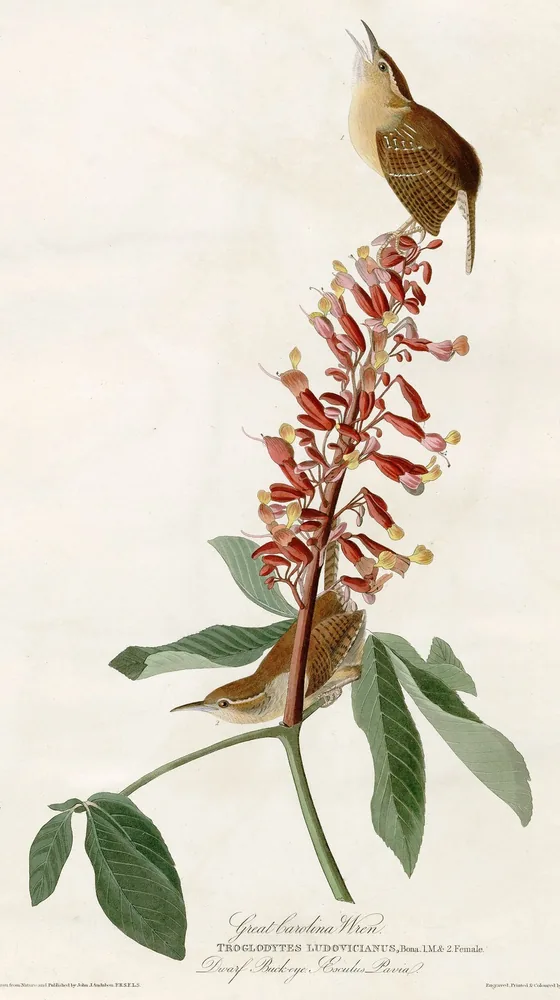
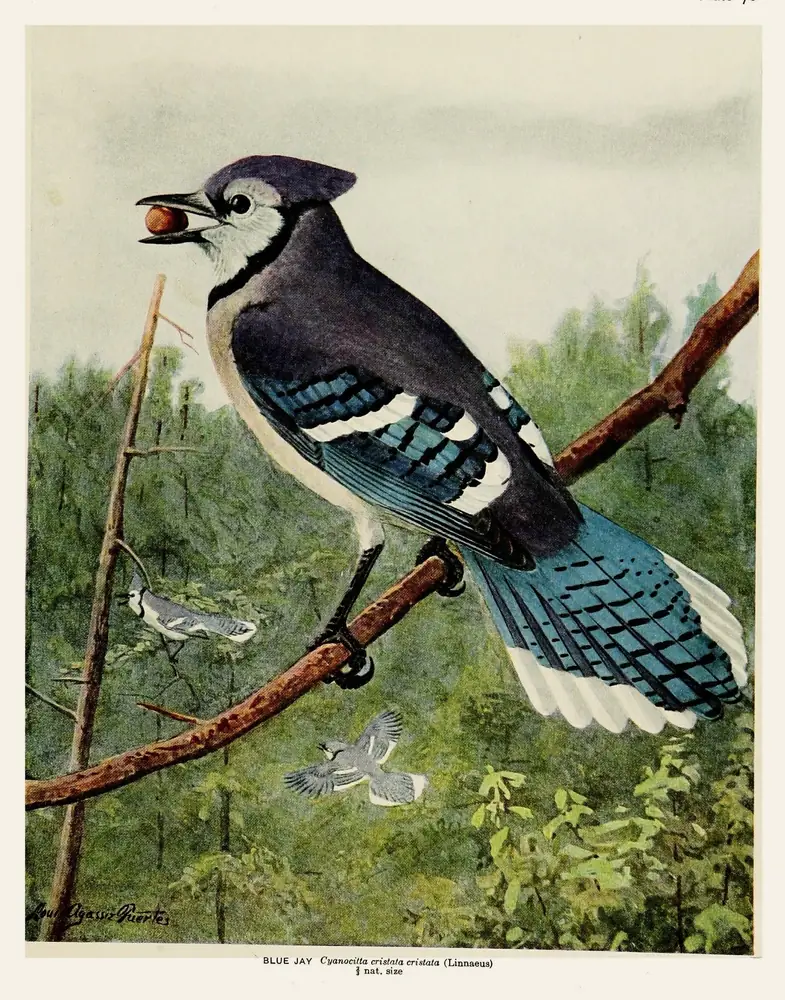
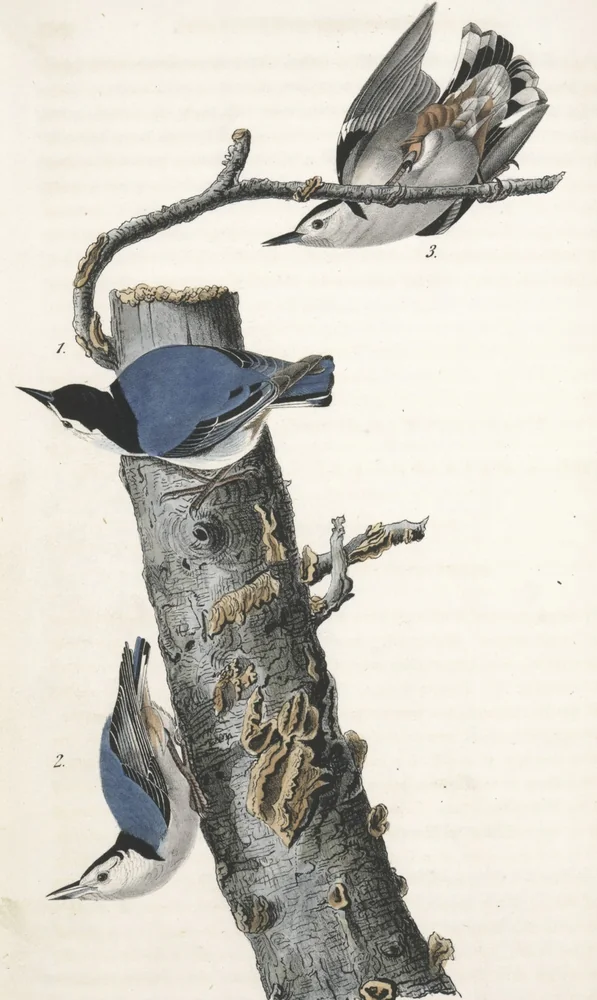
A Birdfolio is a hardcover, 8.5 × 11 inches. Every species on your list gets a classic painting or a credited photo, with the date and place you first saw it. About 7 in 10 pictures are paintings, by John James Audubon, Louis Agassiz Fuertes and other classic painters. The book also marks your milestones, maps the places you've birded and ends with an index.
It costs $79 for lists up to 300 species, $99 up to 1,000, and $129 above that, with US shipping included.
What it isn't: a log book. It's a finished book made from the records you already keep, not one you write in on the trail. It's also a snapshot of your list on the day you make it, so keep adding your birds to the app.
Would you rather print your list for free? Our guide on how to print your bird life list compares five ways, three of them free.
Buying a birding journal as a gift?
Match the gift to the way they bird:
- A new birder: a guided journal, and a note suggesting the free Merlin app.
- Someone who's always outdoors: a small hardcover log book, such as Peter Pauper's or Clever Fox's.
- Someone who loves lists: Sibley's life list or the Cornell Lab's journal.
- A longtime birder who keeps their list in eBird: they may have the record but not the book. You can give a Birdfolio as a gift and let them add their list when they're ready.
For more ideas at every budget, see our gifts for birders and bird lovers.
Which should you get?
- You watch birds now and then, mostly at the feeder: a guided journal, kept by the window.
- You bird often and want accurate totals: an app, with a pocket log book if you enjoy writing.
- You love lists and handwriting: a life-list journal.
- You have years of records and want something to keep or give: a book printed from your own list. Page through a Birdfolio to see one.
- Not sure yet: start free, with Merlin and any notebook.
Whatever you choose, keep a copy of your records somewhere safe. Here's how to back up your birding records.
Birdfolio is not affiliated with eBird, the Cornell Lab of Ornithology or iNaturalist.