The birds of "The Twelve Days of Christmas" are a partridge, two turtle doves, three French hens, four calling birds, six geese and seven swans: 23 birds, or 184 if you add up every verse. The calling birds were first printed as "colly" birds, an old word for blackbirds, and some people think the five gold rings were birds too, though that's a theory.
Here is each bird, which species it most likely was, and whether you can see it in the United States and put it on your life list. Three of them, it turns out, live wild in America.
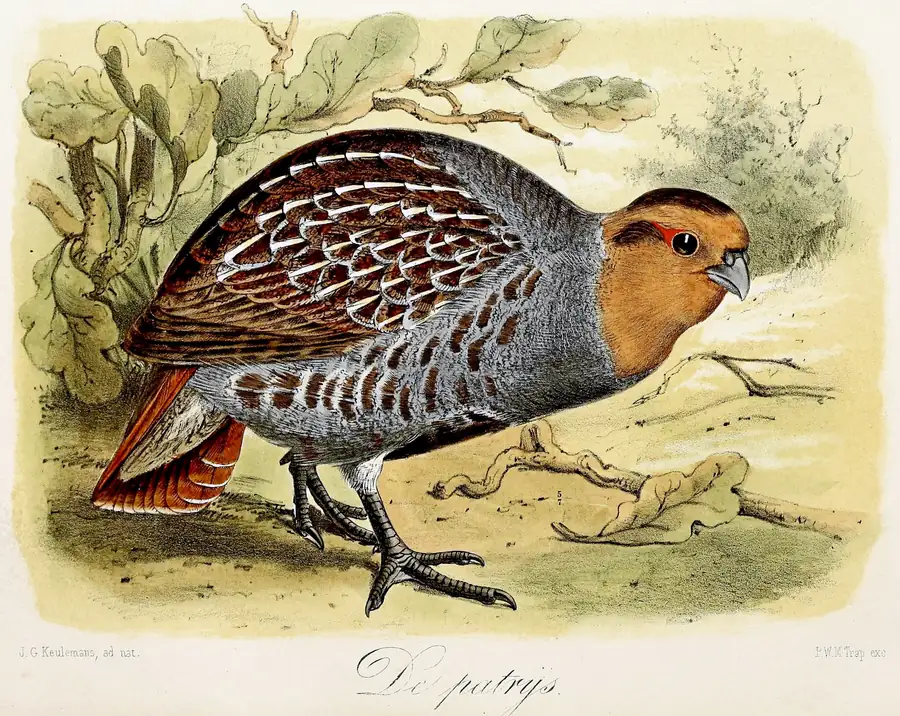
The birds of the song at a glance
| Day | Gift | The bird, most likely | Wild in the US? |
|---|---|---|---|
| 1 | A partridge in a pear tree | Gray Partridge or Red-legged Partridge | Gray Partridge: yes, introduced, mainly on the northern prairies |
| 2 | Two turtle doves | European Turtle Dove | Almost never; its cousin the Eurasian Collared-Dove is common |
| 3 | Three French hens | Hens of a French chicken breed | Farm birds: they don't count |
| 4 | Four calling birds | Eurasian Blackbird ("colly" birds) | Almost never |
| 5 | Five gold rings | Rings, though some say Ring-necked Pheasants | The pheasant: yes, introduced, widespread |
| 6 | Six geese a-laying | Farm geese, descended from the Greylag Goose | The wild Graylag: almost never |
| 7 | Seven swans a-swimming | Mute Swan | Yes, introduced, mainly in the Northeast |
Facts checked: October 22, 2026.
What is a partridge in a pear tree?
A game bird, most likely Europe's Gray Partridge or its Red-legged Partridge, perched where partridges rarely go. The song never says which partridge, and the experts split.
Matthew L. Miller of The Nature Conservancy calls the Gray Partridge, the common partridge of European farmland, "the likeliest candidate," since it was probably the bird the song's first singers knew. Pamela Rasmussen, an ornithologist at Michigan State University, picks the Red-legged Partridge, which was brought to England in the 1700s. The Game and Wildlife Conservation Trust says it was successfully introduced to East Anglia in about 1770, from French stock. If that's the bird, it was the fashionable newcomer when the song was first printed.
There's a theory about the tree, too. The Horniman Museum, in London, mentions the idea that the line came from France, through a mistranslation of the French word for partridge, perdrix. That's a guess, not a documented history: the oldest printing already has the pear tree.
Do partridges really sit in pear trees?
Hardly ever. The RSPB, Britain's bird charity, calls the Grey Partridge (the British spelling) "strictly a ground bird," and Miller writes that he has never seen one within 100 yards of a tree. Outside the nesting season they live in small groups called coveys, of 6 to 15 birds, the RSPB says.
What are the two turtle doves, and are they endangered?
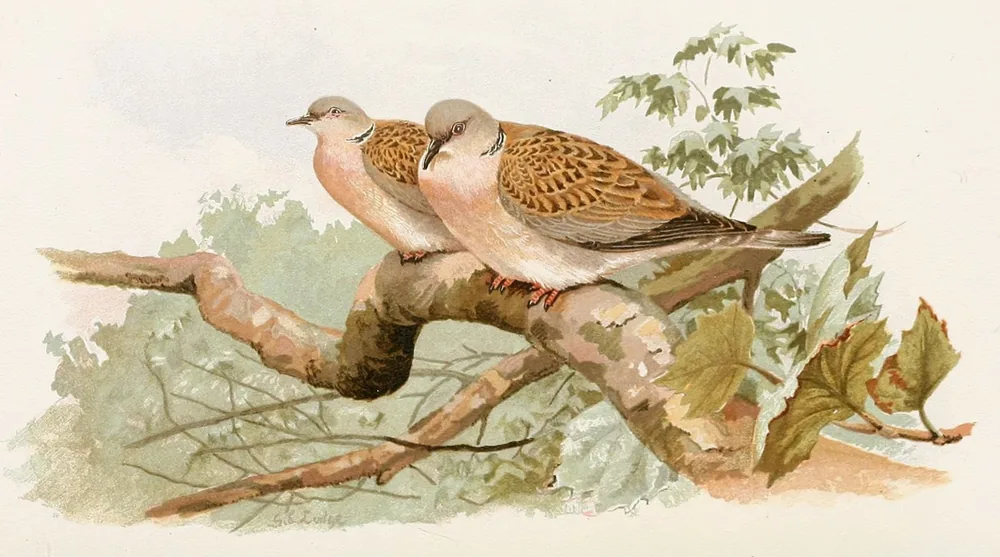
They're European Turtle Doves, small doves that migrate between Europe and Africa, and they are threatened: in 2015 the IUCN Red List moved them to Vulnerable, one step below Endangered. BirdLife Malta reported the change in October 2015, after the world's turtle doves had declined by more than 30% in 16 years.
In Britain the loss is far steeper. The RSPB says turtle dove numbers have "plummeted by almost 99% since the 1960s," and the bird has been on the UK's Red List, its highest conservation priority, since 1996. The causes it gives are fewer wildflower seeds on farmland, where the doves feed, and unsustainable hunting along their migration route through southwest Europe. There is good news as well: after France, Spain and Portugal began managing the hunt in 2021, the western European breeding population grew by over 30% in three years.
The name is the bird's own song. Its purring "turr turr" call is where the name turtle came from, the RSPB says; it has nothing to do with turtles. British turtle doves are summer visitors, flying up to 3,000 miles each way to and from West Africa. And there are two in the song for a reason: turtle doves have stood for love and devotion throughout history, the RSPB notes, so a pair was the point.
What breed are the three French hens?
The song doesn't name a breed: French hens were simply hens from France, though Faverolles, Houdan and Crèvecoeur are the breeds people usually suggest. The Horniman Museum says the song is widely thought to mean Faverolles.
The dates argue against that. The Livestock Conservancy, which looks after heritage breeds in the US, says the Faverolles took shape as a distinct type by about 1886, roughly a century after the song was first printed. Older French breeds fit better: the Conservancy says the black Crèvecoeur of Normandy has been documented back to the 12th century, and the Houdan, named for a village west of Paris, reached America in 1865.
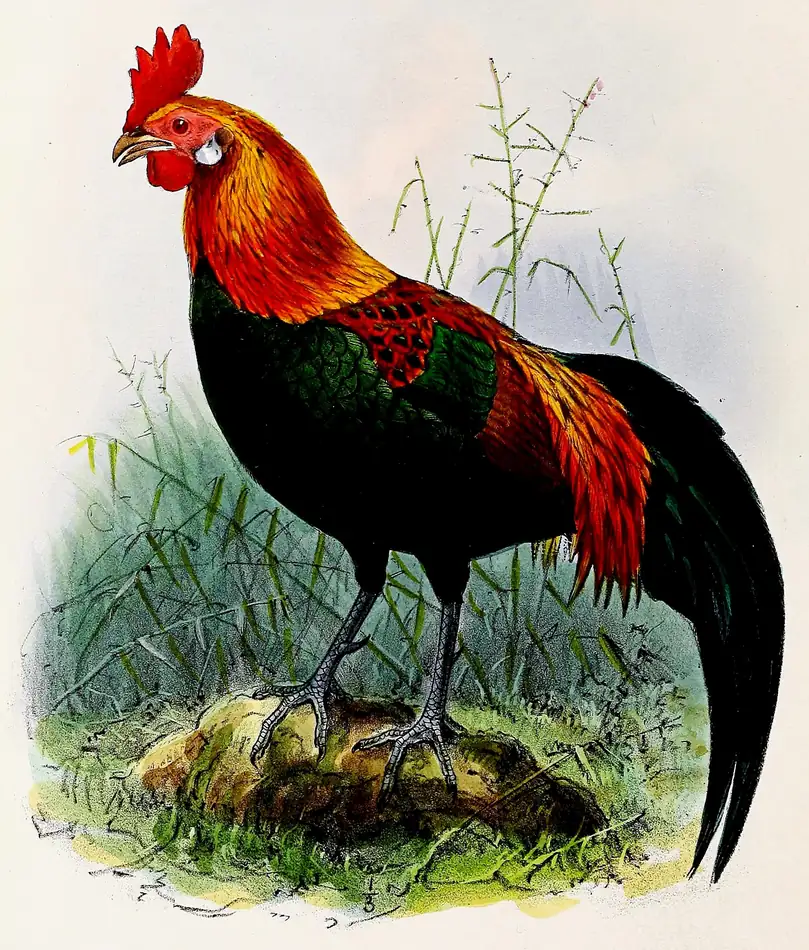
The American Ornithological Society's Bob Montgomerie adds that hens from France were a luxury import in the 16th century, prized for the table, and that an 1864 version of the song had "fat hens" instead. Whatever the breed, every chicken descends from a wild bird of South Asia, the Red Junglefowl, the Buffalo Bill Center of the West's guide to the song's birds notes.
What are the four calling birds?
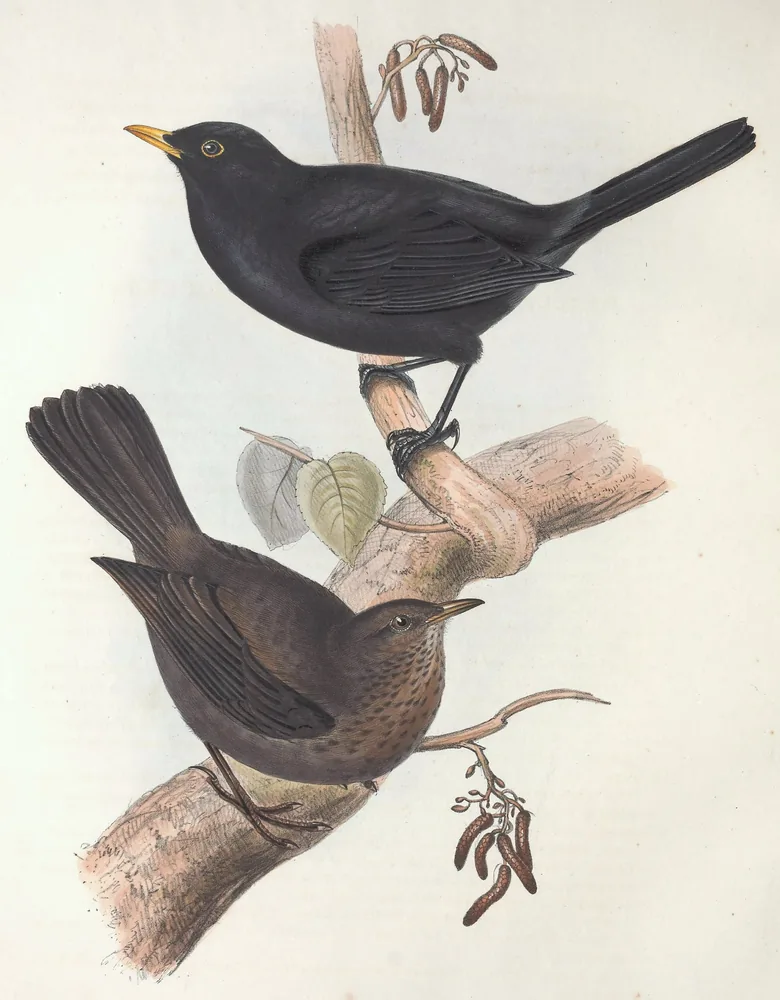
They were blackbirds: the oldest printing has "colly birds," and colly meant coal-black. In the copy of that first book you can read online, the printer spelled it both "colly" and "colley." Montgomerie explains that "colly" meant black, as in "coaly," and that the original colly bird was the European, or Eurasian, Blackbird. Joseph Wright's English Dialect Dictionary of 1898 still listed "colley" for the blackbird in Gloucestershire, Somerset and Devon, a University of Reading history blog notes.
Then the word drifted. Montgomerie lists canary, collie, colour'd and curley birds among the later versions, and James Halliwell's Nursery Rhymes of England (1842) printed "canary birds," the Reading blog says. "Calling" first appeared in Frederic Austin's 1909 edition, the version most people sing now.
The colly bird isn't one of America's blackbirds. The RSPB groups it with the thrushes, and the Center of the West notes it is only distantly related to the blackbirds of the US, such as the Red-winged Blackbird. Its relative in American yards is the American Robin: the blackbird is Turdus merula and the robin Turdus migratorius, the same genus. The male blackbird is black, with an orange-yellow bill and a yellow eye-ring; the female is brown. It's still common in Britain: more than 5 million pairs breed in the UK, the RSPB says.
Were the five gold rings birds?
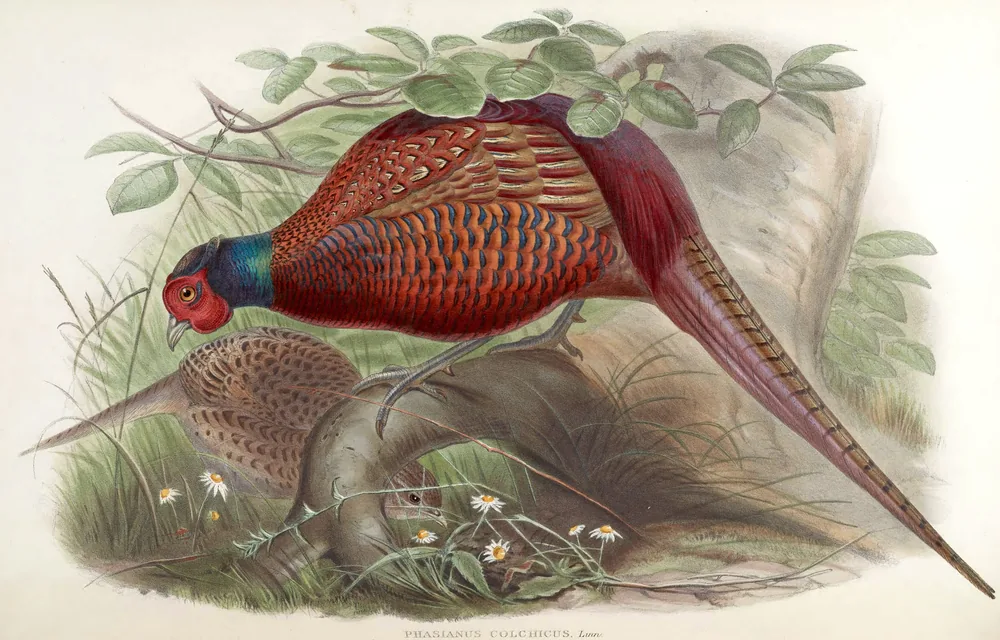
Probably not, but it's a popular theory: some people think the rings were Ring-necked Pheasants, others goldfinches, which were once called "goldspinks." No early version says so. The oldest printing has plain "gold rings," gold and not golden.
The Horniman Museum mentions the rings around a pheasant's neck as one reading. The Nature Conservancy's Miller finds the pheasant case "pretty strong," and quotes the 10,000 Birds blog, which asks why the giver would "vacillate from birds to jewelry to birds again." The goldfinch version rests on the old name: if the line began as "goldspinks," it could have changed when it was copied down, Miller writes, just as colly birds became calling birds. Both are theories; the song itself never settles it.
If the rings were pheasants, they're one of the song's birds you can see in much of the US. In 1880 Owen Denny, then US consul general in Shanghai, brought a shipment of Ring-necked Pheasants home to Oregon, and within 50 years pheasants had been stocked in 40 states, The Nature Conservancy says. The pheasant is the South Dakota state bird. And the goldspink has an American foothold too: the American Birding Association added the European Goldfinch to its official checklist on March 5, 2024, for the birds living between Milwaukee and Chicago, descended from releases by a pet importer in the early 2000s, the Wisconsin Society for Ornithology reports.
What kind of geese are the six geese a-laying?
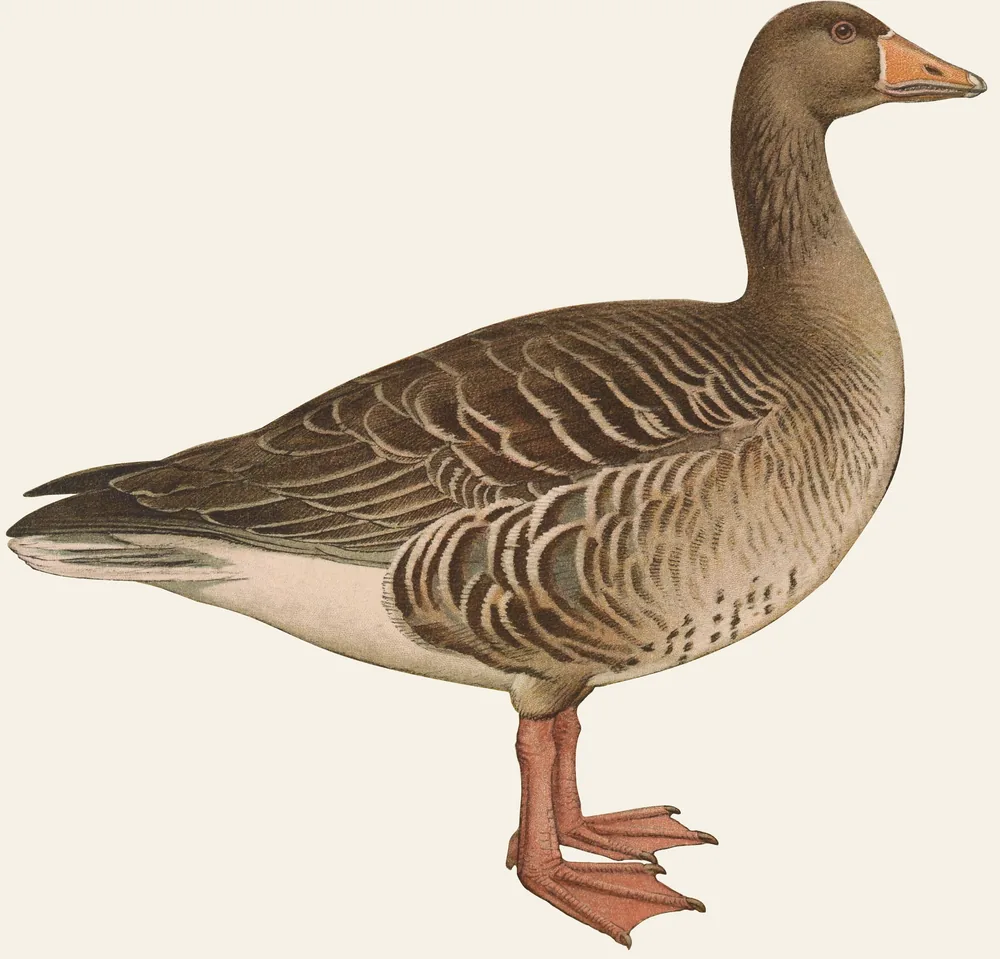
Farmyard geese, and most of those descend from one wild bird, the Greylag Goose. The RSPB calls the Greylag "the ancestor of most domestic geese" and the largest and bulkiest wild goose native to Britain and Europe. (In America its name is spelled Graylag.)
Greylags have a place in science, too. They were the geese in Konrad Lorenz's imprinting experiments, which showed that newly hatched goslings attach themselves to the first moving thing they see, the Center of the West notes.
For a US birder, farm geese don't count: the American Birding Association's rules say a bird must be "alive, wild, and unrestrained." A truly wild Graylag Goose is so rare in the US and Canada that the ABA lists it as accidental. For a wild goose on your list, look to the native ones, such as the Canada Goose.
What kind of swans are the seven swans a-swimming?
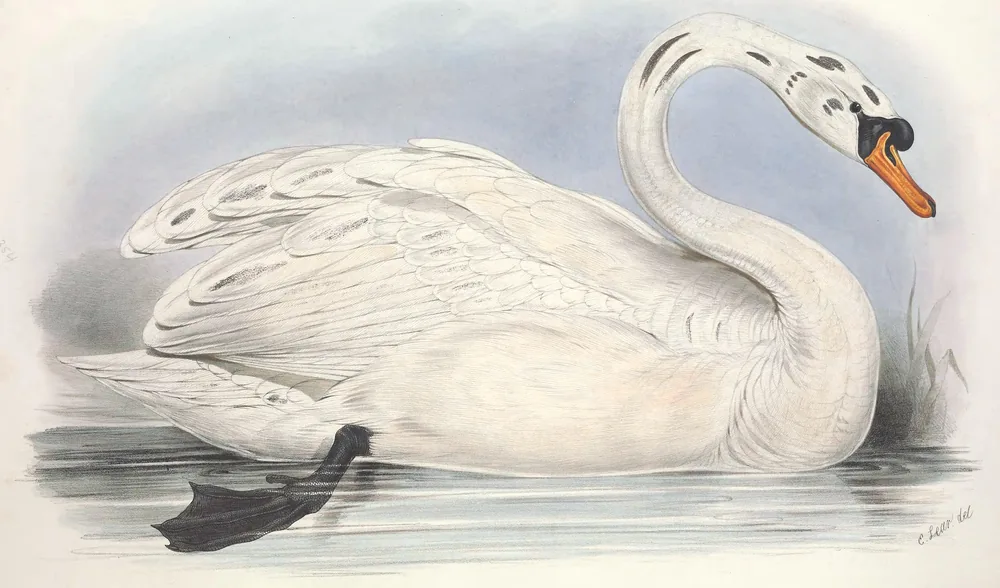
Mute Swans: the big white swans with orange bills on English rivers, where the King can still claim any unmarked one. The Royal Family's website says the King "retains the right to claim ownership" of any unmarked mute swan in open water, a claim that goes back to the 12th century. Two London livery companies, the Vintners and the Dyers, have held similar rights since the 15th century. Every July, on stretches of the Thames, the swans are lifted from the water and checked, and their cygnets weighed and measured, in a ceremony called Swan Upping.
Despite the name, Mute Swans aren't silent: they hiss loudly when disturbed, the RSPB says. The orange bill carries a black knob, bigger in males, and a female lays four to seven eggs: seven swans is a big family.
America has Mute Swans as well. The Audubon field guide says they were brought from Europe to decorate parks and estates, and have become naturalized in parts of North America, mainly the Northeast. They eat great amounts of underwater plants and compete with native waterfowl, so some biologists have suggested controlling them around Chesapeake Bay and in southern New England. America's native swans are the Trumpeter and the Tundra Swan.
Can you see the Twelve Days of Christmas birds in the US?
Yes: three of them live wild in the US and count on a life list, the Gray Partridge, the Mute Swan and, if the gold rings were birds, the Ring-necked Pheasant. All three were brought from Europe or Asia. Under the American Birding Association's rules, a bird of an introduced species counts once it belongs to an established population, and these three are on its checklist of the birds of the US and Canada.
The others have turned up so rarely that the checklist calls them Code 5, "accidental": five or fewer records in all, or fewer than three in the past 30 years. French hens and farm geese never count at all.
| The song's bird | Name on the ABA Checklist | Code | What to know |
|---|---|---|---|
| Partridge | Gray Partridge | 2 | Most successful on the northern prairies, in farmland with hedgerows and shelterbelts |
| Turtle doves | European Turtle-Dove | 5 | Accidental; look for its cousin, the Eurasian Collared-Dove (Code 1) |
| Colly birds | Eurasian Blackbird | 5 | Accidental; its cousin the American Robin is Code 1 |
| Gold rings, if birds | Ring-necked Pheasant | 1 | Stocked in 40 states within 50 years of 1880 |
| Gold rings, if goldspinks | European Goldfinch | 2 | Southeastern Wisconsin and northern Illinois |
| Geese | Graylag Goose | 5 | Accidental |
| Swans | Mute Swan | 1 | Mainly in the Northeast |
The Gray Partridge is a bird of open farm country. It was brought to North America as early as the 1790s and has done best on the northern prairies, the Audubon field guide says; South Dakota's wildlife agency finds it in grassy and farm country, especially near shelterbelts and woodlots. It lives in coveys most of the year and in winter may burrow into the snow to reach seeds. Americans often call it the Hungarian partridge.
The turtle dove's cousin is a common sight. The Eurasian Collared-Dove, in the same genus, was accidentally introduced to the Bahamas in 1974, soon reached Florida, and is now common across much of North America, the Audubon field guide says.
Winter is a good time to go looking. If you'd like company, the Christmas Bird Count runs from December 14, 2026 to January 5, 2027, and anyone can join. And America's own Christmas bird is a native: here's why the cardinal is a symbol of Christmas. A Birdfolio prints every bird you've seen as a book, each one beside a classic painting like the ones on this page.
How many birds are in the Twelve Days of Christmas?
23 if you count each bird once, and 184 if you add up every verse, because each day repeats all the gifts before it. The partridge is sung on all 12 days, the turtle doves on 11, and so on, so a gift's total is its number times the days it's sung:
- Partridges: 1 × 12 = 12
- Turtle doves: 2 × 11 = 22
- French hens: 3 × 10 = 30
- Calling birds: 4 × 9 = 36
- Geese: 6 × 7 = 42
- Swans: 7 × 6 = 42
That makes 184 birds. If the five gold rings were pheasants, add 5 × 8 = 40 more, for 224. Counting every gift, birds or not, the true love sends 364: one for every day of the year but one. (That's our arithmetic.)
Where does the song come from?
From England: the words were first printed around 1780 in a London children's book called Mirth without Mischief, and the tune most people sing was published by Frederic Austin in 1909. The Horniman Museum gives 1780 for the book. The copy you can read online, from a printing by J. Davenport for C. Sheppard, is catalogued as about 1800. It introduces the song as "Sung at King Pepin's Ball," and the book sold for threepence. Its later days bring maids a-milking, drummers drumming, pipers piping, ladies dancing and lords a-leaping.
Where the words came from before that is less certain. The Horniman Museum lists the theories: a memory-and-forfeits game, where a forgotten gift cost a kiss or a sweet; a song from France; a Christian teaching aid, with a meaning for each gift; even a hidden recipe for a Tudor feast. Montgomerie thinks the words were likely derived from an older French song, Les Douze Mois. None of these is proven.
The tune is easier to trace. Frederic Austin, an English singer and composer, performed his arrangement in 1905 at Victoria Hall in Exeter, with Hamilton Harty at the piano, and Novello published it in 1909, according to the score library IMSLP. In a footnote to a 1955 reprint, Austin wrote that the song was "current in my family" when he was a child. His arrangement gave the song its long, drawn-out "five gold rings," the Farmers' Almanac says, and, Montgomerie notes, its calling birds.
Questions people ask
What bird is the partridge in a pear tree?
The song doesn't say. The Gray Partridge and the Red-legged Partridge are the two favorites; both live on the ground, not in trees.
What are colly birds?
Blackbirds. "Colly" was an old English word for coal-black, and the colly bird was the Eurasian Blackbird, a thrush related to the American Robin.
Are turtle doves endangered?
They're listed as Vulnerable on the IUCN Red List, one step below Endangered, since 2015. In Britain their numbers have fallen by almost 99% since the 1960s, the RSPB says.
What breed are the French hens?
No breed is named. Faverolles is the usual answer, but the breed took shape around 1886, long after the song was printed; older breeds such as the Crèvecoeur and Houdan fit the dates better.
Are the five gold rings birds?
Probably not. Some people think they were Ring-necked Pheasants or goldfinches ("goldspinks"), but that's a theory; the oldest printing simply says "gold rings."
Can you count a Mute Swan on your life list?
Yes, in the US and Canada. The Mute Swan is on the American Birding Association's checklist as an established species, Code 1, so a wild, free-flying one counts.
How many gifts are in the Twelve Days of Christmas?
364, counting every repeat. Counting each gift once, there are 78.