A spark bird is the bird that first made someone fall for birding. Audubon magazine defines it as "a species that triggers a lifelong passion for birding." It can be any bird, rare or common: a jay at a feeder, a heron on a lake, a woodpecker in the woods. Birding magazines, podcasts and clubs love collecting these stories.
Key facts
- Audubon magazine included "spark bird" in its dictionary for birders in January 2015.
- The Spark Bird Project, started in 2022 by psychologist Jenn Lodi-Smith of Canisius University, had collected nearly 250 spark stories by fall 2025. They name 205 different species (Audubon, Fall 2025).
- In those stories, the most common age for the spark was 10, and it came as late as age 71.
- Two-thirds of the stories involve other people, often family or friends: a grandmother's garden, a kayak trip with a sister.
Facts checked: October 1, 2026.
What "spark bird" means
Birders use the term for one particular sighting: the bird that turned a passing interest into a real hobby. Some people call it a conversion. Ted Floyd, the longtime editor of the American Birding Association's Birding magazine, describes it as a turning point.
A spark bird doesn't have to be rare. It only has to arrive at the right moment. The same bird can be ordinary for one person and life-changing for the next.
It's also different from a lifer, which is any species you see for the first time. Your spark bird may be a lifer, but most lifers aren't spark birds. (More birding words in our guide, what is a life list?)
Where the term comes from
Nobody seems to know who first said "spark bird". We couldn't find a first use, or anyone who claims to have coined it. What we can say:
- By 2015, it was common enough for Audubon magazine to put it in its dictionary for birders, next to words like "lifer" and "nemesis bird".
- By the early 2020s, it was in wide use. Orion magazine and the National Wildlife Federation ran spark-bird stories in 2021, the ABA's Birding editor wrote about it the same year, and BirdNote runs a Spark Bird series about how people got into birds.
The experience is surely older than the name. The name may be older than 2015 too: that's simply the earliest use we found.
Examples of spark birds
Spark birds are as varied as birders. A few from the stories we read:
- Everyday birds: a Blue Jay, an American Robin, a Red-tailed Hawk, a Great Blue Heron and a Yellow Warbler, from BirdNote's Spark Bird series.
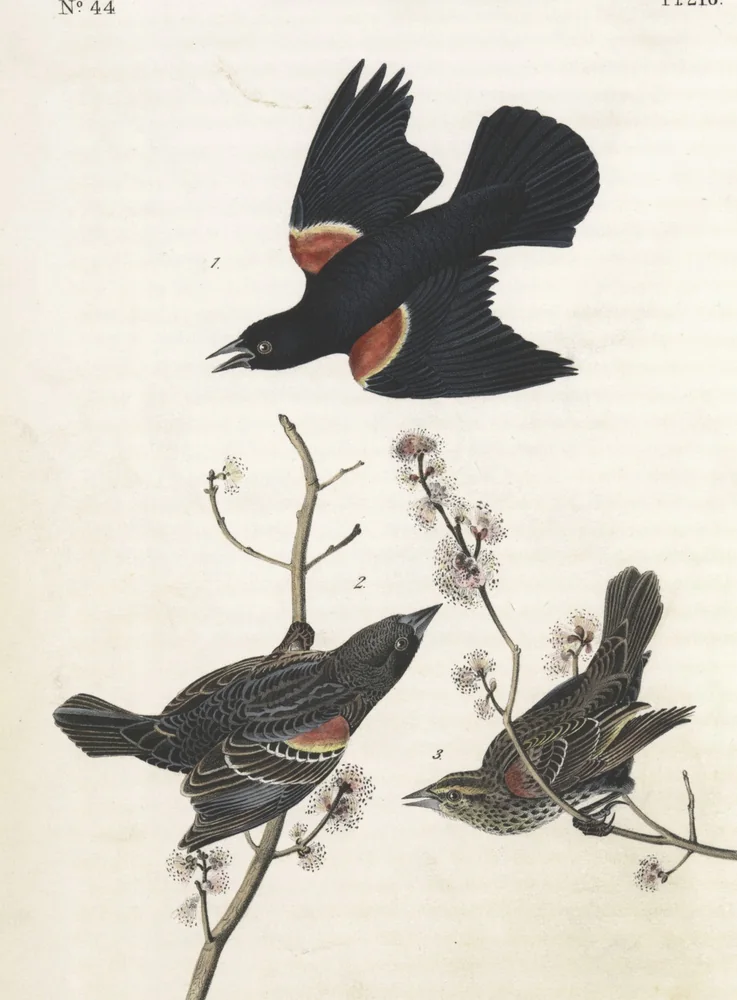
- From an essay: a Red-winged Blackbird and Baltimore Orioles, in Emily Raboteau's piece for Orion magazine. Her own spark was a pair of Burrowing Owls painted on a storefront gate in Harlem: a spark doesn't even have to be alive.
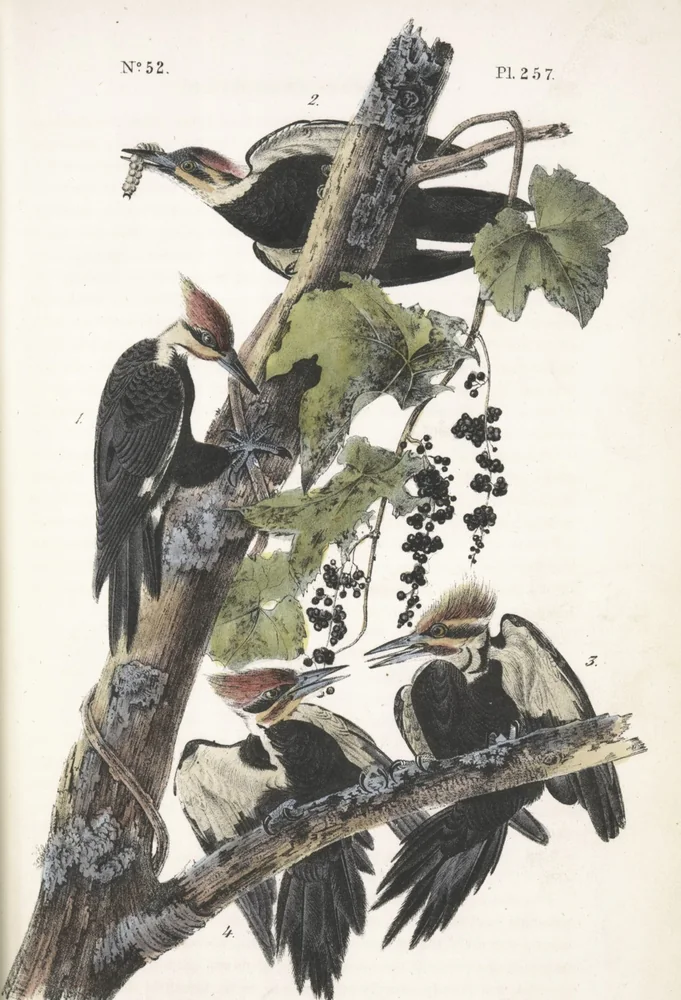
- A bird met by chance: a Pileated Woodpecker in a college ecology class, and a family of Burrowing Owls on a business trip, in Ted Floyd's column for the ABA.
The Spark Bird Project found the same spread: its stories name 205 species. Audubon's report reads this as a sign that the moment matters as much as the species.
Why spark birds matter
They remind birders how they started. A spark bird is often tied to a place and a person: a parent, a teacher, a friend. In the Spark Bird Project, two-thirds of the stories involve other people. People, often family or friends, were named as the spark more often than any bird.
A spark can come at any age. The most common age in the project's stories was 10, but people reported sparks as late as 71. Retirement is not too late.
You don't need one. Ted Floyd argues that nobody needs a dramatic moment to become a birder. Some people come in through a bird app, an article or a podcast, and grow into it slowly. That counts too.
They're a good way to start a conversation. Asking "what was your spark bird?" is a gentle opener on a bird walk, and a lovely question for a parent or grandparent who loves birds.
How to record your spark bird
Memories fade, so write yours down while you still can. Five things are worth keeping:
- The species. If you're not sure what it was, describe it: size, color, what it was doing.
- The date. Even a rough one helps: "summer 1974" is better than nothing.
- The place. The town, the park, the lake, or "Grandma's back porch".
- Who was with you. Often the most important part of the story.
- Why it struck you. A sentence or two in your own words.
Keep it at the start of your life list, in a notebook or in the notes of your birding app. If you're giving a birding gift, ask the person about their spark bird first. Their answer will tell you a lot about what they'd enjoy.
Your spark bird in a book
A Birdfolio, our book of a birder's life list, opens with the first bird on the list, with the date and place it was first seen. If your spark bird is also your first recorded bird, it gets that page. If it came before your records began, the short dedication near the front of the book is a good place to tell its story. See the first-bird page in a Birdfolio.
More to read: celebrate a big number with our guide to gifts for a birder's milestone, see how many birds the average birder sees, or browse gifts for birders. Giving a Birdfolio? A gift card lets them add their own list later.