A year list is every bird species you see or hear and identify in one calendar year. It starts from zero on January 1. There's no pass mark: one birder found 159 species from his New Jersey yard in 2015, keen county and state listers reach 200 to 300, and the US and Canada record is 840.
Already keeping one? Count your year list in numbers, free, from your own sightings file.
Key facts
- A birding year runs from 12:00 am on January 1 to 11:59 pm on December 31, by your local time. That's how the American Birding Association (ABA) times a Big Year.
- A bird counts if it was alive and wild and you identified it to species by sight or by sound. Heard-only birds count (ABA Recording Rules, version 2020).
- Each species counts once a year. Last year's birds don't carry over.
- In Britain, the Wildfowl & Wetlands Trust calls the year list the most common kind of bird list (January 2025).
- By 2014, only 14 people had ever seen more than 700 species in the US and Canada in one year (Audubon). The record is 840, set by John Weigel in 2019.
- The 127th Christmas Bird Count runs from December 14, 2026, to January 5, 2027, so a count day in January can open your 2027 list.
Facts checked: October 12, 2026.
What is a year list in birding?
A year list is your running list of every bird species you identify between January 1 and December 31. Each species goes on once, the first time you see or hear it that year. Your hundredth robin of the spring adds nothing, but your first robin of the year adds one. On January 1 the list goes back to zero, and every bird is new again.
You choose the area. Some people keep one year list for everything they see, anywhere they go. Others keep one for their state, their county or their own backyard, and plenty keep several at once. The American Birding Association runs Listing Central, a tool for its members that tracks year lists by region, state, province and county, alongside life lists and month lists.
Why keep a year list?
- Familiar birds feel new again. The first robin, the first hummingbird and the first warbler back from the south are each a small event.
- The year gets a gentle goal. Beat last year's total, or simply see what turns up.
- You learn the calendar of birds. The Wildfowl & Wetlands Trust, a British wetland charity, says a year list tells you when each bird arrived, so you know when to look for it next year. Its former director of conservation found that his old lists showed how much the birds around him had changed: egrets he once rarely saw are now regular, while the Turtle Dove has become hard to find anywhere in the UK.
- It's a record of your year. Jeff and Allison Wells, writing in Maine's Boothbay Register, keep their own yard year list on the refrigerator.
What is a life list for birders?
A life list is every bird species you have ever seen or heard and identified, over your whole life, and it never resets. Every bird on your year list is on your life list too. A species you've never met before is a "lifer", and it lands on both lists at once. More in what is a life list?
What is considered a Big Year in birding?
A Big Year is a year list kept as a challenge: you try to see as many species as you can in one calendar year, inside an area you set. There's no minimum; any year you go all out counts. The rules, the records and how to plan one are in our Big Year guide.
Year list vs Big Year vs life list
A year list counts one calendar year and starts over every January 1. A Big Year is the same list, chased hard on purpose. A life list never starts over. The same sightings feed all three, as long as each note has the species, the date and the place.
| Compare | Year list | Big Year | Life list |
|---|---|---|---|
| What it counts | Every species you identify in one calendar year | The same, chased as hard as you can in a set area | Every species you've ever identified |
| When it starts over | Every January 1 | Every January 1 | Never |
| Effort | As much or as little as you like | A lot: planning, travel, early mornings | A lifetime of birding |
| A new species is | New for the year | New for the year | A lifer |
| Read more | This page | Big Year birding | What is a life list? |
The two lists side by side, and which one to keep, are in life list vs year list.
What is a good year list?
A good year list is one that beats your own last year. There's no standard number, because totals depend mostly on the size of your area and how often you get out. For scale, here are real totals we found at each level, from one yard to the whole world.
Real year-list totals, by area
| Area | Real totals | Source |
|---|---|---|
| One yard | 159 species from a 2.7-acre yard in Hunterdon County, New Jersey, in 2015, watching most days of the year | Rob Fergus, Birding magazine, June 2020 |
| One county | 213 in Windham County, Vermont, in 2021, tied for that year's top total; 275 in Yolo County, California, in 2025, a county record | Chad Witko for Audubon, 2023; UC Davis, 2026 |
| One county, without a car | 230 in Outagamie County, Wisconsin, in 2014, every trip on foot or by bike | Wisconsin Society for Ornithology, 2015 |
| One state | Maine: most reported year lists in the 200s, the highest 314 (2015). Indiana: fewer than 35 people have reached 300. Minnesota: a record of 333, as reported in 2022 | Boothbay Register; Indiana Audubon Society; Three Rivers Park District |
| US and Canada | Only 14 people past 700 by 2014; the record is 840 (John Weigel, 2019) | Audubon; Big Year birding |
| The world | 6,852 species (Arjan Dwarshuis, 2016) | Guinness World Records |
A yard year list
From one yard, Rob Fergus counted 159 species in 2015, and he spent much of that year outside watching. He told the story in Birding, the ABA's magazine, in June 2020. His home sat on 2.7 acres in Hunterdon County, New Jersey, and he hoped for 200.
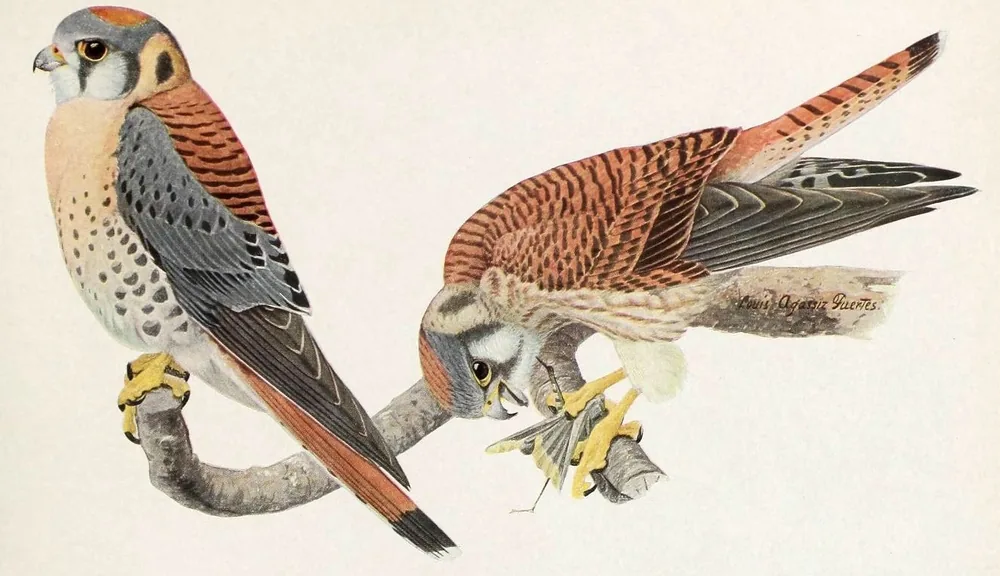
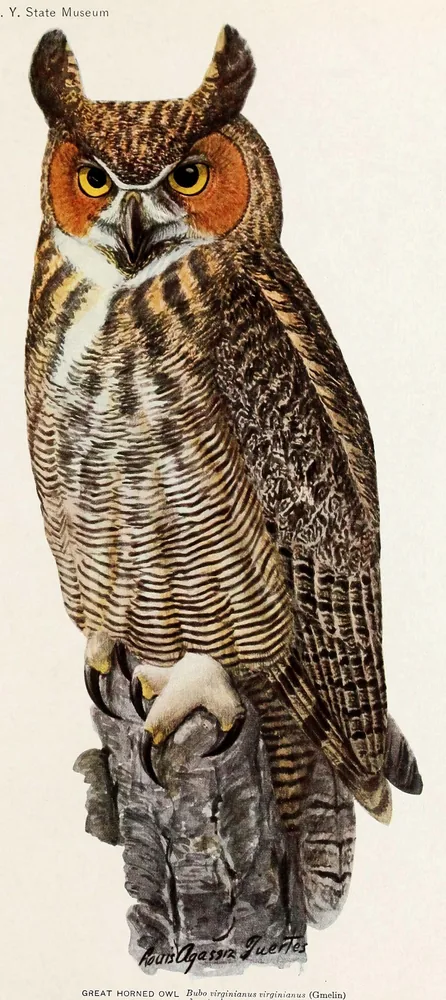
At 12:35 am on January 1 he called in an Eastern Screech-Owl, his first bird of the year, and by the end of the morning he had 35 species. Then 11 days passed without a new one. He reached 139 by the end of May. In June and July he added a single bird, a passing American Kestrel. He stood at 156 at the end of October and finished at 159 when a pair of Great Horned Owls answered him on December 20. His own verdict on comparing totals: "Everyone's yard is different, so the lists can't really compare."
For comparison, John Moriarty, a wildlife manager at Minnesota's Three Rivers Park District, wrote in 2022 that his yard list had reached 157 species over 20 years.
A county year list
In one county, the keenest birders in the examples we found reached the 200s. Chad Witko, an avian biology specialist at Audubon, finished a 2021 Big Year in Windham County, Vermont, with 213 species, about 95 percent of the county's total by his count. That tied for first that year and was the second-highest ever there. In Hunterdon County, New Jersey, Fergus called 250 species "a good annual goal."
At the top end, Julian Johnson, a UC Davis student, set the Yolo County, California, record in 2025 with 275 species. He had been birding for about two years and spent around 1,035 hours birding in the county that year.
A state year list
Across a whole state, the keenest listers reach the 200s and 300s. In Maine, where 445 species had been recorded by 2015, Jeff and Allison Wells found that year that the highest year list on the ABA's website was 314 and most others were in the 200s. They called anything over 200 quite an accomplishment in their state.
Indiana's checklist has more than 420 species, but only 320 to 340 are reported there in a typical year, by all of the state's birders together. Fewer than 35 people have seen 300 in Indiana in one year. Mark Welter, writing for the Indiana Audubon Society, had a personal best of 279 before he joined that "300 Club" on September 16, 2023, with an Eared Grebe. In Minnesota, the state Big Year record was 333 species when Three Rivers Park District wrote about it in 2022.
The US and Canada, and the world
Seeing 700 species in a year in the US and Canada puts a birder in a very small club: by 2014, only 14 people had done it, Audubon reported. The record is 840, by John Weigel in 2019. He ended that year on 839 plus one bird awaiting review, a Pallas's Grasshopper-Warbler in Alaska, which the ABA's Checklist Committee accepted 8-0 in May 2020.
Worldwide, Guinness World Records lists 6,852 species in one year, by Arjan Dwarshuis of the Netherlands in 2016. Teams go further together. In 2022, Audubon staff pooled their sightings into one shared year list: 1,857 species in 17 countries, including 705 in the US, with checklists from all 50 states.
Who holds the record for most birds seen in a year?
Arjan Dwarshuis, with 6,852 species around the world in 2016, as Guinness World Records lists it. In the US and Canada, the highest total is John Weigel's 840 in 2019. The full history is in our Big Year guide, and other records are in birding records.
How many birds can you see in a year?
It depends mostly on how much ground you cover. From home, one very keen birder passed 150 species; in one county or state, keen listers reach 200 to 300; across the US and Canada, only a handful have passed 700. Four things move your own number:
- Your area. A state holds more species than a county, and a county more than a yard. Nobody sees them all, though. In Indiana, all birders together report 320 to 340 species in a typical year, out of more than 420 on the state list. To see what your state holds, look up how many bird species each state has.
- Time outdoors. Julian Johnson's county record took about 1,035 hours of birding.
- The season. January and the migration months bring the most new birds; summer is slow. Fergus had 35 species by the end of New Year's morning, and one new bird in all of June and July.
- Your ears. Many birds are heard long before they're seen, and a bird you identify by its song counts. Fergus urges yard listers to brush up on songs and calls for exactly that reason.
A target for your first year
The Wildfowl & Wetlands Trust offers a useful yardstick. In Britain, about 250 species occur regularly. The trust calls 250 in a year really committed and 200 very respectable, says your own target might be nearer 100, and adds that a few visits to wetlands in January could get you there. Those are British numbers, but the advice works anywhere: pick a target you'll enjoy chasing.
When does a year list reset?
A year list resets at midnight on January 1 and closes at 11:59 pm on December 31. The ABA's Big Year rules use the local time of the place where the birder is at each of those moments. So an owl you hear at 11:58 pm on December 31 counts for the old year, and one at 12:01 am counts for the new one.
Nothing carries over. A species you saw last December has to be found again. If scientists split one species into two during the year, the new species counts for the whole year under the ABA's Big Year rules, even if you saw it before the split was announced. More on that in bird splits and lumps.
Does a heard-only bird count?
Yes. Under the ABA's Recording Rules (version 2020), a bird counts if you saw and/or heard enough to identify it, and even a first-ever encounter "may be by sight or sound." Two limits apply. A bird heard through a microphone or other listening device counts only if you're there with it and hear the bird live. And a bird seen on a webcam doesn't count, except on lists set up for remote sightings. If you like, mark heard-only birds with an "H", so you know which ones you still hope to see.
What doesn't count?
- Caged, zoo and just-released birds: the rules ask for a bird that is alive, wild and unrestrained.
- Birds seen only on a screen.
- Birds you couldn't pin to one species, such as a "gull sp.", and hybrids.
- A bird outside your area. Under Rule 1, the bird has to be inside the area, not you.
Do I have to follow the ABA rules?
No. It's your list, so you can set your own rules, as long as you keep them the same all year. The Wildfowl & Wetlands Trust puts it gently: "A tick is just a tick, after all." Write your rules on the first page, and next year's list can be compared fairly with this one.
Yard, patch, county, state and green year lists
Any area can have its own year list, and you can keep a few at once: a yard list, a patch list, a county or state list, and even a "green" list of birds reached without a car. The rules stay the same; only the boundary changes.
Yard year list
A yard year list counts every species you see or hear from your own home. A bird flying over counts too, since it's inside your area, and so does a wild bird at your feeder, under the ABA's rules. Fergus's advice for a bigger yard list: watch from higher up, such as an upstairs window, learn to name birds in flight, and listen. It's the easiest list to start and the slowest to grow, which makes every new bird the news of the week.
Patch year list
A patch is one place near home that you bird again and again: a park, a pond, a stretch of river. The trust suggests keeping a patch list alongside your year list. Keep the boundary the same every year, and your patch totals can be compared from one year to the next. Our guide to keeping a record of your local patch covers choosing one and what to note.
County year list
A county list suits people who mostly bird close to home. Witko notes that most birders who take on a Big Year choose a county or a state, because it's easier on time and money. His own county year changed more than his list: the back roads he drove helped him decide where to buy a home, and many of the local birders he met became good friends.
State year list
A state list rewards knowing when each bird passes through, and where. The Indiana Audubon Society's tips for a state year include getting to 100 species in January. Each state's possible total is different: see how many bird species each state has.
Green year list (BIGBY)
A green year list, or BIGBY (Big Green Birding Year), counts only birds you reach under your own power: walking, biking or running, with every trip starting from the same home base. The Wisconsin Society for Ornithology runs a statewide BIGBY challenge, and 40 people were on its tally sheet in early 2025. Its 2014 winner, Ross Mueller, found 230 species in Outagamie County and traveled 2,269 carbon-free miles to do it. On a bigger scale, Dorian Anderson's 2014 Big Year by bicycle reached 618 species (see Big Year birding).
How to start a year list on January 1
Pick your area and your rules, note your first bird of the year, and then write down each new species with its date and place. Seven small steps:
- Choose your area. Your yard, a patch, your county, your state, the US and Canada, or everywhere you go.
- Write down your rules. The ABA's rules, or your own. Decide now whether heard-only birds count for you.
- Make your first bird count. Whatever you see or hear first after midnight is your first bird of the year. Fergus's was an Eastern Screech-Owl at 12:35 am. The first bird of Audubon's 2022 staff year was a Song Sparrow in Tennessee.
- Sweep up the common birds in week one. Winter makes it easier. The trust points out that short days mean birds are active when you're out, and bare trees hide less.
- Join a Christmas Bird Count. See the next section.
- Note three things for every new bird. The species, the date and the place, as the trust advises at the very least. Add "heard" or "seen" if you like.
- Check in once a month. Compare your total with the same date last year.
The Christmas Bird Count overlap
The National Audubon Society's Christmas Bird Count runs from December 14 to January 5 each year, and each local count picks one day in that window. For the 127th count, that's December 14, 2026, to January 5, 2027. A count day in December adds birds to your 2026 list. A count day between January 1 and 5 can fill a good part of your 2027 list in one go, with experienced birders beside you. Here's how to join a Christmas Bird Count.
App, notebook or spreadsheet?
Any of the three works, as long as every bird has its species, date and place.
- A notebook. The trust says a notebook and binoculars are all you need to start. Our free printable year list is a US Letter PDF you fill in by hand, with no sign-up. For bound journals, see the best birding log books.
- A spreadsheet. Give each species one row, with columns for the name, the date, the place and "seen" or "heard". Sort by date to read your year in order, and start a new tab each January. Our guide to turning a paper list into a spreadsheet walks through it.
- An app. See the next section.
Whatever you use, keep a copy somewhere safe: here's how to back up your birding records. To get a list onto paper later, see how to print your life list. More printables and free tools are on our free birding tools page.
How to see your year list in the apps
In eBird, your year list is the number under "Year" in My eBird. In iNaturalist, filter the Explore page to your own bird observations for the year. Birds you save in Merlin go to your eBird account. Here are the steps, from each one's own help pages.
eBird
- On the website: sign in and open My eBird. Below your name is a summary of your current year, month and day. Click the number under "Year" to see every species you've reported this year, then narrow the list to a region or a species.
- Against earlier years: the bar charts on My eBird compare your species total up to today's date with the same date in earlier years.
- In the eBird app: open My eBird and tap any of the green numbers to see your list for that place and time.
- For an earlier year: open your Sightings List (click your total species, or Sightings Lists in the Manage tools) and use the calendar icon to pick the dates.
Merlin Bird ID
Merlin keeps a Life List of the birds you save, with their dates and places, and it also includes species from your eBird checklists. The Merlin help page we read doesn't describe a year view. The birds you save in Merlin are kept in your eBird account: Merlin's help sends you to your list in My eBird to change or delete one. So the eBird steps above cover them too. Our Merlin guide shows how the two connect.
iNaturalist
On the iNaturalist website, open Explore and type "Birds" in the Species box. Then click Filters, then More Filters, and add yourself as the person and January 1 to December 31 as the dates. The bar along the top shows how many species match: that's your year list. iNaturalist also makes a personal Year in Review: in late 2025 it released one that each user could generate for their own account. iNaturalist covers plants, insects and every other living thing, though, so for birds alone the Explore filter is the way.
Count it from your own file
Your birding year in numbers reads an eBird or iNaturalist export, or a list you type, and shows your species for the year, new lifers, first bird of the year, best month and biggest day. It works any day of the year, with no account, and nothing is uploaded.
Other ways
- ABA Listing Central tracks year lists for ABA members, by area, region, state, province and county.
- The Big Year Birding app is a free iPhone app, with a US and Canada version, for logging sightings in the field. It can mark a bird as "identified by ear" and create eBird upload files.
Is there a free app for a year list?
Yes. eBird's help describes a free Cornell Lab account and a free eBird Mobile app, and the same account works in the free Merlin Bird ID app. iNaturalist's help says its apps are completely free to use, with no subscriptions.
Questions people ask
Can I count birds I see on vacation?
Yes, on any year list whose area includes them. Under the ABA's Rule 1, a bird counts for a list only if it was inside that list's area. You can keep an "everywhere" year list alongside one for your home state, and a bird on a trip goes on the first but not the second.
Can I start a year list in the middle of the year?
Yes. The year still runs from January 1, so species you saw earlier count if you know the date and place. Old photos, notes and app records can fill in the gap.
Does a bird have to be photographed?
No. The ABA's rules ask only that you saw or heard enough to tell it from every other species. A photo can help you check an identification later, and some birders keep a photo list as a separate challenge.
What if I'm not sure what I saw?
Leave it off. In his backyard Big Year write-up, Fergus warns against pinning a name on a bird you didn't see or hear well enough, and says to let it go. Write it in your notes as "possible", and count the next one you're sure of.
A year worth keeping
On December 31 your year list closes, but every species on it stays on your life list. A Birdfolio prints a life list as a hardcover book, with a classic painting beside every species: page through a Birdfolio.
Birdfolio is not affiliated with eBird, the Cornell Lab of Ornithology or iNaturalist.