Yes, The Big Year (2011) is based on a true story: the 1998 race between three real birders, Sandy Komito, Greg Miller and Al Levantin, told in Mark Obmascik's 2004 book. The film renamed them Kenny Bostick (Owen Wilson), Brad Harris (Jack Black) and Stu Preissler (Steve Martin) and moved the race to the present day.
Some of the true story is stranger than the film. Greg Miller, the man Jack Black plays, paid for his year with five credit cards and needed six years to clear the last one. And Attu, the remote Alaskan island at the heart of the story, is also where the only World War II land battle in North America was fought, the National Park Service notes.
Key facts
- The Big Year opened in US theaters on October 14, 2011, from 20th Century Fox. David Frankel directed, Howard Franklin wrote the script and John Cleese narrates. It's rated PG and runs 100 minutes.
- It's based on The Big Year: A Tale of Man, Nature, and Fowl Obsession by Mark Obmascik (Free Press, 2004).
- The real 1998 totals: Sandy Komito 745 species (later 748), Greg Miller 715, Al Levantin 711.
- It was filmed from May 3 to July 30, 2010, mostly in British Columbia, with Attu re-created in Canada's Yukon.
- It cost a reported $41 million and took in about $7.2 million in US and Canadian theaters, The Numbers estimates.
- In the US, JustWatch listed it streaming on Disney+ on October 11, 2026.
Facts checked: October 12, 2026.
The Big Year cast: who plays whom?
Steve Martin, Jack Black and Owen Wilson star as three birders racing to see the most species in one year, and each plays a man from the real 1998 race. Rashida Jones, Rosamund Pike, Anjelica Huston, Jim Parsons, Brian Dennehy, Dianne Wiest and JoBeth Williams lead the supporting cast.
| Actor | Character | Based on |
|---|---|---|
| Owen Wilson | Kenny Bostick, the record holder | Sandy Komito |
| Jack Black | Brad Harris, a computer programmer | Greg Miller |
| Steve Martin | Stu Preissler, a company founder trying to retire | Al Levantin |
The rest of the cast, as Wikipedia lists it: Rashida Jones (Ellie, a birder Brad falls for), Rosamund Pike (Jessica, Bostick's wife), Anjelica Huston (Annie Auklet), Jim Parsons (Crane), Brian Dennehy (Raymond, Brad's father), Dianne Wiest (Brenda), JoBeth Williams (Edith), Joel McHale (Barry Loomis), Kevin Pollak (Jim Gittelson), Anthony Anderson (Bill Clemont), Tim Blake Nelson (Phil), Corbin Bernsen (Gil Gordon) and Steven Weber (Rick). Al Roker appears as a New York weatherman. Dustin Hoffman was first lined up to play Stu, before Steve Martin took the part.
Behind the camera, David Frankel had already directed The Devil Wears Prada (2006) and Marley & Me (2008), and he won an Oscar in 1996 for his short film Dear Diary.
Who is Kenny Bostick based on?
Kenny Bostick, Owen Wilson's character, is based on Sandy Komito, the New Jersey contractor who won the real 1998 race. The film made him more of a villain: the American Birding Association says "a great deal of artistic license" went into his underhanded tricks.
Who narrates The Big Year?
John Cleese is the film's narrator, as both Wikipedia's cast list and Obmascik's 2011 Audubon article give it.
Is The Big Year based on a true story?
Yes. The three men, their jobs, the 1998 race, the island of Attu and the honor system birders count by are all real. The names, the year it's set in, the final numbers and many of the scenes are the film's own.
What's true in The Big Year?
The people, their jobs, the money they spent and the spirit of the race are all true to life.
- The three men. In a 2004 PBS NewsHour interview, Obmascik described Komito as a New Jersey contractor who already held the record, Levantin as a chemical company executive just retired to Aspen, Colorado, and Miller as a software writer at a nuclear power plant in Maryland. The film gives its three characters much the same jobs.
- The money. Komito spent an average of $10,000 a month chasing birds, Obmascik said, and Miller maxed out five credit cards at 40.
- Birders helping birders. Greg Butcher, then National Audubon's director of bird conservation, talked the film over with Audubon in 2011 and singled out the way birders share tips as true to life.
- Small moments. Like Owen Wilson's character, the real Komito spent Christmas Eve of his Big Year in Duluth, Minnesota, eating dinner at a Chinese restaurant, bird writer Laura Erickson noted in 2011.
- Attu. The three men "lived for weeks on a desolate Alaskan island," Obmascik wrote in Audubon.
What did the film change?
The names, the year, the numbers and the rivalry, plus where it was filmed.
- The names. All three men were renamed.
- The year. The book is set in 1998; the film takes place in the present. Obmascik noted that smartphones and birding blogs replace the tape-recorded rare bird alerts the real men checked from phone booths, and that the dashes onto departing planes were gone, ended by post-9/11 airport rules.
- The numbers. In the film, Bostick's old record is 732 and he wins with 755. In real life, Komito's old record was 722, and he finished 1998 with 745, later 748.
- The rivalry. "The rivalry with Sandy was a bit overblown," Levantin told 10,000 Birds in 2010; he and Komito were very friendly. The film went further and gave Bostick dirty tricks.
- Brad's father. The real Greg Miller's father was a birder who backed his Big Year from the start, unlike Brad's doubting father in the film, Laura Erickson wrote after interviewing Miller.
- Attu itself. The island scenes were shot in Canada's Yukon, not on Attu (more below).
How accurate is The Big Year?
It's close on the people and the feel of competitive birding, and loose on the birds. The two expert birders Audubon asked about it in 2011 "genuinely enjoyed the film" and the respectful way it showed birders, but they spotted birds in the wrong places.
- A Swainson's Hawk in the snow. Butcher noted that the species spends the winter in Argentina.
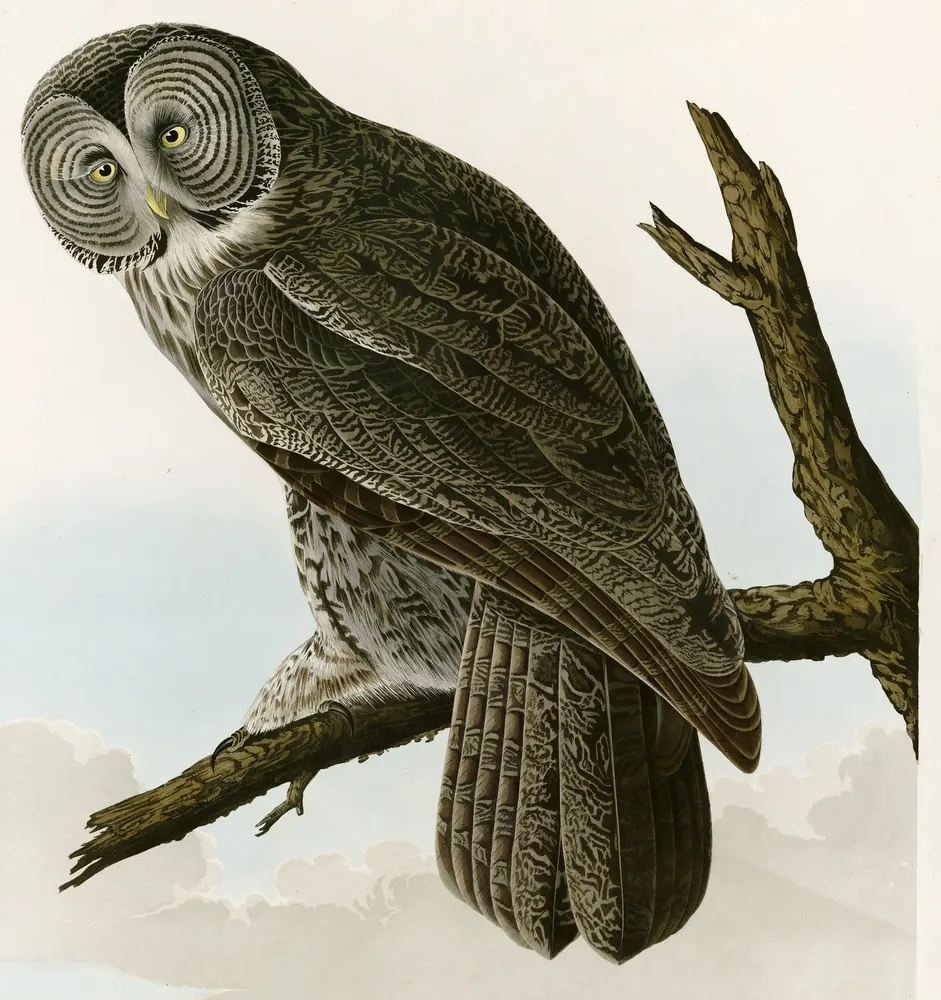
- A Great Gray Owl in Virginia. The film sets one in the George Washington National Forest; Butcher said Virginia has never had a record of one.
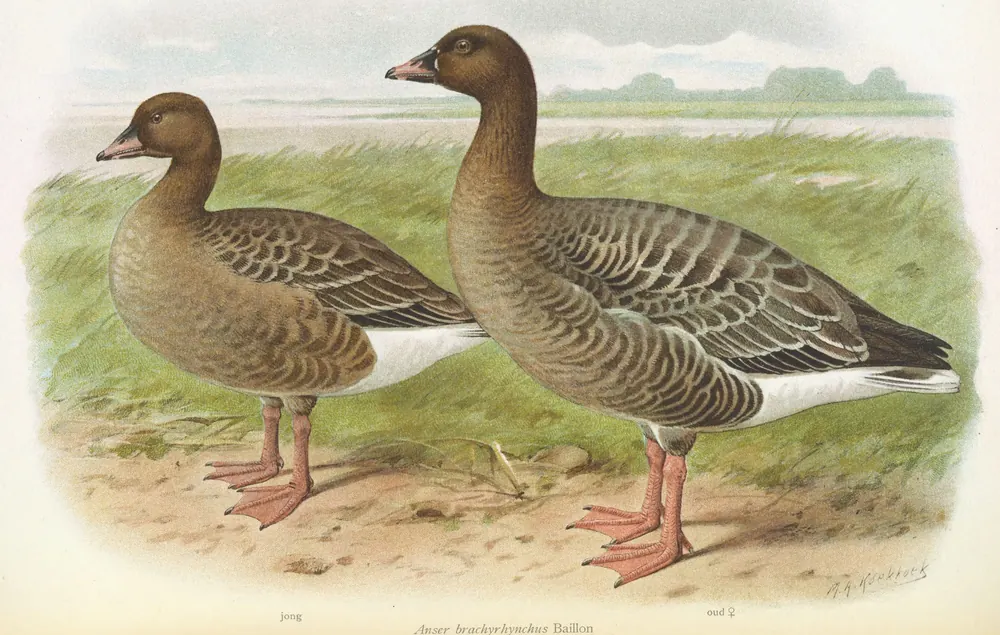
- Pink-footed Geese in a hot spring on a snowy mountain, which he called wrong.
- A "fallout" (a mass landing of tired migrants) shown as a sky full of birds. Butcher said a real fallout doesn't fill the sky like that.
Greg Miller, who worked on the film as its birding adviser, put it kindly in 2011: "For dead on accuracy, we should have been making a documentary."
Who were the real people in The Big Year?
They were three men from very different lives: a contractor from New Jersey who held the record, a chemical company executive newly retired to Colorado, and a software writer at a nuclear power plant. All three passed 700 species in 1998.
| Real birder | Who he was in 1998 | 1998 total | Played by |
|---|---|---|---|
| Sandy Komito | New Jersey contractor; record holder since 1987, with 722 | 745, later 748 | Owen Wilson, as Kenny Bostick |
| Greg Miller | Software writer at a nuclear power plant in Maryland, newly divorced | 715 | Jack Black, as Brad Harris |
| Al Levantin | Chemical company executive, just retired to Aspen, Colorado | 711 | Steve Martin, as Stu Preissler |
Sources: PBS NewsHour (2004) for who they were; Wikipedia's history of North American Big Years, 10,000 Birds and Audubon for the totals; Wikipedia for the cast.
Sandy Komito (Owen Wilson's Kenny Bostick)
Sandy Komito went into 1998 as the record holder, with 722 species from his 1987 Big Year. He won again with 745, which rose to 748 when three more of his 1998 sightings were accepted. That total stood as the record for the US and Canada for 15 years, until Neil Hayward saw 749 in 2013.
Komito died in September 2024. In its tribute, the American Birding Association called him "perhaps the ultimate Big Year birder" and said Owen Wilson played "an exaggerated version" of him, though friends knew the drive, passion and charisma as his own.
Greg Miller (Jack Black's Brad Harris)
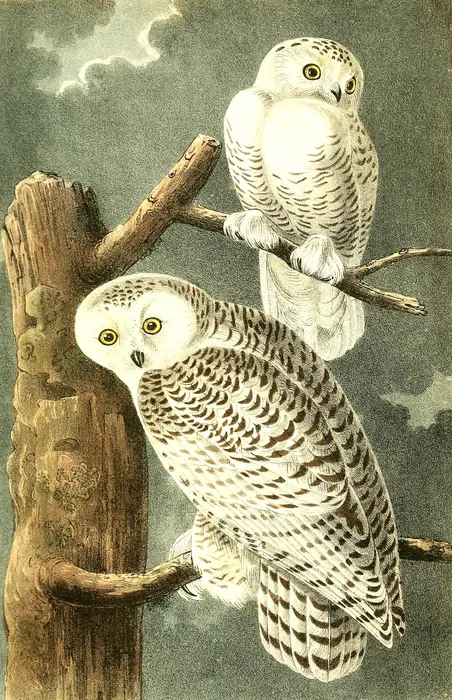
Greg Miller began his Big Year the day after his divorce became final, Obmascik told PBS. He kept working full time at the nuclear plant and still traveled more than 130,000 miles that year, the Tribune Chronicle of Warren, Ohio, reported in 2025. He finished with 715 species, though he missed what he called easy birds, like the Snowy Owl. The five maxed-out credit cards took him six years to pay off, he told 10,000 Birds in 2011.
When Hollywood came calling, Miller was hired as the film's birding adviser. He went through the script line by line, worked on set and took Jack Black birding, a local Audubon newsletter reported after a talk he gave in 2011. His verdict on the casting: "Jack is a better fit than I initially thought."
In recent years Miller has worked as a bird guide. National Geographic described him in 2024 as a guide at Ohio's Biggest Week in American Birding festival, based in Sugarcreek, Ohio, and he still gives talks: in May 2025 he spoke at the Big Birding Weekend at Mosquito Lake State Park, Ohio.
Al Levantin (Steve Martin's Stu Preissler)
Al Levantin had just retired to Aspen, Colorado, after decades as a hard-charging businessman, Obmascik told PBS, when he set out on his 1998 Big Year. He finished with 711 species. In May 2010, as filming began, he confirmed a story from the book to 10,000 Birds: he and Miller fed Komito an inflated count of Levantin's birds. As for the casting, he said he was "very pleased to have Steve Martin play my part."
Who won The Big Year?
On screen, Kenny Bostick (Owen Wilson) wins with 755 species, a new record. In real life, Sandy Komito, the man Bostick is based on, won the 1998 race with 745 species, later raised to 748. Greg Miller finished with 715 and Al Levantin with 711.
Why was 1998 such a big year?
Weather and an island. Obmascik told PBS NewsHour that 1998 brought "the strongest El Niño on record," whose storms kept blowing rare birds in from Europe, Asia and Latin America. And Attu, at the far western tip of Alaska, was still open to birders: the three men spent weeks there, Obmascik wrote.
What is Attu Island?
Attu is the last island in Alaska's Aleutian chain, about 1,500 air miles southwest of Anchorage, the National Park Service says. Birders prize it because it lies close to the migration routes of Asian birds, so strays from Asia turn up there, John Weigel explained. Obmascik named two: the Great Knot and the Yellow-throated Bunting.
The island has a darker past. In May 1943, US troops retook Attu from a Japanese garrison in the only World War II land battle in North America, and nearly all of the Japanese defenders died, the Park Service says. Obmascik later wrote a book about that battle, The Storm on Our Shores (2019).
Getting there is harder now. Hundreds of birders visited while the island's airstrip was open. When John Weigel went in 2019, the year he set the current record, his group took a 72-hour boat trip from Adak and found the old Coast Guard station abandoned.
Where was The Big Year filmed?
Mostly in British Columbia, Canada, between May 3 and July 30, 2010, with the Alaska scenes shot in the Yukon. Obmascik visited the set and described in Audubon how Canadian places stood in for American ones:
- Tofino, on Vancouver Island: the boat trips out to sea, standing in for Monterey Bay in California and for Newfoundland.
- The Okanagan Valley: the desert Southwest, "a fairly convincing" one, he wrote.
- A Vancouver soundstage: the inside of the Attu barracks.
- Dawson City, Yukon: Attu itself. The director trucked the whole production three days up the Alaska Highway and built a copy of the island's old World War II barracks.
Taking a full film crew to the real Attu would have been very costly and hard, Jack Black told Audubon, so the crew built its own.
The Big Year book
The Big Year: A Tale of Man, Nature, and Fowl Obsession is Mark Obmascik's nonfiction account of the 1998 race, published by Free Press on February 4, 2004 (272 pages). Obmascik, a Denver Post reporter, was the lead writer for the Denver Post team that won the 2000 Pulitzer Prize.
The book follows all three men through the year, real names and all. Kirkus Reviews cast them as a New Jersey roofer, a wealthy businessman and a nuclear plant "software jock," and noted that even these rivals helped each other when asked. Simon & Schuster lists later paperback editions, including a movie tie-in.
How is the book different from the movie?
The book is the true story, set in 1998, in the days of phone booths and tape-recorded rare bird alerts. The film keeps the race and the outline of the three men but tells it through renamed, partly made-up characters in the present day. Obmascik summed up the real year in Audubon as 270 days away from home and 270,000 miles of travel; his publisher's description calls it a 275,000-mile odyssey.
More true Big Year stories
Other birders have written books about their own real Big Years, such as Kenn Kaufman's Kingbird Highway, about his 1973 year on the road. Our Big Year guide lists more, and the best bird books has plenty to read.
Where can you watch The Big Year?
In the US, The Big Year streams on Disney+, and you can rent or buy it online. On October 11, 2026, JustWatch listed it on Disney+, for rent at $3.99 and to buy for about $5 in HD from Amazon, Apple TV and Fandango at Home, and on DVD. Streaming deals change often, so check a streaming guide such as JustWatch before movie night.
Is The Big Year on Netflix?
Not in the US when we checked. JustWatch's October 11, 2026 listing named Disney+ as its only US streaming subscription.
Is The Big Year OK for kids?
It's rated PG "for language and some sensuality," and it runs 100 minutes.
How did The Big Year do at the box office?
Not well in theaters. It cost a reported $41 million and took in about $7.2 million in the US and Canada, after opening with $3.25 million on 2,150 screens, The Numbers estimates. Its estimated DVD and Blu-ray sales, about $7.6 million, topped those ticket sales.
Critics were mixed: 41% of the 100 reviews counted by Rotten Tomatoes were positive, and the site's summary found it slow but made "with care and affection for its characters." Audiences polled by CinemaScore gave it a B minus. Birders were often kinder, like the two experts Audubon asked.
Has anyone beaten the 1998 record?
Yes. Neil Hayward edged past Komito with 749 species in 2013, and John Weigel holds the record for the US and Canada today: 840 species in 2019, counting a rarity the American Birding Association accepted in 2020. The count area grew in 2016, when the association's members voted to add Hawaii.
| Year | Birder | Species |
|---|---|---|
| 1987 | Sandy Komito | 722 |
| 1998 | Sandy Komito | 748 (745 at the end of the year) |
| 2013 | Neil Hayward | 749 |
| 2016 | John Weigel | 835 counting Hawaii (784 without) |
| 2019 | John Weigel | 840 |
Sources: Wikipedia's history of North American Big Years for 1987 and 1998; 10,000 Birds and Audubon for 2013; the North American Rare Bird Alert's standings and the ABA for 2016; Weigel's own posts and the ABA Checklist Committee for 2019.
Who has seen the most birds in a year?
Around the world, Guinness World Records lists Arjan Dwarshuis of the Netherlands, with 6,852 species in 2016. For the history of the North American record, see the Big Year guide, and for Big Days and the biggest life lists, birding records.
Is a Big Year a real thing for birders?
Yes. A Big Year is a real, unofficial challenge: seeing or hearing as many bird species as you can between January 1 and December 31, inside an area you choose. The famous version covers the US and Canada under rules from the American Birding Association, and it runs on the honor system: nobody checks every bird.
Most Big Years are much smaller: a county, a state or a backyard. Each species counts once, birds identified by their song count too, and the count starts over every January 1. That count is called a year list: see life list vs year list and what a life list is. For the rules, the records and a plan for your own, read our Big Year guide.
Curious about your own year? If your sightings live in eBird or iNaturalist, Your birding year in numbers counts your species for the year, free, from your own export.
If you liked The Big Year: more birding films
Three more films about birders, two of them true stories:
- Listers: A Glimpse Into Extreme Birdwatching (2025): brothers Owen and Quentin Reiser film their own 2024 Big Year, traveling by minivan. It's free on YouTube and passed a million views in its first month, Audubon reported.
- Birders: The Central Park Effect (2012): Jeffrey Kimball's HBO documentary about the New Yorkers who bird Central Park, where about 200 species of migrating birds stop on their way through, The Daily Beast noted.
- A Birder's Guide to Everything (2013): a gentle comedy-drama, directed by Rob Meyer, about a 15-year-old birder (Kodi Smit-McPhee) who thinks he has seen a duck believed extinct, with Ben Kingsley as a famous birder. It premiered at the Tribeca Film Festival.
Questions people ask
Did Steve Martin learn to bird for the film?
He had help at home. Martin told Audubon in 2011 that his wife is an amateur birdwatcher and that he picked up a lot from her. He also wrote songs during the shoot, and a birding phrase from those weeks became the title of a song and of his album Rare Bird Alert.
Did the real birders like the movie?
The two we found on record did. Greg Miller worked on it and warmed to Jack Black's casting, and Al Levantin was pleased to be played by Steve Martin. We couldn't find Sandy Komito's own view in a source we could check; the ABA's tribute says only that the film exaggerated him.
How long is The Big Year?
It runs 100 minutes, The Numbers and Rotten Tomatoes both list.
A year worth keeping
Every bird of a Big Year, or of any ordinary year, stays on a birder's life list. A Birdfolio prints a life list as a hardcover book, with a classic painting beside every species: page through a Birdfolio.
Birdfolio is not affiliated with eBird, the Cornell Lab of Ornithology or iNaturalist.