A Big Year is an attempt to see or hear as many bird species as possible in one calendar year, inside a set area. Most often that area is the ABA Area: the US and Canada. The record there is 840 species, by John Weigel in 2019. Smaller Big Years cover a county, a state or a backyard.
Already keeping a list? Count your birding year in numbers, free, from your own sightings file.
Key facts
- An ABA Area Big Year runs from 12:00 am on January 1 to 11:59 pm on December 31, by the birder's local time (ABA Area Big Year Rules).
- A bird counts if it was alive, wild and unrestrained, inside the area, and identified to species by sight or by sound. Heard-only birds count (ABA Recording Rules, version 2020).
- The ABA Area is the 49 continental US states, Hawaii, Canada, the French islands of St. Pierre and Miquelon, and waters up to 200 miles out. Hawaii joined by a member vote in October 2016.
- ABA Area record: 840 species, John Weigel, 2019. That's 839 at the end of the year, plus one rarity the ABA accepted in May 2020.
- World record: 6,852 species, Arjan Dwarshuis, 2016, as Guinness World Records lists it.
- Lower 48 (the contiguous states): 758 species, Ezekiel Dobson, 2024, as St. Louis Public Radio reported it.
Facts checked: October 10, 2026.
What is a Big Year?
A Big Year is a personal challenge, or a friendly competition, to identify as many bird species as you can between January 1 and December 31, inside a boundary you choose before you start. It counts species, not individual birds: your hundredth robin adds nothing, but the first one of the year adds one.
The idea goes back decades. In 1939 a traveling businessman, Guy Emerson, timed his work trips to the birding seasons and saw 497 species in North America, the earliest continent-wide Big Year on record, according to Wikipedia's history of the pursuit. Roger Tory Peterson reached 572 on a 1953 road trip. Today the top totals are past 800.
Two things turn an ordinary year into a Big Year: a fixed area, from a yard to the whole world, and intent, because you're trying to find everything you can. Your year list is the record; a Big Year is the push behind it.
What is considered a big year in birding?
There's no minimum: any year you set out to see as many species as you can in a set area is a Big Year. For scale, Audubon reported in 2014 that only 14 birders had ever passed 700 species in the ABA Area in one year. In Indiana, fewer than 35 people have reached 300 in the state in one year.
A good personal target is simply more than last year. Don't know last year's number? Count it from your own list.
What are the Big Year rules?
The standard rules come from the American Birding Association (ABA). An ABA Area Big Year runs from midnight on January 1 to 11:59 pm on December 31, local time, and every species must meet the ABA Recording Rules and be on the ABA Checklist that year. A personal Big Year can use the same rules or simpler ones.
The five ABA Recording Rules
The Recording Rules (version 2020) apply to every kind of list, from a life list to a county Big Year. A bird counts if:
- It was inside the area, during the time period. The bird has to be inside, not you: a bird you identify across the Rio Grande counts for Mexico, not the US.
- Its species is on the right checklist. For the ABA Area, and any state, province or county in it, that's the ABA Checklist.
- It was alive, wild and unrestrained. A wild bird at a feeder or answering playback still counts. A caged bird, or one just released, doesn't.
- You saw and/or heard enough to tell it from every other species.
- You found it in a way that follows the ABA Code of Birding Ethics.
Where is the ABA Area?
The ABA Area is the 49 continental US states, Hawaii, Canada, and the French islands of St. Pierre and Miquelon, plus their waters out to 200 miles from land, or half the distance to a neighboring country where that's less. Bermuda, the Bahamas and Greenland are outside it.
Hawaii is the newest part. ABA members voted it in at the annual meeting in late October 2016, with about 80% of ballots in favor. That's why some lists still keep a separate "continental" total without Hawaii. The ABA Checklist itself held 1,161 species in January 2026: see how many bird species are in the US and Canada.
Smaller areas follow their legal lines. A state or county Big Year uses that state's or county's boundary, including nearby lakes, rivers and bays out to half the distance to the next area.
Do heard-only birds count?
Yes. Under Rule 4, a bird counts if you saw and/or heard enough to identify it, and the ABA says even a first-ever encounter "may be by sight or sound." An owl calling in the dark, identified with confidence, goes on the list. Some birders still mark heard-only birds, so they know which ones they'd like to see.
What is a provisional species?
A provisional species is a bird new to the ABA Area and not yet on the ABA Checklist. Under the Big Year rules, it counts for the year it was seen once the ABA adds it, if the bird you saw is the accepted record or a later one. Until then, totals show it as a "+1".
What if a species is split or lumped during the year?
A split helps for the whole year. When the ABA split Pacific Wren from Winter Wren in November 2010, a Pacific Wren seen in March 2010 still counted for a 2010 Big Year. A lump doesn't take a bird away in the year it happens: a species removed late in the year still counts for that year. More in bird splits and lumps.
What doesn't count?
- Birds seen on a webcam or any other remote camera.
- Hybrids, and birds you couldn't pin to one species, such as a "gull sp."
- Captive, escaped or just-released birds, and introduced species outside an established population.
- Eggs.
- A second subspecies or color form of a species you already have. Each species counts once.
Who checks a Big Year?
Nobody checks every bird. The ABA's rules don't require a photo or a recording, so a Big Year rests on the birder's word. Disputes go to the ABA's Recording Standards and Ethics Committee, which ruled in 2017 that 2016 Big Years could count Hawaii's birds. Its stated habit: on a listing rule, a tie goes to the birder.
What is the Big Year record?
The ABA Area Big Year record is 840 species, set by John Weigel in 2019: 839 at the end of the year, plus one rarity the ABA accepted in May 2020. The world record is 6,852 species, by Arjan Dwarshuis of the Netherlands in 2016, as Guinness World Records lists it.
How the ABA Area record moved
| Year | Birder | Species | Notes |
|---|---|---|---|
| 1939 | Guy Emerson | 497 | The earliest continent-wide Big Year on record |
| 1953 | Roger Tory Peterson | 572 | The road trip behind the book Wild America |
| 1956 | Stuart Keith | 594 | Followed Peterson's route; stood for 15 years |
| 1971 | Ted Parker | 626 | His last semester of high school, then his first months of college |
| 1973 | Floyd Murdoch | 669 | A race with Kenn Kaufman |
| 1979 | James Vardaman | 699 | Traveled 161,332 miles |
| 1983 | Benton Basham | 710 | Topped Vardaman by 11 |
| 1987 | Sandy Komito | 722 | Beat Steve Perry's 711 the same year |
| 1998 | Sandy Komito | 748 | 745 that year, 748 after three later acceptances; the year in The Big Year |
| 2013 | Neil Hayward | 749 | 193,758 miles flown |
| 2016 | John Weigel | 835 | Counting Hawaii; 784 without it (the "continental" total) |
| 2019 | John Weigel | 840 | 839, plus one provisional species accepted in 2020 |
Sources: Wikipedia's history of North American Big Years for 1939–1973 (it cites magazines of the time); NARBA's Big Year standings for 1979–2013 and the continental 784; the ABA for 2016; Weigel's own posts and the ABA Checklist Committee for 2019.
Why do some sources say 839 and others 840?
Weigel finished 2019 on 839 species plus one awaiting review: a Pallas's Grasshopper-Warbler seen at Gambell, on Alaska's St. Lawrence Island, in September 2019. His closing post on January 2, 2020, put it at "839 +1 (in all likelihood, 840)." In May 2020, the ABA Checklist Committee voted 8-0 to add the species, based on the Gambell bird of September 9–12, 2019. A new species counts for the year it was seen once it's accepted, so the total is 840. Articles from early 2020, before the vote, give 839: Audubon called it "the current real-world ABA Big Year record" that February.
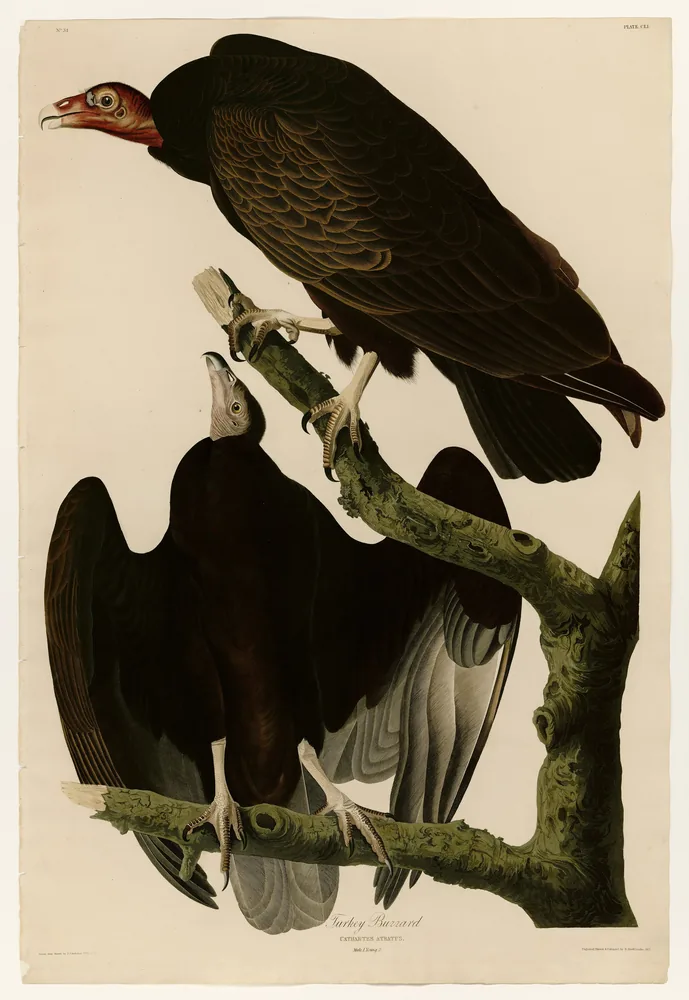
On December 16, 2019, Weigel named the bird that took him past the old mark: a light-morph Short-tailed Hawk, soaring with about a hundred Turkey Vultures near Everglades National Park.
Has anyone beaten 840?
Not that we could find. No organization keeps an official ranking today. The ABA published the 2016 totals itself, and the North American Rare Bird Alert's standings page, whose list stops at 2019, is gone. We looked for higher totals from 2020 to 2026 and found none (checked October 10, 2026). The biggest since then that we found is Gino Ellison's 802 species in 2023.
What is the Lower 48 Big Year record?
The Lower 48 are the contiguous US states, without Alaska and Hawaii. Jeremy Dominguez set a Lower 48 record of 724 species in 2020, Audubon noted. In 2024, Ezekiel Dobson, then 19, set a new one: St. Louis Public Radio reported his total as 758 species. We haven't found the count in his own words.
What is the world Big Year record?
Guinness World Records lists 6,852 species in one year, by Arjan Dwarshuis in 2016, birding in 40 countries on six continents. Taxonomy changes have since raised the same sightings to 6,910 (as of December 2021), but Guinness keeps 6,852, the count as it stood in 2016. A year earlier, Noah Strycker had set the mark at 6,042.
For Big Days, the biggest life lists and more, see birding records.
How do you do a Big Year?
Pick an area and write down your rules, set a goal and a budget, start fast in January, plan the year around migration, chase the rarities you can reach, and record every species with its date and place. A local Big Year needs a calendar of weekends, not a stack of plane tickets.
- Pick your area and your rules. A yard, a patch, a county, a state, the Lower 48 or the ABA Area. Write the boundary down. Decide whether you'll follow the ABA rules, as most birders do, or add your own, such as "only birds I photograph" or "only places I can reach by bike."
- Set a goal you can measure. Last year's total is the easiest starting point. Then check what's possible: Indiana, for example, has more than 420 species on its state list, and 320 to 340 are reported there in a typical year. The Nature Conservancy's budget guide describes a birder who drew a 100-kilometer circle around Perth and aimed for 200.
- Set a budget and the time you'll give it. Neil Hayward flew 193,758 miles and drove 51,758 in his 2013 record year. A 2016 planning guide from the Golden Gate Bird Alliance put a Lower 48 year at about $35,000 in extra expenses. Two brothers covered 38,757 miles across the US by minivan in 2024 on $16,000 and saw 579 species. Kenn Kaufman did his 1973 year on a budget of $1,000, Audubon noted. A county or backyard Big Year costs little more than gas and time.
- Start fast in January. One Indiana birder's tips for a state Big Year include hitting 100 species in January. A Christmas Bird Count in the first days of January can add a lot in one day, and your first bird of the year is the first tick of all.
- Plan around migration. Build a calendar by season: winter for ducks, gulls and northern visitors; spring and fall for migrating songbirds, shorebirds and hawks; summer for nesting birds and boat trips out to sea. A one-day count such as October Big Day is a good test of your plan.
- Chase the rarities you can reach. Sign up for alerts: the ABA's Rare Bird Alert, your state's birding email list or online group, and the alerts in whatever app you log sightings in. Decide in advance how far you'll drive or fly for one bird.
- Record every species as you go. Note the species, the date and the place, and whether you saw it or only heard it. Keep any provisional species apart. A local patch you check often catches birds passing through.
- Don't skip the easy birds, and take breaks. Every species counts once, rare or common. The Indiana tips put it simply: every bird is a number. They also say to rest when the chase stops being fun.
What kinds of Big Year are there?
The kind is set by the area and by any extra rule you add. The common ones are backyard, patch, county, state, Lower 48, ABA Area and world Big Years, plus "green" Big Years without a car and photo Big Years, where only birds you photograph count.
| Kind | Area | A real example |
|---|---|---|
| Backyard (yard) Big Year | Birds seen or heard from your own home | Your own record to beat |
| Patch Big Year | One park, trail or lake you visit often | Your own record to beat |
| County Big Year | One county | Julian Johnson, Yolo County, California, 2025: 275 species, a county record |
| State Big Year | One state or province | New Mexico's state-run 2026 contest; Indiana's "300 Club" |
| Lower 48 Big Year | The contiguous US states | Ezekiel Dobson, 2024: 758 species |
| ABA Area Big Year | The US and Canada, with Hawaii since 2016 | John Weigel, 2019: 840 species |
| Green Big Year (BIGBY) | Any area, reached without a car or plane | Dorian Anderson, 2014: 618 species by bicycle |
| Photo Big Year | Any area; only photographed birds count | Laura Keene, 2016: identifiable photos of more than 790 species |
| World Big Year | Anywhere | Arjan Dwarshuis, 2016: 6,852 species |
Backyard Big Year
A backyard Big Year counts every species you see or hear from your own home between January 1 and December 31. It's the easiest one to start and the slowest to grow, which is the charm: a hawk passing over or a warbler in the hedge becomes the news of the week. It works under the same ABA rules, with your property line as the boundary.
County and state Big Years
Julian Johnson, a UC Davis student, set the Yolo County record in 2025 with 275 species, after about 1,035 hours of birding in the county. Some states run contests: New Mexico's Department of Game and Fish is running a 2026 Birding Big Year Contest, January 1 to December 31, for anyone 13 or older, with groups by age and experience. Registration closed April 1, and winners will be recognized in January 2027.
Green Big Year (BIGBY)
A BIGBY, short for "Big Green Birding Year," counts only birds you reach on foot, by bike or by other carbon-neutral means, Audubon explains. Dorian Anderson biked 17,830 miles in 2014 and saw 618 species, the first North American Big Year by bicycle, as the Golden Gate Bird Alliance described it.
Photo Big Year
In a photo Big Year, a bird counts only if you photograph it. In her 2016 ABA Area Big Year, Laura Keene saw 815 species and took identifiable photos of more than 790 of them, Birding magazine reported in 2018.
A Big Year's one-day cousin is the Big Day: the same game in 24 hours. The Big Sit! is a Big Day from one small circle.
Big Year 2026 and 2027: how to start
You can still run a 2026 Big Year: every species you've recorded since January 1 already counts, so total what you have and chase the rest before December 31. For 2027, plan in November and December, then go out early on January 1, 2027, when every year list goes back to zero.
What's left of Big Year 2026
From October, the year still has late migrants, ducks and other winter arrivals, and the finches that move south in some winters (see the winter finch forecast for 2026–27). The 127th Christmas Bird Count runs from December 14, 2026, to January 5, 2027: a count day in December adds to your 2026 list, and one in January starts your 2027 list. First, find out where you stand: count your 2026 so far.
A plan for Big Year 2027
- November: choose your area, your rules and a number to beat.
- December: list the birds you'll need by month, sign up for rare bird alerts, and find a Christmas Bird Count for early January.
- January 1, 2027: the year starts at 12:00 am, local time. Decide where your first bird of the year will come from.
- First week: sweep up the common winter birds while they're easy.
Can you start a Big Year late?
Yes, for a personal Big Year. The year still runs from January 1 to December 31, so species you saw earlier in the year count if you noted the date and place.
The Big Year film and book
The Big Year (2011) is a comedy from 20th Century Fox, directed by David Frankel, with Steve Martin, Jack Black and Owen Wilson as three birders racing through a North American Big Year. It opened on October 14, 2011. It's based on Mark Obmascik's 2004 nonfiction book The Big Year: A Tale of Man, Nature, and Fowl Obsession (Free Press), about the real 1998 race between Sandy Komito, Al Levantin and Greg Miller. The film changes their names. Komito won with 745 species, later 748, ahead of Miller's 715 and Levantin's 711.
More Big Year books, each about a real year:
- Kingbird Highway (1997): Kenn Kaufman's 1973 year.
- Lost Among the Birds (2016): Neil Hayward's 2013 record year.
- Birding Without Borders: Noah Strycker's 2015 world year.
- The (Big) Year that Flew By (2023): Arjan Dwarshuis's 2016 world record.
- Birding Under the Influence (2023): Dorian Anderson's year by bicycle.
On screen, Listers: A Glimpse Into Extreme Birdwatching (2025) follows Owen and Quentin Reiser's 2024 Big Year in a minivan. It's free on YouTube and passed a million views in its first month, Audubon reported. For more reading, see the best bird books.
Questions people ask
How much does a Big Year cost?
As much or as little as you like. Birders chasing a continent-wide record can spend tens of thousands of dollars on flights alone, The Nature Conservancy notes. A backyard, patch or county Big Year costs almost nothing beyond your time.
Who has seen the most birds in one year?
Arjan Dwarshuis, with 6,852 species around the world in 2016, Guinness World Records lists. In the US and Canada, John Weigel's 840 species in 2019 is the highest published total.
Is a Big Year the same as a Big Day?
No. A Big Year lasts a calendar year; a Big Day is the same count squeezed into 24 hours. Both count species, not individual birds.
How do I count my Big Year?
Keep every sighting with its species, date and place, then count the different species you recorded between January 1 and December 31. If your list lives in eBird or iNaturalist, Your birding year in numbers does the counting for free: drop in your export, and it shows your species for the year, new lifers, first bird and biggest day. Nothing is uploaded.
Counting by hand works too. Count each species once, mark heard-only birds if you like, and keep provisional species to one side until they're accepted. A paper list can go into a spreadsheet later: see how to turn a paper list into a spreadsheet. Whatever you use, back up your birding records.
A year worth keeping
A Big Year ends on December 31, but every bird in it stays on your life list. A Birdfolio prints your life list as a hardcover book, with a classic painting beside every species: page through a Birdfolio.
Birdfolio is not affiliated with eBird, the Cornell Lab of Ornithology or iNaturalist.