2025 split
Yellow Warbler split: Northern and Mangrove
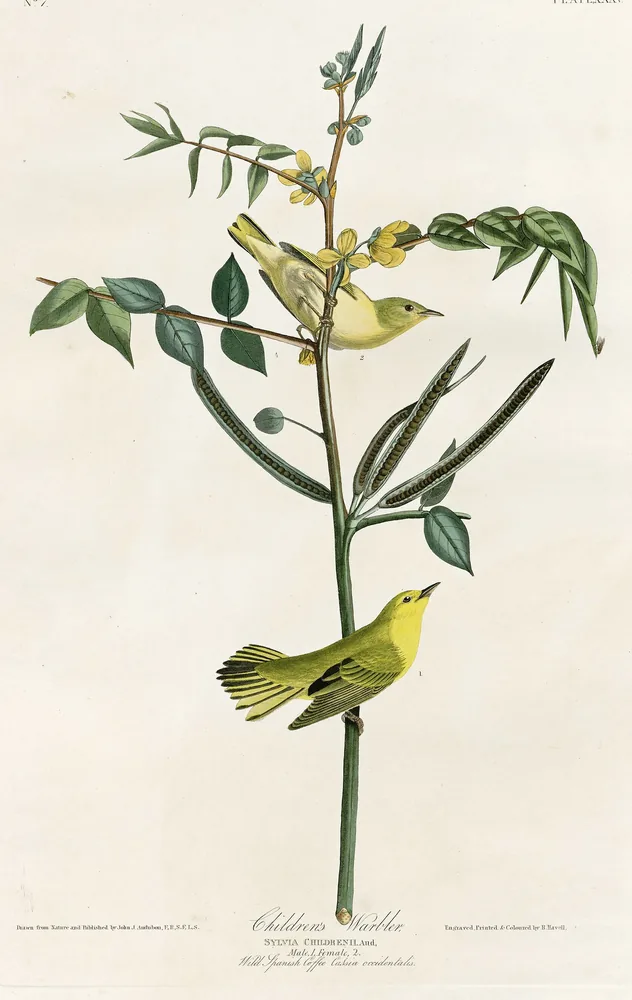
The Yellow Warbler is now two species: eBird and its Clements Checklist split it in October 2025, after the AviList world checklist did in June 2025, and the American Ornithological Society (AOS) followed on October 20, 2026. In eBird, the Yellow Warbler that nests across the US and Canada is now the Northern Yellow Warbler, and the one that lives all year in coastal mangroves is the Mangrove Yellow Warbler; the AOS calls them Yellow Warbler and Mangrove Warbler. For most US birders it's a new name, not a new bird: your total goes up only if you have also seen a Mangrove Yellow Warbler.
Updated
What changed
Nests across almost all of the mainland US, Canada and Alaska.
Lives all year in coastal mangroves. In the US only in southern Florida, including the Keys, and on the south Texas coast; also in the West Indies and other tropical coasts.
Is the Northern Yellow Warbler a new species?
It's a newly recognized species, not a newly found bird. The Northern Yellow Warbler is the same bright yellow warbler that nests in gardens, swamp edges and thickets along streams across the US and Canada. What changed is that the checklists now count the year-round mangrove birds of the tropics as a species of their own.
Its scientific name is now Setophaga aestiva. The old name, Setophaga petechia, stays with the Mangrove Yellow Warbler.
The names differ a little by checklist. eBird and the ABA say Northern Yellow Warbler and Mangrove Yellow Warbler. The AviList world checklist says American Yellow Warbler and Mangrove Warbler, and since October 20, 2026, the AOS says plain Yellow Warbler and Mangrove Warbler. The Smithsonian's National Zoo uses both "American yellow warbler" and "Northern yellow warbler." They all mean the same two birds.
Surprising facts about the Yellow Warbler
It buries cowbird eggs under a new floor. Brown-headed Cowbirds lay their eggs in other birds' nests and leave the hosts to raise their young. Some Northern Yellow Warblers fight back: they build a new floor over the cowbird eggs and lay a fresh clutch of their own on top, says Audubon's field guide. In one case, cowbirds came back five times to lay more eggs in the same nest, and the warbler built six layers of nest floors to cover them up.
Its nests can be six stories high. Where cowbirds are common, Yellow Warbler nests have been found stacked six deep, with at least one cowbird egg sealed into each layer, says the National Park Service. A female may layer her nest and lay her eggs again up to six times in a season, says the Smithsonian's National Zoo.
It sounds the alarm, and the neighbors listen. When a male or female spots a Brown-headed Cowbird nearby, it gives a repeated "seet" call, the National Zoo says. Red-winged Blackbirds, which cowbirds also target, seem to have learned what that warning means.
It runs on caterpillars. Up to two-thirds of its diet may be caterpillars, says Audubon's field guide. It also leaves early: it migrates mostly at night, and many head south during August.
There are millions of them, but fewer than before. Audubon's field guide puts the Northern Yellow Warbler's population at 97,000,000. The National Zoo calls it one of the most numerous warblers in North America, but says its population has declined by 10 percent over the last decade.
Why it changed
The two live very different lives. Northern Yellow Warblers are long-distance migrants that fly south for the winter. Mangrove Yellow Warblers stay in their coastal mangroves all year. The split follows that line, Michael Retter of the American Birding Association (ABA) explained when eBird's update came out: the migrating birds became Northern Yellow Warbler, and the birds that stay put in the tropics became Mangrove Yellow Warbler.
They also look and sound different. Adult male Mangroves have rusty color on the head, which Northern males lack, and their songs are on average richer and lower.
Their genes point the same way. As far back as 1994, a study of the birds' mitochondrial DNA (genes passed down from the mother) found a deep split between the North American birds and the tropical ones, though the tropical birds did not sort out neatly among themselves.
Who decided, and when
- AviList, the shared world checklist: agrees, under the names American Yellow Warbler and Mangrove Warbler
- eBird and the Clements Checklist: its 2025 taxonomy update
- American Birding Association (ABA): added both to the ABA Checklist
- American Ornithological Society (AOS): the 67th Supplement to its Check-list, after its committee passed proposal 2026-B-13, under the names Yellow Warbler and Mangrove Warbler
Why did the Yellow Warbler split take so long?
Because for years the experts voted no. In October 2003, a proposal to split it went to the committee that keeps the official list of South American birds. It failed: six members voted no and one voted yes.
In 2018 the AOS's committee for North American birds turned down a proposal to split Yellow Warbler into two species.
Then 2025 changed things. The AviList world checklist split it in June 2025, eBird and the Clements Checklist followed in October 2025, and on January 29, 2026, the ABA added both species to its official list of the birds of the US and Canada.
The AOS came last. On October 20, 2026, in the 67th Supplement to its Check-list, it split the Yellow Warbler too, on a proposal by Shawn Billerman and Oscar Johnson that pointed to differences in genes, songs, size and shape, and way of life. Mangrove birds have bigger bills and longer legs than inland birds, the proposal noted. When the ABA added both species in January, the AOS still counted one; that's why the ABA kept the old four-letter code, YEWA, for Northern Yellow Warbler and gave Mangrove a new one, MANW.
How do you tell a Northern Yellow Warbler from a Mangrove Yellow Warbler?
Mostly by where and when you see it. Away from coastal mangroves, it's Northern. In mangroves, take a closer look: Mangrove lives there all year, but Northern passes through on migration, and many Northern Yellow Warblers spend the winter in the mangrove forests of Central and South America, says the National Zoo.
Then look at an adult male's head. A Northern male has no rust on the crown. A Mangrove male does, Retter writes: a rusty patch on the crown in the "Golden" birds of Florida and the Caribbean, and a wholly rusty head in the "Mangrove" birds of the mainland coasts, including Texas.
Other clues are subtle. Mangrove males are slightly darker and greener above, with shorter wings and a slightly thinner, more curved bill. Females average duller and greener, and many young Mangroves look mostly gray, with faint greenish tones and very little yellow.
Listen, too. Mangrove songs and calls average richer, lower and more penetrating, sometimes noticeably so. The Northern song is the familiar bright, musical sweet-sweet-sweet, sweeter-than-sweet, as Audubon's field guide writes it. A Northern Yellow Warbler also has a plain yellow face and yellow, not white, spots in its tail, and the male has reddish streaks on his chest.
Where can you see a Mangrove Yellow Warbler in the US?
Only in a few places near the coast. In the US it nests in the mangroves of the Florida Keys and southern Florida and locally on the south Texas coast, the ABA says. Strays have turned up farther away: Retter counts records from California (2), Arizona (1) and Louisiana (1).
Beyond the US it lives along tropical coasts. The "Golden" birds live mostly in the Caribbean, and the "Mangrove" birds mostly on the mainland coasts.
The Northern Yellow Warbler is the one almost everywhere else. It nests from the Arctic Circle to Mexico, says Audubon's field guide, often in willows and alders in thickets along streams, lakes, swamps and marshes. In fall it flies to Central and South America for the winter.
Which one did you see?
Go by where you saw it. Anywhere away from coastal mangroves, from Alaska to the Gulf, it's Northern Yellow Warbler.
In the mangroves of the Florida Keys and the south Texas coast it may be Mangrove Yellow Warbler, which lives there all year. Adult males usually show some rusty color on the head, and the song is lower and richer. Northern Yellow Warblers pass through on migration too, so a bird there in spring or fall could be either: see the clues above.
What it does to your list
For nearly everyone it's a new name only: your Yellow Warbler is now Northern Yellow Warbler, and your total stays the same.
If you have also seen Mangrove Yellow Warbler, in southern Florida, south Texas, the Caribbean or tropical America, your total goes up by one. Birders call a species gained from a split, without a new sighting, an "armchair lifer."
Have an older Yellow Warbler from a mangrove coast, in the Florida Keys or on a Caribbean trip? Check your notes and photos: an adult male with rust on the head was a Mangrove.
Other familiar birds went the same way: see the Whimbrel split and the Herring Gull split. And read more about how bird splits and lumps work.
A copy of your list printed before eBird's 2025 update still says Yellow Warbler; here are five ways to print a fresh one, three of them free.
Check your own list. Drop your eBird download or type your birds: the free checker shows which of them this and other recent changes touched.
Check my list