2026 split
Tufted Flycatcher split: the Tawny and the Lemon-bellied Tufted-Flycatcher
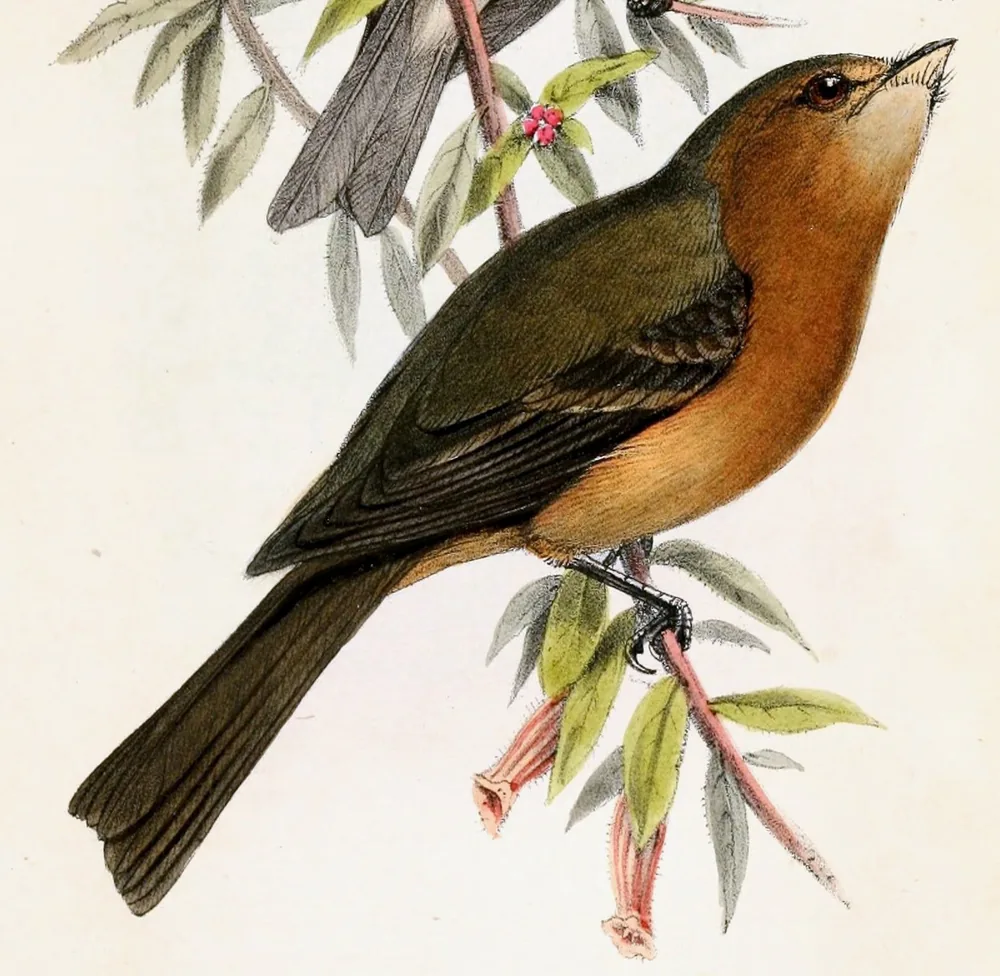
The Tufted Flycatcher is now two species. The American Ornithological Society (AOS) split it on October 20, 2026: the northern bird, from Mexico to Nicaragua, is now the Tawny Tufted-Flycatcher, and the one from Costa Rica to Ecuador the Lemon-bellied Tufted-Flycatcher. The rare visitors to Arizona and Texas are Tawnies. eBird's yearly update, expected October 27, usually follows the AOS; what eBird changes is certain only once it publishes.
Updated
What changed
Pine-oak and cloud forest in the mountains, from northern Sonora and southern Tamaulipas in Mexico south to northern Nicaragua. A rare visitor to Arizona, where it has nested in the southeast, and to Texas.
Highlands of Costa Rica and Panama, and south into northwestern Colombia and northwestern Ecuador.
Has the Tufted Flycatcher been split?
Yes. The AOS split it on October 20, 2026, in the 67th Supplement to its Check-list, and AviList, the shared world checklist, did the same that day.
The AOS writes the new names with a hyphen, Tawny Tufted-Flycatcher and Lemon-bellied Tufted-Flycatcher, as Retter reports them; AviList leaves it out, and so did the US Fish and Wildlife Service's notice of October 1, 2026. eBird still had one Tufted Flycatcher when we checked on October 22, 2026; its update is expected on October 27.
Is the Northern Tufted Flycatcher the same bird?
Yes, under an older name. Northern Tufted Flycatcher is what AviList and the IOC World Bird List called the whole species before the split, the proposal on the new names notes; the AOS and eBird said simply Tufted Flycatcher. That proposal advised against keeping “Northern,” because it had meant all of them. The northern birds, the ones that reach Arizona and Texas, are now the Tawny Tufted-Flycatcher.
Surprising facts about the Tawny Tufted-Flycatcher
Arizona's first turned up in the state's northwest. On February 24, 2005, the first Tufted Flycatcher in Arizona was found in Mohave County, not in the mountains near Mexico; it was only the third ever recorded in the US, Arizona Birds reported.
It has nested in Arizona. In canyons of the Huachuca Mountains, pairs have stayed for whole summers and nested more than once, says Audubon's field guide. The first one north of the border was found in Big Bend National Park, Texas, in 1991.
Its crest makes it easy. Flycatchers are famously hard to tell apart, but these are “wonderfully straightforward” to name, thanks to a long, pointed crest that is usually raised, the proposal on their names says.
Its hyphen is back. In 1998 the AOS's forerunner, the American Ornithologists' Union, already called these birds the Common Tufted-Flycatcher, that proposal recalls. The AOS's list later said plain Tufted Flycatcher, until the 2026 split brought the hyphenated name back.
It hunts like a pewee. It sallies out over openings from a perch 20 to 100 feet up and returns to it, in the manner of a pewee, a group it is thought to be closely related to, the split proposal notes.
Why it changed
Their voices. Birds from Mexico to Nicaragua give calls and dawn songs strikingly different from those of birds from Costa Rica south, the AOS proposal says; their calls are so unlike that its authors found it hard even to measure one against the other. The split lines up with their plumage and with a strong genetic break between Honduras and eastern Panama.
Their color. In a family where look-alikes are the rule, these two differ plainly: the northern bird is tawny cinnamon, the southern one strikingly yellow on the belly, the proposal on their names notes.
The names took a vote of their own. That proposal, by Marshall Iliff and Terry Chesser, recommended Mexican Tufted-Flycatcher for the northern bird, though it also lives in Guatemala, Honduras, El Salvador and Nicaragua, and offered Tawny as a name drawn from its color; for the southern bird it recommended Lemon-bellied. The AOS chose Tawny and Lemon-bellied, as Michael Retter of the American Birding Association reported on October 22, 2026.
Who decided, and when
- American Ornithological Society (AOS): the 67th Supplement to its Check-list, after its committee voted on proposals 2026-B-10 (the split) and 2026-C-3 (the names)
- AviList, the shared world checklist: its 2026 edition, v2026, as Tawny Tufted Flycatcher and Lemon-bellied Tufted Flycatcher
- eBird and the Clements Checklist: hadn't split it yet when we checked. Its yearly update is expected on October 27, 2026; eBird usually follows the AOS, but what it changes is certain only once it publishes
How do you tell a Tawny from a Lemon-bellied Tufted-Flycatcher?
By where you saw it, first. In Mexico, Guatemala, Honduras, El Salvador and Nicaragua, and in Arizona and Texas, it's a Tawny; in Costa Rica, Panama, Colombia and Ecuador, a Lemon-bellied.
Then by color and call. The Lemon-bellied has a noticeably yellowish belly and a slightly greener back and crown, Retter writes, though Costa Rican birds can be cinnamon on the breast too, the naming proposal warns. Their calls differ more: the Tawny's, often given in a series, is burry and rises at the end; the Lemon-bellied's is clearer and piping, falls, and comes faster.
Which one did you see?
By where you saw it: from Mexico to Nicaragua, and in the US, a Tawny Tufted-Flycatcher; from Costa Rica to Ecuador, a Lemon-bellied Tufted-Flycatcher.
By color, if you need it: warm cinnamon below on the Tawny, yellow on the belly of the Lemon-bellied.
What it does to your list
In eBird, nothing has changed yet: it still lists one Tufted Flycatcher until its update, expected on October 27, 2026. If eBird follows the AOS, as it usually does, and you have seen them both north and south of Nicaragua, your eBird total will go up by one: an “armchair lifer.” Seen only in the US or Mexico, or only in Costa Rica or Panama, yours changes only its name.
Birdfolio books use AviList's June 2026 edition, which still has one Tufted Flycatcher, so your book counts one. Typed as a Tawny or Lemon-bellied Tufted Flycatcher, either lands on it, and a notes page in the book explains why.
Another 2026 change for birders of Arizona's mountain canyons: the Painted Whitestart. The AOS split the Willet the same day.
Seen one in Arizona and another in Costa Rica? When both show on your list, try your list as a book, each bird with the day and place you first saw it.
Check your own list. Drop your eBird download or type your birds: the free checker shows which of them this and other recent changes touched.
Check my list